

Dell Technologies expanded the Dell AI Factory con NVIDIA today at NVIDIA GTC Berlin with a 48U PowerEdge M9882 rack holding 256 NVIDIA Vera CPUs for agentic workload execution, the PowerEdge XE9810 rack-scale inference system built on Groq 3 LPUs, an air-cooled two-socket Vera server, a 64GB Dell Pro Precision with GB10, and a set of validated software and deskside deployment templates. The software is available now, and the new hardware arrives between this month and early 2027. Dell says the platform has passed 6,500 customers, up from 5,000 last quarter.
Dell builds its case for the expansion on cost of ownership, citing a September 2026 Signal65 and Futurum Group analysis that puts the Dell AI Factory at up to 90 percent more cost-effective than public cloud over two years, a figure that assumes deskside and data center systems running knowledge, sales, and software development workloads. Dell also cites Goldman Sachs and Gartner projections that agentic AI will drive 24x token consumption while inference costs fall more than 90 percent by 2030. These are vendor and analyst figures, and we did not audit them.
“Enterprises used to think about AI infrastructure as an IT budget question, but that’s changed. AI infrastructure is no longer a cost center. It’s a value creation center,” said Michael Dell, chairman and chief executive officer of Dell Technologies.
PowerEdge Expands CPU Execution and LPU Inference
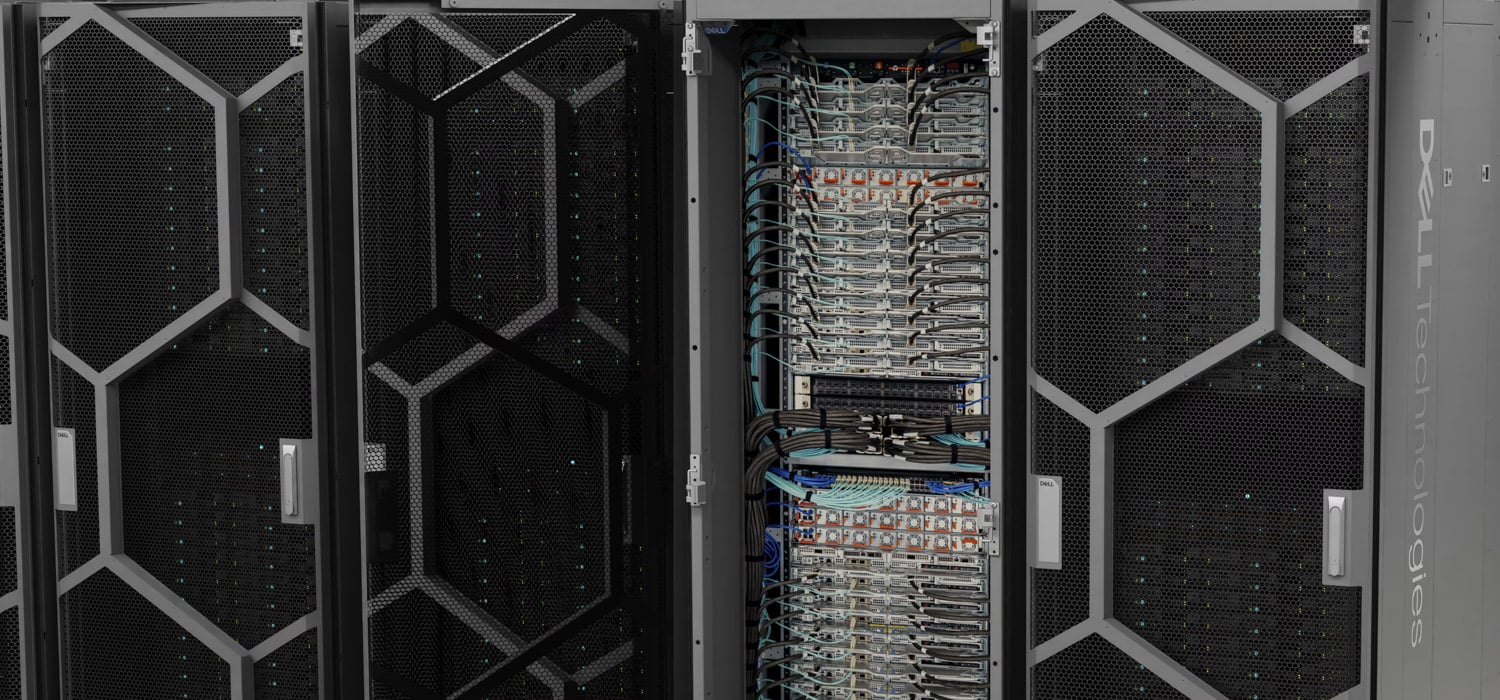
The Dell PowerEdge M9882 packs 256 NVIDIA Vera CPUs into a single 48U rack as Dell’s build of the Rack per CPU NVIDIA Vera, aimed at the CPU side of agentic work: orchestration, tool use, code execution, and evaluation, with model inference left to GPU clusters. Each Vera CPU carries 88 Olympus cores, so a full rack comes to 22,528 cores. NVIDIA’s reference design specifies 400TB of LPDDR5X, 300TB/s of aggregate memory bandwidth, and 64 BlueField-4 DPUs per rack; Dell has not yet published the M9882’s memory or networking configuration.
Dell’s argument for a CPU-only rack is power and cooling: separating CPU execution from GPU clusters lets a data center size each pool to its workload, which Dell says makes better use of power and cooling capacity than over-provisioned mixed-use servers. The M9882 is the second CPU-only agentic rack announced this month, after AMD’s Helion blueprint, which packs up to 32,768 EPYC cores in an open OCP design. Dell lists M9882 availability as Q1 CY27.
The Dell PowerEdge R8822 brings Vera to conventional data centers as an air-cooled, two-socket 2U server for standard 19-inch racks. Dell lists agent orchestration, sandboxing, reinforcement learning, and data processing and analytics as target workloads, and the chassis takes up to four double-wide GPUs. It ships this month, which makes it the first of the new PowerEdge platforms to reach customers.
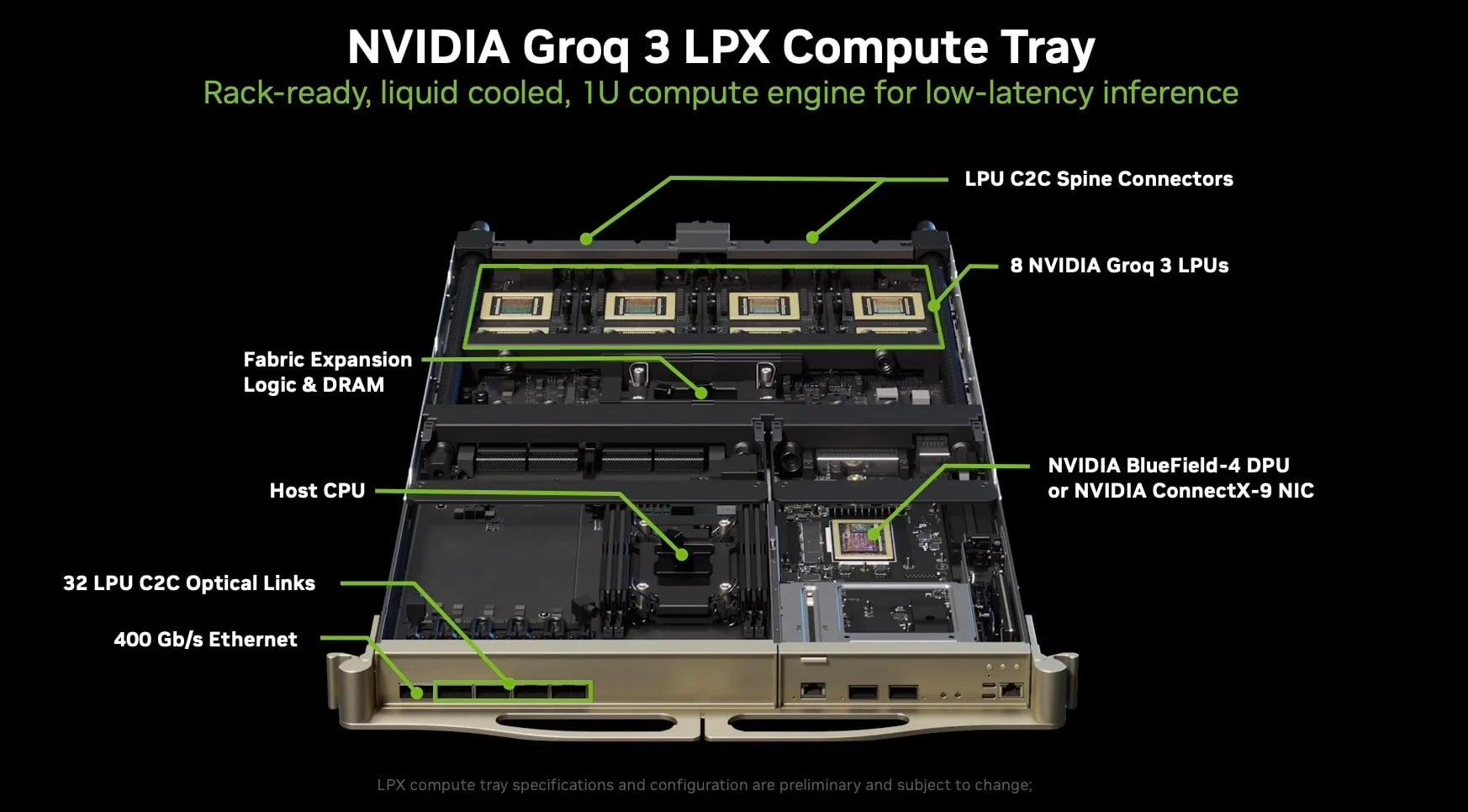
The Dell PowerEdge XE9810 is Dell’s first Groq LPU rack-scale inference system, with 16 direct-liquid-cooled compute trays built on NVIDIA Groq 3 LPUs. Dell positions it as a disaggregated complement to GPU clusters for production agentic AI, with consistent time to first token at scale as the design target. Dell has not published the LPU count per tray, throughput figures, or a full system configuration, and the XE9810 is due in Q1 CY27.
The Dell Modular Data Center with NVIDIA DSX POD is a containerized reference design that ships with compute, storage, networking, rack-level power, and liquid cooling integrated and validated at the factory, so a site connects it to prepared power. Dell says deployment at a prepared site can move from six months to 14 days, and capacity grows by adding containers. It is slated for early 2027.
For telecom operators, NVIDIA Aerial RAN Computer (ARC) platforms on Dell PowerEdge servers run RAN and AI workloads on one compute footprint, which Dell pitches as lower total cost of ownership than separate siloed systems. Dell lists the ARC framework on PowerEdge as coming soon.
Deskside Systems Add Memory and Deployment Templates
Dell Pro Precision with GB10, the system we reviewed as the Dell Pro Max with GB10, gains a 64GB unified memory configuration on October 23, the same day NVIDIA’s DGX Spark 64GB arrives at $4,999. Dell pitches it at individual developers and small teams running open-weight models locally, and it has not listed a price for the 64GB configuration.
Clustering runs to two 64GB systems or four 128GB systems, and Dell says a customer can start with one system and scale to an eight-node GB10 cluster for more model capacity and concurrent users. We have run eight GB10 systems, two of them Dell’s, against shared storage over 100GbE, where the fleet pulled 24.9GiB/s from one Solidigm QLC array.
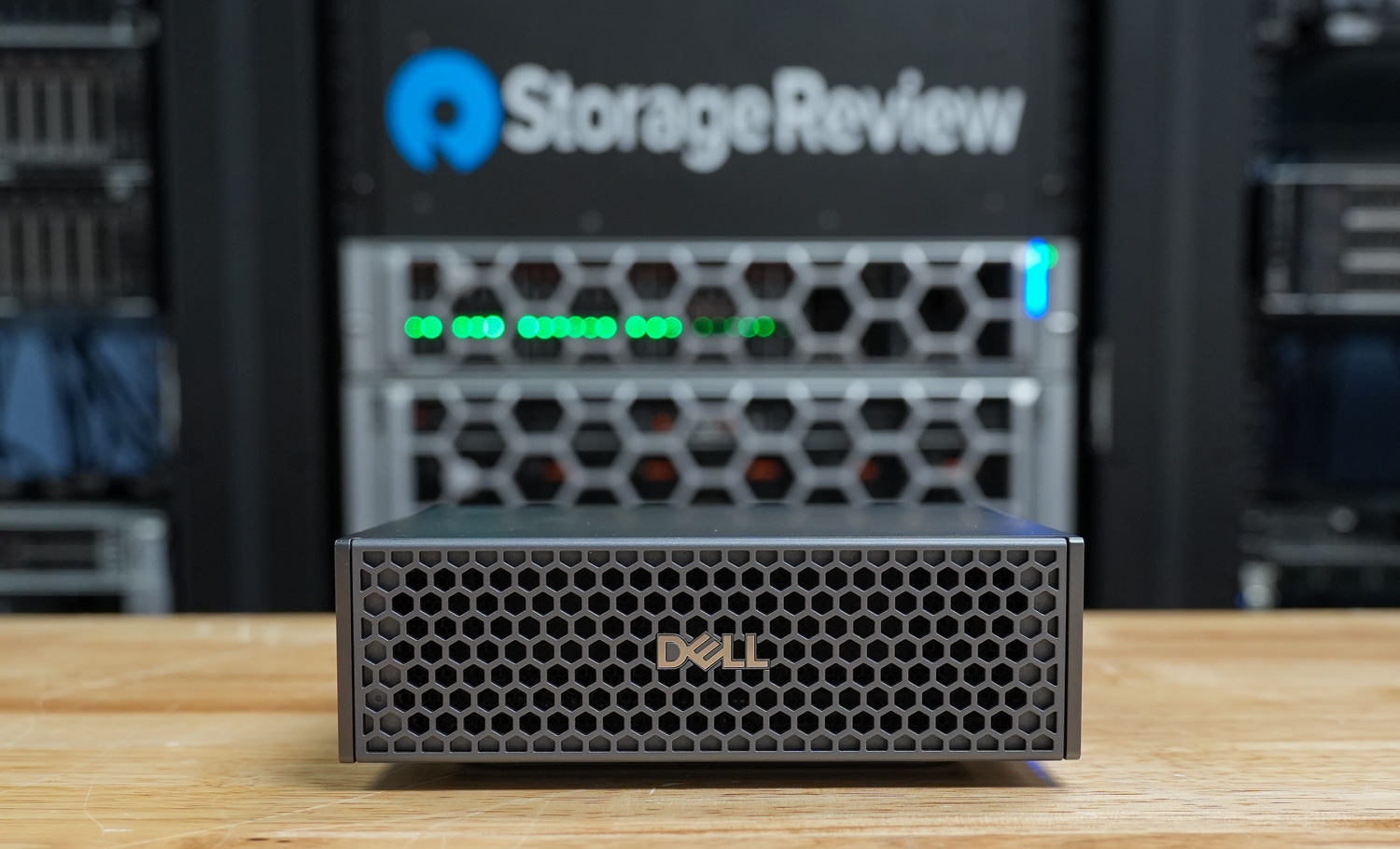
Dell Pro Precision con GB300 is coming to Windows with up to 748GB of coherent memory, and 20 petaflops of FP4 compute, which puts the desk-side Grace Blackwell Ultra system inside the Windows environments enterprises already manage. Dell gives no date beyond coming soon.
Dell Deskside Agentic AI Solutions for NVIDIA, the reference deployment templates, are on GitHub now. Five launch blueprints cover agentic coding, agentic VSS, NVIDIA NemoClaw, Hermes Agent on NemoClaw, and a Higher Education AI Lab platform. Each specifies the hardware, models, and software stack for its use case, and Dell says they scale from a single developer to 1,000 or more systems, with support for up to 96 developers on a single platform.
Software Validation and Governance Extend Across the Stack
Reflection’s Beam, an Apache 2.0 open-weight model built for software engineering and long-horizon agentic tasks, is validated and available on the platform now, as are a knowledge assistant and an agentic AI platform with Mistral. AI observability with Dynatrace and computer vision with Fogsphere follow in Q4 CY26, and SUSE Linux joins the supported operating systems in early Q1 CY27.
Dell’s security architecture for agents stacks three layers: hardware-rooted Dell infrastructure, Red Hat AI Factory software for platform orchestration, and the NVIDIA OpenShell reference architecture for runtime governance, covering the runtime, network, data, and infrastructure layers. Dell Managed Services for AI, due in Q1 CY27, adds resource optimization, access governance, and consumption and cost management, giving development teams self-service access to AI resources while IT keeps the governance and financial controls.


 Amazon