

VAST Data announced that DeepL is deploying the VAST AI-operativsystem as the data foundation for the research environments behind its written and real-time voice translation. Based on current deployment plans, DeepL expects roughly three times the storage capacity of the NVMe hardware it already runs, and it will use VAST’s SyncEngine to migrate data out of its incumbent environment. DeepL’s platform serves more than 200,000 business teams, and the company says real-time voice training is what is driving the new data demand.
NVMe Consolidation Targets 3x Usable Capacity
The threefold figure covers DeepL’s existing NVMe infrastructure, and DeepL frames the gain as room to scale model development without a corresponding increase in physical hardware. Neither company breaks the gain down between data reduction, erasure coding, and consolidating separate pools onto one platform, and VAST has not tied the figure to Amplify, the program it launched in January with a claim of up to 6x effective capacity from existing SSDs. Drive models, raw capacities, and a deployment timeline were not disclosed.
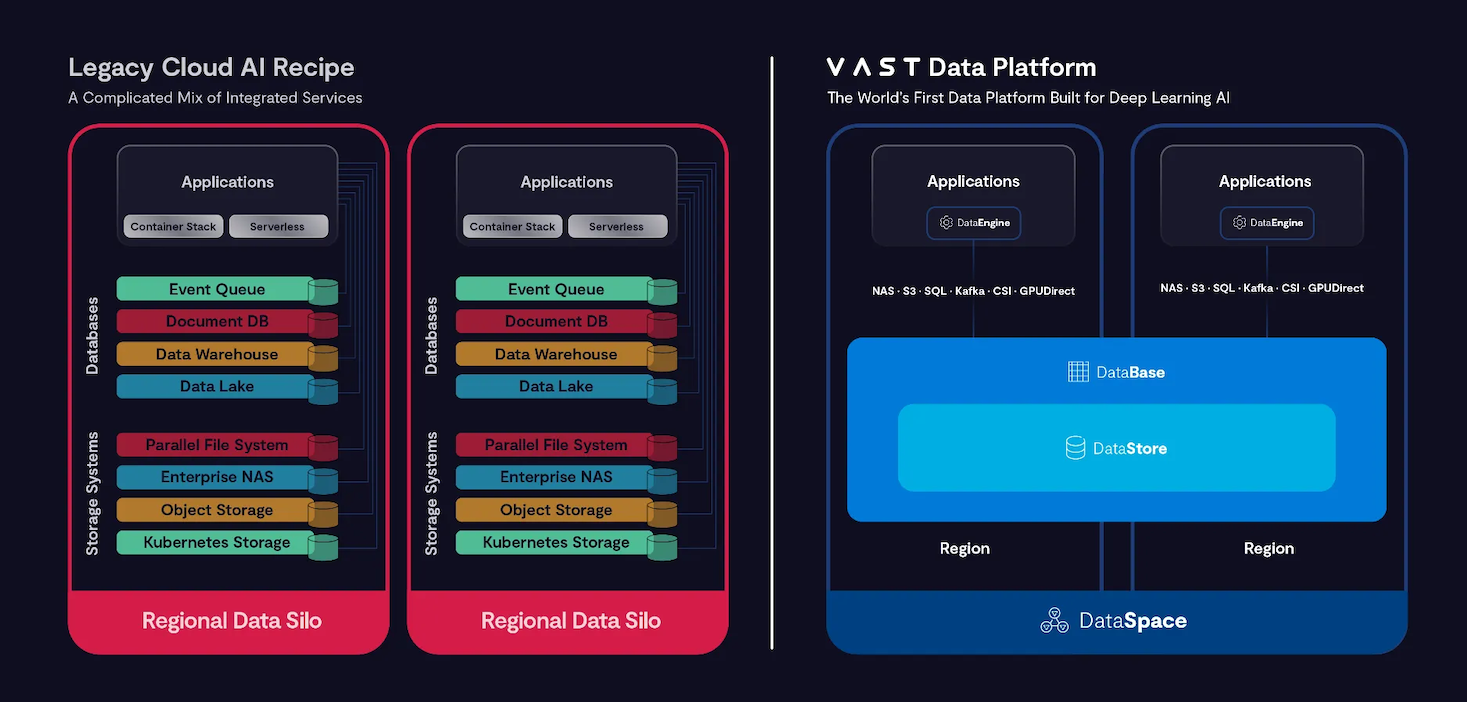
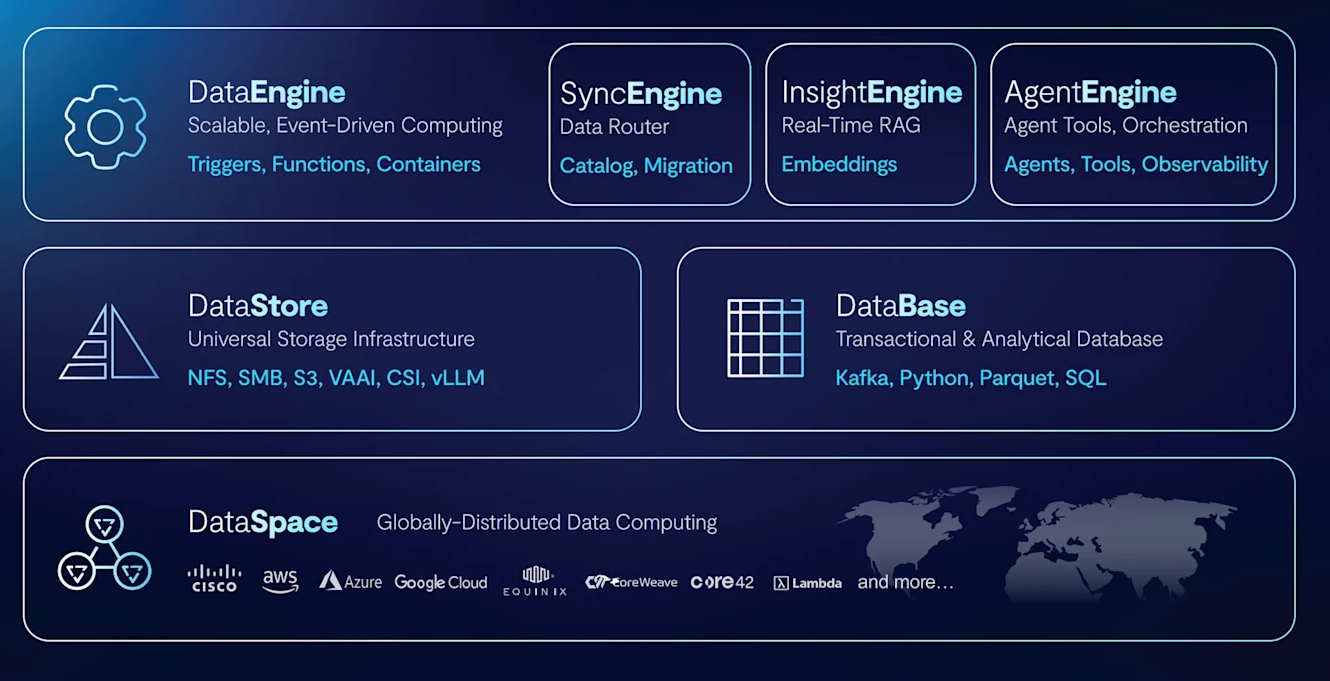
SyncEngine, the AI OS component that catalogs and migrates data, moves DeepL’s data from the incumbent environment onto the VAST platform. From there, the platform serves file and object storage from one system, which DeepL says simplifies the data structure underneath its research teams and gives it flexibility as the workloads change with the models.
“VAST gives us the performance and reliability we need while allowing us to make significantly more efficient use of the infrastructure we already operate,” said Stefan Andresen, chief scientist at DeepL. “Just as importantly, it gives us a path to make data more easily accessible across our own data centres and, over time, cloud environments, reducing the manual data movement that can get in the way of research.”
DeepL Voice, introduced in November 2024 for live multilingual conversation, is the workload pushing the requirements. Recent updates let it preserve characteristics of a speaker’s voice across languages, and DeepL says training those capabilities puts heavier demands on data access and infrastructure performance than text, with efficient movement between training and production environments as the priority.
Hybrid Data Management Spans On-Premises and Cloud
The deployment starts in DeepL’s data centers, with plans to extend VAST into cloud environments over time so researchers get the same access to datasets wherever the training cluster sits and stop copying data between sites by hand. Neither company has said which VAST services the cloud phase will use or when it begins.
“As AI moves into production, infrastructure reliability becomes just as important as raw performance,” said Jeff Denworth, co-founder of VAST Data. “Written language, real-time voice and the next generation of AI experiences all place different demands on data, but researchers should not have to redesign the underlying infrastructure every time the model or product changes.”
VAST positions the AI OS as a common data foundation across model development, training, and inference, consolidating file and object services with consistent access across distributed infrastructure. DeepL follows a run of VAST announcements this fall, including DataEnclave for running models on regulated data inside NVIDIA confidential computing and the CrowdStrike integration that went live in September.


 Amazon