
…database requires roughly 650GB of space for its four database nodes. Our protocol uses an SCST host and presents each SSD in JBOD, with one allocated per database node. The…

…database requires roughly 650GB of space for its four database nodes. Our protocol uses an SCST host and presents each SSD in JBOD, with one allocated per database node. The…

…four database nodes. Our protocol uses an SCST host and presents each SSD in JBOD, with one allocated per database node. The test repeats itself over 24 intervals, requiring 30-36…

…NoSQL database requires roughly 650GB of space for its four database nodes. Our protocol uses an SCST host and presents each SSD in JBOD, with one allocated per database node….
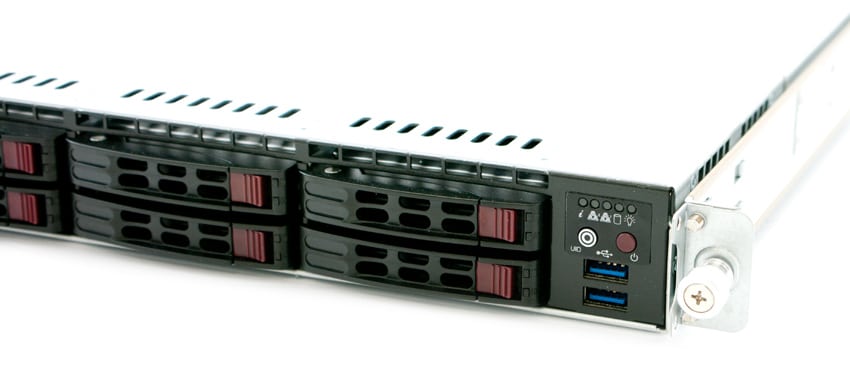
…Plug and Play (PnP) APM 1.2 PCI 2.3 ACPI 1.0 / 2.0 / 3.0 / 4.0 USB Keyboard support SMBIOS 2.7.1 UEFI 2.3.1 Software: SuperDoctor 5 Intel® Node Manager 3.0…
…NoSQL database requires roughly 650GB of space for its four database nodes. Our protocol uses an SCST host and presents each SSD in JBOD, with one allocated per database node….

…handles the rest on its own. VMmark Performance The 4-node Dell PowerEdge RD730xd VSAN cluster was able to top out at 18 tiles in VMmark. 18 tiles is certainly an…

…a 2-node cluster that can scale to a raw capacity of 280TB. The system scales by adding new WFA appliances to the Windows cluster in increments of 35 or 70TB…
…protocol uses an SCST host and presents each SSD in JBOD, with one allocated per database node. The test repeats itself over 24 intervals, requiring 30-36 hours total. MarkLogic records…

…space for its four database nodes. Our protocol uses an SCST host and presents each SSD in JBOD, with one allocated per database node. The test repeats itself over 24…

…Our protocol uses an SCST host and presents each SSD in JBOD, with one allocated per database node. The test repeats itself over 24 intervals, requiring 30-36 hours total. MarkLogic…


 Amazon