

Updated October 13, 2026: Copy pass for house style; picks and data unchanged.
New: The Leaderboard now covers complete systems too. Browse all of our lab-tested rankings at StorageReview Best, starting with Best Desktops for Local AI.
The storage market has moved fast enough over the past eighteen months that a “best drives” list from even a year ago reads like a museum placard. PCIe Gen5 is now the consumer performance mainstream, the first Gen6 data center SSDs are shipping, and the QLC capacity race has crossed into quarter-petabyte territory. This updated Leaderboard reflects where the market stands today, with every ranked pick backed by StorageReview lab testing. Capsule summaries link to the full reviews, which remain the definitive resource for each drive.
Best Consumer SSDs
The drives below are internal SSDs, and portable models have their own leaderboard: Best Portable SSDs ranks ten lab-tested portable drives across USB4, rugged, high-capacity, and pocketable use, led by the LaCie Rugged SSD4 at 3,183.1 MB/s read and 3,185.4 MB/s write over a 40Gbps connection.
Best Consumer SSD Overall: SanDisk WD_BLACK SN8100
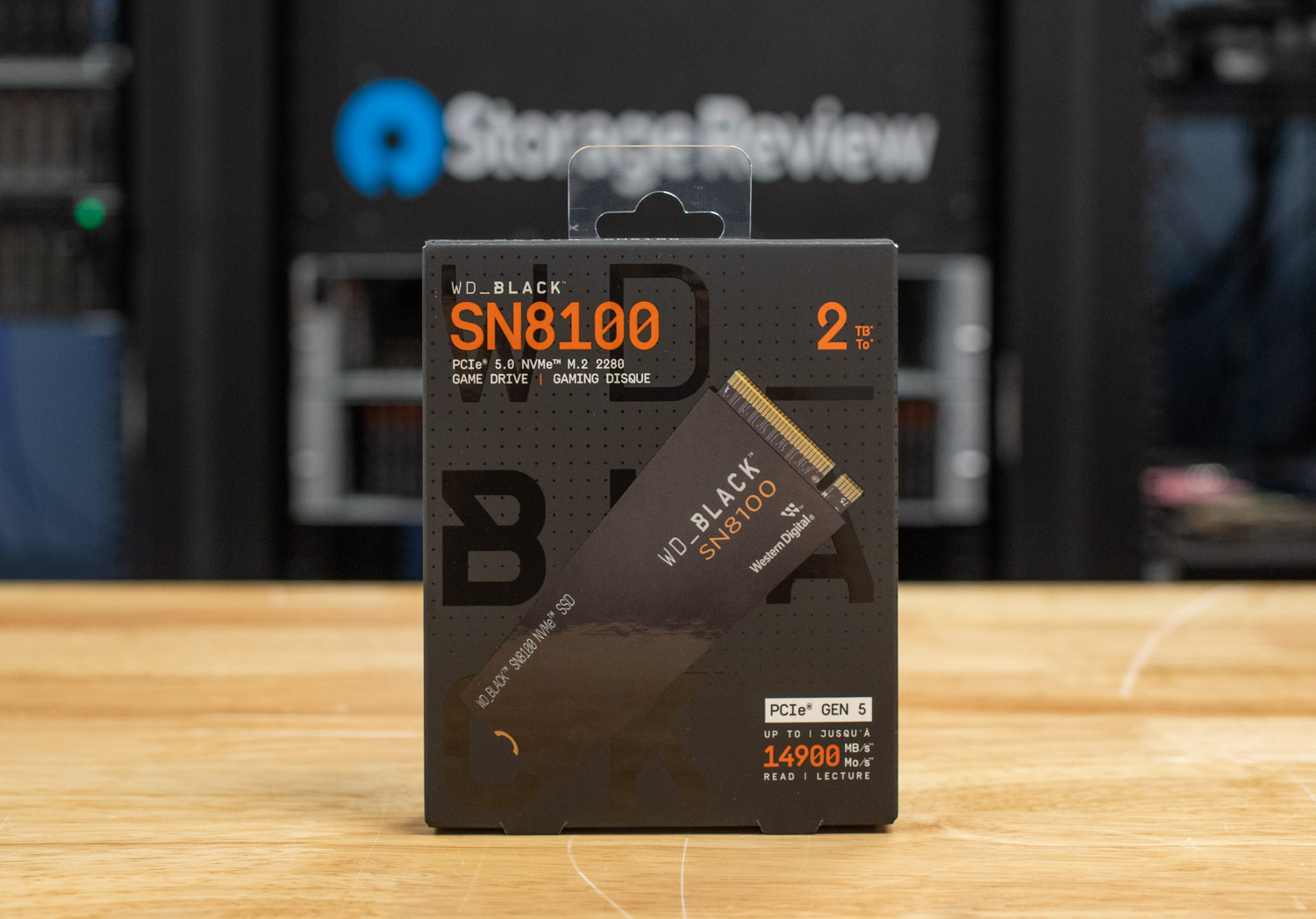
The SN8100 is the drive to beat in the consumer space. Built on a SanDisk-tuned Silicon Motion SM2508 controller and BiCS8 TLC NAND, it topped our charts in sequential throughput at 15GB/s reads and 14.1GB/s writes in FIO burst testing, led our 3DMark Storage benchmark by a wide margin, and posted the fastest large-model LLM load times we have recorded on a consumer drive.
Just as important, it does all this with power efficiency that first-generation Gen5 drives could not approach, so it does not demand exotic cooling to sustain performance. Available in 1TB to 4TB now with an 8TB model rolling out, and an easy Best of 2025 award winner in our testing. Read the full SanDisk WD_BLACK SN8100 review.
Best High-Capacity Consumer SSD: Samsung 9100 Pro (8TB)
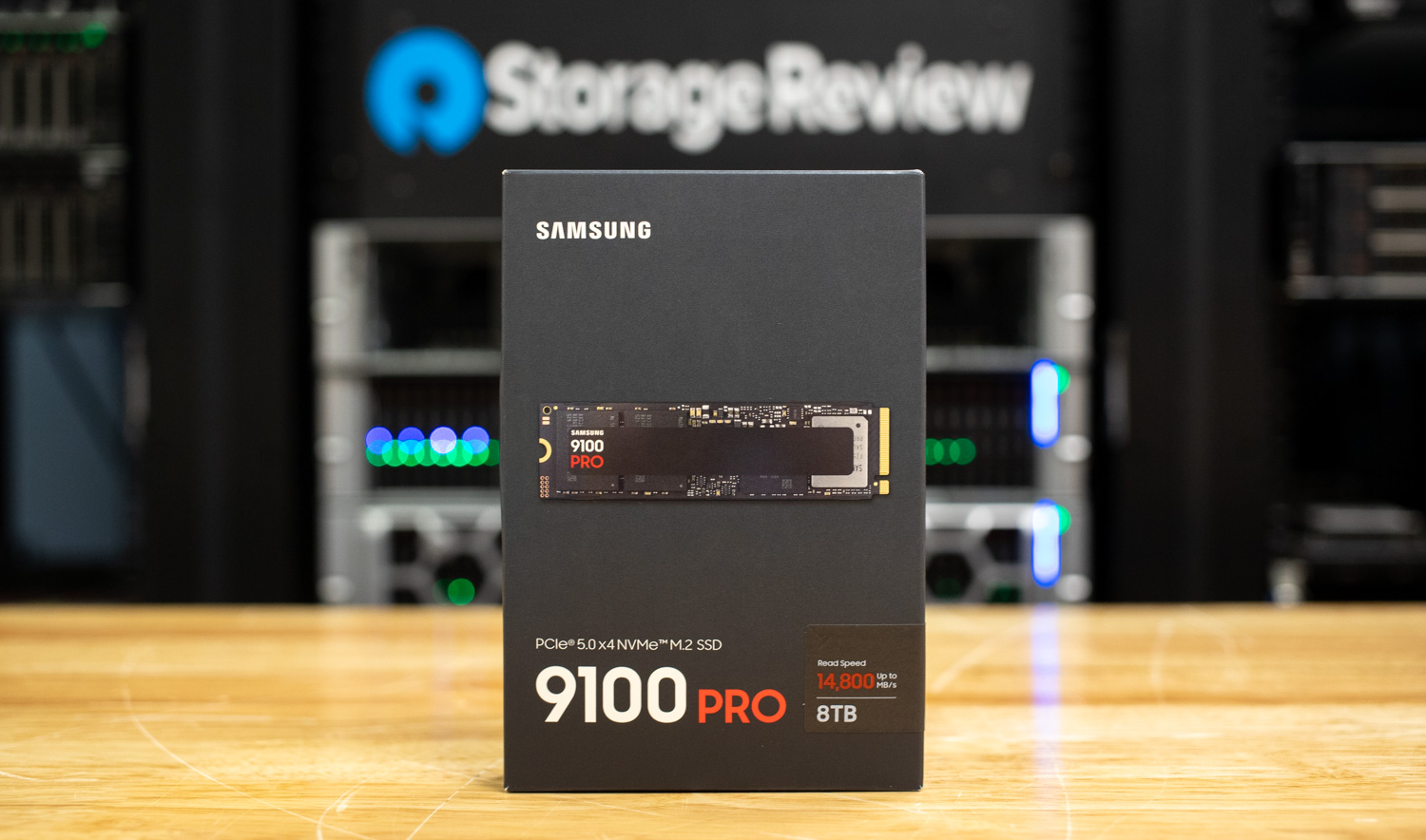
Samsung’s first consumer Gen5 drive is a strong effort across the board, delivering up to 14,800MB/s reads and 13,400MB/s writes from the in-house 5nm Presto controller and eighth-generation V-NAND, but its trump card is scale. The 8TB model is Samsung’s first single-M.2 drive at that capacity, holding the 4TB model’s performance profile while doubling headroom and carrying endurance up to 4,800TBW. In our testing, the 4TB version’s 2.73M IOPS 4K random performance remains among the best we have measured from any consumer drive.
Samsung Magician is still the best drive-management software in the business, and when street pricing dips below the SN8100, the 9100 Pro is the smart buy. Read our Samsung 9100 Pro 8TB review and the original 4TB review.
Best Value Gen5 SSD: Crucial T710
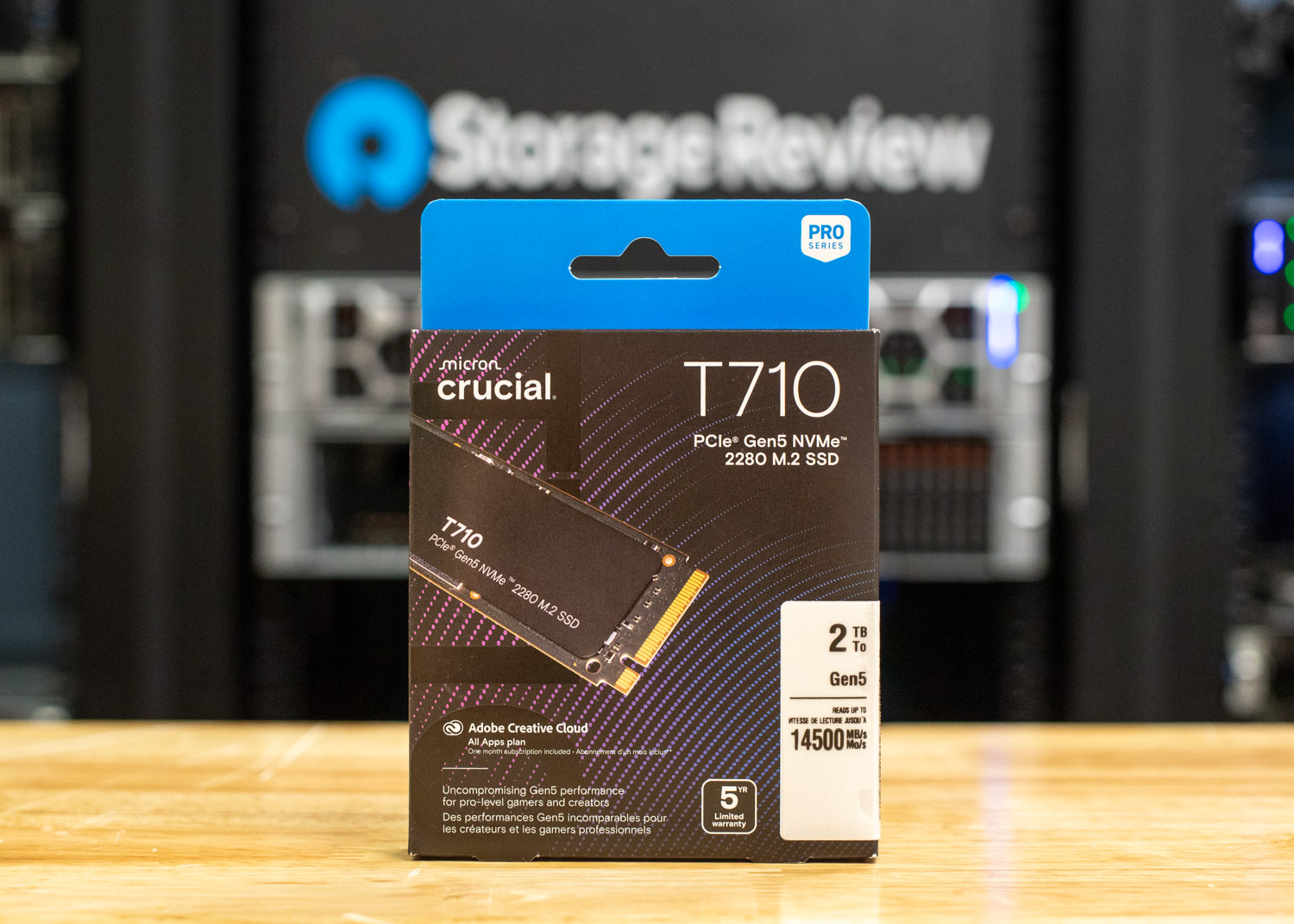
Micron’s G9 TLC NAND paired with the Silicon Motion SM2508 controller makes the T710 the value story in Gen5. In our lab it hit 14,400MB/s sequential reads and 13,500MB/s writes with roughly 2.3M IOPS in both 4K random read and write, a massive random-write improvement over the T705, while drawing 24 percent less average power than Crucial’s earlier Gen5 drives. At $279.99 for 2TB, it undercuts the flagship tier while giving up very little, and the low-profile heatsink version is PS5-ready. Read the full Crucial T710 review.
One important buying note: Micron is winding down the Crucial consumer SSD business as the company shifts its focus to enterprise and AI storage. T710 drives remain on shelves and carry their full five-year warranty, but availability will tighten over time, so if this is your pick, do not wait on it.
The good news is that the T710’s core recipe lives on in several places. Micron’s OEM counterpart, the Micron 4600, is effectively the same drive built for system integrators and PC OEMs, pairing the same SM2508 controller with Micron G9 TLC NAND, and it may appear in prebuilt systems and channel inventory even as the Crucial brand fades.
Among retail alternatives on the same SM2508 controller platform, the SanDisk WD_BLACK SN8100 is the premium expression of the silicon, while the Kingston FURY Renegade G5 and Lexar Professional NM1090 PRO deliver similar balanced Gen5 performance, with the Lexar in particular competing directly on price. All three have been through our full consumer test suite.
Best Gen4 / Best Budget SSD: Samsung 990 Pro & WD_BLACK SN850X
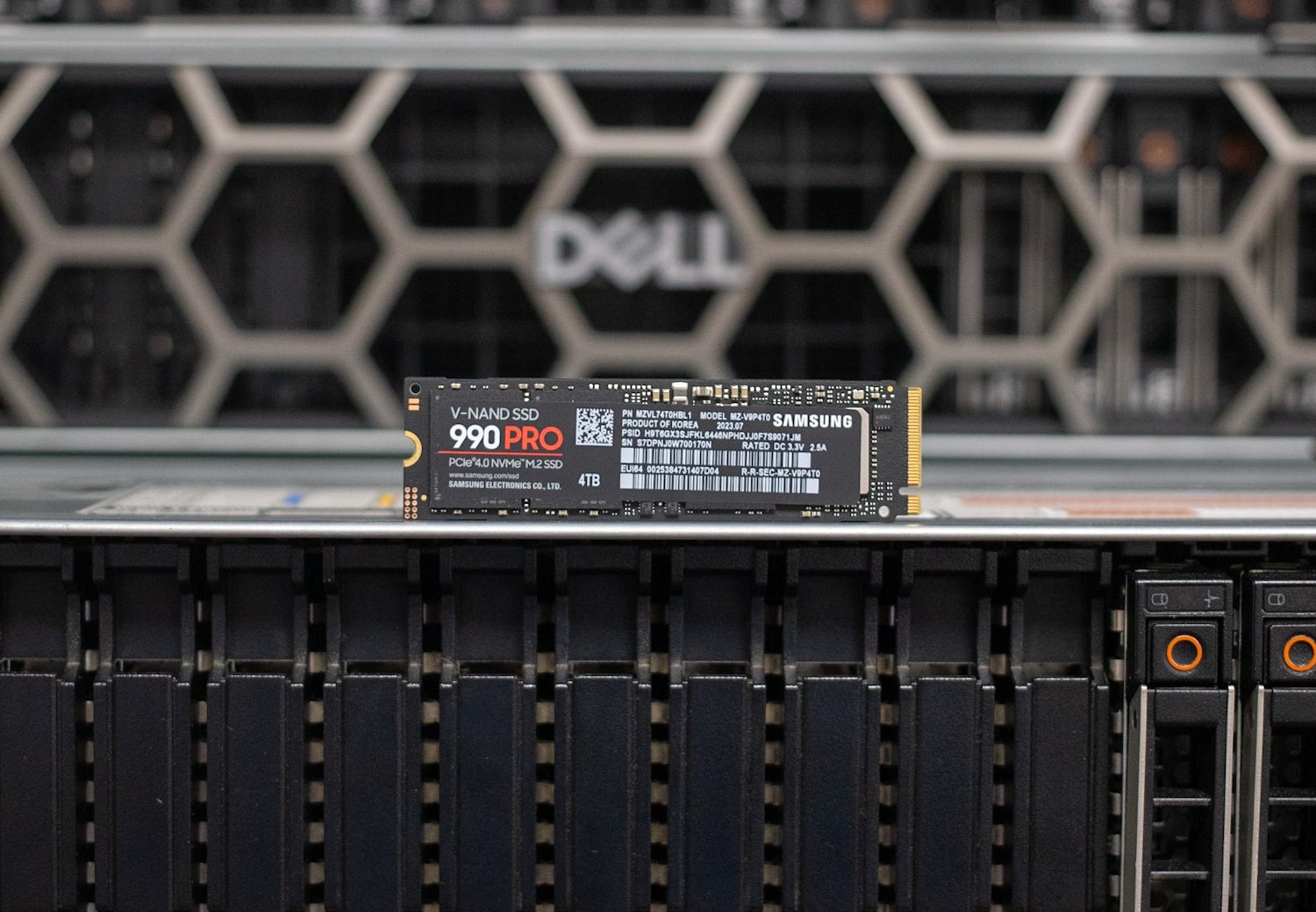
The former flagship tier is now the value tier, and it’s a great place to shop. The 990 Pro remains the most polished Gen4 drive available, with 7,450MB/s reads, proven reliability, and the full Magician software suite, while the SN850X is the standing price-per-terabyte bargain, particularly at 8TB. For builders without a Gen5 M.2 slot, or workloads that never saturate Gen4, this tier remains the right answer at a fraction of flagship pricing. Read our Samsung 990 Pro 4TB review and WD_BLACK SN850X review.
Best Enterprise SSDs
Enterprise storage now has its own leaderboard, where Best Enterprise SSDs ranks six lab-tested data center drives across mixed-use, read-intensive, high-capacity, and EDSFF deployments, led by the Micron 9550 MAX on a 10,957.9 MB/s sequential write result and the lowest write latency in its comparison group. That page also tracks the Gen6 and 245TB-plus drives that have been announced but not yet measured.
The short version: the Micron 9550 MAX for mixed use, the Kioxia CD9P-R for read-intensive fleets, and the Micron 6600 ION 245.76TB when capacity per watt is the binding constraint.
Best Hard Drives
Flash gets the headlines, but hard drives still carry the overwhelming majority of the world’s stored bytes, and the last eighteen months brought the biggest technology shift in years: HAMR-based drives are now shipping in volume across NAS, enterprise, and creative storage. Every pick below went through the StorageReview lab.
Best NAS HDD: Seagate IronWolf Pro 32TB
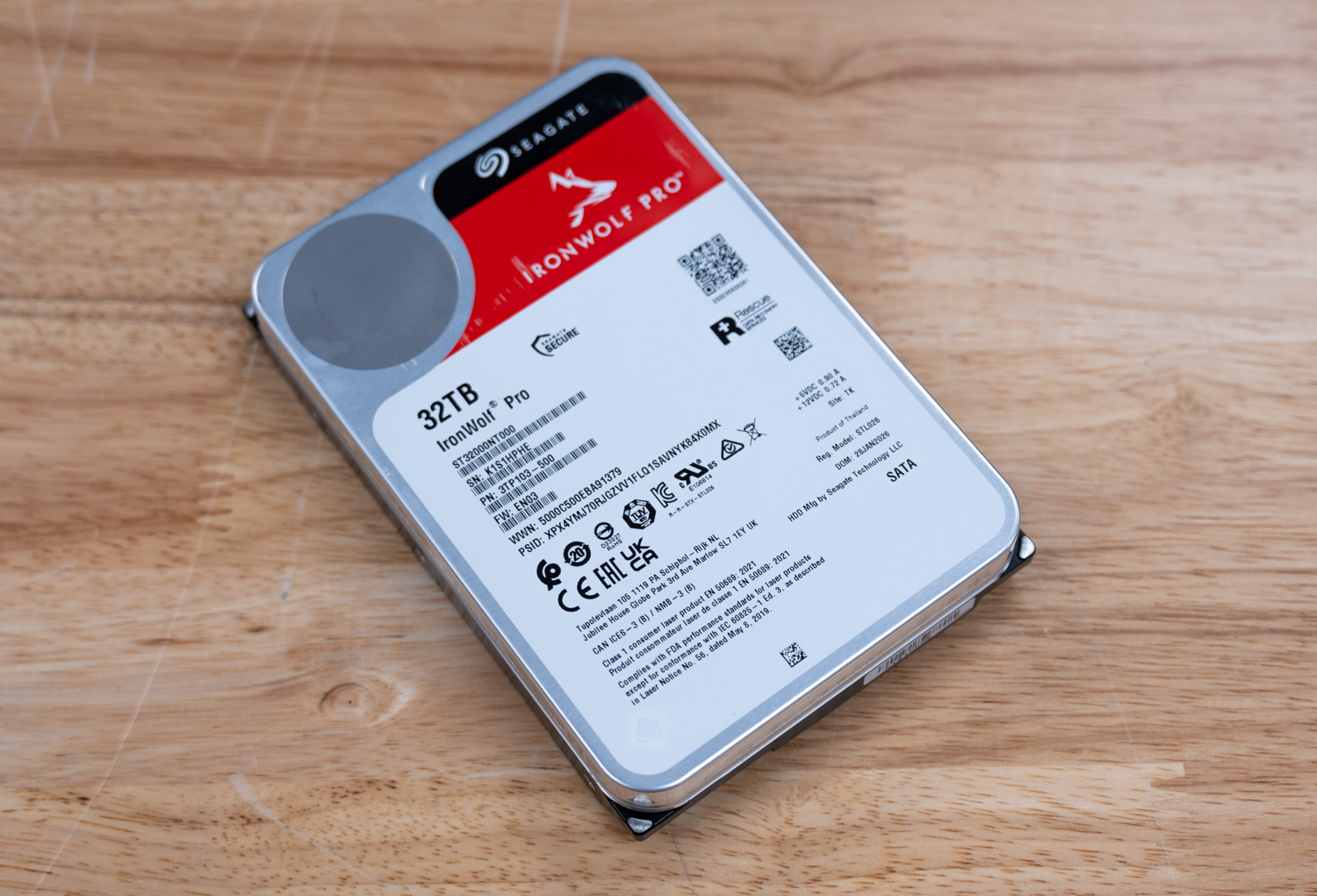
The IronWolf Pro 32TB is the NAS-tuned member of Seagate’s first 32TB generation, launched alongside matching Exos and SkyHawk AI variants and built on the Mozaic3+ platform. It uses heat-assisted magnetic recording (HAMR) to push past 3TB per platter while still presenting to the host as a conventional CMR device, so it drops into any multi-bay NAS without special handling. Ten platters and twenty heads in a helium-sealed enclosure deliver 32TB over SATA at 7200RPM.
Single-drive desktop benchmarks undersell this class of drive; its value shows up in RAID consistency, vibration tolerance, and sustained performance across many drives, which is exactly the duty cycle it is rated for. It is also the drive we used to fill the LaCie 8big Pro5 below. Read the full Seagate IronWolf Pro 32TB review.
Best Enterprise HDD: Seagate Exos M 30TB
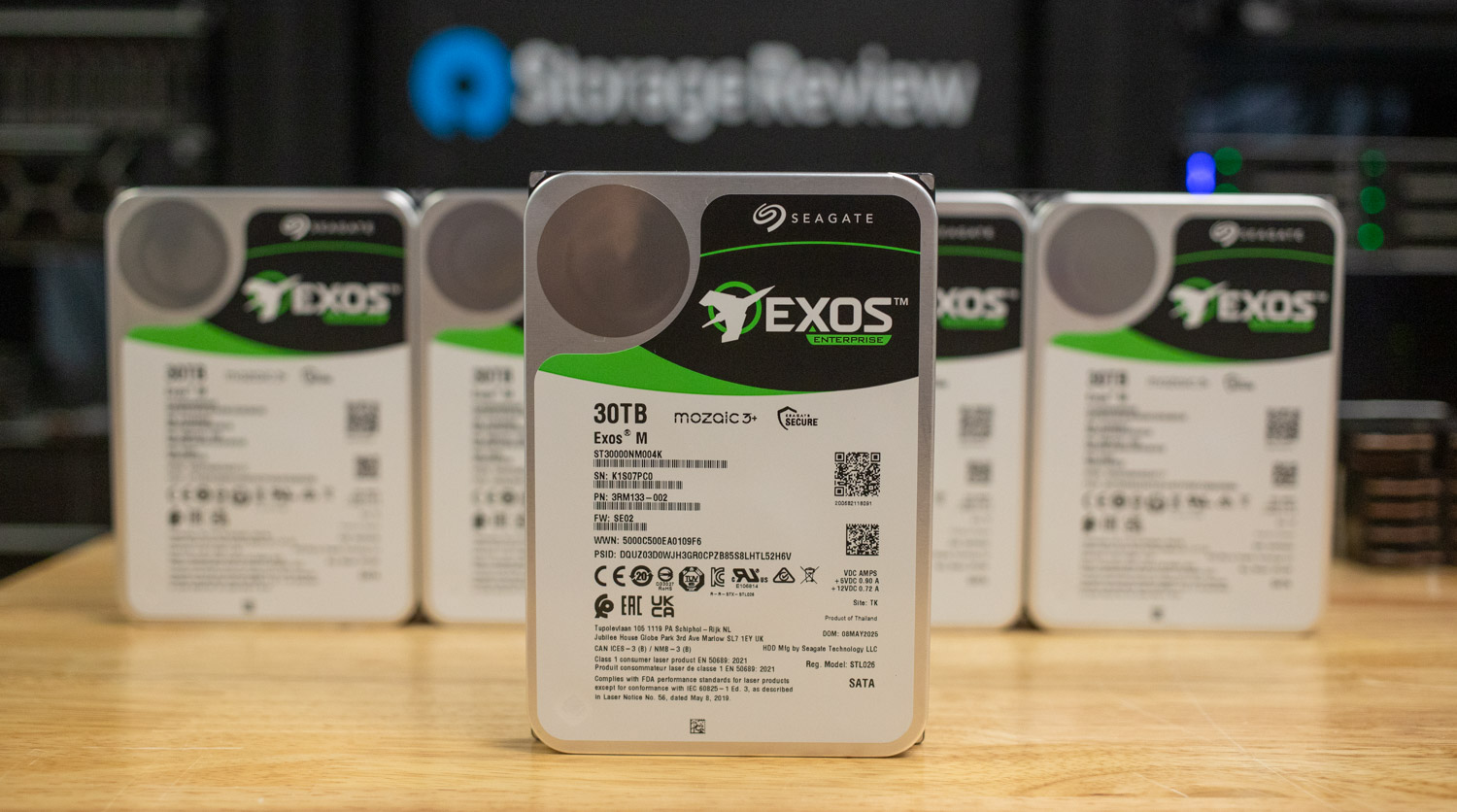
The Exos M brought HAMR to the datacenter mainstream, with a 3TB-per-platter design, 275MB/s sustained transfers, a 2.5 million-hour MTBF, and a 550TB/year workload rating. In our benchmarking it consistently delivered top-tier sequential performance, led most read and write tests in its group, and posted surprisingly competitive results in LLM model-load testing, a workload that increasingly matters as bulk storage feeds AI pipelines. A 32TB Exos variant on the same platform has since followed the drive we tested. Read the full Seagate Exos M 30TB review.
Enterprise Runner-Up: Western Digital Ultrastar DC HC590
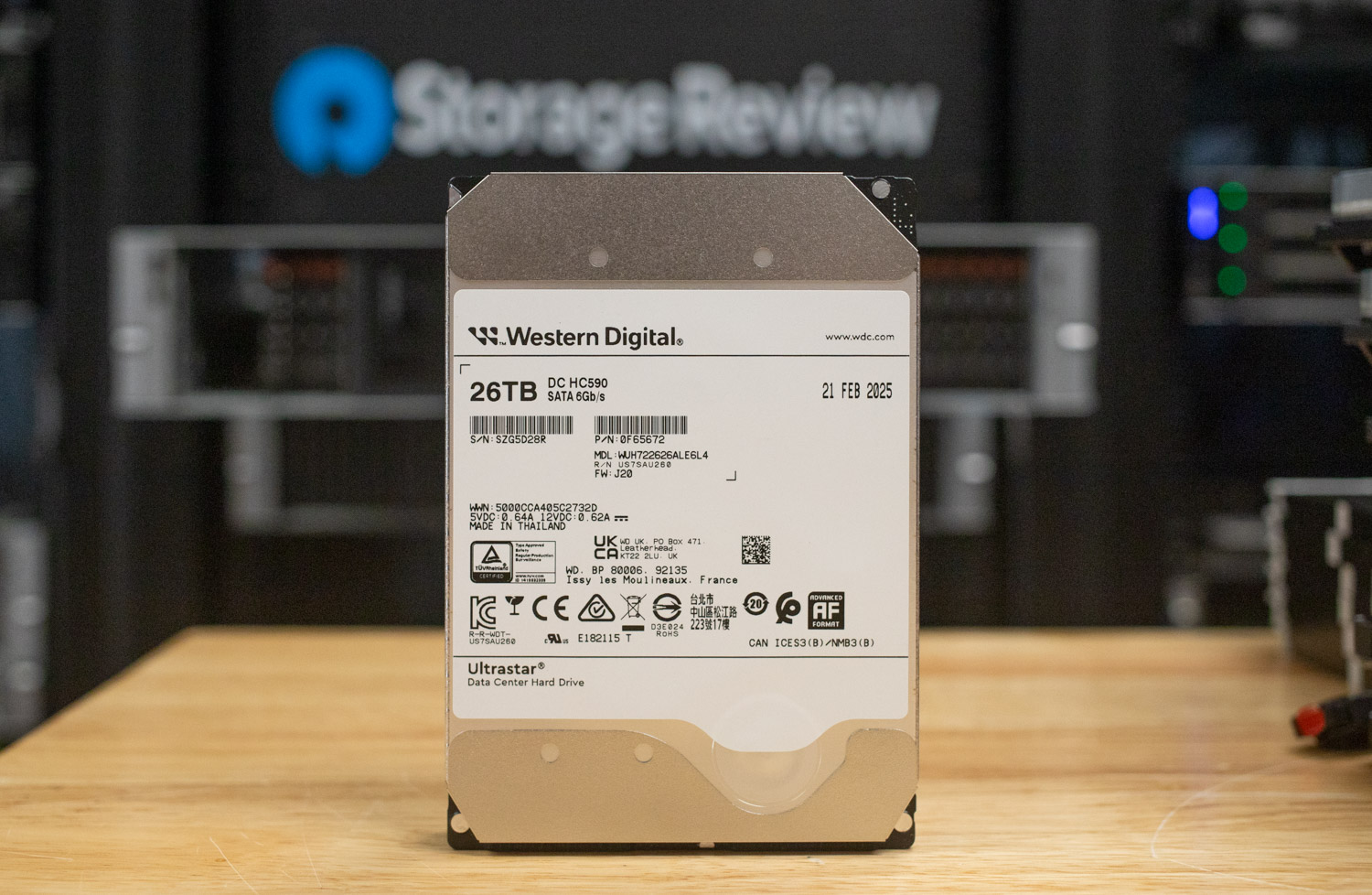
For deployments that want maximum capacity on a proven ePMR platform rather than HAMR, the HC590 is the first CMR hard drive to fit eleven platters in a standard 3.5-inch chassis, reaching 26TB with no changes to existing infrastructure. In our testing it kept pace with peers in sequential work, showed strong random write capability, and led our Blackmagic disk write testing while staying competitive in LLM load times. It is the conservative pick for fleets that qualify drives slowly and value platform continuity.
Above the CMR line, WD’s capacity path runs through shingled and heat-assisted recording: 40TB UltraSMR drives are now shipping to hyperscale customers, with 44TB HAMR planned for the first half of 2027, on a roadmap WD says reaches past 100TB. Read the full Western Digital Ultrastar DC HC590 review.
Best Desktop External HDD: Seagate One Touch Desktop 24TB
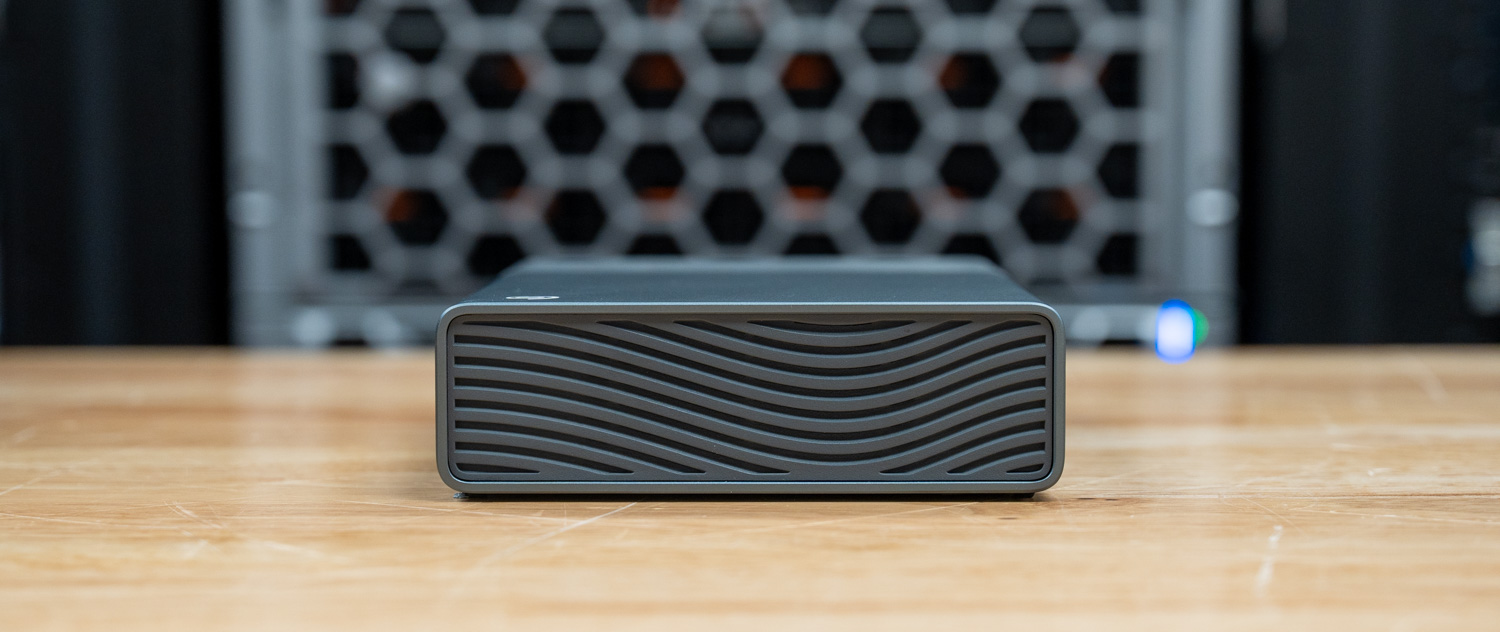
A category-first in a commoditized space: Seagate bills the One Touch Desktop as the industry’s only bus-powered USB-C desktop hard drive, meaning 24TB on the desk with no power brick at all. Performance lands where 3.5-inch 5400RPM storage should, with sequential throughput in the low 200s MB/s, which rules out latency-sensitive work but is exactly right for backup, archive, media libraries, and bulk offload. Toolkit backup software and two years of Rescue Data Recovery Services round out the package, with 8TB and 20TB models below the flagship. Read the full Seagate One Touch Desktop HDD review.
Best HDD Creative Storage: LaCie 8big Pro5 (256TB)
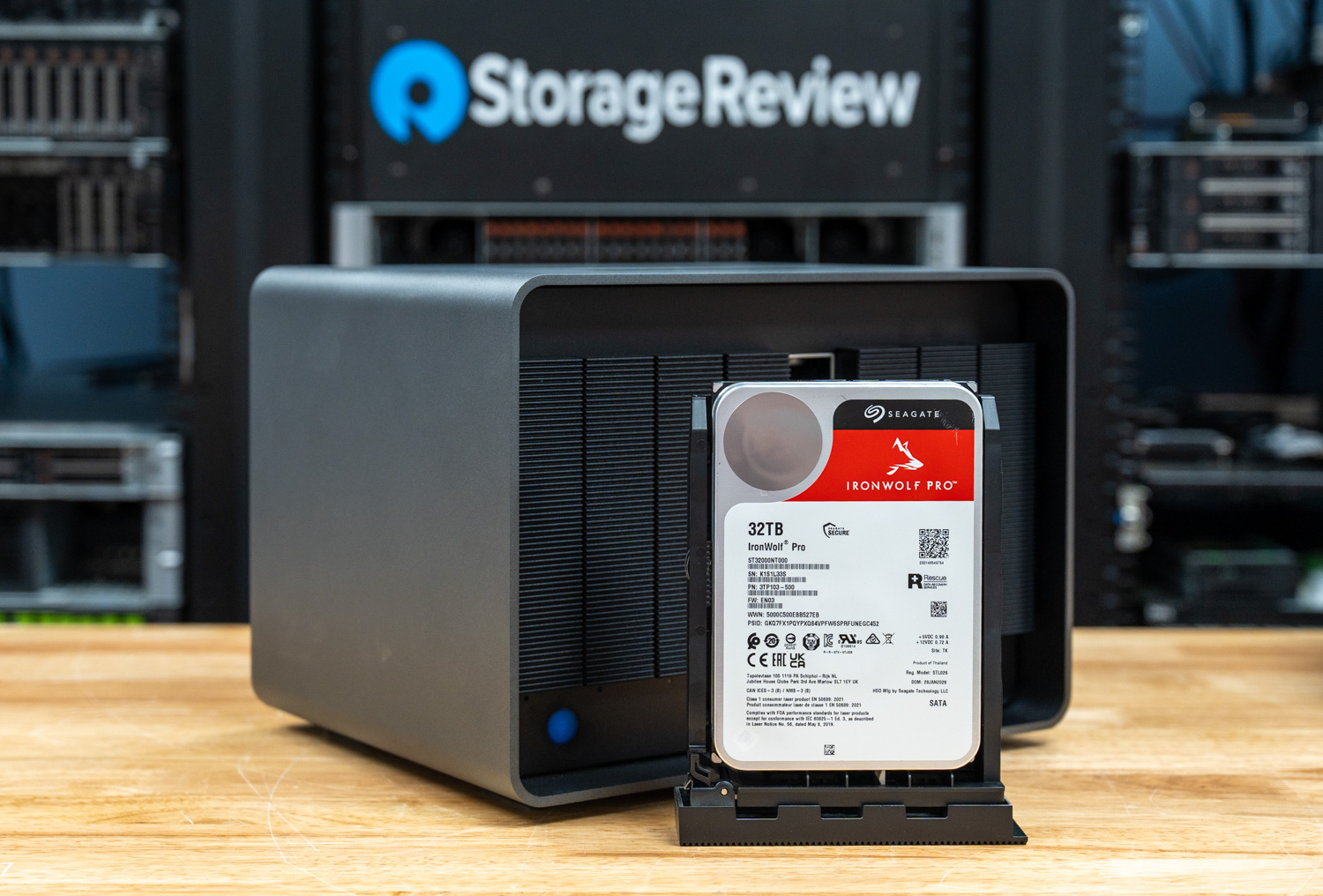
Eight IronWolf Pro 32TB drives behind a Thunderbolt 5 port make the 8big Pro5 the largest desktop DAS we have tested, at a quarter petabyte in a single quiet enclosure. In RAID 5 the array comfortably handles multi-stream 4K and 8K editing, the Thunderbolt 5 host port delivers 140W of power to the connected laptop, and LaCie RAID Manager keeps array management approachable for the video, photo, and 3D workflows this box is aimed at. Small-block random performance is modest, as with any HDD array, but that is not what a media ingest target is for. Read the full LaCie 8big Pro5 review.
Best Hard Drive Value: Recertified Enterprise HDDs
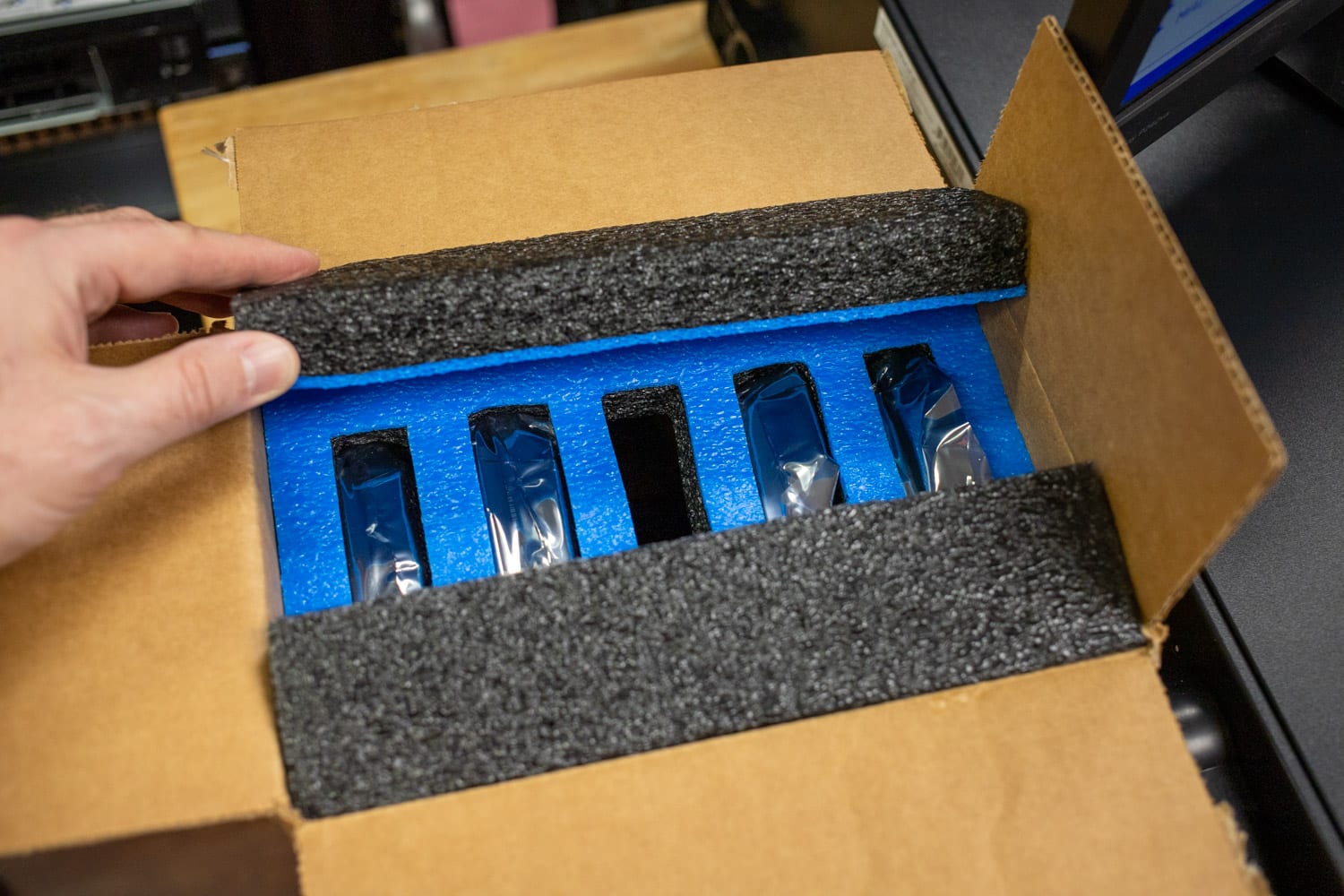
The best dollars-per-terabyte in storage are not on a new-product spec sheet. In our testing, recertified enterprise drives from ServerPartDeals performed like new units with no issues observed, arrived in packaging engineered for the transit that kills drives, and cost a fraction of retail. For homelabs, bulk archives, and secondary copies where the data is protected by RAID or backup anyway, recertified capacity is the value play we recommend most often. Read our full recertified hard drives evaluation.
Frequently Asked Questions
What is the fastest SSD in 2026?
Among consumer drives, the SanDisk WD_BLACK SN8100 leads our charts, hitting 15GB/s sequential reads in lab testing, with the Samsung 9100 Pro close behind and offering an 8TB option. In the data center, the fastest drive through our lab is the Micron 9550 MAX. Micron claims up to 28GB/s reads for its PCIe Gen6 9650, but we have not tested it yet; see Best Enterprise SSDs for what is measured and what is merely announced.
Is PCIe Gen5 worth it over Gen4?
For 8K video work, AI model loading, and heavy content creation, yes. Our testing shows Gen5 drives roughly doubling Gen4 throughput. For gaming and general desktop use, a quality Gen4 drive like the Samsung 990 Pro or WD_BLACK SN850X delivers most of the practical experience at a much lower price.
What is the largest SSD available?
The Micron 6600 ION at 245.76TB is the highest-capacity commercially available SSD, which we’ve fully benchmarked in our lab. KIOXIA’s LC9 also reaches the 245TB class, and SK hynix has announced the 245TB PS1101, with even larger drives on vendor roadmaps for 2027.
Do Gen5 SSDs need a heatsink?
For sustained workloads, yes, so plan on a motherboard heatsink or the drive’s bundled option. That said, current-generation controllers like the SM2508 run dramatically cooler than the first Gen5 wave, so thermal management is far less of a concern than it was two years ago.
The Leaderboard is updated as new lab data lands. All rankings reflect StorageReview’s independent, first-party testing; see each linked review for full methodology and results.
What is the largest hard drive available?
The largest hard drives we have tested are the 32TB Mozaic3+ generation, covered in our IronWolf Pro 32TB review. Beyond that, Western Digital has begun shipping 40TB UltraSMR drives to hyperscale customers, with 44TB HAMR drives planned for the first half of 2027, and WD’s public roadmap points past 100TB per drive. Note that UltraSMR is host-managed and aimed at hyperscale deployments; it is not a drop-in option for NAS or desktop use.
CMR or SMR for a NAS?
CMR, without exception, because shingled (SMR) drives overlap tracks to gain density and can stall badly under the sustained random writes a RAID rebuild generates. Every NAS drive we recommend, including the HAMR-based IronWolf Pro 32TB, presents to the host as CMR. SMR belongs in host-managed hyperscale deployments and archive workloads that are engineered for it.
Are recertified hard drives safe to buy?
In our testing, yes, with the right sourcing. Recertified enterprise drives we evaluated from ServerPartDeals performed like new units, and the category makes the most sense where RAID or backup already protects the data. Buy from a vendor that tests drives, warranties them, and ships them properly; see our full recertified drives evaluation.


 Amazon