

NetApp announced an expanded collaboration with Google Cloud, formalized through a four-year enterprise agreement to accelerate the deployment of NetApp storage within Google Distributed Cloud (GDC) Air-Gapped environments. Delivered with World Wide Technology (WWT), the offering targets sovereign cloud use cases that require strict data residency, security, and operational isolation.
The joint solution integrates NetApp’s data platform with Google Distributed Cloud’s full-stack private cloud architecture. The result is an air-gapped environment that supports sensitive and classified workloads while maintaining compliance with national sovereignty requirements. NetApp positions its storage systems as secure-by-design, enabling organizations to deploy controlled infrastructure that supports modern applications and AI workflows without external connectivity.
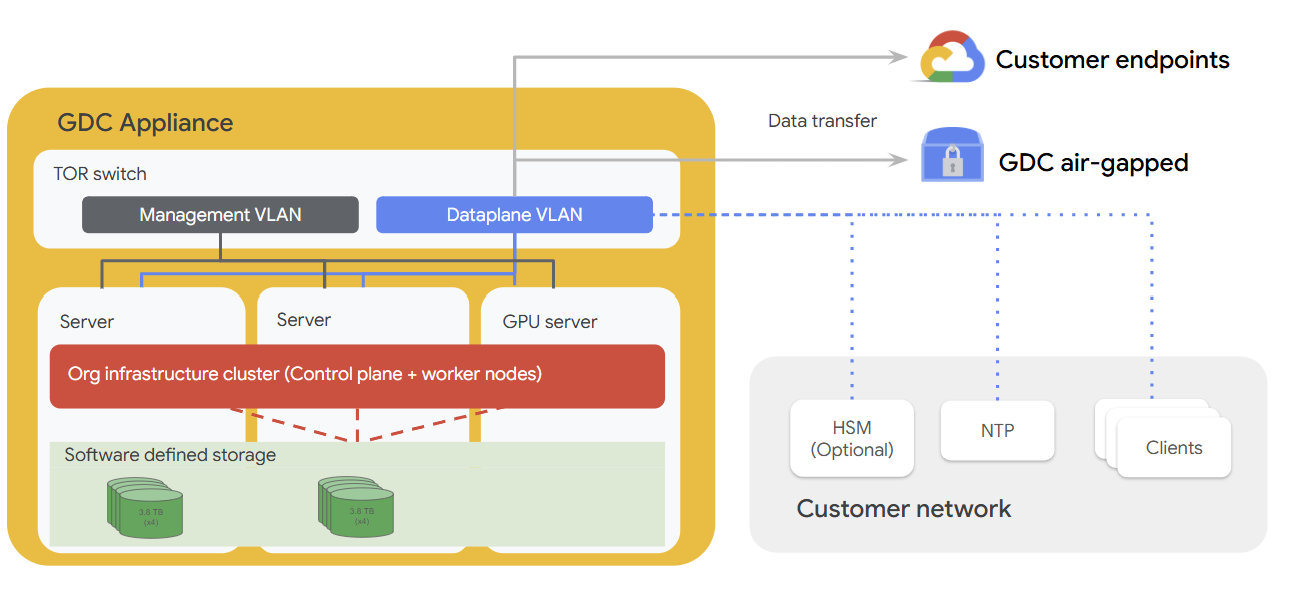
NetApp integrates its AFF all-flash systems, StorageGRID object storage, and Trident Kubernetes storage orchestration into the GDC stack. Together, these components form what the company calls an intelligent data infrastructure. Within GDC, this architecture supports zero-trust security models, local data storage, customer-managed encryption keys, and full operational control. The platform enables organizations to extend cloud capabilities to on-premises or edge environments while maintaining isolation, or to operate in fully disconnected, air-gapped configurations.
The collaboration is primarily aimed at government and regulated industries, where data-handling requirements limit the use of traditional public cloud. NetApp leadership highlighted that these environments require infrastructure capable of handling classified data while supporting modernization initiatives. By integrating with GDC, NetApp enables enterprise-grade AI and analytics capabilities within accredited environments, allowing agencies to derive insights and automate processes without compromising compliance or sovereignty.
Google Distributed Cloud is designed to extend Google Cloud services to customer-controlled locations, including on-premises data centers and edge sites. Google noted that public-sector organizations face growing pressure to extract value from data while complying with strict regulatory frameworks. GDC addresses this by enabling the deployment of cloud-native services and advanced AI in sovereign and disconnected environments.
As part of this effort, Google has expanded the availability of its AI capabilities for regulated use cases. Gemini models are now supported in GDC environments, enabling generative AI functions such as automation, content generation, discovery, and summarization directly on-premises. These capabilities can run in fully disconnected deployments, allowing organizations to leverage advanced AI while maintaining strict security and compliance boundaries.
The NetApp and Google Cloud partnership reflects a broader trend of bringing cloud and AI capabilities into controlled environments. By combining enterprise storage with sovereign cloud infrastructure, the companies are targeting organizations that require both advanced data services and strict operational isolation.


 Amazon