

At CES 2026, AMD refreshed its client CPU roadmap for consumer, commercial, and enthusiast desktops, emphasizing on-device AI acceleration while maintaining familiar priorities such as battery life, thin-and-light performance, and high-end gaming. The updates include new Ryzen AI 400 Series processors for Copilot+ PCs. There is a Ryzen AI PRO 400 Series stack for business fleets. Expanded Ryzen AI Max+ offerings are available for premium ultraportables and compact desktops. Additionally, a new flagship gaming CPU, the Ryzen 9000X3D, has been introduced.
AMD also used the event to emphasize that AI PC enablement is not only silicon. The company announced support for ROCm 7.2 on Ryzen AI 400 Series processors, added an “AI Bundle” option to AMD Software: Adrenalin Edition to streamline local AI setup, and continued expanding its FidelityFX Super Resolution roadmap with FSR “Redstone” machine-learning features and a new developer-preview ray-tracing optimization.
Ryzen AI 400 Series and Ryzen AI PRO 400 Series Target Copilot+ PCs
AMD’s Ryzen AI 400 Series and Ryzen AI PRO 400 Series processors are built on the company’s Zen 5 CPU architecture and integrate second-generation XDNA 2 NPUs. AMD positions both families as exceeding Copilot+ PC requirements, with up to 60 TOPS of NPU performance, up to 12 CPU cores, Radeon 800M Series integrated graphics, and faster memory support, all designed to deliver responsive on-device AI experiences without sacrificing battery life.
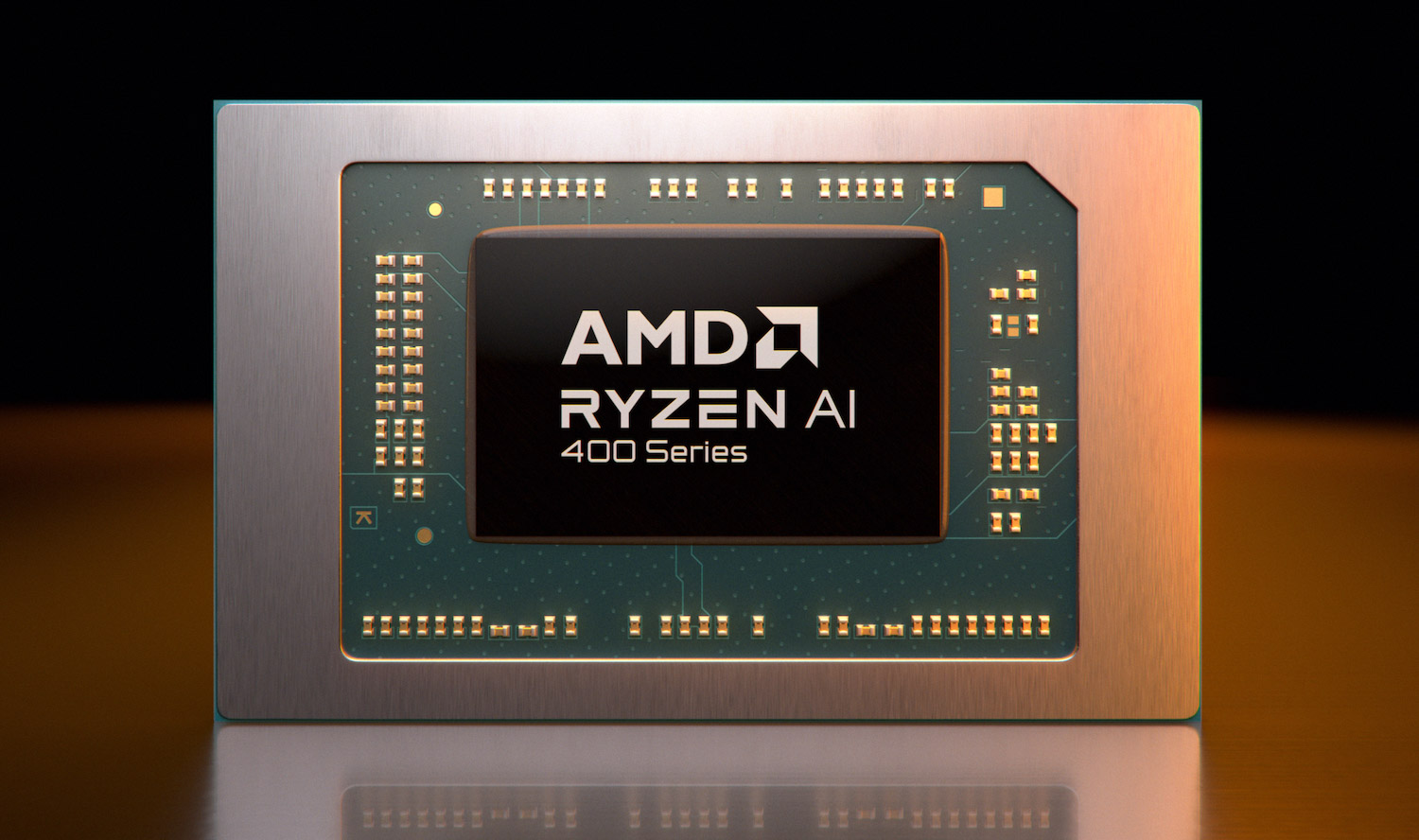
For commercial deployments, the Ryzen AI PRO 400 Series adds AMD PRO Technologies to deliver multi-layer security, fleet manageability, and long-term platform stability. AMD is framing PRO as a way for IT organizations to deploy the same AI experiences available on consumer systems, while keeping the device controls and lifecycle expectations that matter in managed environments.
AMD’s executive commentary focused on a full-stack approach, pairing AI compute with graphics and software ecosystem work to enable AI experiences to scale across form factors. The emphasis was less on a single feature and more on breadth, with AMD pushing Ryzen AI across consumer and commercial designs simultaneously.
Ryzen AI Max+ Adds New SKUs for Premium Ultra-Thins and Mini PCs
AMD expanded its Ryzen AI Max+ lineup with the Ryzen AI Max+ 392 and 388. These processors are designed for premium ultra-thin laptops, mobile workstations, and small-form-factor desktops that require high AI throughput and “desktop-class” integrated graphics while maintaining a unified memory architecture.
The platform combines Zen 5 CPU cores, Radeon 8060S Series graphics, and a second-generation XDNA NPU. AMD’s positioning here is on versatility: local LLM acceleration, high-resolution media workflows, and modern gaming in thin designs, with fewer compromises than traditional iGPU-class systems.
| Model | Cores / Threads | Boost / Base Frequency | Total Cache | Graphics Model | cTDP | NPU TOPS | Graphics CUs |
|---|---|---|---|---|---|---|---|
| AMD Ryzen AI Max+ 392 | 12 C / 24 T | Up to 5.0 / 3.2 GHz | 76 MB | AMD Radeon 8060S Graphics | 45-120W | 50 | 40 |
| AMD Ryzen AI Max+ 388 | 8 C / 16 T | Up to 5.0 / 3.6 GHz | 40 MB | AMD Radeon 8060S Graphics | 45-120W | 50 | 40 |
Ryzen AI Halo Brings an AMD-Branded AI Developer Mini PC
AMD also unveiled Ryzen AI Halo, described as the company’s first AMD-branded AI developer platform. The mini PC is based on Ryzen AI Max+ processors and is positioned for local AI development, with a stated capability to run models with up to 200 billion parameters locally. AMD highlighted up to 128GB of unified memory, up to 60 TFLOPS of RDNA 3.5 graphics performance, and support for Windows and Linux.
Ryzen AI Halo is positioned as “day-one” ready for ROCm-based workflows, with AMD emphasizing pre-optimization and pre-installed developer tooling to reduce setup friction for developers who want local inference and experimentation in a compact footprint.
| Model | Cores / Threads | Boost / Base Frequency | Total Cache | TDP |
|---|---|---|---|---|
| AMD Ryzen 7 9850X3D | 8 C / 16 T | Up to 5.6 / 4.7 GHz | 104 MB | 120W |
Ryzen 7 9850X3D Takes Aim at Enthusiast Gaming Leadership
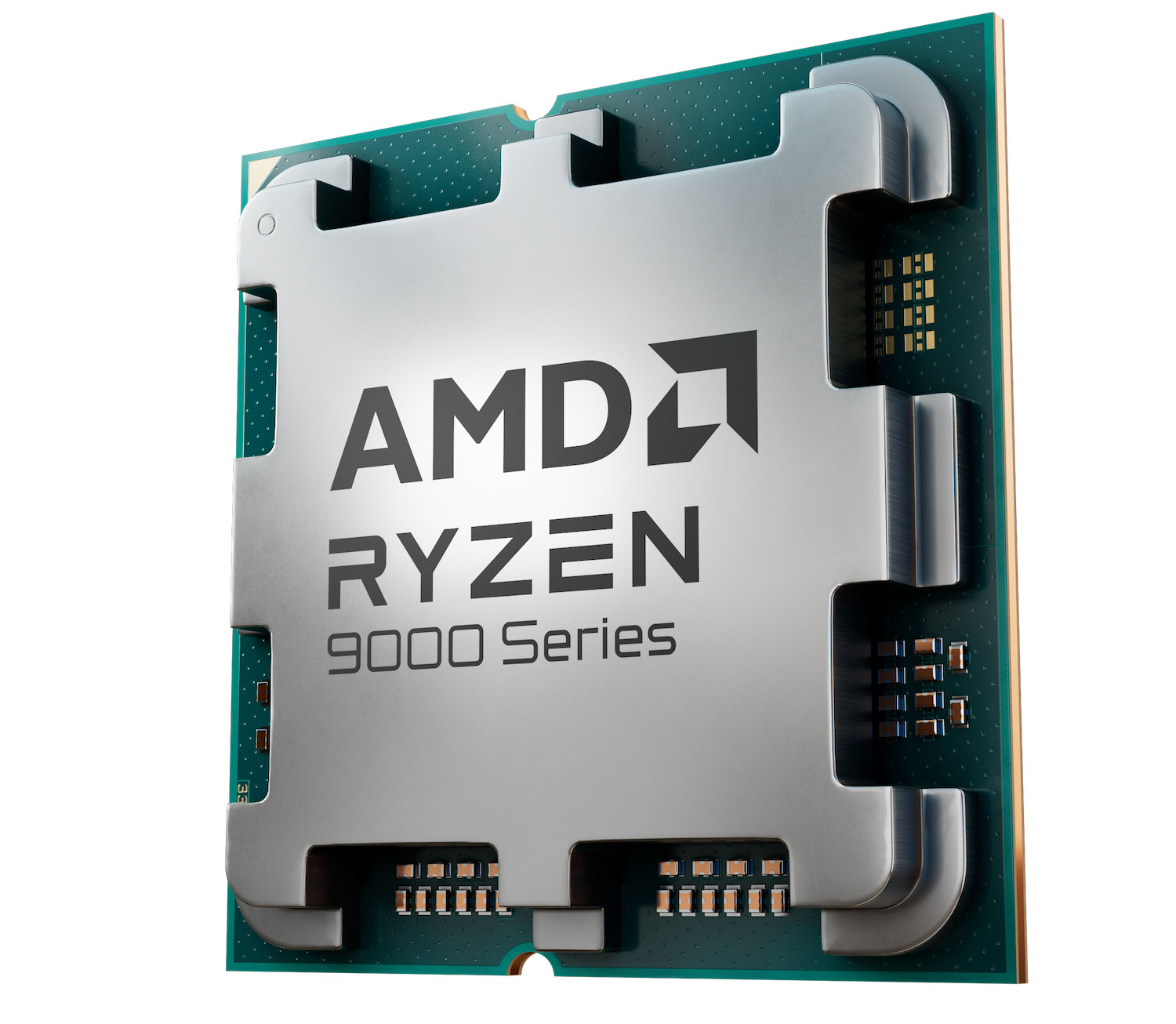
For desktops, AMD introduced the Ryzen 7 9850X3D as the latest flagship gaming processor in the Ryzen 9000X3D lineup. Built on Zen 5 and second-generation 3D V-Cache, AMD claims up to 27% better gaming performance than Intel’s Core Ultra 9 285K.
Specs highlighted by AMD include 8 cores and 16 threads, boost clocks up to 5.6 GHz, and 104MB of total cache. The pitch is consistent with prior X3D parts: high cache capacity tuned for low-latency gaming performance, while still maintaining enough general compute capability for streaming and multitasking.
OEM Availability
AMD expects systems powered by Ryzen AI 400 Series and Ryzen AI PRO 400 Series to begin shipping from OEMs, including Acer, ASUS, Dell, HP, GIGABYTE, and Lenovo, in Q1 2026, with Ryzen AI 400 Series desktops following in Q2 2026. Systems with the new Ryzen AI Max+ additions are also expected to begin in Q1 2026, starting with Acer and ASUS, with additional designs planned throughout the year. Ryzen AI Halo is scheduled for Q2 2026, with pricing to be announced closer to launch. Ryzen 7 9850X3D systems are expected in Q1 2026 across OEMs, system integrators, and retail.
| Model | Cores / Threads | Boost / Base Frequency | Total Cache | Graphics Model | cTDP | NPU TOPS | Graphics CUs |
|---|---|---|---|---|---|---|---|
| AMD Ryzen AI 9 HX 475 | 12 C / 24 T | Up to 5.2 / 2.0 GHz | 36 MB | AMD Radeon 890M | 15-54W | 60 | 16 |
| AMD Ryzen AI 9 HX 470 | 12 C / 24 T | Up to 5.2 / 2.0 GHz | 36 MB | AMD Radeon 890M | 15-54W | 55 | 16 |
| AMD Ryzen AI 9 465 | 10 C / 20 T | Up to 5.0 / 2.0 GHz | 34 MB | AMD Radeon 880M | 15-54W | 50 | 12 |
| AMD Ryzen AI 7 450 | 8 C / 16 T | Up to 5.1 / 2.0 GHz | 24 MB | AMD Radeon 860M | 15-54W | 50 | 8 |
| AMD Ryzen AI 7 445 | 6 C / 12 T | Up to 4.6 / 2.0 GHz | 14 MB | AMD Radeon 840M | 15-54W | 50 | 4 |
| AMD Ryzen AI 5 435 | 6 C / 12 T | Up to 4.5 / 2.0 GHz | 14 MB | AMD Radeon 840M | 15-54W | 50 | 4 |
| AMD Ryzen AI 5 430 | 4 C / 8 T | Up to 4.5 / 2.0 GHz | 12 MB | AMD Radeon 840M | 15-54W | 50 | 4 |
| AMD Ryzen AI 9 HX PRO 475 | 12 C / 24 T | Up to 5.2 / 2.0 GHz | 36 MB | AMD Radeon 890M | 15-54W | 60 | 16 |
| AMD Ryzen AI 9 HX PRO 470 | 12 C / 24 T | Up to 5.2 / 2.0 GHz | 36 MB | AMD Radeon 890M | 15-54W | 55 | 16 |
| AMD Ryzen AI 9 PRO 465 | 10 C / 20 T | Up to 5.0 / 2.0 GHz | 34 MB | AMD Radeon 880M | 15-54W | 50 | 12 |
| AMD Ryzen AI 7 PRO 450 | 8 C / 16 T | Up to 5.1 / 2.0 GHz | 24 MB | AMD Radeon 860M | 15-54W | 50 | 8 |
| AMD Ryzen AI 5 PRO 440 | 6 C / 12 T | Up to 4.8 / 2.0 GHz | 22 MB | AMD Radeon 840M | 15-54W | 50 | 4 |
| AMD Ryzen AI 5 PRO 435 | 6 C / 12 T | Up to 4.5 / 2.0 GHz | 14 MB | AMD Radeon 840M | 15-54W | 50 | 4 |
Software Stack Updates: ROCm 7.2, Adrenalin AI Bundle, and FSR “Redstone”
At CES, AMD reinforced that AI PC adoption depends on software access as much as NPU TOPS. ROCm now supports Ryzen AI 400 Series processors and is available for download via ComfyUI. AMD also said the upcoming ROCm 7.2 release will extend compatibility across Windows and Linux and that new PyTorch builds will be accessible through AMD software to streamline deployment on Windows. AMD claims ROCm delivered up to 5x AI performance improvements over the past year and saw significant growth in platform support and downloads in 2025.
On the client experience side, AMD introduced an optional “AI Bundle” feature in AMD Software: Adrenalin Edition to simplify local AI setup. The company says the bundle consolidates required tools into a streamlined install path, reducing manual configuration and making it easier to get started with image generation apps, local LLM tooling, and PyTorch on Windows.
For gaming, AMD highlighted that FSR “Redstone” features are available in AMD Software: Adrenalin Edition 25.12.1. The feature set includes machine-learning-based upscaling and frame generation to enhance image quality and performance in current titles. AMD also announced FSR Radiance Caching, a technique designed to improve ray tracing efficiency by predicting light behavior to reduce render time while maintaining visual fidelity, available as a developer preview on GPUOpen.


 Amazon