

AMD continues to strengthen its position in the global high-performance computing (HPC) market, with the latest TOP500 and Green500 rankings showing broad adoption of AMD EPYC processors and Instinct accelerators across leading supercomputing deployments.
According to the June 2026 TOP500 list, AMD technology now powers 191 systems, an 11% year-over-year increase, and accounted for 41% of the new systems added to this edition. The company also claims four of the world’s 10 fastest supercomputers and four of the 10 most energy-efficient systems, underscoring the growing role of AMD platforms in both AI and traditional HPC environments.
Strong Showing in TOP500 Rankings
AMD-powered systems remain well represented among the world’s highest-performing supercomputers, even as the No. 1 spot changed hands this cycle. China’s LineShine, a 2.198 exaflop system at the National Supercomputing Centre in Shenzhen, debuted at the top of the June 2026 list and ended El Capitan’s run as the world’s fastest supercomputer. AMD-powered machines still hold three of the top six: El Capitan at No. 2, Frontier at No. 3, and Eni’s newly deployed HPC7 at No. 6.
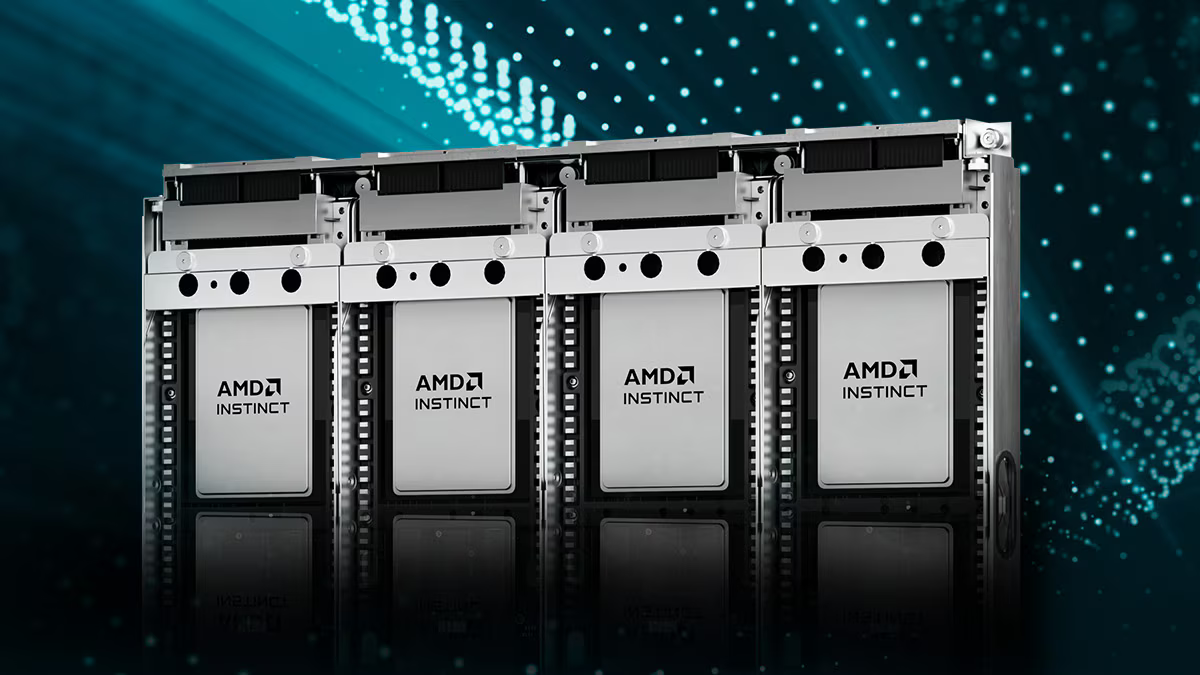
These deployments rely on combinations of AMD EPYC CPUs and AMD Instinct GPUs to support large-scale scientific computing, simulation, and AI workloads. The continued presence of AMD-powered systems near the top of the TOP500 rankings reflects the industry’s demand for architectures capable of supporting increasingly complex data-intensive applications.
Energy Efficiency Remains a Key Differentiator
The Green500 rankings, which measure supercomputer energy efficiency, have become an increasingly important benchmark as power consumption emerges as a primary constraint for future HPC and AI deployments.
AMD-powered systems secured four positions in the Green500 top 10, including Otus (No. 5), Capella (No. 6), AMD Ouranos (No. 9), and Portage (No. 10). AMD technology also powers more than half of the Green500 top 50 systems, accounting for 56% of the list.
The results highlight the industry’s growing focus on balancing computational performance with operational efficiency, particularly as AI training and inference workloads continue to scale.
Growing Role in European HPC and Sovereign AI Initiatives
AMD is also expanding its footprint across Europe as governments, research institutions, and enterprises invest in sovereign AI and next-generation HPC infrastructure.
Eni’s HPC7 supercomputer, ranked sixth globally, represents one of Europe’s largest industrial HPC deployments. The system builds on the company’s earlier HPC6 platform and supports AI, simulation, and energy research workloads.
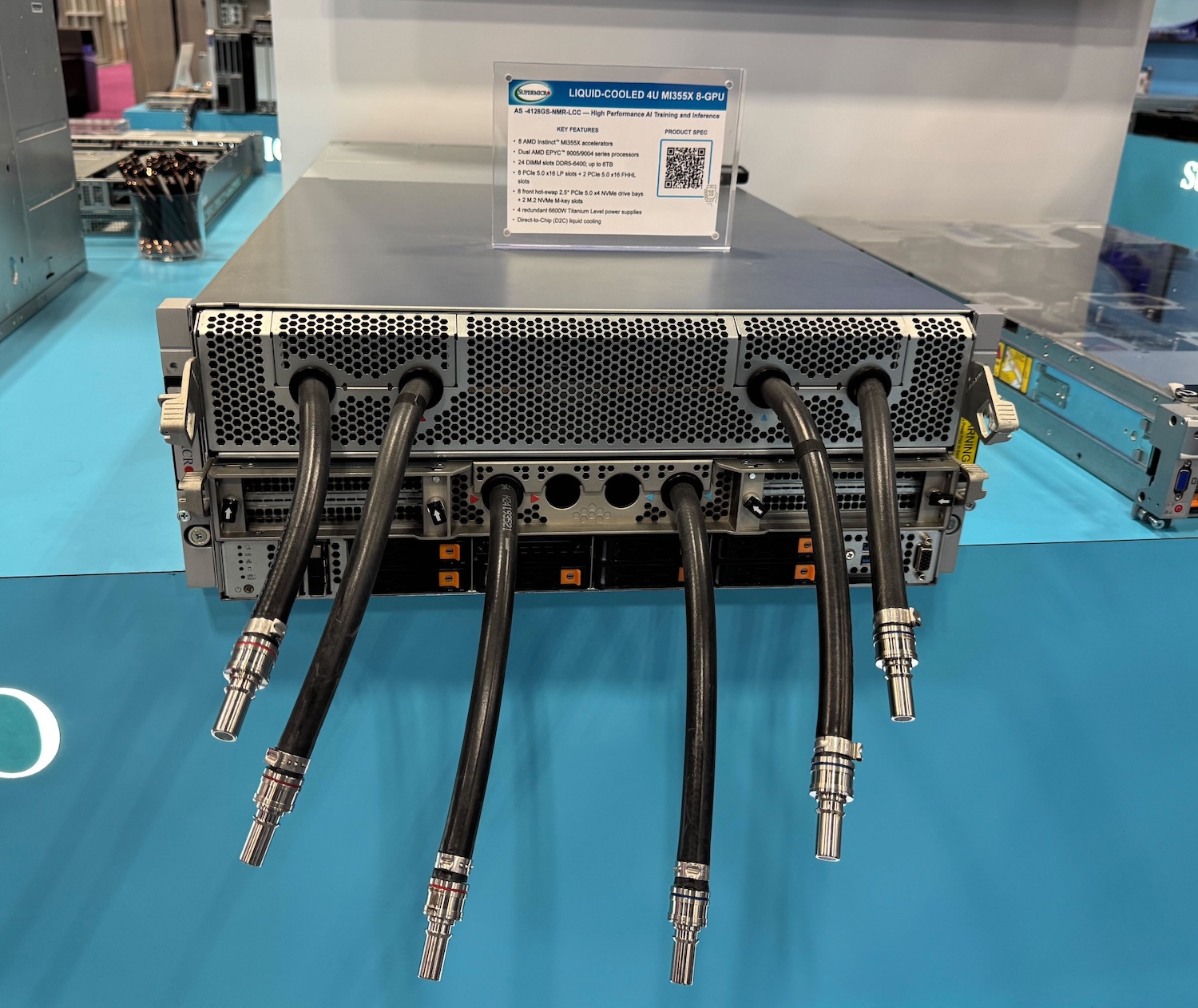
The University of Cambridge recently announced two systems powered by AMD Instinct MI355X GPUs, marking the first TOP500 deployments based on the accelerator. The systems entered the rankings at positions 67 and 68.
LUMI, hosted by CSC in Finland and operated through the EuroHPC Joint Undertaking, remains one of Europe’s flagship HPC resources. Ranked No. 11 globally, the system supports a broad range of scientific computing and AI research projects across the region.
In France, GENCI is advancing plans for Alice Recoque, the country’s first exascale supercomputer. The system will combine AMD Instinct MI430X GPUs with 6th Generation AMD EPYC processors and is expected to serve both traditional HPC and AI workloads as part of France’s broader AI infrastructure strategy.
AMD Previews MI430X Accelerator
At the HPC User Forum 2026, AMD provided an early look at its upcoming Instinct MI430X GPU, targeting organizations that require both AI acceleration and high-precision scientific computing.
While AI workloads often emphasize lower-precision formats, many scientific applications continue to depend on double-precision (FP64) performance. Climate modeling, computational fluid dynamics, advanced materials research, aerospace design, and fusion energy simulations all require high levels of numerical accuracy.
AMD projects the Instinct MI430X will deliver more than 200 TFLOPS of native FP64 performance, positioning it as a potential flagship accelerator for next-generation leadership-class HPC systems. If achieved, that level of performance would establish a new benchmark for large-scale simulation, modeling, and AI-assisted scientific computing.
The latest TOP500 and Green500 results suggest that AMD’s strategy of pairing high-core-count EPYC processors with increasingly capable Instinct accelerators continues to gain traction across both traditional supercomputing and emerging AI infrastructure deployments.


 Amazon