

At Dell Technologies World, Dell announced an expanded partnership with Samsung Electronics to support AI-driven semiconductor manufacturing, with Dell AI infrastructure deployed across Samsung’s research, chip design, and production-critical environments. The collaboration aims to help Samsung apply AI more broadly across fab operations as semiconductor production becomes increasingly dependent on real-time analytics, digital twins, and adaptive decision-making.
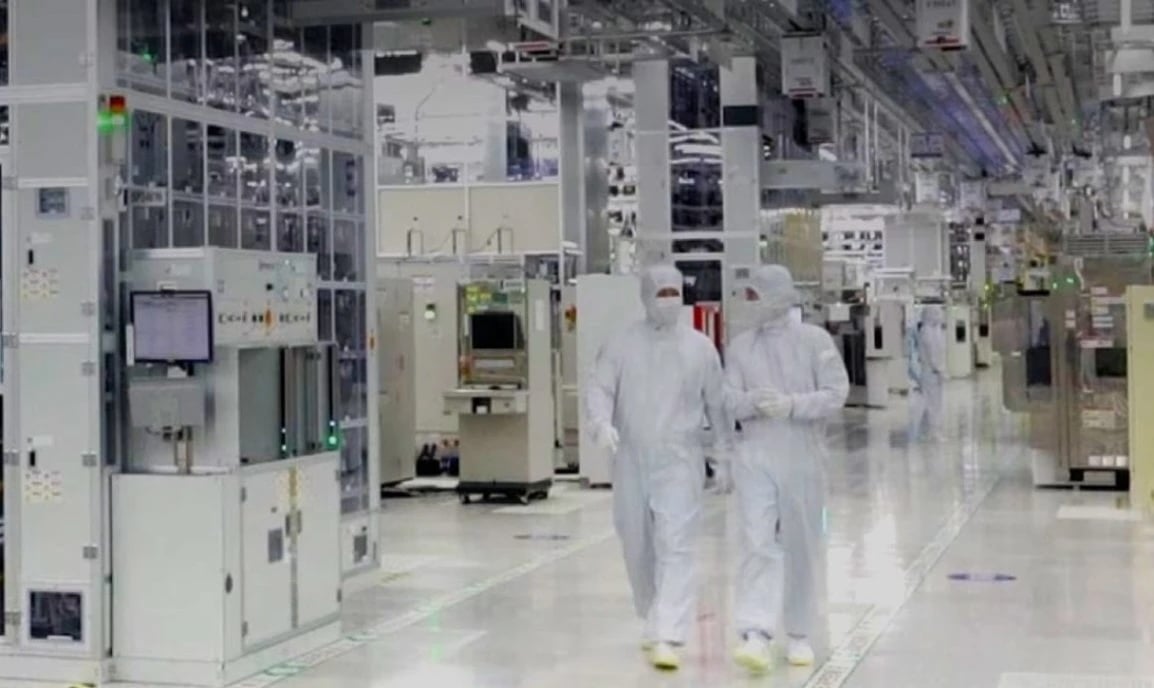
For Samsung, the initiative reflects a shift beyond traditional factory automation. The company is applying AI across memory, logic, foundry, and advanced packaging operations to improve process precision, yield, and quality. That is a notable development in an industry where the same chips powering modern AI systems are now being designed and manufactured inside facilities that increasingly rely on AI themselves.
AI Workloads in the Fab
Modern semiconductor manufacturing generates enormous volumes of telemetry, metrology data, inspection output, and process information. Those data streams need to be ingested, moved, and analyzed continuously, often under strict uptime and latency requirements. In this environment, infrastructure consistency matters as much as raw performance.
Dell’s role is to provide the compute, storage, and data movement foundation needed to support those workloads at scale. According to the announcement, Dell infrastructure is being used across Samsung’s global IT and manufacturing footprint, spanning R&D, chip design, and fab systems. That kind of standardization can help Samsung deploy repeatable architectures across sites while still accommodating local operational requirements.
Digital Twins, AI Agents, and Real-Time Analytics
Within Samsung fabs, AI models are being used to analyze equipment telemetry, process parameters, and inspection data to support digital twins and yield optimization. These are practical production use cases rather than isolated AI experiments. They depend on predictable infrastructure behavior, reliable access to large datasets, and the ability to run concurrent workloads without disrupting critical manufacturing systems.
The broader strategy also points to a move away from rule-based automation alone. Samsung is using AI agents and orchestration platforms to support engineering, maintenance, and quality workflows, creating systems that can continuously interpret conditions and respond more dynamically as operations change. That is especially relevant as fabs become more complex and distributed.
Global Manufacturing Raises the Value of a Common Platform
Samsung’s expansion across advanced memory, logic, and packaging increases the need for tighter alignment between design environments, production systems, and analytics platforms. Each segment brings different workflow and infrastructure demands, but all require coordination across multiple facilities. A common AI infrastructure layer can make that easier by supporting repeatable deployment models across geographies without having to rebuild the stack for each environment.
The Samsung deployment highlights a demanding enterprise AI use case outside of model training clusters and general-purpose inference environments. Semiconductor manufacturing combines high data volume, specialized workflows, and little tolerance for disruption, making it a strong fit for tightly integrated infrastructure. The practical benefit for Samsung is a more stable platform for applying AI across the semiconductor lifecycle, from research and design through production and quality control.


 Amazon