

HP introduced a new round of Z workstations and AI systems at HP Imagine 2026, expanding its high-performance computing lineup for engineers, architects, designers, AI developers, and other professional users working with heavier local compute demands. The update covers desktop and mobile workstations, GPU-sharing tools, and new systems intended to support hybrid AI infrastructure across cloud and edge environments.
The announcement includes an upgraded HP Z8 Fury G6i desktop workstation, new ZBook mobile systems, updates to HP Z Boost, and additional focus on the ZGX Nano and ZGX Fury as part of HP’s Advanced Compute Solutions portfolio. These new releases center on giving organizations more flexibility in where demanding workloads run, while addressing performance, security, manageability, and cost.
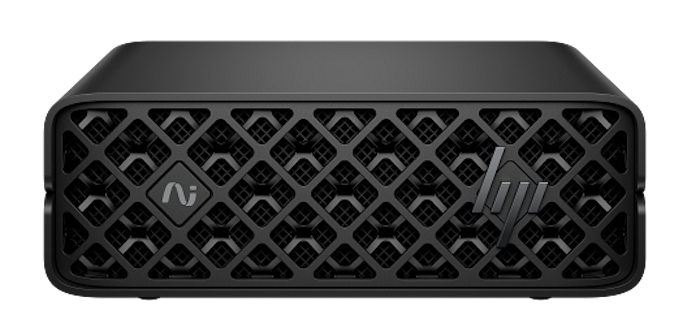
Desktop and Mobile Systems Expand the Core Workstation Portfolio
At the top of the desktop lineup, the HP Z8 Fury G6i is built for AI development, simulation, and visual effects workloads, with support for up to four NVIDIA RTX PRO 6000 Blackwell Max-Q Workstation Edition GPUs and next-generation Intel workstation processors. The system is also positioned as a host platform for HP Z Boost, enabling GPU resources to be shared among users.
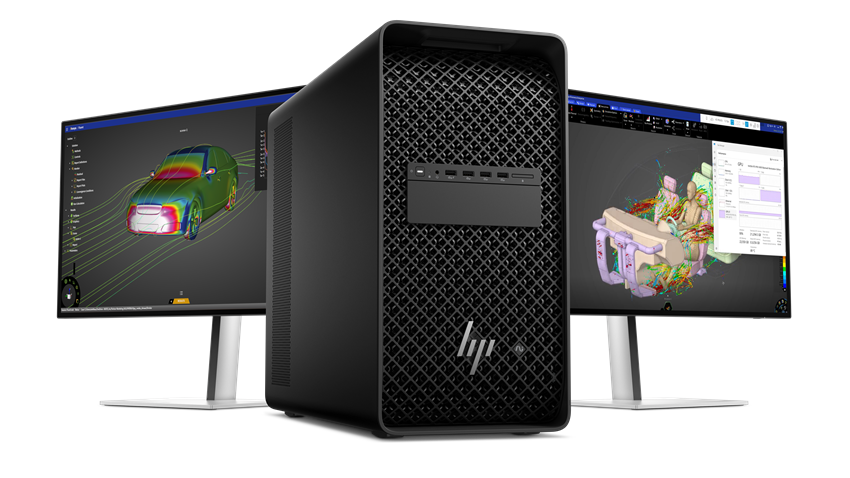
HP also introduced the HP Max Side Panel for Z8 Fury and Z4 workstations, a chassis expander that increases internal volume by 15%. The add-on is designed to enable the installation of larger graphics cards tool-free while maintaining thermal performance and serviceability.
On the mobile side, new versions of the HP ZBook X G2i, HP ZBook 8 G2i, and ZBook 8 G2a extend workstation-class performance to users who need to work away from a desk. These systems include AMD and Intel options, integrated or discrete graphics, scalable memory, and a lighter form factor intended to preserve battery life while supporting more demanding applications.
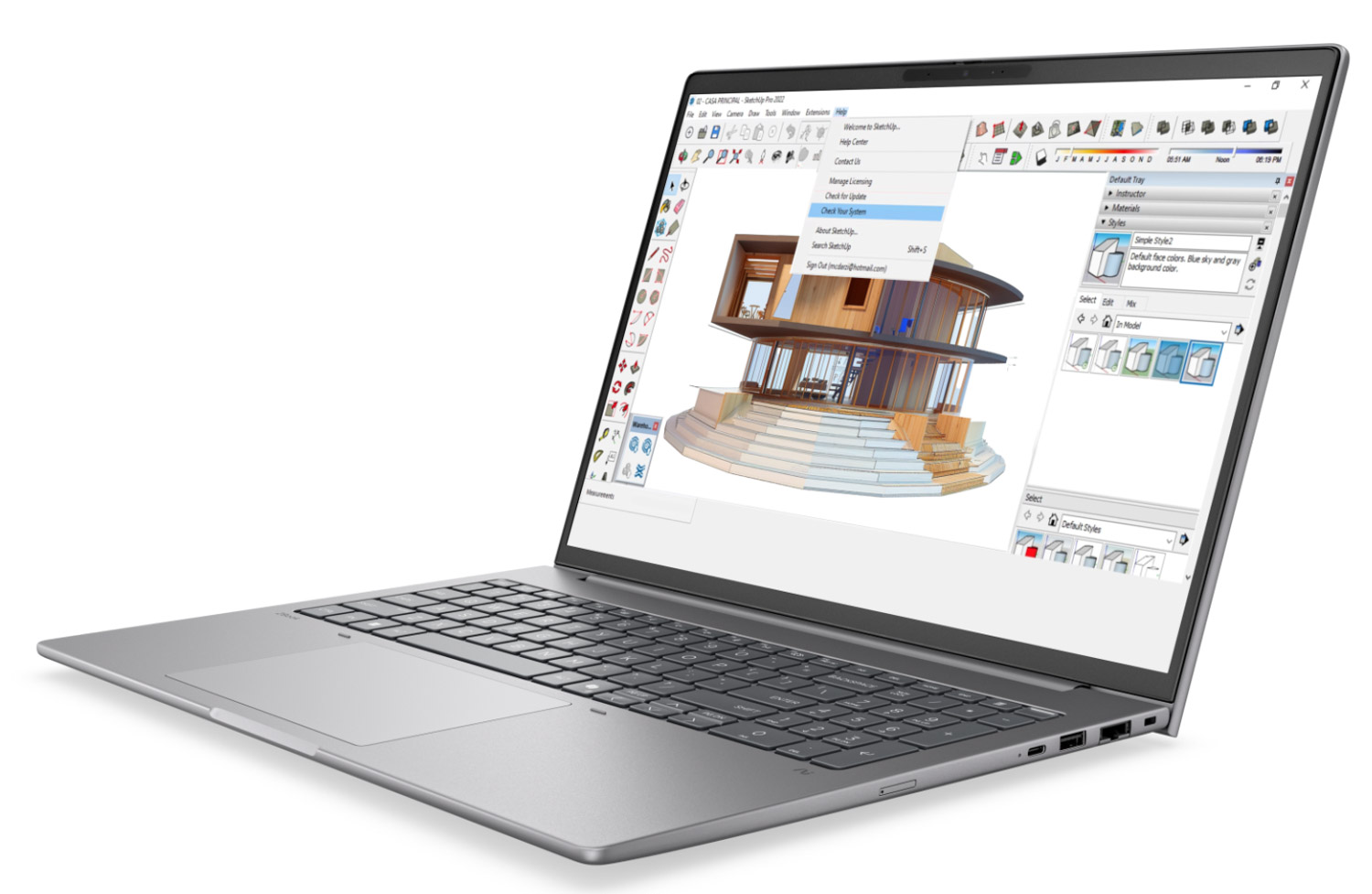
HP positions the ZBook X as its most powerful 16-inch mainstream mobile workstation, with 3000-level graphics and up to 128GB of RAM. That hardware is designed to reduce rendering bottlenecks and speed up photorealistic rendering and real-time project reviews for architects, engineers, and designers. In an Autodesk Inventor example, the ZBook 8 G2i delivered rendering speeds up to 3.3 times faster for a mobile engineer. The ZBook 8 line also includes a new GaN adapter that is up to 40% smaller and 50% lighter.
Z Boost Adds Shared GPU Power for AI and Rendering Workflows
HP Z Boost, first introduced for AI workloads, is also being extended to rendering workloads. The platform turns workstations into shared, on-demand GPU resources, allowing users to tap into additional graphics power without moving files off their local systems. According to the announcement, customers using Z Boost for AI have enabled hundreds of additional training runs through shared GPU access. At the same time, early rendering deployments showed up to 5.7 times faster rendering in applications including Catia and Siemens NX. In that configuration, HP’s mobile ZBook systems connect as client devices, while desktop Z systems provide the host GPU resources.
Several of the new systems are set to launch on HP.com in the coming months. The HP ZBook 8 G2i and G2a, the HP Z4 G6i Desktop, and the HP Z8 Fury G6i are expected to become available starting in April, while the HP ZBook X G2i is slated for Spring 2026. Pricing has not yet been announced.
ZGX Fury Extends HP’s Push Into Local AI Infrastructure
HP has also unveiled the ZGX Fury, a deskside AI system built for data-center-class AI development and inference in on-premises environments. The system is intended for organizations seeking production-grade compute outside the cloud, as AI inference moves closer to where data is created due to latency, privacy, cost, and data gravity concerns. As cloud infrastructure continues to play a role in AI at scale, the growing use of agentic AI is increasing token consumption and overall compute demand, leading to higher costs and added latency for some real-world workloads.
Powered by NVIDIA’s GB300 Grace Blackwell Ultra Desktop Superchip and 748GB of coherent memory, the ZGX Fury supports trillion-parameter inference and fine-tuning for models with more than 100 billion parameters. The platform is built to support large teams while avoiding the specialized infrastructure, cooling requirements, and facility demands associated with traditional data center deployments. It also allows teams to move from development to production on the same machine, giving users a single system for developing, validating, and deploying AI workloads locally with more direct control over data and workflows.
The broader software stack includes the HP ZGX Toolkit, a free, open-source collection of AI tools preconfigured for rapid startup and free of licensing fees, as well as hardware-level protections, isolated pipelines, and sovereign deployment options for sensitive data. The system also supports autonomous AI agents via NVIDIA OpenShell. This open-source runtime governs agent operations and inference routing while allowing agents to run in isolated sandboxes with privacy and security controls. HP is also collaborating on NVIDIA NemoClaw, an open-source stack for running OpenClaw always-on assistants with a single command, as part of the NVIDIA Agent Toolkit, which combines the OpenShell runtime with open-source models such as NVIDIA Nemotron.


 Amazon