

Intel announced a set of data center updates at Computex 2026 in Taipei spanning compute, networking, and its AI accelerator roadmap. The headline item is the introduction of Intel Xeon 6+ processors, paired with an expanded 800 Series Ethernet lineup based on Intel Ethernet E835 controllers and adapters. Intel also provided an update on its next data center GPU, code-named Crescent Island. Collectively, the announcements reflect Intel’s positioning around agentic AI, in which the CPU increasingly serves as the control plane for orchestration, concurrency, and data movement across clusters.
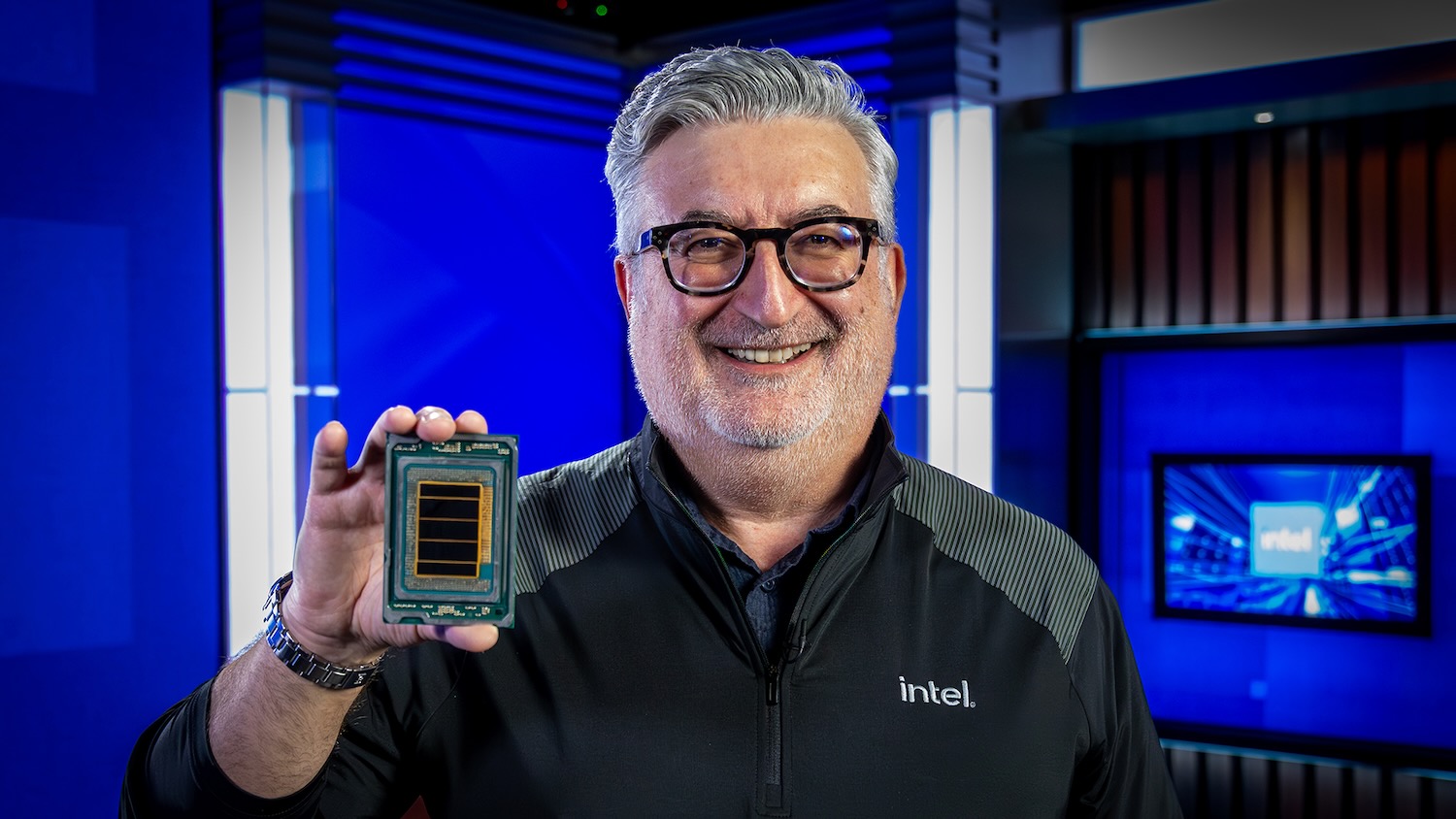
Intel data center leadership framed AI scaling as a coordinated systems problem rather than a component upgrade cycle. As AI agents become more autonomous and workloads become more distributed, Intel is emphasizing tight coupling between CPU, memory, and networking to reduce bottlenecks and improve efficiency under real power and rack constraints.
Xeon 6+ Extends the Xeon 6 Family with Density, Efficiency, and Scale-Out Focus
Xeon 6+ processors extend the Xeon 6 family, emphasizing performance density, power efficiency, and operational scale for cloud-native, network-intensive, and agentic AI-driven workloads. Intel said Xeon 6+ is built on Intel 18A, marking the company’s first use of that process node in a data center CPU. The platform’s focus is sustained throughput in environments where watts per rack, throughput per core, and predictable latency are primary constraints.
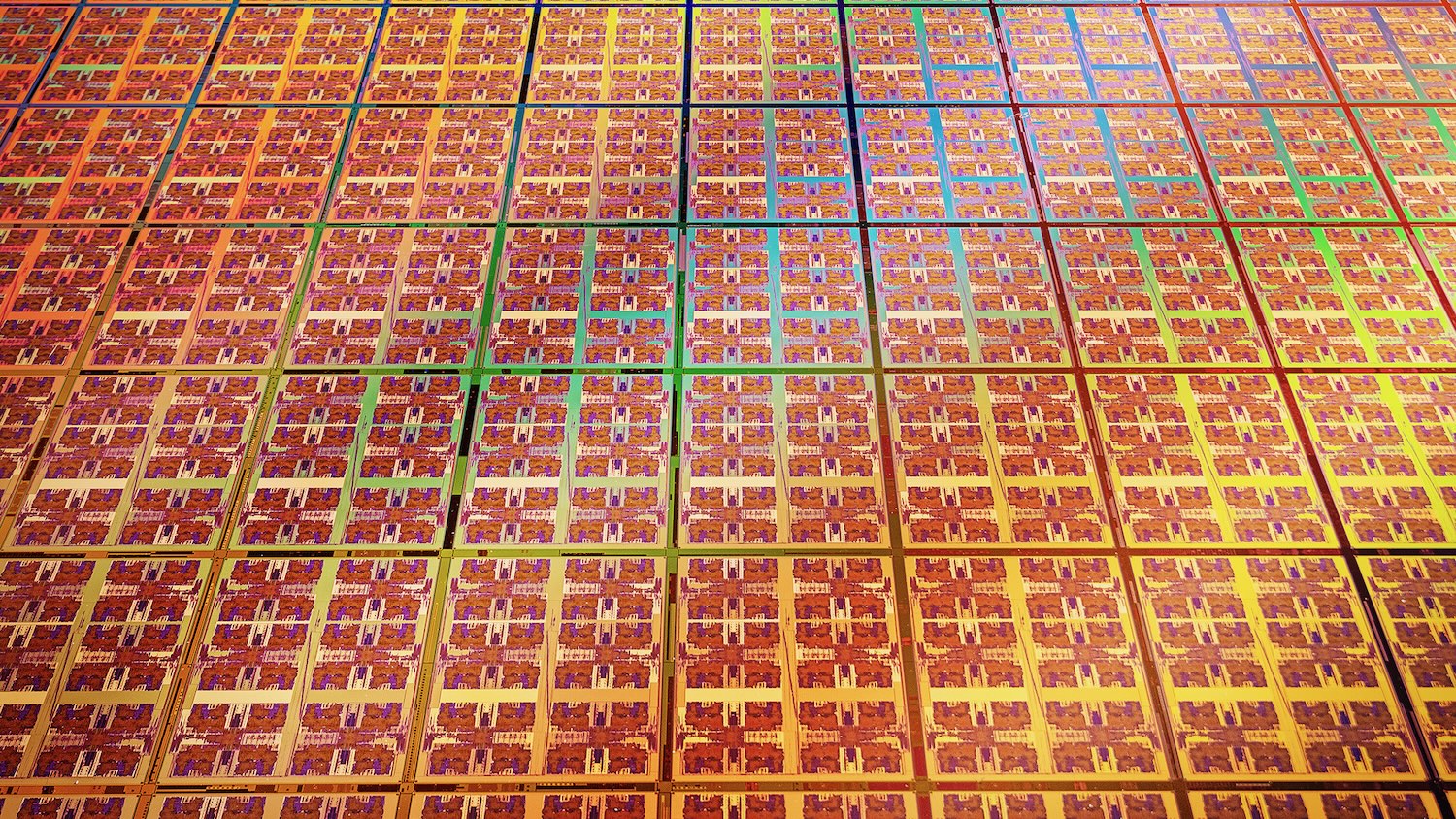
Intel’s stated feature set targets scale-out infrastructure that needs to add new AI-adjacent services without requiring a disruptive data center redesign. Configuration highlights include up to 288 efficient cores, which Intel says deliver up to 2.5 times more performance than the previous generation and up to 45 percent better per-thread performance per watt versus the competition, along with 12-channel DDR5 and 96 lanes of PCIe Gen5 with CXL support to move data across heterogeneous infrastructure. Intel also claims up to 9:1 server consolidation versus 2nd Gen Xeon systems. In addition, Intel is introducing Intel Application Energy Telemetry on Xeon 6+, providing real-time, workload-level telemetry of CPU energy and activity to improve visibility into consumption and utilization.
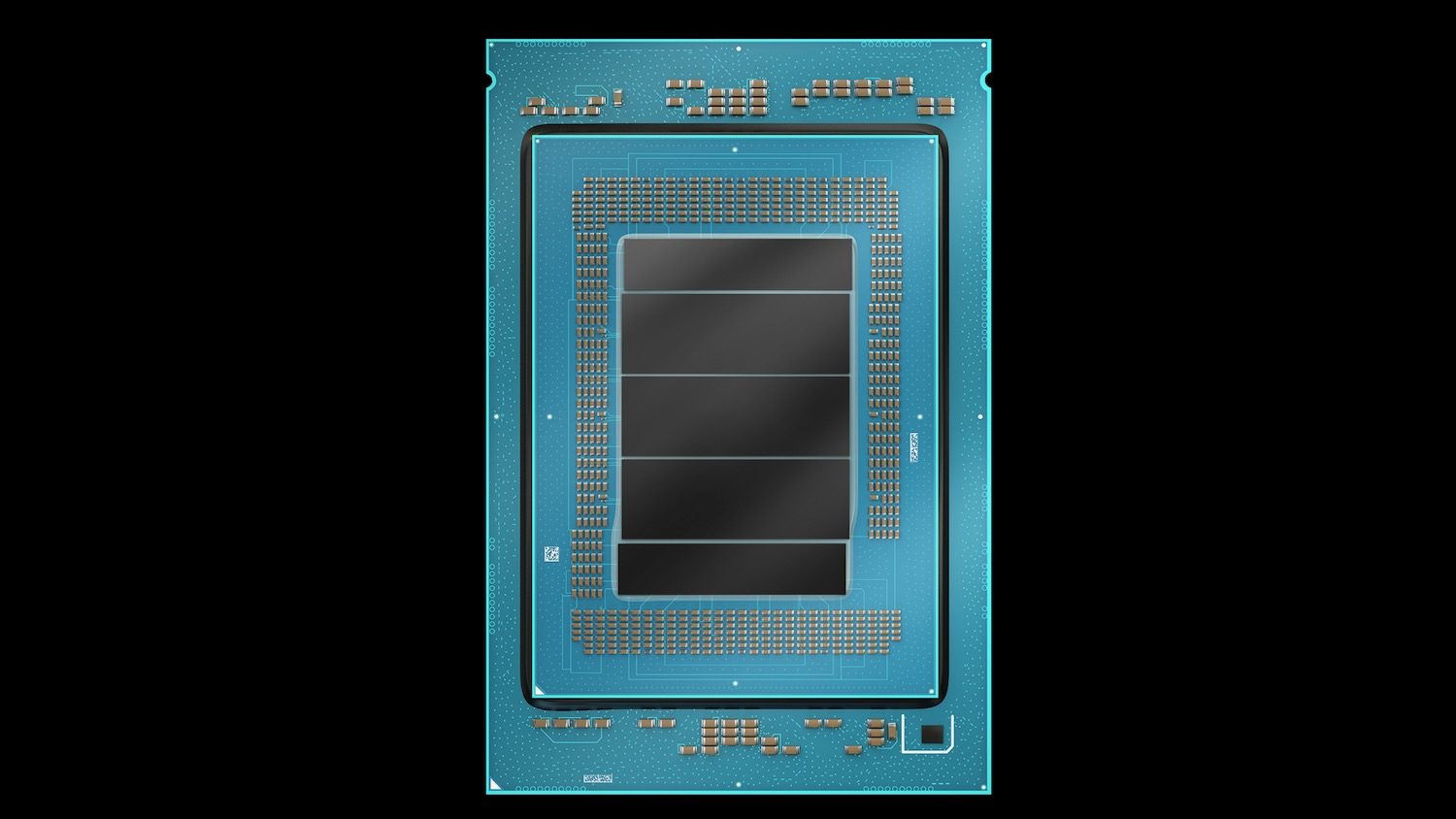
On security, Intel highlighted silicon-level protections, including Intel SGX and Intel TDX, aimed at confidential computing and multi-tenant deployments. Intel also said Xeon 6+ platforms are already being tested in telecom network infrastructures and configured into data center systems across the ecosystem, with servers, networking, and integrated solutions from ASUS, Dell Technologies, Ericsson, GIGABYTE, HPE, Lenovo, Supermicro, and others developing on Xeon 6+ today.
Intel Ethernet E835 Targets Power-Efficient 10GbE to 200GbE for AI and Virtualized Data Centers
Intel expanded its 800 Series Ethernet portfolio with Intel Ethernet E835 controllers and network adapters, positioning networking as a key limiter for modern AI, cloud, and distributed workloads. The E835 line targets dense, virtualized deployments where bandwidth and latency consistency must be delivered within tight power envelopes.
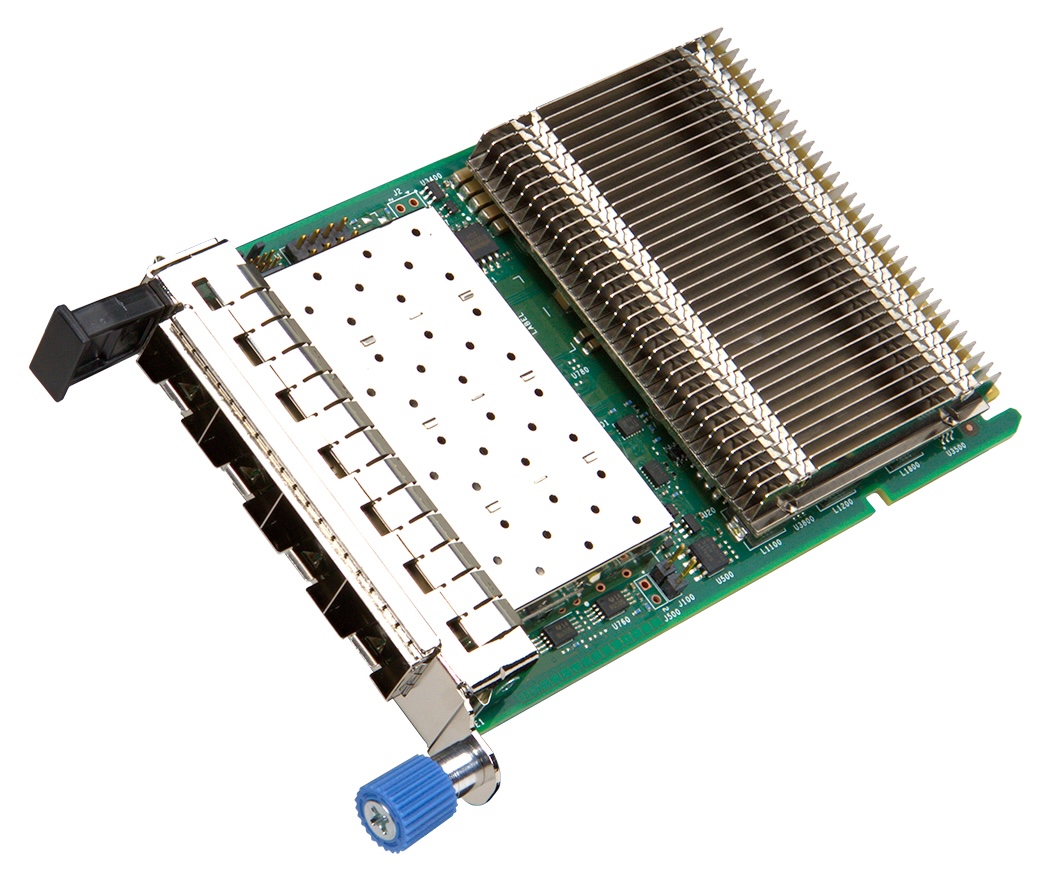
Intel said the E835 family supports up to 200GbE and a range of port configurations, including 2x25GbE, 4x25GbE, 2x100GbE, and 1x200GbE, with additional configurations enabled through Intel’s Ethernet Port Configuration Tool. For efficiency, Intel said the E835-CQDA2 adapter delivers up to 1.9 times higher performance per watt than the comparable NVIDIA ConnectX-6 Dx and 1.4 times higher than the Broadcom BCM957508-P2100G, positioning the product line as reducing energy consumption without sacrificing throughput.
On offloads and data path efficiency, E835 supports RDMA via RoCEv2 and iWARP, along with Dynamic Device Personalization to streamline packet processing. For security and manageability, Intel highlighted a hardware root of trust, signed SPDM, DMTF-based manageability, and OS support for Linux, VMware ESXi, and Windows. Intel also called out a 10+ year lifecycle target for long-term fleet standardization. Recommended pricing varies by configuration and is listed at intel.com/ethernet.
Xeon 6300 Adds a 12-Core Entry Option for SMB Servers
Intel also announced general availability of a new 12-core option in the Xeon 6300 family for entry servers, extending the platform beyond 8 cores. The key message is a drop-in upgrade path for existing entry-level server designs, allowing SMB environments to increase compute capacity without a platform change, and with availability through major OEMs.
Crescent Island: Intel Updates Next Data Center GPU for Inference and Token-Heavy Workloads
Intel provided an update on Crescent Island, its next-generation data center GPU built on the Xe 3P architecture. Intel is positioning the part around memory capacity, bandwidth, and efficiency as differentiators for agentic AI inference, particularly as token-intensive workloads grow.
According to Intel, Crescent Island pairs LPDDR5X with up to 480GB of capacity. It targets a 350W air-cooled PCIe form factor for scale-out deployments where rack-level thermals and power delivery are limiting factors. Intel also highlighted broad data-type support, ranging from native FP4 and MXFP4 to FP64, as well as expanded support for AI operations and scalability features. On software, Intel reiterated its commitment to an open, programmable stack designed to reduce friction in heterogeneous environments, with Arc Pro cited as a development platform aligned with the same Xe foundation for forward and backward compatibility.
Related: Supermicro Launches 12 Xeon 6+ Optimized Platforms, Expands X14 and DCBBS Offerings
In related news, Super Micro Computer announced 12 new server platforms optimized for Intel Xeon 6+ processors, spanning its Hyper, SuperBlade, FlexTwin, and GrandTwin families. Supermicro is emphasizing high core density and performance-per-watt for high-density cloud, virtualization, 5G analytics, and other throughput-intensive workloads. The new systems expand the company’s X14 lineup, with Supermicro positioning its DCBBS platform, a modular infrastructure approach built from validated components and subsystems, as the integration layer across the portfolio.
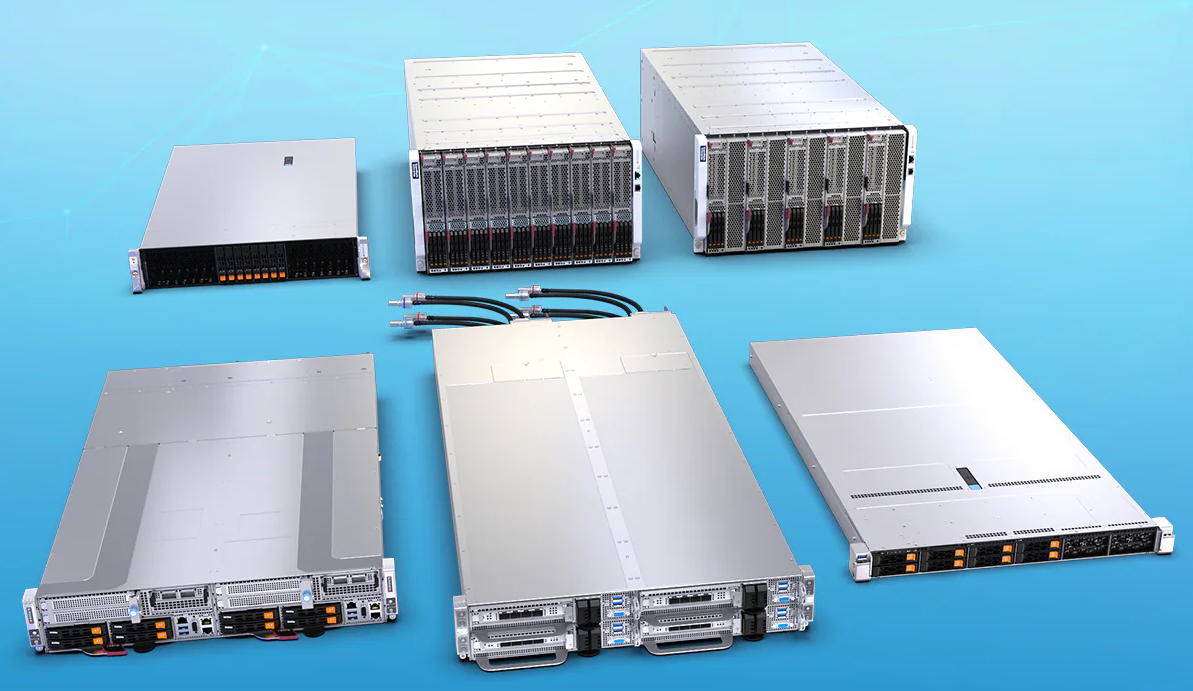 Supermicro’s updated portfolio spans multiple server families tuned for different densities, cooling, and deployment models, giving operators a clearer path to standardize on a common platform while still matching hardware to workload requirements. The Hyper series targets mainstream rack deployments with single- and dual-socket 1U and 2U systems that prioritize configurability. In practice, that means flexible CPU options, high-memory configurations for virtualization and data services, and the ability to pair the platform with advanced networking where east-west traffic and storage connectivity become performance limiters.
For environments where rack efficiency is the primary constraint, Supermicro’s SuperBlade and multi-node designs push density higher while maintaining serviceability. SuperBlade packages up to 10 compute nodes into a compact 6U chassis, using shared infrastructure to improve utilization at scale, a fit for large fleet deployments that benefit from simplified power and management domains. FlexTwin and GrandTwin take a multi-node approach in rack form factors, with FlexTwin emphasizing liquid-cooled, dual-socket nodes that operate independently while sharing power and cooling resources, and GrandTwin focusing on single-socket density optimized for high-core-count, E-core-heavy workloads where throughput per rack and thermal efficiency matter.
Supermicro said the new X14 platforms can scale up to 576 efficient cores per server in dual-socket configurations, improving deployment efficiency and energy consumption for large-scale data centers.
At the rack and data center level, Supermicro positions DCBBS as the integration layer that ties these systems together into a modular AI infrastructure. Built from validated components and subsystems, DCBBS is designed to reduce deployment friction by offering a repeatable building-block approach that scales from individual servers and networking to full rack-scale solutions, with supporting software and services for operators building out larger cloud and AI footprints.
Supermicro also cited architectural gains it attributes to Xeon 6+ systems, including double the core count, up to 17 percent higher IPC, five times more last-level cache, and 25 percent faster memory support compared to previous generations.


 Amazon