

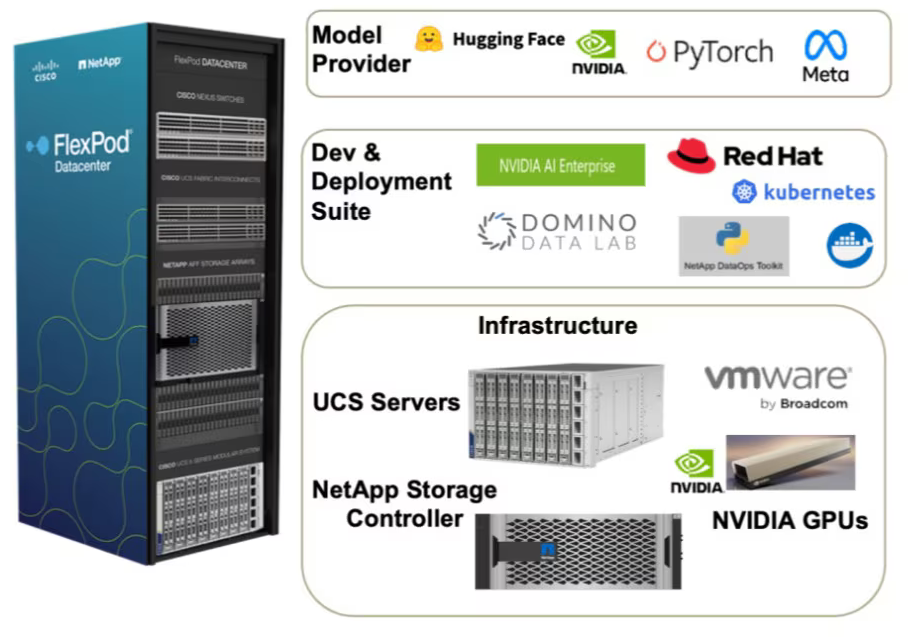
NetApp and Cisco have introduced an expanded set of FlexPod-validated solutions to simplify the deployment of secure, scalable AI infrastructure. The announcement builds on the long-standing FlexPod partnership, positioning the platform as a pre-validated foundation for organizations looking to address the performance, data management, and security demands of modern AI workloads.
The companies are targeting enterprises that need predictable infrastructure outcomes without the integration overhead typically associated with AI environments. FlexPod continues to serve as a converged architecture that combines compute, networking, and storage, now extended with capabilities aligned with AI training and inference pipelines.
NetApp highlighted that AI workloads are placing increasing demands on data infrastructure as IT teams are tasked with delivering reliable, consistent performance across environments. Dallas Olson, Chief Commercial Officer at NetApp, noted that the FlexPod partnership has already saved customers up to 20% of their time in infrastructure management and maintenance, and that the companies are now applying their combined expertise to accelerate AI adoption while reducing risk with built-in security. Cisco reinforced the need to build security into AI infrastructure from the start, with Jeremy Foster, GM and SVP at Cisco, pointing to AI-specific risks such as data exposure, governance gaps, and compliance challenges.
Validated Architectures for AI Workloads
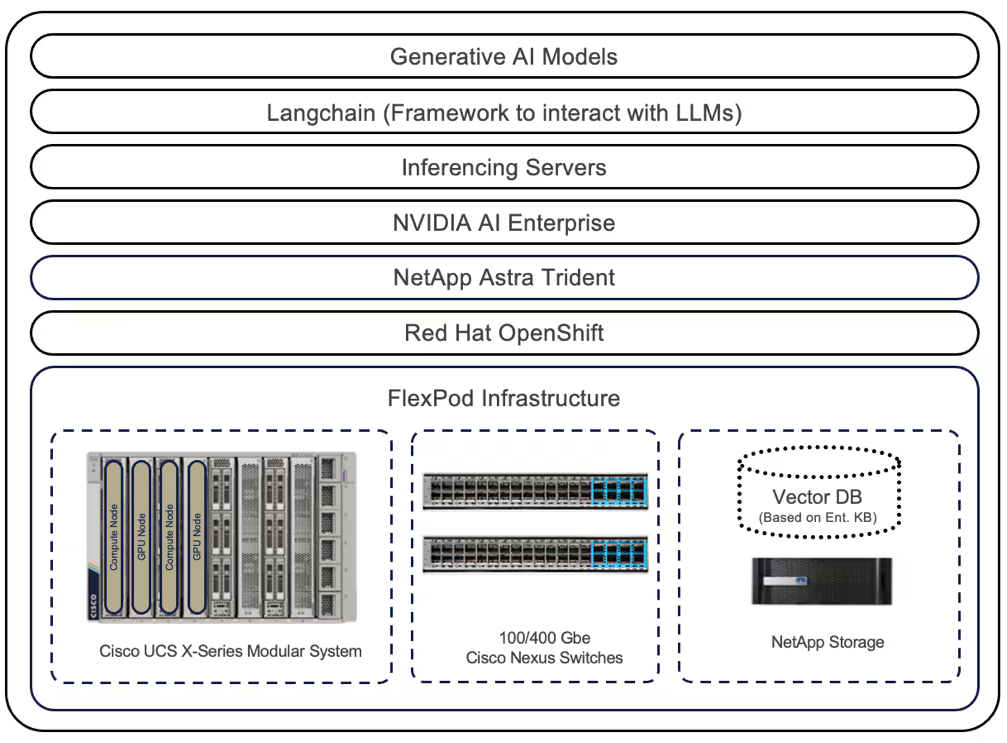
The updated FlexPod solutions are delivered as pre-tested reference architectures designed to support organizations at different stages of AI adoption. These configurations integrate NetApp data services, Cisco networking, and NVIDIA AI technologies to provide a consistent and scalable foundation.
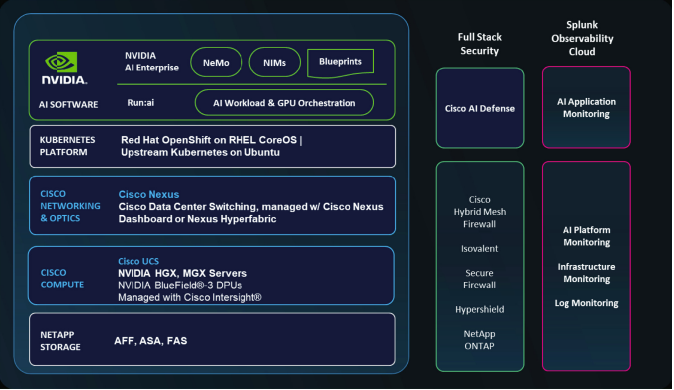
For enterprise AI deployments, the architecture supports use cases such as retrieval-augmented generation and semantic search. The design reduces integration complexity by allowing AI capabilities to run directly where the data resides, with built-in, end-to-end security. NetApp AFX, the company’s disaggregated all-flash storage system, allows independent scaling of performance and capacity, which is critical for AI pipelines with uneven resource demands.
The solution also incorporates NetApp’s AI Data Engine, which is being developed to address data discovery, preparation, and governance challenges. This integrates with the NVIDIA AI Data Platform reference design, providing a structured approach to managing large enterprise datasets for AI use. Security is implemented across the stack through Zero Trust-aligned controls, with Cisco Secure AI Factory with NVIDIA providing policy-driven protections throughout the AI lifecycle.
On the networking side, Cisco AI networking infrastructure with Nexus One transforms the network into a deterministic, high-performance fabric that maximizes XPU utilization, reduces job completion times, and delivers predictable AI outcomes at scale. NetApp and Cisco also collaborated with NVIDIA to build FlexPod solutions based on NVIDIA Enterprise Reference Architectures, enabling organizations to design, deploy, and scale high-performance AI factories using a validated full-stack approach.
Simplified AI Inferencing and Departmental Adoption
In addition to full-scale deployments, NetApp and Cisco are targeting smaller teams and departmental use cases with pre-integrated solutions for AI inferencing and RAG workflows. These configurations are designed to reduce both cost and operational complexity, enabling organizations to leverage existing datasets without requiring specialized AI infrastructure expertise.
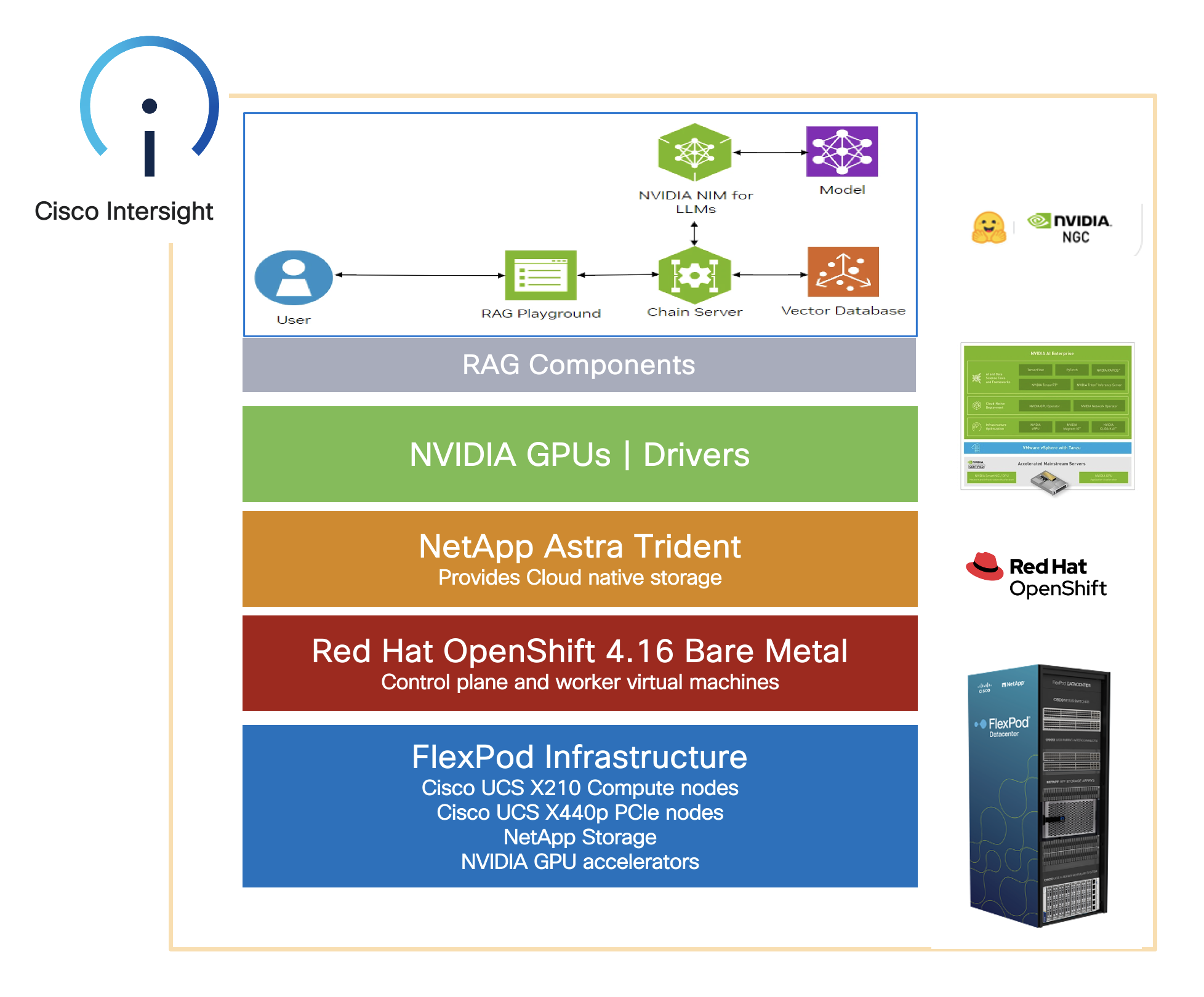
By standardizing deployment models, the companies aim to lower barriers to entry for AI adoption while maintaining enterprise-grade data management and security controls.
Extending AI to the Edge
The FlexPod expansion also includes validated architectures for edge environments, where AI inference and data processing must occur close to data sources. These solutions combine Cisco Unified Edge platforms with NetApp storage to support containerized and virtualized workloads in distributed locations.
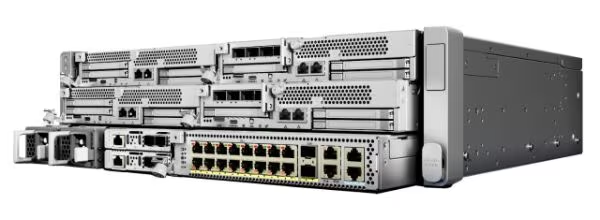
The approach emphasizes centralized management and automation, allowing IT teams to deploy and operate AI infrastructure consistently across multiple sites. Policy-based configuration and orchestration enable repeatable deployments, reducing the operational overhead associated with managing isolated edge stacks.
Data Foundation and Ecosystem Integration
NVIDIA’s involvement centers on aligning data infrastructure with AI processing requirements. The companies are integrating NetApp’s data management capabilities with NVIDIA’s AI Data Platform to provide a unified, AI-ready data foundation. This includes support for data preparation, governance, and secure access, which remain key challenges for enterprises scaling AI initiatives.
The combined solution is validated within the Cisco Secure AI Factory framework, enabling organizations to deploy scalable AI environments on FlexPod with integrated security and data services. The goal is to provide a consistent architecture that supports both current AI workloads and future expansion without requiring significant redesign.
Expanded Cyber Resilience Collaboration with Splunk SOAR Integration
At the same time, NetApp and Cisco announced an expansion of their collaboration focused on cyber resilience and operational visibility. The expanded collaboration introduces deeper integration between NetApp storage and Splunk analytics and orchestration, strengthening defense-in-depth strategies at the data layer.
The companies are positioning intelligent data infrastructure as a core component of enterprise security, particularly as AI-driven threats increase in speed and sophistication. By combining observability, automation, and storage-level controls, the joint solution aims to reduce response times and limit the impact of cyber incidents.
Storage-Level Security Automation with Splunk SOAR
A key component of the announcement is the introduction of a NetApp Splunk Security Orchestration, Automation, and Response playbook. This integration extends Splunk’s existing visibility into NetApp environments by enabling automated response actions directly on ONTAP storage systems.
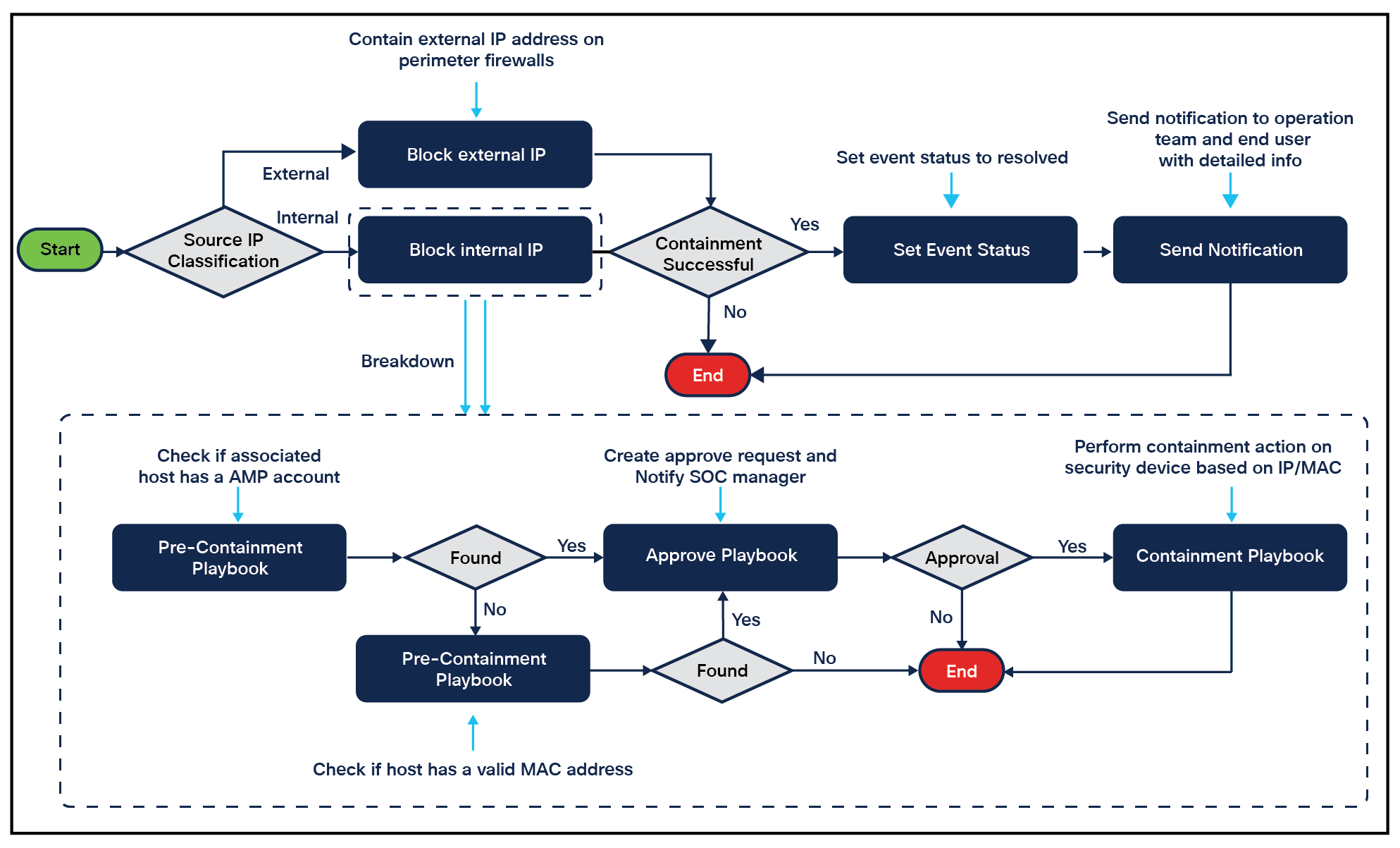
Splunk Enterprise Security is already integrated with NetApp Ransomware Resilience to collect analytics from the data layer, enhancing incident triage and prioritization. The new SOAR playbook builds on that foundation by allowing security teams to operationalize those insights. Automated actions can now be triggered by signals from NetApp Ransomware Resilience and other solutions in the environment, including blocking a suspicious user, taking snapshots of data, and taking data volumes offline to protect against further infection.
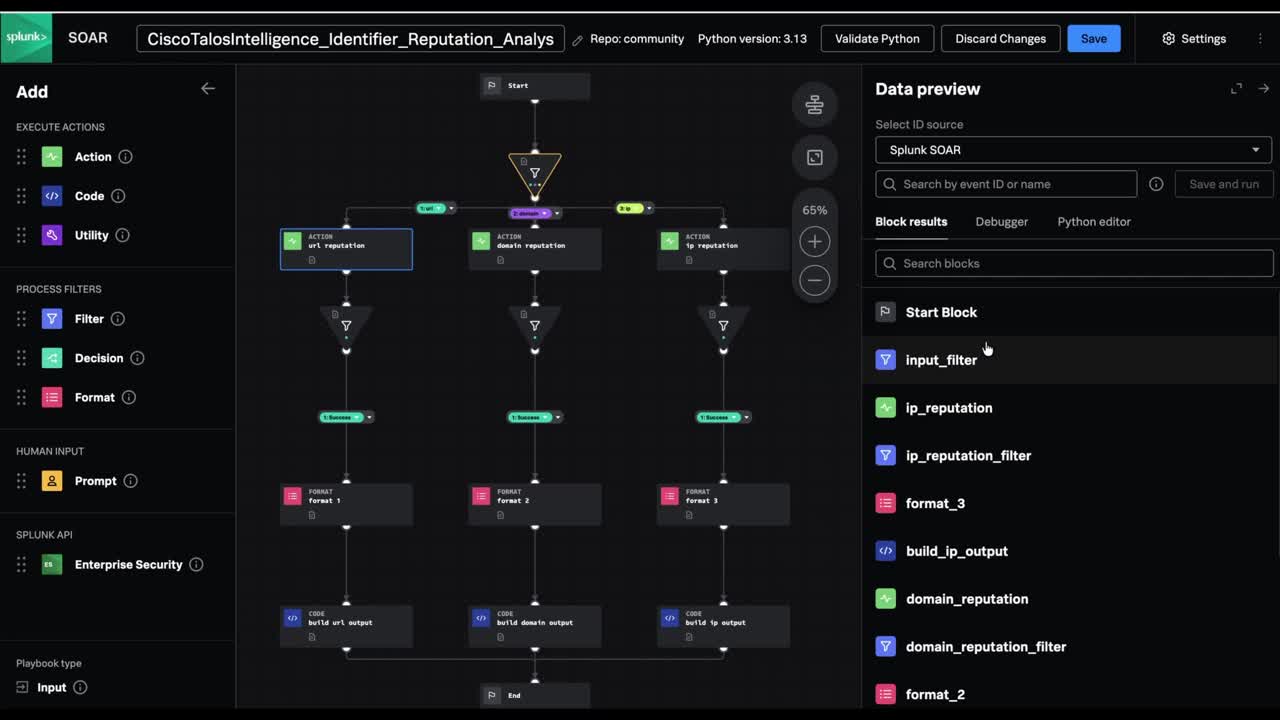
This approach shifts part of the incident response process closer to the data itself, reducing reliance on manual intervention and enabling faster containment. NetApp emphasized that integrating storage systems into security workflows helps reduce the blast radius of ransomware attacks, improves recovery times, and lowers overall remediation costs.
Enhancing Defense-in-Depth Strategies
NetApp and Cisco are aligning this integration with broader defense-in-depth strategies by connecting storage infrastructure into the security operations ecosystem. The solution combines NetApp’s data management and ransomware resilience features with Cisco’s secure AI infrastructure and Splunk’s analytics and orchestration capabilities.
NetApp noted that the rapid evolution of AI-enabled cyberattacks requires faster and more automated responses. Extending SOAR workflows to ONTAP enables organizations to take direct action on enterprise data during incident response, rather than treating storage as a passive layer. This enables more effective containment and reduces the window of exposure during an attack.
Cisco highlighted the importance of end-to-end visibility across the entire technology stack, including the data layer. By integrating NetApp storage into Splunk SOAR workflows, companies enable coordinated responses spanning networking, compute, and storage. This integration is intended to improve collaboration between security and storage teams while increasing confidence in automated response actions.
Operational Impact and Enterprise Readiness
The automation introduced by the NetApp Splunk SOAR playbook is expected to improve key security metrics, such as mean time to contain incidents, while reducing the manual effort and skills required to protect data. By embedding response capabilities directly into storage systems, organizations can respond more quickly without requiring specialized storage intervention during an incident. The playbook is available now for download from SplunkBase.


 Amazon