

While hyperconverged infrastructure (HCI) has simplified virtualization via streamlined deployments and reduced operational overhead, traditional architectures often struggle with asymmetric scaling. This is particularly evident when storage requirements for large unstructured datasets outpace compute needs, forcing IT teams into inefficient and costly node expansions.

To address this imbalance, Scale Computing and Nexsan have introduced a joint architecture that integrates the SC//HyperCore virtualization suite with enterprise-grade external storage. This combined solution allows organizations to decouple storage growth from compute resources, providing a scalable and cost-effective model for capacity-intensive workloads like video retention, backup repositories, and long-term archives.
Addressing Real-World Infrastructure Constraints
Many IT teams are modernizing their infrastructure while still managing legacy storage investments and growing volumes of unstructured data. Requirements such as long-term video retention, secure backup strategies, and preservation of existing SAN and NAS assets create architectural friction. Traditional approaches often force a tradeoff between adopting fully integrated HCI stacks or continuing with less efficient legacy systems.
The combined Scale Computing and Nexsan approach avoids this binary decision. It enables organizations to retain the simplicity of HCI for core workloads while extending storage capacity through external systems that scale independently.
Architecture Overview
SC//HyperCore provides a tightly integrated virtualization platform with built-in high availability and simplified lifecycle management. It is designed to minimize administrative overhead, particularly in edge and remote deployments.
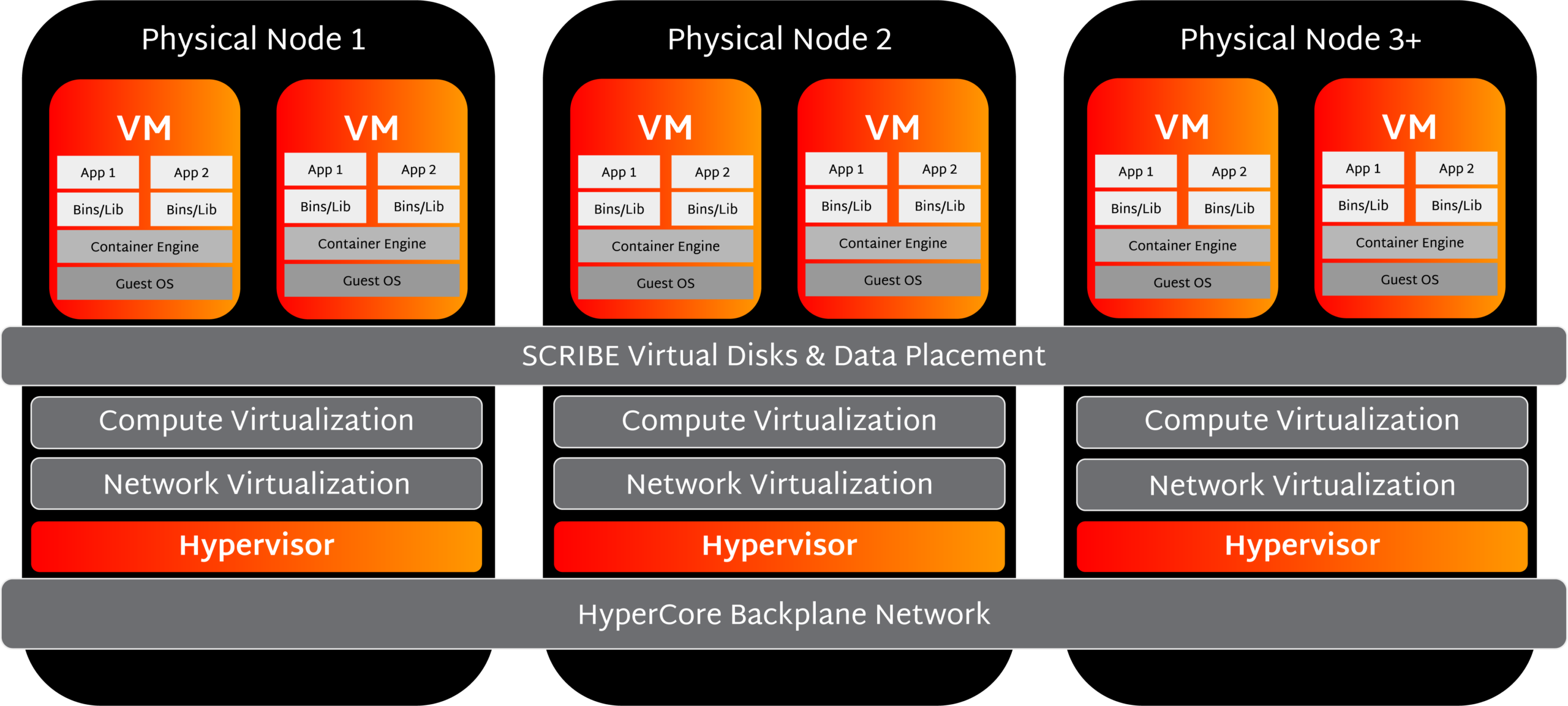
Nexsan complements this with a portfolio of external storage platforms that support block, file, and object protocols. These systems are designed for capacity scaling, long-term retention, and data protection. Together, the platforms enable a hybrid model in which performance-sensitive workloads remain on-cluster while capacity-heavy datasets are offloaded to external storage.
This separation allows IT teams to align infrastructure decisions with actual workload characteristics rather than forcing all applications into a single scaling model.
Edge and Distributed Use Cases
The joint solution is particularly relevant in edge environments across sectors such as retail, healthcare, manufacturing, education, and government. These deployments often require local compute resources to ensure application performance while supporting centralized data strategies.
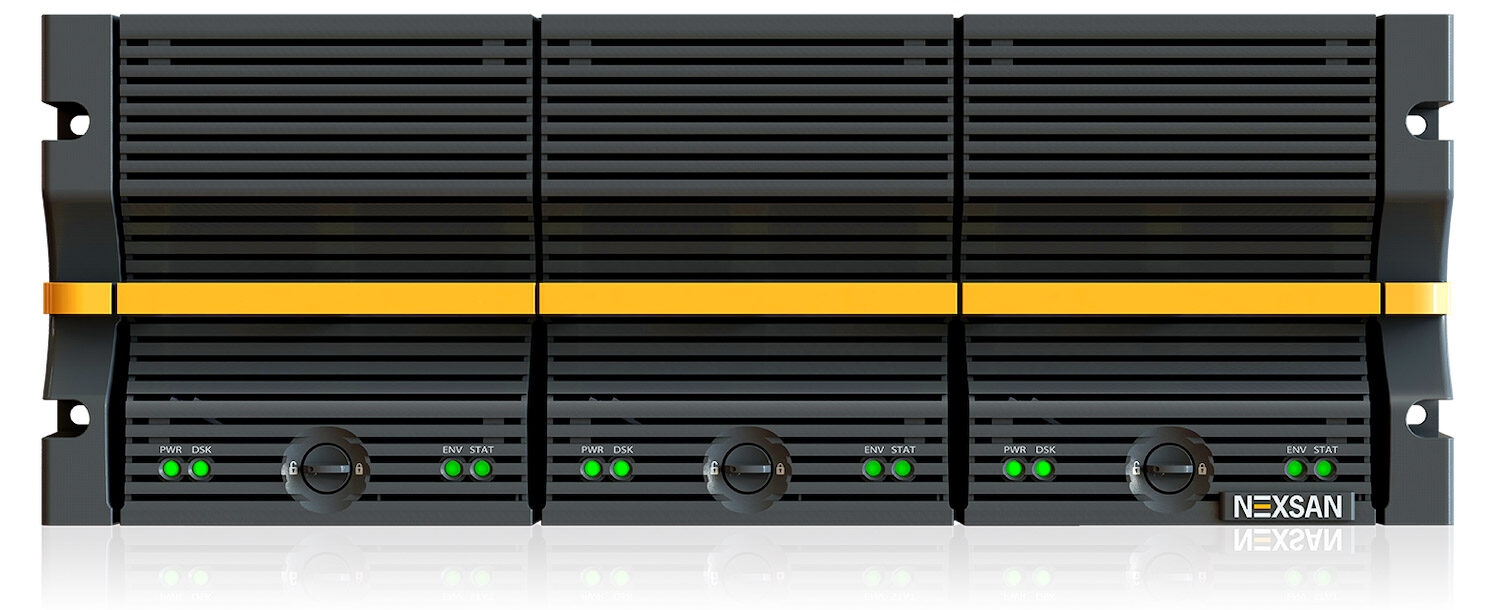
SC//HyperCore simplifies operations at remote sites with limited IT presence, while Nexsan platforms handle the associated data growth. This includes centralized archives, backup repositories, and long-term video storage. The result is an edge-to-core architecture that maintains edge simplicity without sacrificing enterprise storage capabilities.
Flexible Storage Integration
A key aspect of the joint approach is support for multiple storage access methods based on workload requirements. Organizations can deploy iSCSI for block-based virtual machine storage, NFS or SMB for file services, and S3-compatible object storage for modern data workflows.
This flexibility enables use cases such as immutable backups, lifecycle-managed archives, and centralized data repositories. It also supports edge-to-core data flows, in which applications run locally while large datasets are aggregated centrally.
Security and Data Protection Considerations
Infrastructure decisions increasingly prioritize cyber resilience alongside performance and capacity. Nexsan platforms incorporate features such as immutable snapshots, object locking, replication, and encryption. These capabilities support secure backup, compliance retention, and rapid recovery workflows.
The Unity NV-Series targets mixed workloads with an emphasis on ransomware resilience, while the E-Series P focuses on dense, high-capacity block storage scenarios such as surveillance. These design points align with environments where data protection and recoverability are critical operational requirements.
Use Cases
The joint solution is best suited for environments with uneven growth patterns and a need for operational simplicity. Common use cases include video surveillance retention, backup and disaster recovery repositories, centralized file services, and long-term archival storage.
It also aligns well with organizations that are modernizing their virtualization while preserving existing storage investments. For channel partners and managed service providers, the architecture supports repeatable solution design that can be tailored to specific vertical requirements.
By separating compute and storage scaling while maintaining a unified operational model, Scale Computing and Nexsan provide a pragmatic approach to modern infrastructure design that reflects how enterprise workloads and data actually grow.


 Amazon