

IBM and the Massachusetts Institute of Technology (MIT) have launched the MIT-IBM Computing Research Lab, a new joint research organization intended to advance foundational work in artificial intelligence, algorithms, and quantum computing, with an emphasis on computing methods that can extend beyond the practical limits of classical systems. The lab evolves from the MIT-IBM Watson AI Lab (founded in 2017 on MIT’s campus). It reflects a shift in the technology landscape, in which AI is now broadly deployed, and quantum computing is moving toward greater practical utility.
Leadership described the new lab as a vehicle for deeper co-development across modeling, algorithms, and system design, particularly at the intersection of AI and quantum. MIT leadership positioned the effort as a continuation of the partners’ prior decade of results and a mechanism for sustaining long-horizon research with academic rigor and industrial relevance.
Research Focus: AI, Algorithms, Quantum, and Hybrid Systems
The lab’s technical agenda is centered on collaborative efforts across multiple domains.
One of the primary focus areas is AI and hybrid computing, exploring approaches that combine classical computing with advanced AI methods and, where suitable, quantum-centric elements. The goal is to enhance the integration of AI capabilities into production-oriented computing environments, with an emphasis on practical, operational improvements.

Additionally, the lab emphasizes the development of small, efficient language model architectures and new AI computing paradigms. These efforts are viewed through an enterprise deployment lens, with particular attention to system attributes such as reliability, transparency, and trustworthiness. This indicates a focus not just on research prototypes but on creating operational systems that meet real-world constraints.
The agenda also includes research into quantum algorithms and the mathematical foundations needed to tackle complex problem classes relevant to fields such as materials science, chemistry, and biology. Alongside this, there is a broader investigation into the mathematical and algorithmic foundations of next-generation computation, aimed at advancing foundational understanding and capabilities.
The lab also highlighted foundational work spanning machine learning theory, optimization, Hamiltonian simulation, and partial differential equations (PDEs). These areas are frequently bottlenecks for large-scale dynamical system approximation, where classical methods can struggle with fidelity, cost, or both. While several example application domains were cited, the technical thread is improved methods for simulation and optimization that could translate into higher-accuracy forecasting and more efficient compute pipelines.
Alignment With MIT Initiatives and IBM’s Quantum Roadmap
MIT noted the lab complements two institute-wide efforts: the MIT Generative AI Impact Consortium and the MIT Quantum Initiative. IBM, for its part, reiterated its plan to deliver a fault-tolerant quantum computer by 2029 and its broader push toward quantum-centric supercomputing, which it describes as the tight integration of quantum systems with high-performance computing and AI accelerators.
Lab structure and leadership
The lab will continue to be co-directed by Aude Oliva, Senior Research Scientist at MIT CSAIL, and David Cox, Vice President, AI Foundations, at IBM Research. Area co-leads were named across three tracks:
- AI: Jacob Andreas (MIT EECS) and Kenney Ng (IBM Research; MIT-IBM science program manager)
- Algorithms: Vinod Vaikuntanathan (MIT EECS) and Vasileios Kalantzis (IBM Research)
- Quantum: Aram Harrow (MIT Physics) and Hanhee Paik (IBM; Quantum Algorithm Centers)
MIT also identified Dan Huttenlocher, dean of the MIT Schwarzman College of Computing, as MIT co-chair of the lab.
Output to date from the prior lab
MIT and IBM framed the new lab as building on the Watson AI Lab’s scale and publication record. Since its inception, the prior collaboration has funded 210+ research projects involving 150+ MIT faculty members and 200+ IBM researchers, resulting in 1,500+ peer-reviewed articles. The program also reported funding for 500+ students and postdoctoral researchers, positioning workforce development as a continuing deliverable alongside research output.
IBM and Dallara Announce AI and Quantum Exploration for Aerodynamic Design Workflows
In a separate announcement following the MIT-IBM lab launch, IBM and the Dallara Group disclosed a collaboration focused on applying AI to physics-informed vehicle aerodynamics and on exploring quantum and hybrid quantum-classical methods that could complement simulation-heavy design cycles over time.
Physics-based AI as a Surrogate to Accelerate CFD-driven Iteration
The project targets a well-known constraint in motorsport and high-performance vehicle development: computational fluid dynamics (CFD) is accurate but expensive, and iterative geometry exploration can stretch from hours per sweep to weeks or months across a full development workflow.
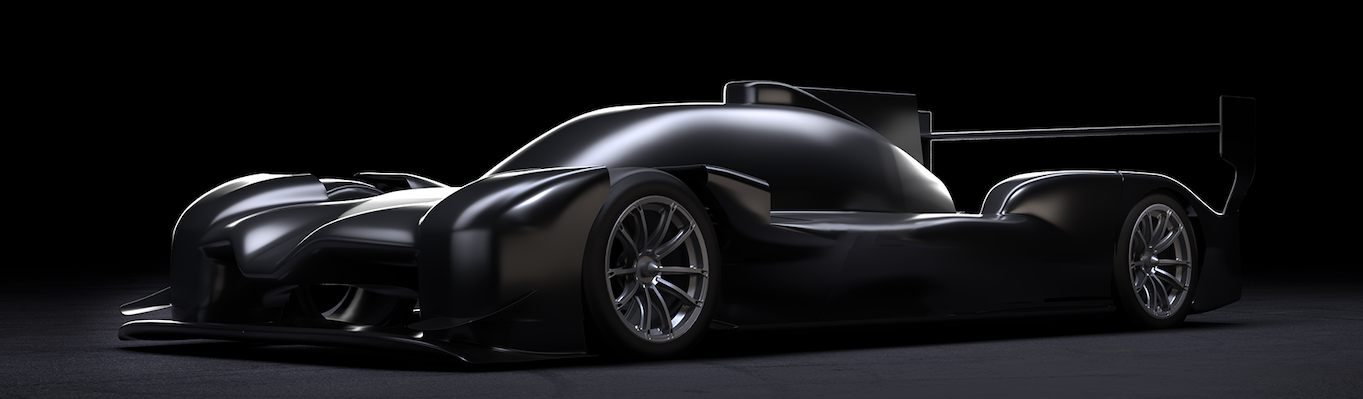
IBM and Dallara reported early results from a physics-based AI method for evaluating multiple rear diffuser configurations on a conceptual LMP2-like race car. In the described comparison, the traditional CFD approach took a few hours to compute all configurations. In contrast, the AI method completed the same evaluations in about 10 seconds, reported error margins comparable to CFD, and identified an optimal configuration.
IBM characterized this as a path to compressing the evaluation of hundreds of configurations from days to minutes, enabling earlier exploration in the design cycle while reserving full CFD for deeper validation and final optimization. The release also referenced pressure-field modeling for a rear diffuser angle adjustment from -2 to +4 degrees, with AI outputs described as closely matching CFD results.
Quantum and hybrid approaches under evaluation
In parallel, the teams said they are assessing where quantum or hybrid quantum-classical techniques could fit into simulation and optimization workflows. The near-term framing is exploratory: identifying workloads where these methods could complement established CFD pipelines, and mapping longer-term opportunities as quantum systems mature.
Research publication and model lineage (arXiv and ICLR)
IBM and Dallara tied the work to recent publications:
- Initial collaboration results were described in an arXiv preprint dated April 20, 2026.
- The work builds on IBM’s Gauge-Invariant Spectral Transformers (GIST) model, which is referenced in a March 17 preprint.
The companies said they presented related advances at the International Conference on Learning Representations (ICLR) on April 26, 2026, in Rio de Janeiro.
Fabrizio Arbucci, CIO of Dallara, highlighted the broader significance of neural surrogate models, initially tested in high-performance vehicles. He emphasized that advancements in aerodynamic efficiency, such as a one to two percent reduction in drag, can lead to substantial fuel savings across various transport modes, including passenger cars and aircraft, benefiting industries reliant on aerodynamics.


 Amazon