

ZutaCore has secured $100 million in Series C funding, with participation from Mitsubishi Electric, Carrier Ventures, Samsung Electronics, and others through its corporate venture arm, Samsung Ventures. The investment is aimed at accelerating global commercialization, expanding deployments, and advancing research and development as demand for high-density AI and HPC infrastructure continues to rise.
The funding comes as data center operators face increasing thermal challenges driven by next-generation processors that are pushing well beyond traditional power envelopes. Liquid cooling adoption has accelerated across hyperscale and enterprise environments, a trend StorageReview has covered extensively as operators shift from air to direct liquid cooling to manage higher rack densities and improve efficiency.
Two-Phase Cooling Targets Next-Gen Power Levels
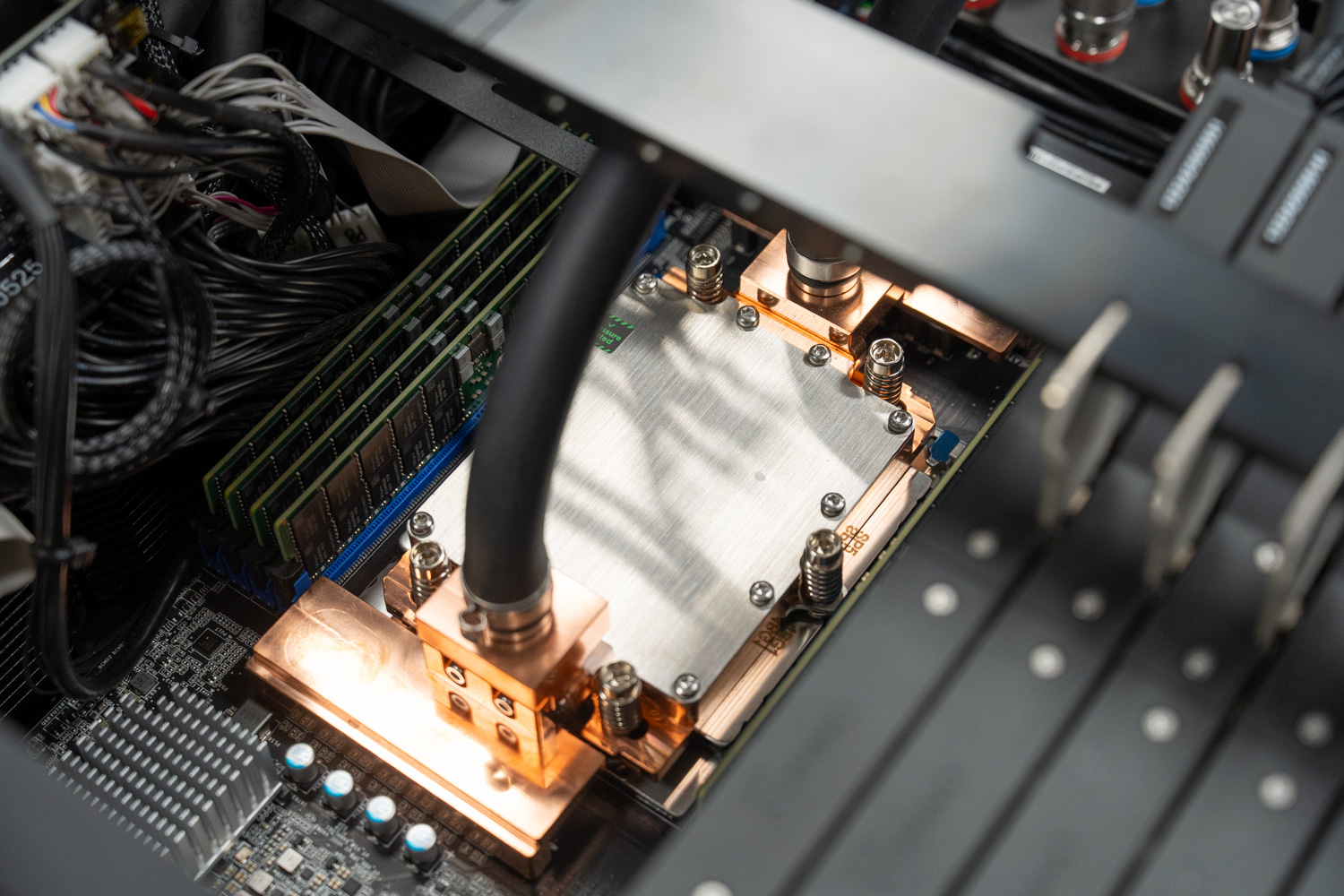
ZutaCore’s platform focuses on waterless two-phase direct-to-chip cooling, designed to support processors exceeding 4,000W. This approach uses phase-change heat transfer at the chip level to remove heat more efficiently than traditional air or single-phase liquid cooling.
The company is positioning its technology to integrate alongside existing air and single-phase liquid systems, enabling incremental deployment within current data center designs. This hybrid compatibility is increasingly important as operators adopt liquid cooling in stages rather than full facility retrofits.
ZutaCore reports more than 75 deployments across the Americas, Europe, and Asia, reflecting growing production adoption of two-phase cooling in AI and HPC environments.
Investment Supports Scale and Product Development
The Series C funding will be used to expand global operations and address increasing customer demand. It will also support ongoing R&D focused on in-package thermal management and system-level integration for megawatt-scale deployments.
As AI clusters scale into multi-megawatt configurations, cooling infrastructure must evolve to maintain performance and reliability. ZutaCore is targeting these requirements with thermal management designs that extend from the chip package itself to full megawatt-class system deployments.
The company also highlighted continued collaboration with ecosystem partners to align cooling solutions with emerging chip roadmaps and accelerate deployment timelines.
Validation at Megawatt Scale
To support scaling efforts, ZutaCore has expanded its executive team with four key hires: Yaniv Reinhold as Chief Financial Officer, Sharon Shafran as Chief Operating Officer, Yoni Nir as Chief Research and Development Officer, and Sarah Warshavsky Oberman as Chief People Officer. The additions bring experience in global finance, semiconductor technologies, and large-scale system deployment, aligning with the company’s focus on hyperscalers, neoclouds, and demanding enterprise compute environments.
This type of pre-deployment validation is becoming more critical as liquid-cooled AI infrastructure increases in complexity and cost.
Expanding Product Portfolio
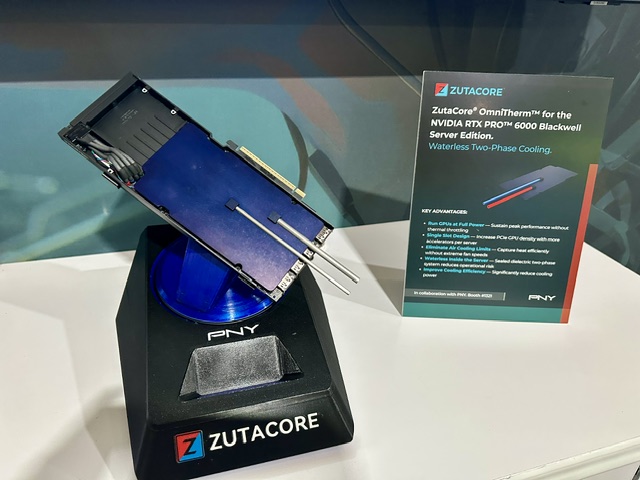
ZutaCore continues to extend its product portfolio, including the OmniTherm cold plate designed for NVIDIA RTX PRO 6000 Blackwell Server Edition GPUs. The design enables waterless two-phase cooling within a single-slot PCIe form factor, supporting full-power operation in standard enterprise and AI server configurations.
This reflects a broader industry shift toward component-level liquid cooling solutions that can be deployed in conventional server architectures while still delivering the thermal performance required for modern accelerators.
Leadership Expansion to Support Growth
To support scaling efforts, ZutaCore has expanded its executive team with hires across finance, operations, R&D, and human resources. The additions bring experience in global operations, semiconductor technologies, and large-scale system deployment, aligning with the company’s focus on expanding into hyperscale, neocloud, and enterprise markets.
Industry Context
The funding round underscores growing momentum behind liquid cooling technologies as AI workloads reshape data center design. StorageReview has observed increasing adoption of both single-phase and two-phase cooling approaches, with vendors aligning solutions to support higher power densities, warm-water operation, and improved energy efficiency.
ZutaCore’s latest funding and deployment activity reflect the next phase of this transition, where cooling is no longer a supporting function but a primary enabler of compute scalability.


 Amazon