

AWS re:Invent returns to Las Vegas from November 30 through December 4, and StorageReview will be covering it in partnership with Intel. AWS lists more than 2,200 sessions for AWS re:Invent 2026, spread across six properties on the Strip alongside the keynotes and the Expo. Our plan for the week centers on three areas: how Intel Xeon instances handle inference without accelerators, how teams emulate AWS locally, and where Amazon WorkSpaces is taking cloud desktops.
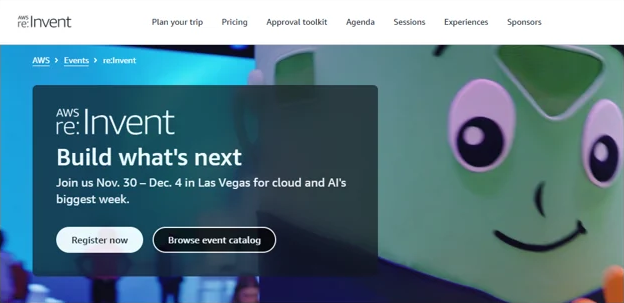
The trip is worth it for two reasons: the technical sessions go deeper than a marketing deck, and the event concentrates the people who build, operate, and troubleshoot these environments at scale. With that many systems engineers, storage architects, and platform developers in one place, hallway conversations tend to teach us as much as the scheduled presentations do.
Exploring Modern Compute: Silicon, Containers, and Using Idle CPU Cycles
Our first focus is how current enterprise CPUs handle production cloud workloads. Accelerators get the headlines, but Xeon-processors carry instruction sets such as Advanced Matrix Extensions (AMX) and AVX-512 that speed up matrix multiplication, deep learning inference, and high-throughput data processing on the CPU. We want to hear from Intel’s engineers, and from attendees, how those features perform on Amazon EC2 instance families such as M7i, C7i, and R7i, where running inference on general-purpose compute can avoid the cost and availability constraints of discrete GPUs.
A discussion we had at VMware verkennen about vSphere Kubernetes Service (VKS) workloads prompted this line of questioning, along with a trend we see toward using spare CPU cycles for background inference and local data-processing pipelines without dedicated AI accelerators. At re:Invent, we will look at how AWS and Intel apply the same approach to container orchestration and managed services.
Running AWS Local
The second area is local cloud emulation, and in particular how developers and platform teams use LocalStack to decouple testing from live AWS environments. When a team builds serverless pipelines or microservices, running every iteration against real cloud infrastructure adds latency, consumes budget, and complicates CI/CD workflows. LocalStack emulates core AWS APIs inside local Docker containers, including S3, Lambda, DynamoDB, SQS, and IAM.
LocalStack will be on the Expo floor with 15-minute booth demos, and it is hosting localhost:2026, an after-hours event for the local cloud community, on December 2 at Cabo Wabo Cantina in Planet Hollywood. We want to talk to the people running LocalStack in production, since it fits our hands-on lab approach.
LocalStack changed how it ships this year, and that has sent some teams looking for alternatives. Starting March 23, 2026, LocalStack for AWS moved to a single image that requires an account and an auth token, including in CI pipelines, and the company says its free tier is intended for non-commercial use. LocalStack also said it can no longer commit to regular updates for the community edition.
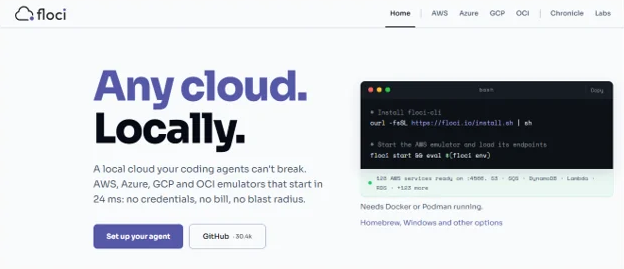
Floci is one of the projects picking up that interest. It is an MIT-licensed, open-source AWS emulator that listens on the same port 4566, and the project describes it as a drop-in replacement that needs no account and no auth token. For teams that want lightweight test runners on many developer machines with no license keys to manage, that pitch is easy to understand, and we are curious how often it comes up in conversation at the show.
Priority Sessions on Our Radar
Sessions run across several properties, so we are prioritizing. Two Intel-sponsored breakout sessions top our list, and both deal with getting more from the hardware underneath a workload.

Optimizing SAP RISE for Cost and Scale with Intel (HMC203-S)
Moving large SAP HANA landscapes to a cloud-managed model under SAP RISE takes careful planning around memory footprint, storage throughput, and CPU sizing. This session covers the operational trade-offs and tuning strategies for scaling those workloads on Intel-based AWS instances while holding infrastructure cost down. It is scheduled for December 1 from 12:00 to 1:00 p.m. at Caesars Forum, Level 1, Forum 120.
Agentic AI on AWS with Intel and Databricks (CMP204-S)
Agentic AI replaces a single prompt and response with multi-step systems that run database queries, orchestrate pipelines, and retrieve context for themselves. This session looks at building responsive agent frameworks at scale by combining Databricks data engines with Intel-optimized AWS instances, with attention to keeping vector operations and model calls efficient. It is scheduled for December 2 from 4:00 to 5:00 p.m. at Wynn and Encore, Upper Convention Promenade, Cristal 2.
We expect both sessions to fill quickly, so plan to arrive early.
Amazon WorkSpaces
We hebben gedekt end-user computing and virtual desktop infrastructure for years, and the Amazon WorkSpaces sessions are on our schedule again. AWS lists a breakout on Capital One’s WorkSpaces deployment, which it says went from 320 to 20,000 desktops in 72 hours, and a customer panel, MAM201, on how IT leaders carried out their cloud desktop migrations.
The rest of the WorkSpaces sessions lean toward AI agents and administration. MAM332 is a workshop on building agents that operate desktop and mainframe applications through WorkSpaces, MAM343 is a chalk talk on governing those agents, MAM348 is a builders’ session on provisioning desktops for developers, and MAM347 introduces an AI advisor for WorkSpaces administration.
The Logistics of Attending
AWS re:Invent 2026 runs five days, from November 30 through December 4. The event spans six properties: The Venetian, Caesars Forum, Caesars Palace, Wynn, Encore, and MGM Grand, with the Expo at The Venetian. Breakouts, workshops, and builders’ sessions are spread across that campus, so a schedule has to account for shuttle loops, walking routes, and enough buffer between properties to reach a session before the doors close.
Navigating the Crowds: Walk-Up Lines and After-Hours Gatherings
Popular sessions fill their reserved seats quickly, and many already show as full, but a full session is still worth trying. AWS releases a reserved seat to walk-up attendees if its holder has not arrived ten minutes before the start, so showing up early for the walk-up line often works. Leaving buffer time for the trip between properties such as The Venetian, Caesars Forum, and Wynn makes that line reachable.
After the sessions end, the evening calendar offers community meetups, sponsored receptions, and re:Play, the official re:Invent party, all of which are good places to compare notes with other attendees.
If you are finalizing a re:Invent schedule, we suggest adding CMP204-S and HMC203-S to your planner. We will report from the show floor and follow up with a recap and, we hope, an interview or two.
Klik hier voor meer informatie over Intel Business Solutions.
This report is sponsored by Intel. All views and opinions expressed in this report are based on our unbiased view of the product(s) under consideration.


 Amazon