

HPE has announced the HPE AI Grid, a comprehensive infrastructure solution aligned with the NVIDIA AI Grid reference architecture. It is designed to securely connect AI factories and distributed inference clusters across regional and remote edge locations. HPE positions this platform for service providers that need to deploy and manage thousands of distributed inference sites as a single, coordinated system.

HPE introduces the AI Grid as a solution for AI-native applications that increasingly require predictable latency, deterministic performance, and distributed deployment. The company claims that the solution delivers ultra-low latency at scale, with zero-touch provisioning, integrated orchestration, and automated security to make lifecycle management easier across large, geographically dispersed deployments.
Rami Rahim, EVP, President, and GM of Networking at HPE, described the strategy as bringing intelligence closer to where data is generated and used, with network infrastructure serving as a key enabler for real-time AI services. NVIDIA’s Chris Penrose, Global Vice President of Telco, emphasized the importance of an AI Grid in connecting geographically dispersed clusters and dynamically assigning workloads based on performance, cost, and latency, with HPE providing multicloud routing and edge infrastructure and NVIDIA delivering accelerated compute and networking components.
Full-stack hardware and networking foundation
HPE states that the HPE AI Grid offers a unified hardware and software platform designed to support service-provider operational models, including multi-tenancy and cloud-native security. The architecture is centered on HPE Juniper capabilities for telco-grade networking, including multicloud routing and coherent optics for long-haul and metro connectivity. HPE also highlights integrated firewalls, WAN automation, and orchestration to enable zero-touch deployment and continuous lifecycle management.
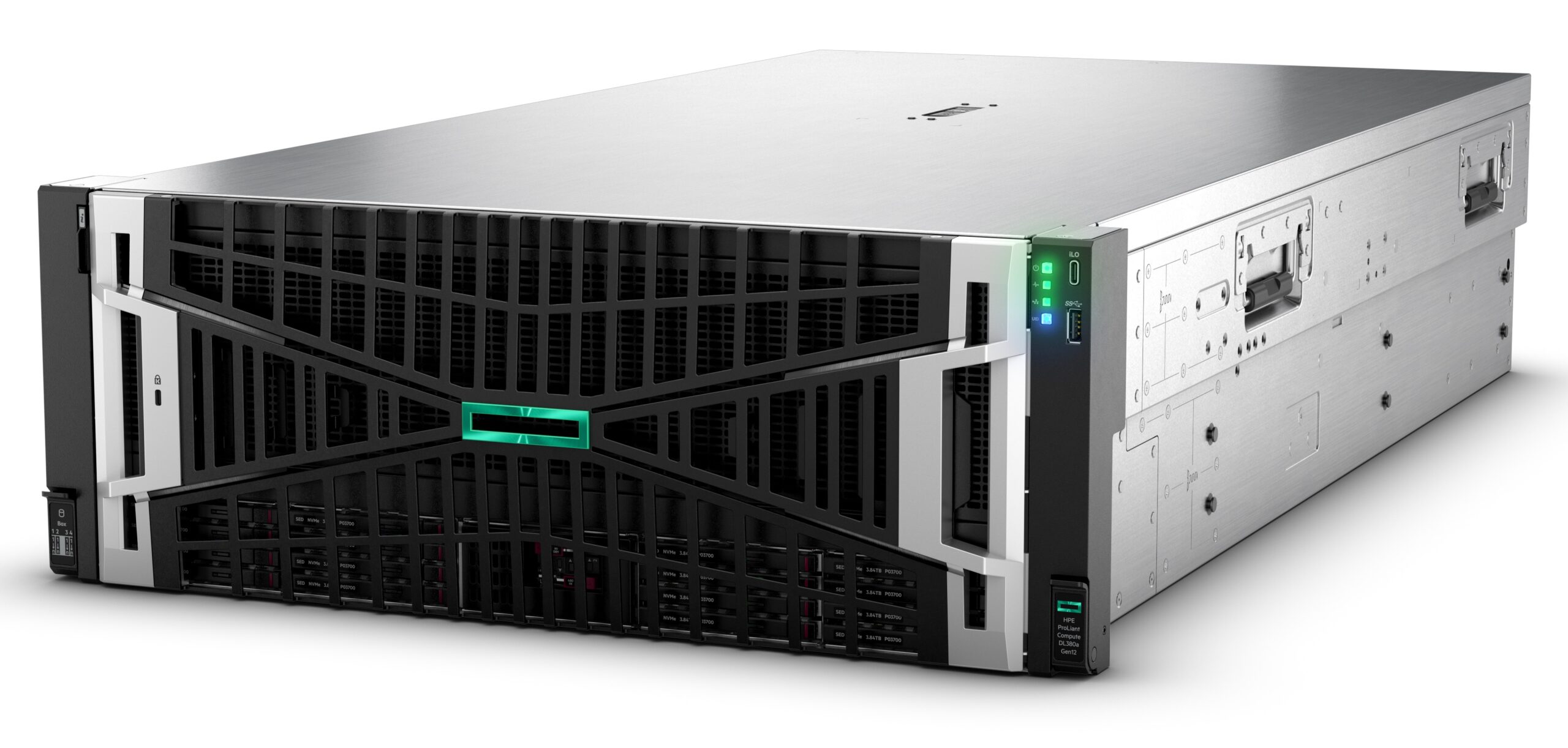
On the compute side, HPE is pairing edge and rack servers with NVIDIA accelerated computing and a high-performance networking and I/O stack. HPE lists support for NVIDIA RTX PRO 6000 Blackwell Server Edition GPUs, as well as NVIDIA BlueField DPUs, Spectrum-X Ethernet switches, and ConnectX SuperNICs. The stack also includes NVIDIA AI blueprints to accelerate the deployment of inference services across distributed sites.
Service provider focus
HPE is positioning AI Grid for applications needing predictable latency and reliable connectivity, including retail personalization, predictive maintenance, edge healthcare, and carrier-grade AI services. The company states the platform can help operators turn sites with existing power and connectivity into RAN-ready AI grid nodes, effectively broadening where inference can occur without treating each location as a separate deployment.
Field trials and partner ecosystem
As part of the broader AI Grid messaging, Comcast announced new AI field trials on its distributed network focused on real-time edge inferencing. HPE stated that early trials included HPE ProLiant servers running small language models from Personal AI (part of HPE’s Unleash AI partner program) on NVIDIA GPUs for AI-driven “front desk” services aimed at small businesses.


 Amazon