

At COMPUTEX 2026, HPE announced the ProLiant Compute DL394 Gen12, a next-generation 2U server built around the NVIDIA Vera CPU. The platform is designed to support emerging agentic AI and data-intensive workloads that require high memory bandwidth, low latency, and deterministic performance. The system integrates HPE’s enterprise management and security stack, including Integrated Lights-Out and Compute Ops Management, targeting organizations deploying large-scale AI and real-time data processing environments.
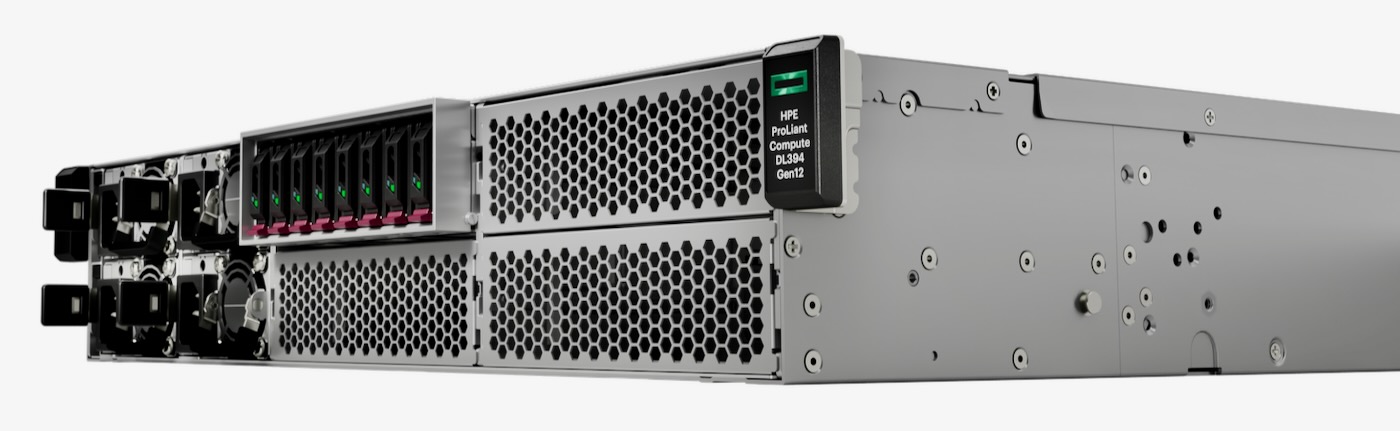
The launch is tied to a new collaboration between HPE, NVIDIA, and data streaming company Redpanda, which the New York Stock Exchange is exploring for its own agentic AI infrastructure. The work centers on technology optimized for agentic AI across data storage and processing, monitoring, management, and security, with the DL394 Gen12 as the foundational compute platform. NYSE is the early proof point, which fits the financial services workload profile HPE is targeting.
HPE leadership framed the launch around the shift from generative AI to agentic AI, in which systems perform real-time reasoning and make autonomous decisions, raising the bar for latency consistency and memory throughput. NVIDIA positioned Vera as purpose-built to orchestrate AI factories, claiming 2x the efficiency and faster task completion than x86. The DL394 Gen12 is intended to put those capabilities to work in enterprise and financial services deployments.
Architecture Focused on Memory Bandwidth and Latency
The DL394 Gen12 is centered on the NVIDIA Vera CPU, which uses a monolithic architecture rather than a chiplet-based design. This approach avoids the non-uniform memory access characteristics common in high-core-count processors, where memory latency can vary depending on data locality. By eliminating NUMA-related variability, the platform is engineered to deliver more predictable performance for distributed AI workloads.
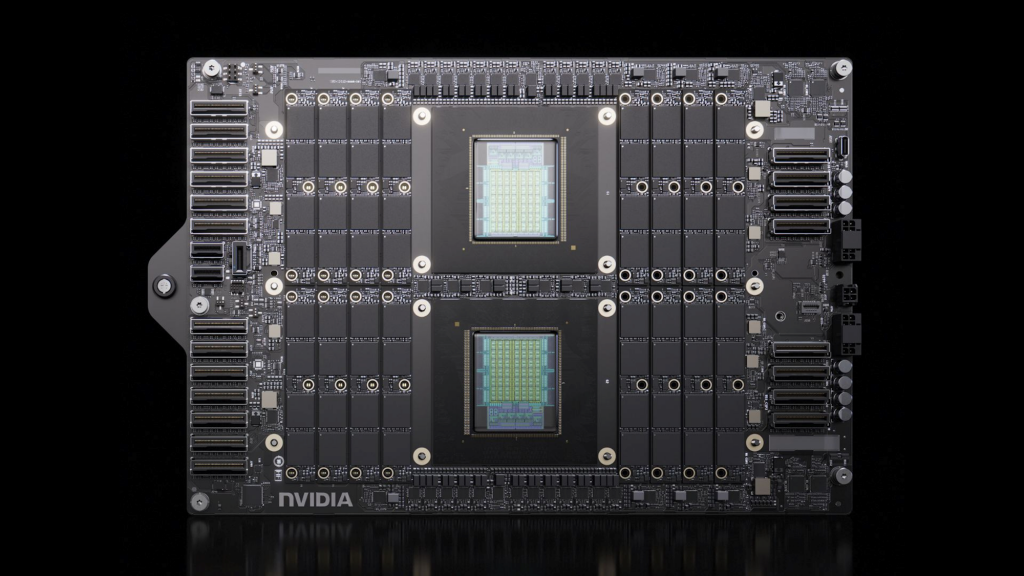
The system leverages LPDDR5X memory, enabling an aggregate bandwidth of up to 1.2TB/s and approximately 14GB/s per core. This level of throughput is intended to support high-speed data ingestion and processing, particularly for workloads that require continuous streaming and real-time inference. In this configuration, the Vera CPU functions as an orchestration layer, balancing compute and memory resources across workloads to reduce inefficiencies and improve utilization.
Integrated Security and Lifecycle Protection
Security is embedded at the hardware and firmware levels through HPE’s Silicon Root of Trust. The DL394 Gen12 also incorporates iLO 7 with a secure enclave, protecting the server lifecycle from manufacturing through decommissioning. These capabilities are designed to mitigate firmware-level attacks and ensure system integrity in regulated environments.
HPE indicated that this generation of ProLiant systems is the first to meet NIST requirements for quantum-resistant cryptography. This positions the platform for long-term deployment in environments where data protection standards are expected to evolve alongside emerging threats.
Unified Management with AI-Driven Operations
The DL394 Gen12 integrates with HPE Compute Ops Management, providing a centralized platform for managing distributed infrastructure. The software layer delivers AI-driven insights into system health, performance, and capacity, reducing operational overhead and minimizing downtime.
By consolidating monitoring and automation into a single interface, HPE aims to simplify infrastructure management for organizations operating at scale. This is particularly relevant for AI deployments, where dynamic workloads and resource demands require continuous optimization.
Availability
The HPE ProLiant Compute DL394 Gen12 is expected to be available in fall 2026 as part of the NVIDIA AI Computing by HPE portfolio.


 Amazon