

At CES 2026, NVIDIA is rolling out a range of updates across the GeForce platform, spanning game rendering and display technology, AI-assisted gameplay, and creative tools. Rather than centering the announcements on new consumer GPUs, this year’s focus is on software, with NVIDIA positioning these changes as ways to unlock more capability from existing and upcoming RTX hardware.
The updates span several areas, including a new DLSS version, expanded RTX Remix tooling, AI-driven gameplay concepts, and continued investment in running larger AI models locally on RTX PCs.
DLSS 4.5 Brings Image Quality Refinements and Expanded Frame Generation
One of the headline announcements is DLSS 4.5, which builds on the DLSS 4 foundation and focuses primarily on image quality and consistency. This is centered on a second-generation transformer-based Super Resolution model that NVIDIA says improves the system’s handling of complex scenes with motion, lighting changes, and fine geometry.
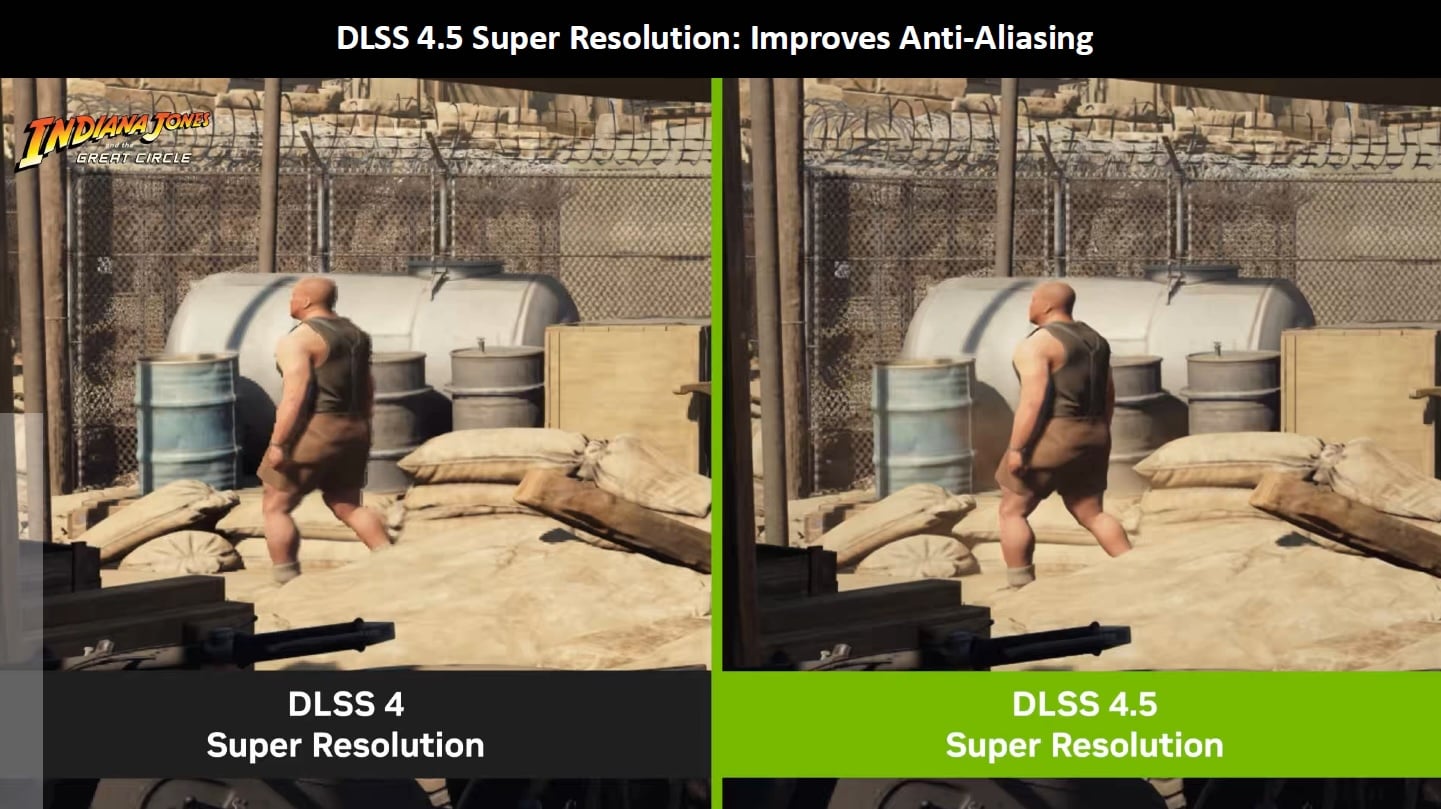
The updated model is trained on a larger dataset and incorporates expanded failure analysis to improve temporal stability. NVIDIA is targeting reductions in ghosting, smoother edges, and more stable image quality across frames.
DLSS 4.5 also extends Multi Frame Generation, supporting up to six generated frames per rendered frame in supported scenarios. A new Dynamic Multi Frame Generation mode adjusts output to match the display’s refresh rate, intended to improve frame pacing on high-refresh monitors, particularly at 240Hz and higher.
NVIDIA notes that the 2nd-gen transformer Super Resolution model is available across all RTX GPUs, while Dynamic six-times frame generation is planned to roll out later for RTX 50 Series hardware.
RTX Remix and AI-Assisted Gameplay Continue to Expand
RTX Remix also receives a substantial update with the introduction of RTX Remix Logic, a system designed to make remastered game content more reactive to gameplay. Instead of applying static visual upgrades, Remix Logic allows mod creators to trigger changes to lighting, materials, volumetrics, particles, and post-processing effects in response to in-game events.

NVIDIA shared examples that show environments reacting dynamically as doors open, enemies approach, or scripted events unfold. The intent is to give modders more control over how remastered visuals respond to player actions, rather than simply replacing assets with higher-fidelity versions.
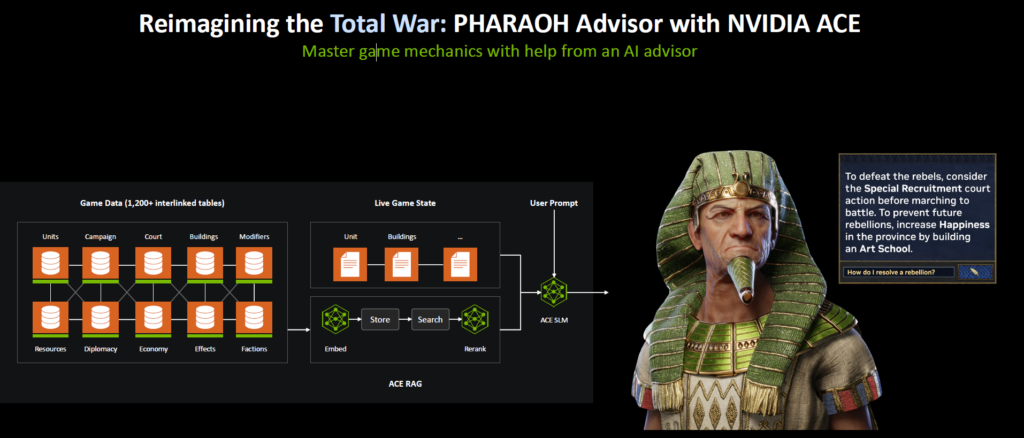
Alongside visual upgrades, NVIDIA continues to explore AI-driven gameplay features that rely on local inference. Demonstrations include AI-controlled teammates and in-game advisors that respond to live game state, offer guidance, or help players navigate complex systems. For example, they presented an AI advisor for Total War: PHARAOH, designed to reference large datasets of game data in real time to help players understand mechanics, resources, and strategic decisions.
Creative AI Tools and Local Model Support Gain Momentum
Beyond gaming, NVIDIA continues to expand support for AI-assisted creation on RTX PCs. Updates to ComfyUI introduce support for lower-precision formats such as NVFP4 and FP8, reducing memory requirements and making it easier to run larger models locally. This enables models that previously required high-end GPUs or cloud resources to run more efficiently on consumer RTX systems.
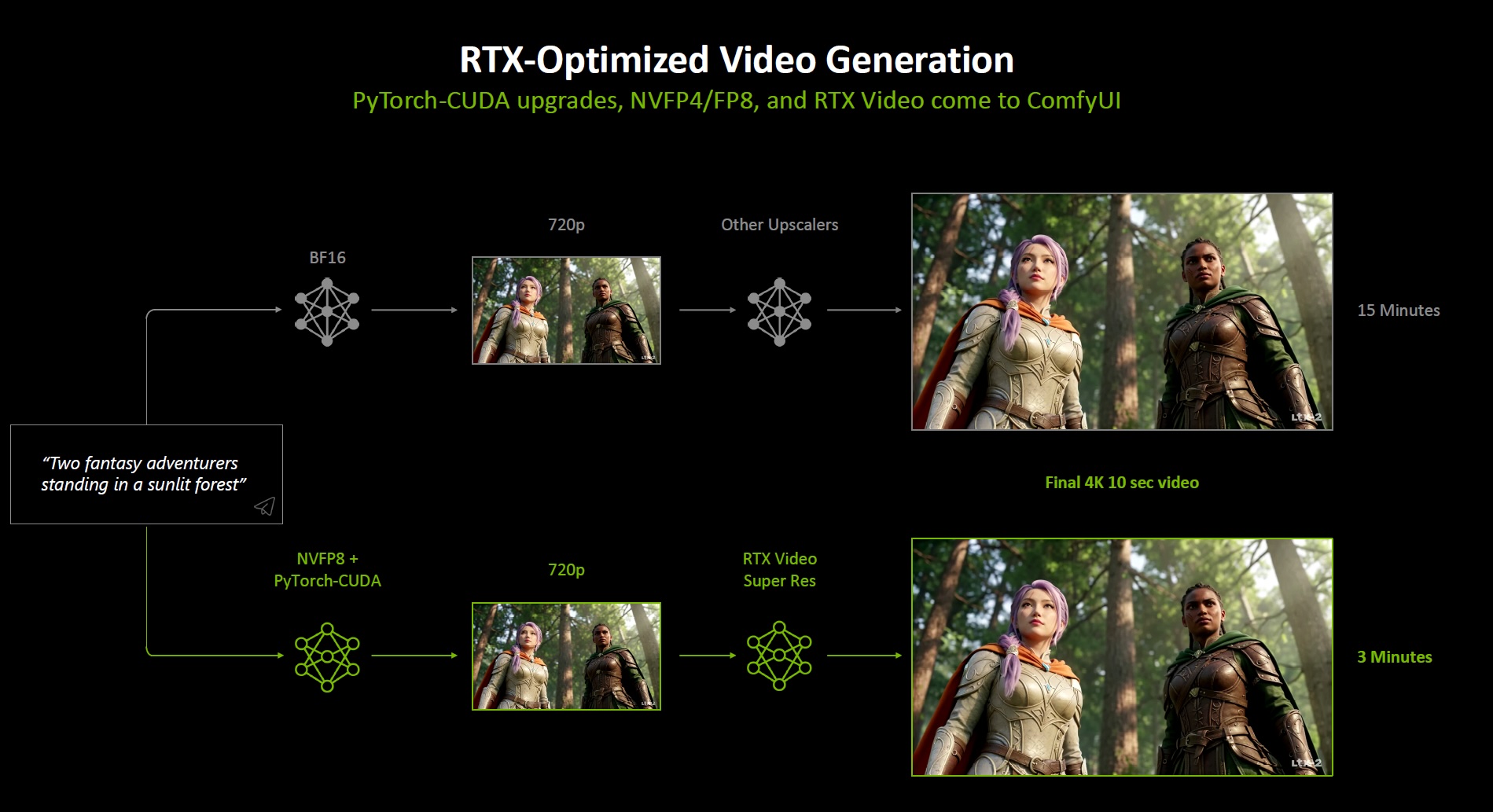
NVIDIA also introduced LTX-2, a video generation model optimized for RTX hardware. LTX-2 supports longer video generation lengths and higher resolutions, including 4K output, and is paired with RTX Video Super Resolution to accelerate upscaling in creative workflows.
Additional updates include AI-powered video search tools, continued development of the RTX Remix ecosystem, and performance improvements delivered through software rather than hardware changes.


 Amazon