

Proxmox has released the stable 1.0 version of Proxmox Datacenter Manager, a platform aimed at organizations that operate Proxmox VE and Proxmox Backup Server across multiple sites or clusters. Many environments grow into structures that become difficult to coordinate, with metrics scattered across nodes and operational tasks handled separately.
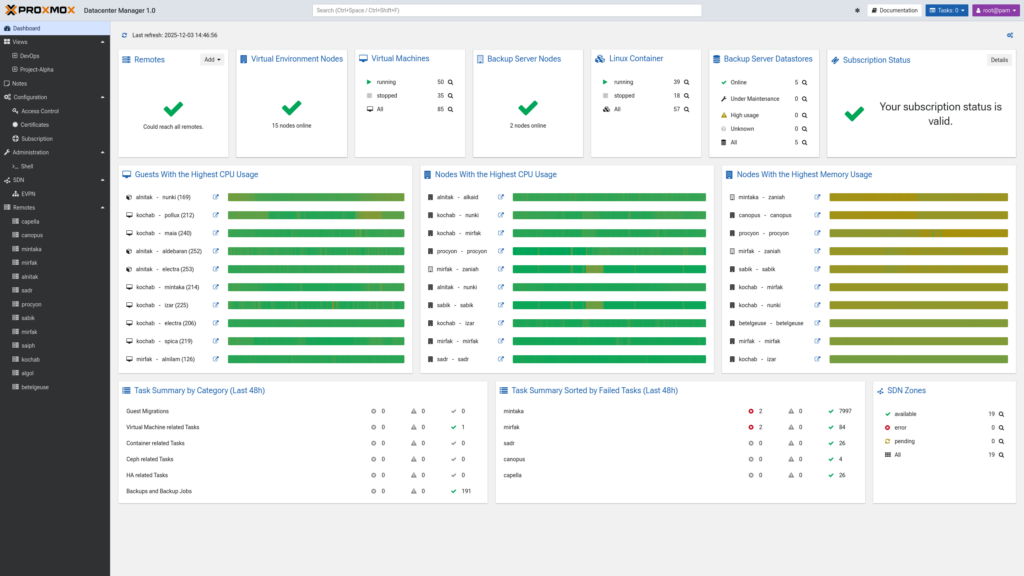
Managing clusters spread across diverse locations often leads to duplicated effort and limited visibility. Administrators working at scale regularly face delays in identifying bottlenecks, since data must be pulled from individual nodes or independent dashboards. Proxmox Datacenter Manager aims to reduce this by linking remotes and offering a unified overview of the infrastructure, pulling system health and resource activity into a single place.
Centralized Monitoring and Customizable Dashboards
The central dashboard aggregates CPU, memory, and storage activity from every connected Proxmox VE and Proxmox Backup Server system, giving administrators a unified health view without requiring them to pull status information from each cluster individually. The layout helps identify problems before they escalate, and its local caching retains the last known metrics, ensuring availability even when a remote connection is briefly offline.
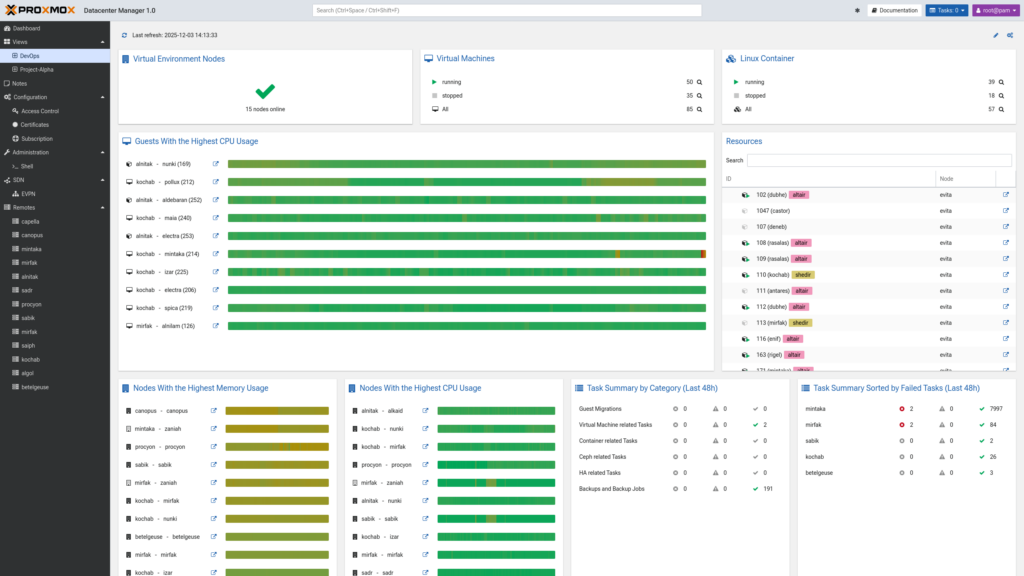
A broader set of customization options helps teams shape the interface around the parts of the infrastructure that matter most to them. Dashboards can be built around remotes, tags, resource types, or operational roles, and the underlying access control system ensures that users only see what they are meant to see. This approach provides focused, workable views without exposing full access to the machines or hosts themselves, which is especially useful in multi-tenant setups or environments where different groups handle different slices of the infrastructure.
Management Tools, Cross-Cluster Mobility, and Lifecycle Operations
Another major part of the release focuses on direct management functions at the multi-cluster level. Administrators can connect separate clusters and nodes, manage them from a single location, and perform operations that previously required local access. One of the more important features is the ability to move virtual machines between clusters while they continue running. This option offers more flexibility when workloads need to shift during maintenance windows or when distributing load across a wider environment.
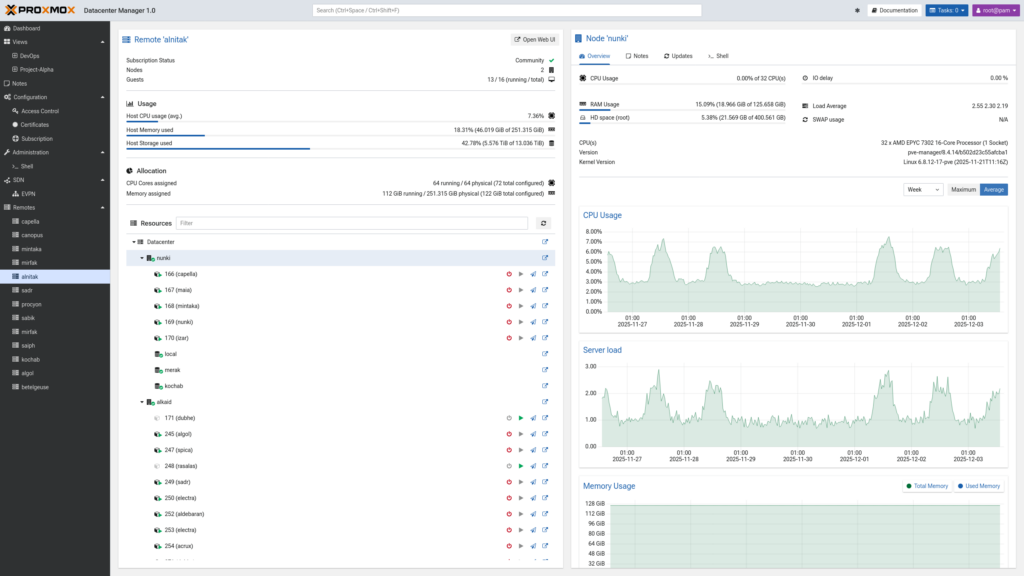
Routine lifecycle tasks, including starting, stopping, and adjusting settings for virtual machines, containers, and storage resources, are managed through the central interface. Activity records and logs are consolidated, making it easier to track changes and keep documentation aligned with compliance requirements.
Advanced Search and Coordinated Networking
The search tool in version 1.0 takes a noticeable step forward by using a query-style approach that many administrators will recognize. Results can be filtered by resource type, status, or custom tags, making it far easier to navigate environments with thousands of virtual guests. This speeds up the location of specific items during troubleshooting and helps compare the state of related resources across different clusters.
Network administration also gains some consistency through the platform’s centralized SDN features. EVPN zones and VNets can be created and managed directly from the Datacenter Manager interface, then applied across all connected remotes. The setup simplifies how teams build and maintain network overlays, especially in deployments spanning multiple clusters or sites.
Central Update Handling and streamlined remote access
Patch management can be challenging in multi-cluster environments, and Datacenter Manager introduces a central update panel to address this. The interface displays available updates for all linked Proxmox VE and Proxmox Backup Server installations and allows administrators to apply them directly. A unified shell access feature is also included, enabling access to individual remotes from a single console rather than switching between tools.
Software Foundation and Design Choices
The underlying stack is built on Debian 13.2 Trixie with Linux kernel 6.17 and ZFS 2.3. The server components are written in Rust, while the interface uses a Rust- and Yew-based Proxmox framework that aims to support responsiveness and efficiency. These choices help ensure stable performance, particularly in deployments that operate at scale or handle heavy administrative workloads.
The development direction emphasizes flexible infrastructure management across settings ranging from central data centers to smaller edge deployments. The accompanying remarks describe Datacenter Manager as part of a broader ecosystem approach that aims to provide long-term interoperability and a range of deployment options, while encouraging openness and scalability.
Availability, Installation Options, and Enterprise Support
Proxmox Datacenter Manager 1.0 is available for download, and the full ISO can be installed on bare-metal systems using the same guided setup as other Proxmox tools. Administrators running earlier versions can upgrade through standard APT methods, and those who prefer to build on an existing Debian system can continue doing so. The project is published as free and open-source software under the GNU AGPLv3 license.
Organizations that rely on formal support can use Proxmox’s subscription plans, which provide access to the Enterprise Repository and certified support. These plans are intended for production environments, and customers who already have Enterprise Support for their Proxmox remotes receive Datacenter Manager updates and support as part of those subscriptions.


 Amazon