

At its Innovation Day 2026 event, Western Digital (now rebranded as WD) unveiled a customer-centric storage roadmap to reinvent hard drives for AI-era infrastructure, spanning 100TB+ HDDs, new performance- and power-optimized architectures, and an intelligent platform designed to improve storage economics and time-to-value.
WD confirmed its 40TB UltraSMR ePMR drive is currently in customer qualification, with volume production planned for the second half of 2026. HAMR-based drives are also moving through qualification, with ramp production expected in 2027.
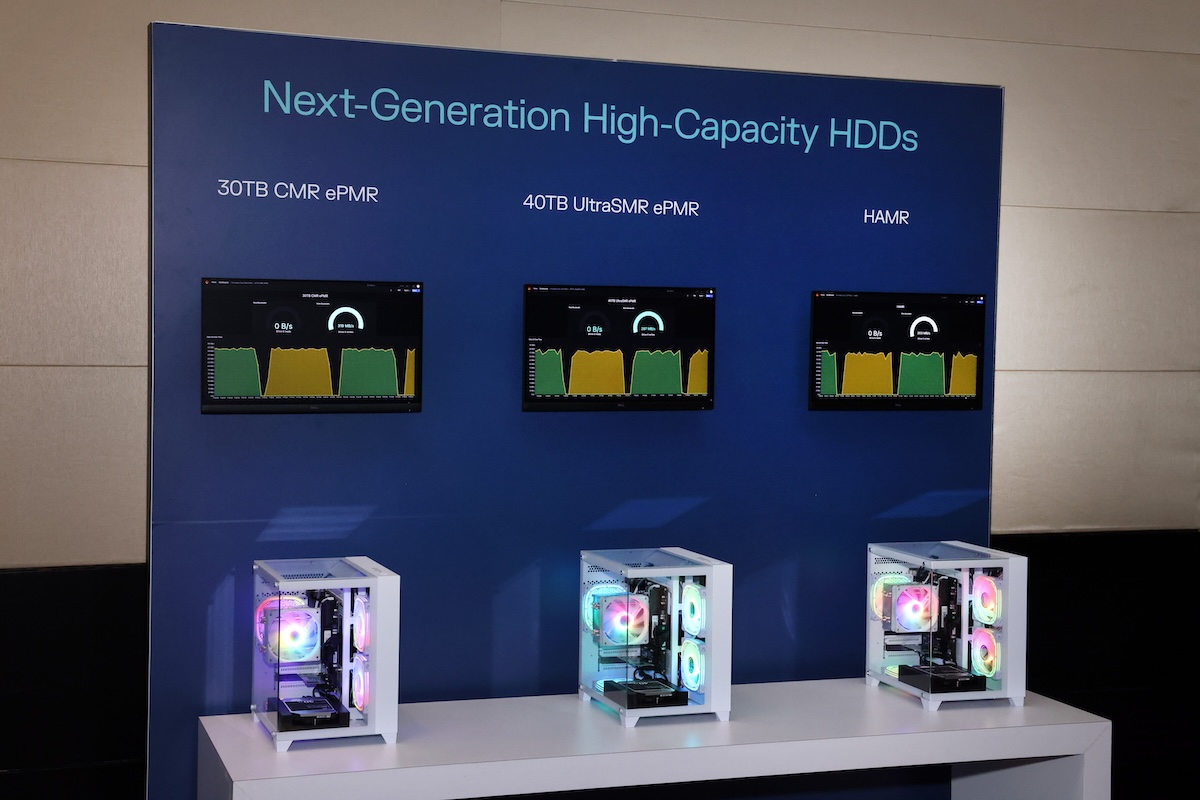
WD will extend ePMR to 60TB by leveraging HAMR innovations without increasing power consumption, while HAMR is projected to scale to 100TB by 2029. Because both technologies share a common architecture, WD says customers benefit from smoother transitions, improved manufacturing efficiency, and predictable capacity planning without forced platform changes.
Boosting HDD Performance for AI Workloads
To address growing performance demands, WD introduced two new drive technologies:
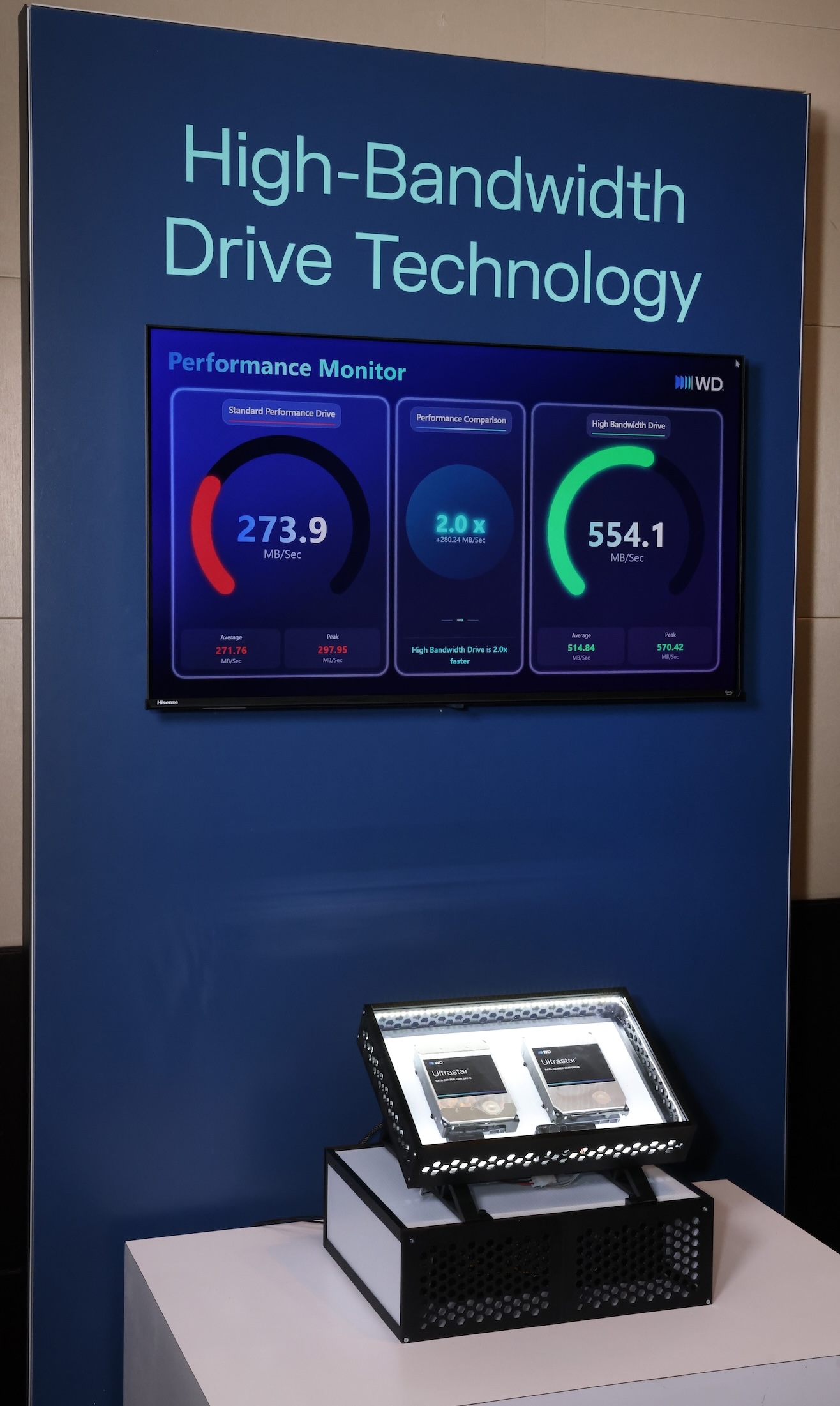
- High-bandwidth drive technology, which allows multiple heads to read and write simultaneously, delivers up to twice the bandwidth of today’s HDDs and offers a longer-term path to much larger gains. Customers are already validating this technology.
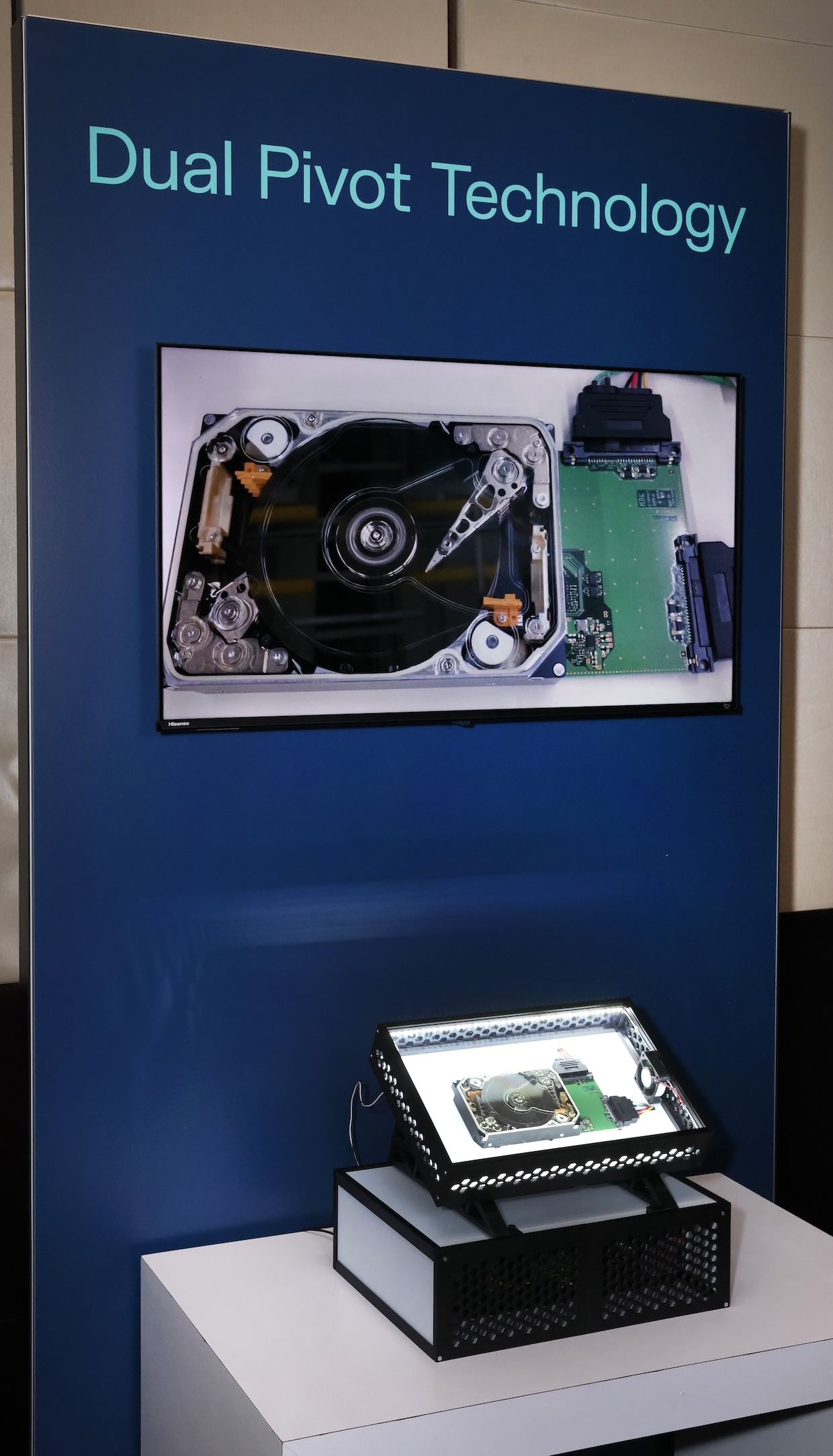
- Dual Pivot technology adds a second independently operating actuator inside a standard 3.5-inch drive. Unlike earlier dual-actuator designs, this approach preserves capacity and avoids software changes while delivering up to double the sequential I/O. Applications see one storage device to manage, significantly improving compatibility across the board. Tightening disk spacing also enables more platters per drive. HDDs with Dual Pivot are expected to be available in 2028.
WD positions these innovations as fundamentally resetting HDD performance, enabling workloads previously considered flash-only to run on hard drives at far lower cost. The company says the combined impact of High Bandwidth Drive and Dual Pivot technologies can ultimately deliver up to 4x sequential I/O, while maintaining relative I/O per TB as capacities climb.
Lower-Power Drives for Cold AI Data
AI workloads generate large volumes of data that are accessed infrequently but must remain available quickly. WD says its upcoming power-optimized HDDs target this gap between warm and cold storage.
WD says these power-optimized HDDs will consume roughly 20% less power, enabling customers to lower operating costs, build lower-cost storage tiers, and improve sustainability, while maintaining sub-second access for cold AI data that is too active for tape but too expensive for traditional capacity drives.
Bringing Hyperscale-Style Storage to More Customers
WD also announced an expansion of its Platforms business, including an intelligent software layer delivered through an open API, targeted for launch in 2027. Aimed at organizations managing 200 petabytes or more, the platform is designed to simplify deployment across WD’s HDD and flash products, shorten time-to-production, and reduce qualification risk.
Rather than requiring architectural changes, the software is meant to sit on top of existing infrastructure, helping mid-scale customers achieve storage efficiency closer to hyperscale environments.
AI and Cloud Centered Business
WD noted that roughly 90% of its revenue now comes from AI and cloud customers. The company says operational improvements more than doubled gross profit year over year, helping drive its inclusion in the Nasdaq 100 and a ranking among the top S&P 500 performers in 2025. WD also shared a new financial model outlining expectations for the next three to five years.
Market Impact
WD’s Innovation Day paints a picture of a company intent on keeping HDDs relevant well into the AI era. But the success of that strategy ultimately hinges on how these technologies translate into usable performance, economics, and scale. StorageReview President Brian Beeler weighs in:
“Data growth isn’t slowing, but data availability is increasingly becoming the bigger challenge as organizations work to extract value from their AI investments. Access to more data, at scale and at the right cost, is quickly becoming an interesting AI workflow.
“HDDs face an uphill battle, though, as QLC SSDs continue to push into higher capacities and broader deployment, offering compelling density and latency advantages despite their higher cost. That said, WD’s roadmap for HDD capacity expansion and performance-focused architectures is the most ambitious effort we’ve seen to reposition hard drives for AI-era workloads.
“If WD can deliver on its claims of materially higher bandwidth, improved sequential performance, and sustained I/O as capacities climb, HDDs could remain a meaningful part of future AI data tiers rather than being relegated purely to deep archive. The performance-oriented technologies in particular stand out, and we’d welcome the opportunity to get hands-on with these designs at scale once WD moves further down the qualification and production curve.”


 Amazon