

ZutaCore has introduced OmniTherm, a cold plate that allows for waterless two-phase cooling for servers equipped with NVIDIA 6000 Blackwell Server Edition GPUs in a single-slot PCIe form factor. The solution targets OEMs and large-scale operators that want to run these accelerators at full power in standard enterprise and AI cloud server designs without switching to specialized server platforms or immersion systems.
PCIe GPU servers remain a top choice for AI inference and mixed workloads because they are easier to deploy, scale, and integrate into existing rack and power infrastructure. As GPU power density grows, traditional air cooling starts to limit performance. Operators often have to crank up fan speeds, which increases power consumption, raises noise levels, and may still leave systems susceptible to overheating during intense AI workloads.
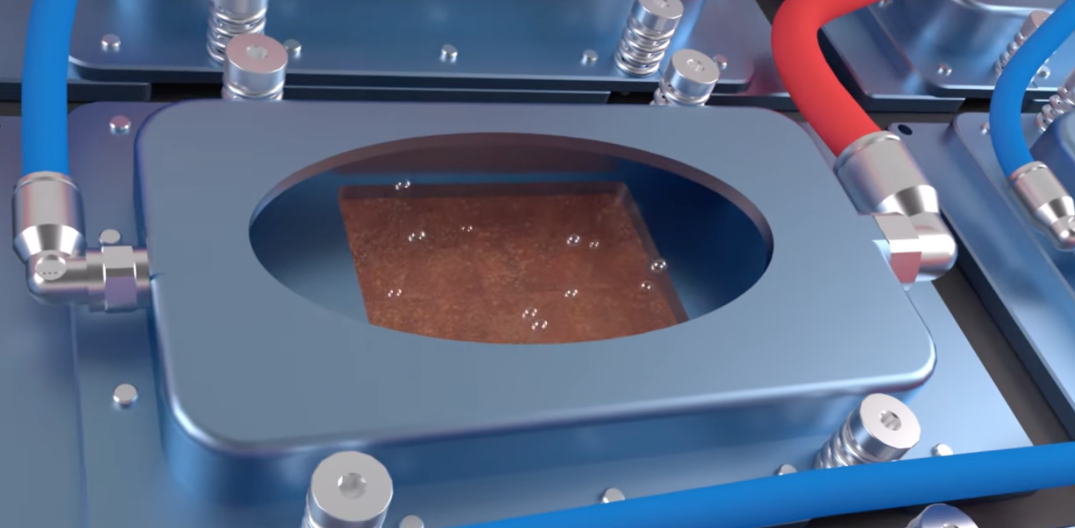
OmniTherm aims to solve this issue by transitioning to two-phase liquid cooling without using water in the server chassis. The cold plate uses a sealed dielectric fluid that boils at the heat source and condenses in a separate loop. By maintaining a single-slot PCIe profile, ZutaCore enables system builders to maintain or increase accelerator density in standard server architectures while shifting most of the heat to a liquid cooling loop. This reduces the need for high-RPM fans, lowers power usage, and lessens thermal and noise pressure at the rack level.
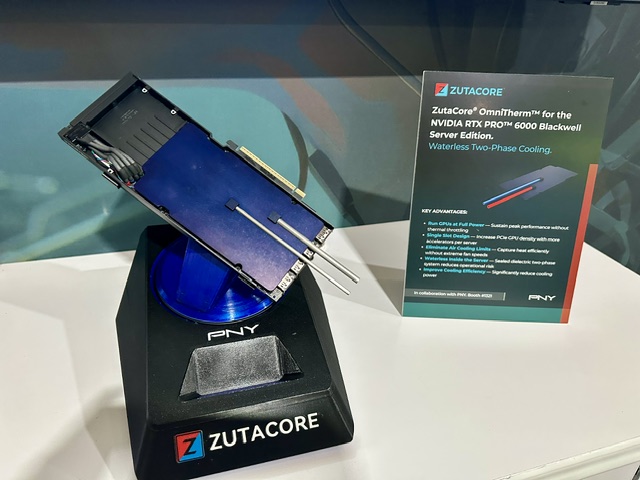
ZutaCore CTO My D. Truong emphasized the growing importance of PCIe GPUs, which offer both flexibility and high density as data centers face rising rack-level power budgets. He mentioned that the combination of waterless two-phase cooling and a single-slot form factor aims to help data centers increase the number of accelerators per server while maintaining stable thermal performance for continuous AI workloads, especially as deployments expand.
Built for Always-On, Variable AI Workloads
Production AI environments seldom maintain a steady workload. Inference tasks are highly variable, with usage and power consumption varying with traffic patterns and model behavior. These fluctuations can lead to quick temperature shifts that strain air-cooled designs and complicate performance reliability.
OmniTherm’s two-phase thermal design rapidly responds to these changes. As GPU load increases, more dielectric fluid vaporizes at the cold plate, improving heat transfer without increasing fan speed. When the load decreases, the system stabilizes naturally as vapor condenses. This function helps operators maintain more consistent temperatures across varying workloads. It supports reliable performance and reduces the risk of temporary throttling in dense PCIe GPU servers.
Protecting Long-Term Infrastructure Investments
For operators, reliability and performance over time are just as vital as peak throughput. ZutaCore claims that OmniTherm cools not only the GPU die but also nearby high-value components such as CPUs and next-generation high-bandwidth memory. By covering more than just the main accelerator ASIC, the system targets hotspots that matter more in multi-chip and HBM-heavy designs.
This broader thermal coverage supports long-duration, bandwidth-intensive AI tasks that challenge both compute and memory systems. Reducing thermal stress on these components can boost long-term stability, reduce performance degradation, and protect investments in high-power PCIe platforms as GPU and memory technologies advance.
Rack Scale Operational Considerations
As racks increasingly handle higher power densities, the cost and complexity of relying solely on air cooling rise quickly. Higher fan power, increased noise, and stricter HVAC requirements all contribute to operational costs and can affect the working conditions in data centers.
OmniTherm’s sealed, non-conductive dielectric fluid loop is designed to absorb most of the heat in the server and transfer it to a facility-side liquid loop without introducing water into the chassis. This structure can reduce dependence on extreme fan speeds, cut cooling energy use, and help operators manage noise levels. The setup also enables scaling PCIe-based AI deployments in existing spaces by shifting more cooling demand to liquid systems rather than relying solely on airflow.
HyperCool Cloud
Alongside OmniTherm, ZutaCore is launching HyperCool Cloud, a cloud-based operations platform that manages liquid-cooling systems across distributed deployments. The platform is designed to be secure and telemetry-driven, offering nearly real-time insights into coolant distribution units (CDUs) and related cooling equipment.
HyperCool Cloud provides telemetry for CDUs, supports fleet-wide monitoring, and implements workflows from alarm to resolution. For operators, this means liquid cooling operates as a managed, observable service like other infrastructure components. The goal is to enhance service response, streamline incident management, and support uptime as liquid-cooling setups expand across multiple sites and larger fleets of PCIe GPU servers.
Together, OmniTherm and HyperCool Cloud enable ZutaCore to tackle both the hardware and operational challenges of scaling PCIe-based AI platforms with waterless two-phase liquid cooling.


 Amazon