

De HP ZBook Ultra G1a 14 staat bovenaan onze lijst met beste laptops voor lokale AI-toepassingen in het segment 'Beste grote modellen ', dankzij de 128 GB aan geïntegreerd geheugen, waarvan 96 GB toewijsbaar is aan de GPU. Deze laptop presteerde beter dan laptops met een aparte GPU. De nieuwe HP ZBook Ultra G3a 16 verhoogt dit geheugen naar 192 GB, met maximaal 160 GB voor de GPU, heeft een 16-inch behuizing en verdubbelt bijna het maximale stroomverbruik. We hebben een pre-productiemodel in ons lab en hoewel de benchmarks pas volgende maand beschikbaar komen, wijst de specificatielijst er al op dat de top van de lijst binnenkort flink door elkaar geschud zal worden.
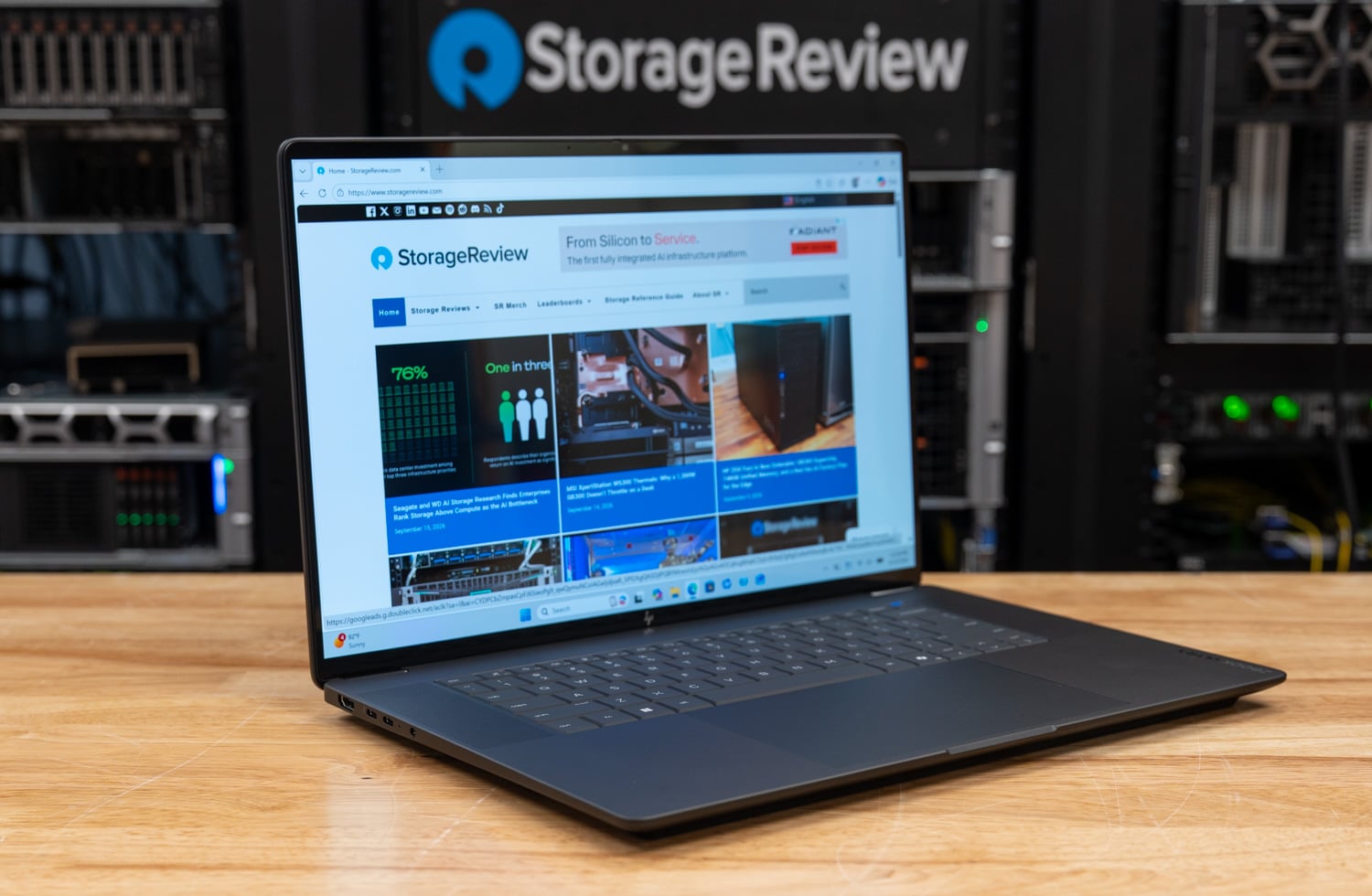
HP heeft vandaag de ZBook Ultra G3a 16 aangekondigd. Het toestel is vanaf oktober verkrijgbaar en de prijs wordt later bekendgemaakt. Het exemplaar dat we hier hebben, is voorzien van een pre-productielabel en een schone Windows-installatie. We kunnen nu alvast de hardware toelichten, laten zien wat er onder de onderkant zit en beschrijven welke specificaties we gaan meten zodra de definitieve systemen arriveren.
192 GB aan gecombineerd geheugen, 160 GB voor de GPU
Eén getal is bepalend voor dit systeem: geheugen. Ons testmodel combineert de AMD Ryzen AI Max+ PRO 495, het topmodel van de Strix Halo PRO-reeks, met 16 cores, 32 threads en een boostklok van 5.2 GHz, met 192 GB LPDDR5X-8533-geheugen dat rond de CPU is gesoldeerd. Tot 160 GB van dit geheugen kan worden toegewezen aan de geïntegreerde Radeon 8065S GPU, en de Ryzen AI NPU voegt daar nog eens 55 TOPS aan toe. HP zegt dat het systeem samen met AMD is ontwikkeld en claimt dat de configuratie LLM's met maximaal 300B parameters lokaal kan uitvoeren, met ruimte voor meerdere agents ernaast. HP noemt het ook de meest capabele laptop voor lokale agents, een ranking gebaseerd op hun eigen vergelijking in augustus van de GPU-geheugencapaciteit van concurrerende laptops.
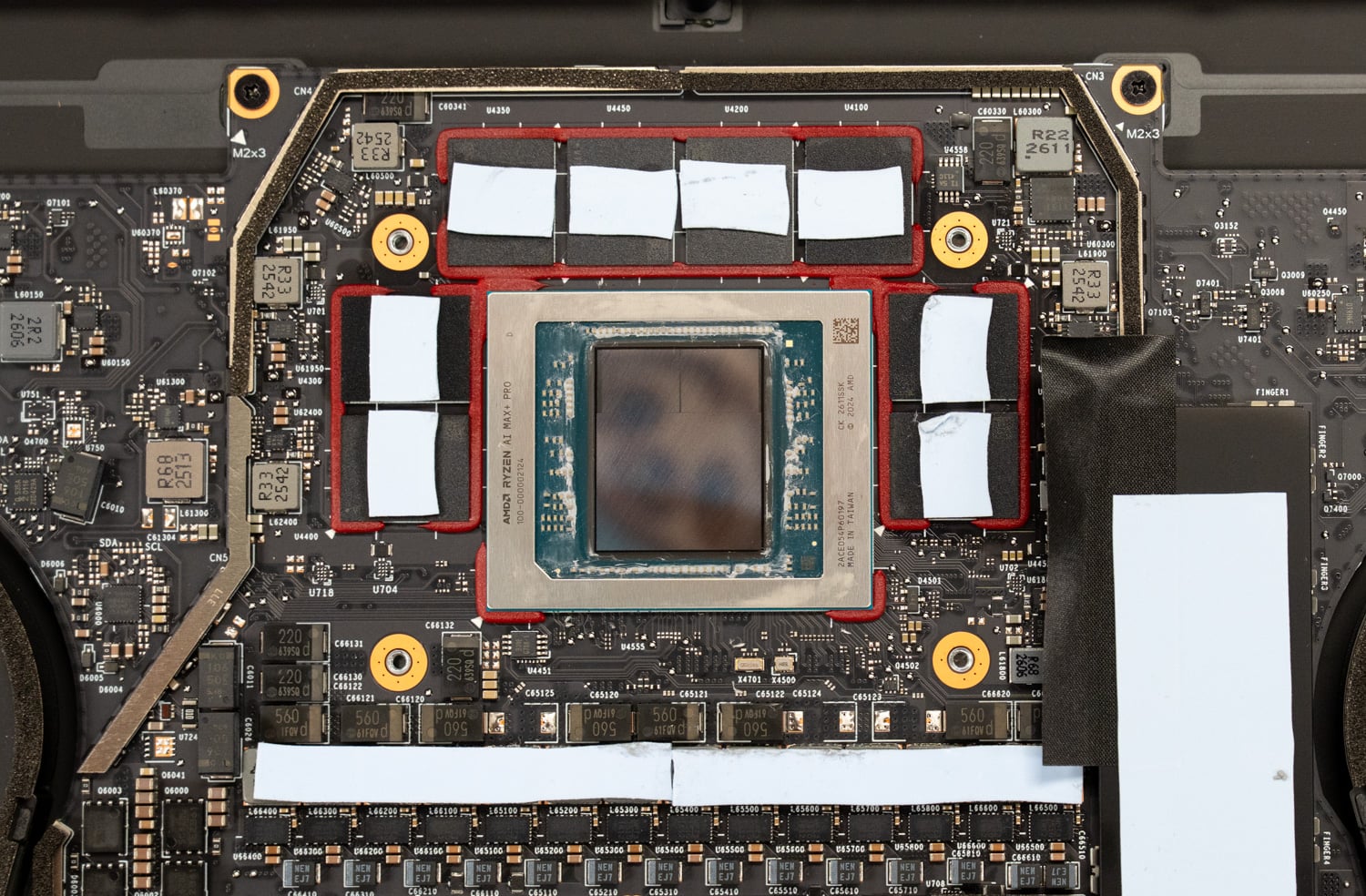
Ter vergelijking: de G1a 14 werd geleverd met 128 GB en we konden tot 96 GB toewijzen aan de Radeon 8060S. Dat was genoeg om DeepSeek-R1 70B en QwQ 32B te laden in LM Studio en Ollama, en om Gemma 3 27B te draaien met 8.96 tokens per seconde. Daarom won hij de categorie 'grootste model', ondanks dat de Procyon-prestaties achterbleven bij de RTX PRO-laptops die we hebben getest. De G3a voegt 64 GB GPU-adresseerbaar geheugen toe aan dat basisontwerp. Het is tevens de grootste GPU-geheugentoewijzing die we tot nu toe hebben gezien op een Ryzen AI Max-systeem, laptop of desktop, en hij valt in dezelfde siliciumfamilie als de Ryzen AI Halo-desktop die we in juli vergeleken met de DGX Spark .
De geheugencapaciteit bepaalt welke modellen geladen worden, maar niet hoe snel ze draaien. Bij de G1a zorgde het uniforme geheugen voor de grootte van de modellen, en het stroombudget van 55W bepaalde de snelheid. De GPU van de G3a alleen verandert daar niets aan.
Een thermisch herontwerp van 55W naar 100W
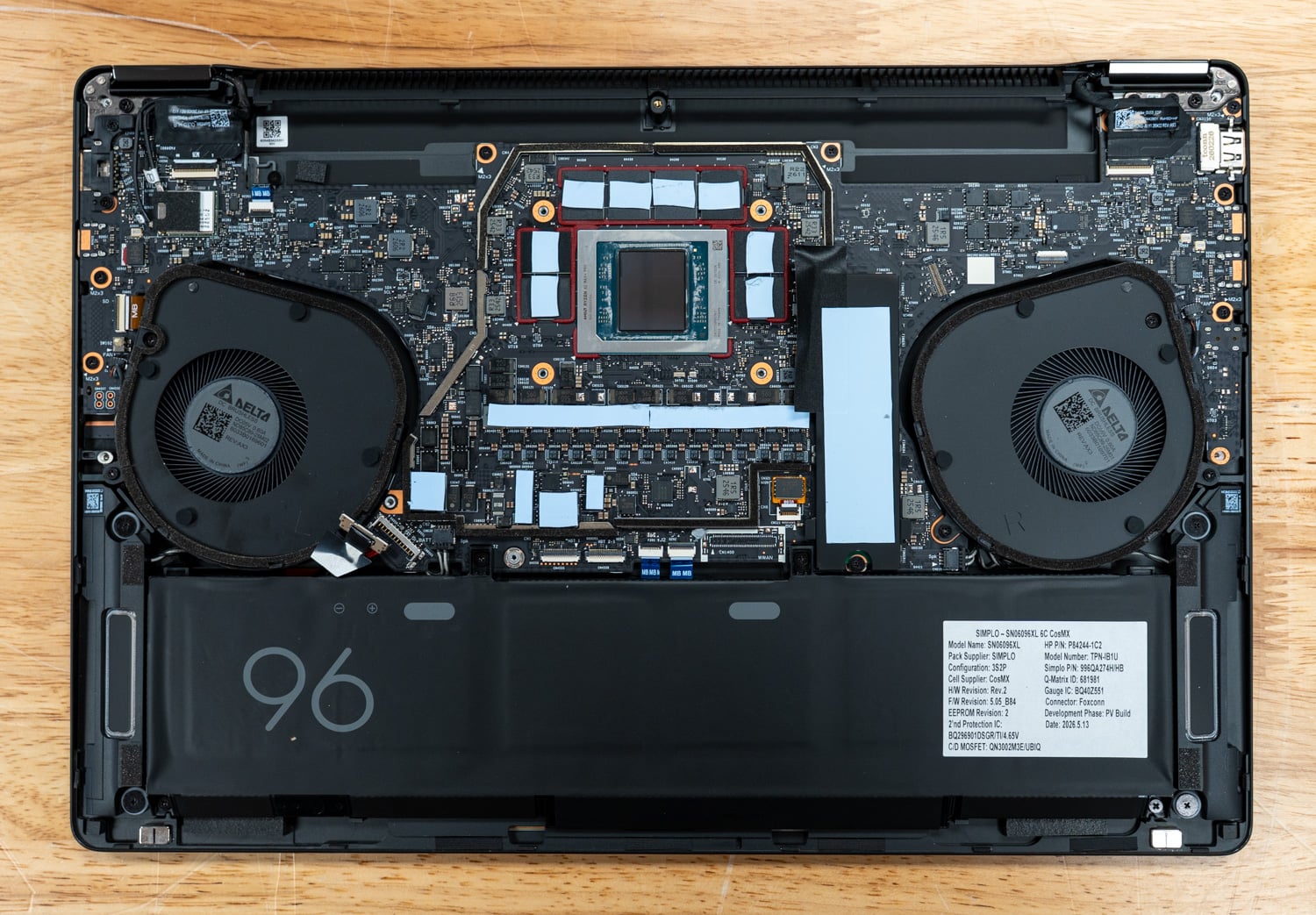
Het nieuwe koelsysteem van de HP G3a 16 kan een vermogen tot 100W aan, een enorme verbetering ten opzichte van eerdere Zbook-modellen. Een enkele koelplaat bedekt de SoC en het geheugen, met twee Delta-ventilatoren aan weerszijden die de warme lucht afvoeren via een brede radiator die wordt gevoed door koperen heatpipes langs de achterrand.
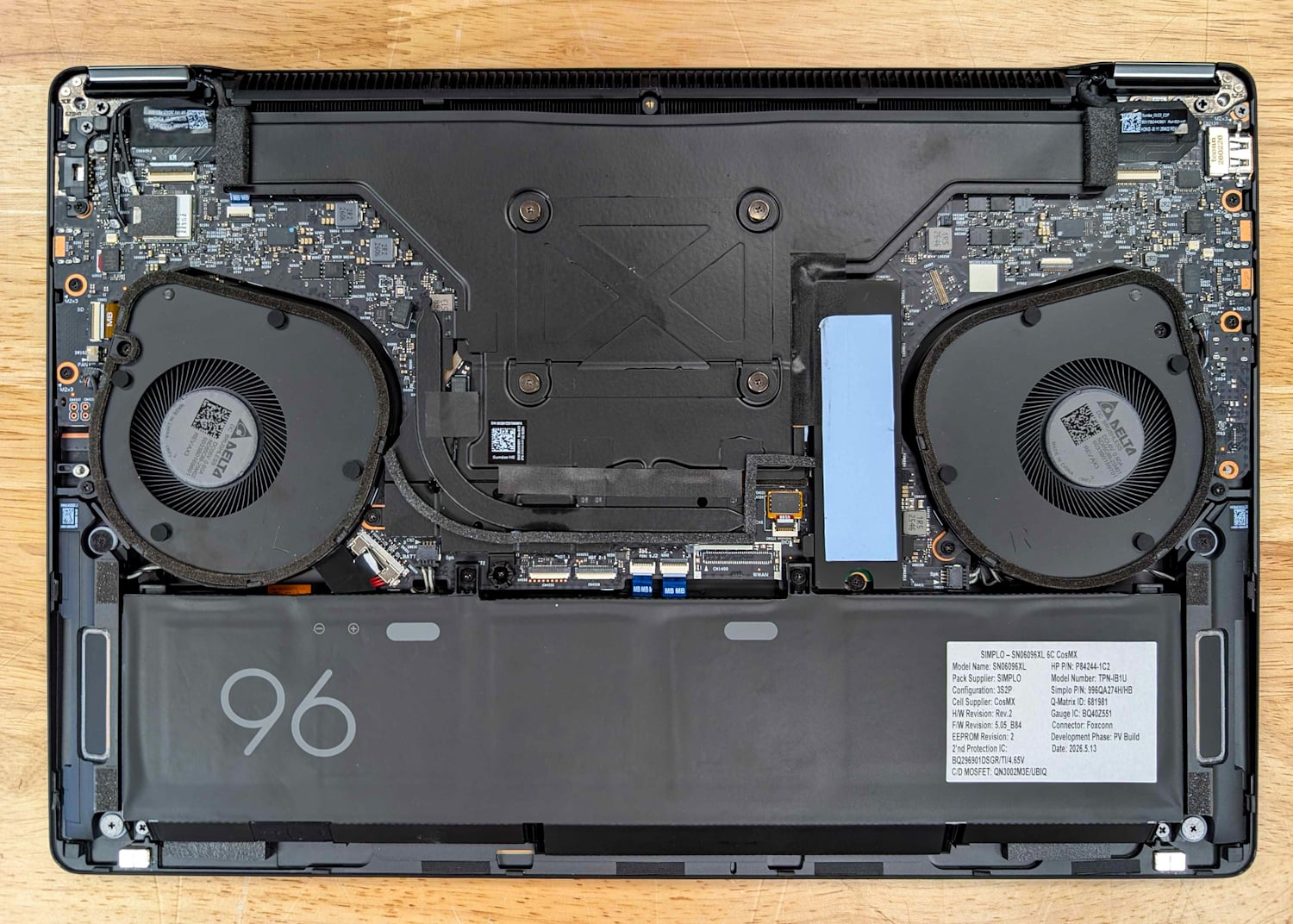
Een door de gebruiker vervangbare 96Wh-batterij vult het onderste derde deel van de behuizing, met een door HP opgegeven gebruiksduur van maximaal 14 uur en een laadtijd van 50% in 30 minuten met de 180W GaN-adapter. Opslag is mogelijk via één PCIe Gen5 x4 M.2-slot, in ons testexemplaar voorzien van een 2TB SK hynix PCB01, configureerbaar tot 8TB. Eén slot in een 16-inch workstation is handig als u rekent op een tweede schijf voor datasets, hoewel 8TB Gen5 in één bay daarvoor grotendeels voldoende is. HP merkt ook op dat het toetsenbord zo is ontworpen dat IT-medewerkers het kunnen vervangen zonder de hele laptop te demonteren, onderdeel van een bredere focus op onderhoudsgemak binnen hun lijn van draagbare apparaten.
Bouw en Ontwerp
Qua design is de G3a 16 een echte Z: een Eclipse Gray aluminium behuizing van 17.9 mm dik, met een gewicht vanaf 1,9 kg en dezelfde ingetogen afwerking als de Fury- en Studio-series. De G1a 14 woog 1,5 kg, had minder dan de helft van het continuvermogen en een kleiner scherm; de G3a voegt daar nog eens 5 cm scherm, een groter koelsysteem en een grotere batterij aan toe voor minder dan 450 gram extra.
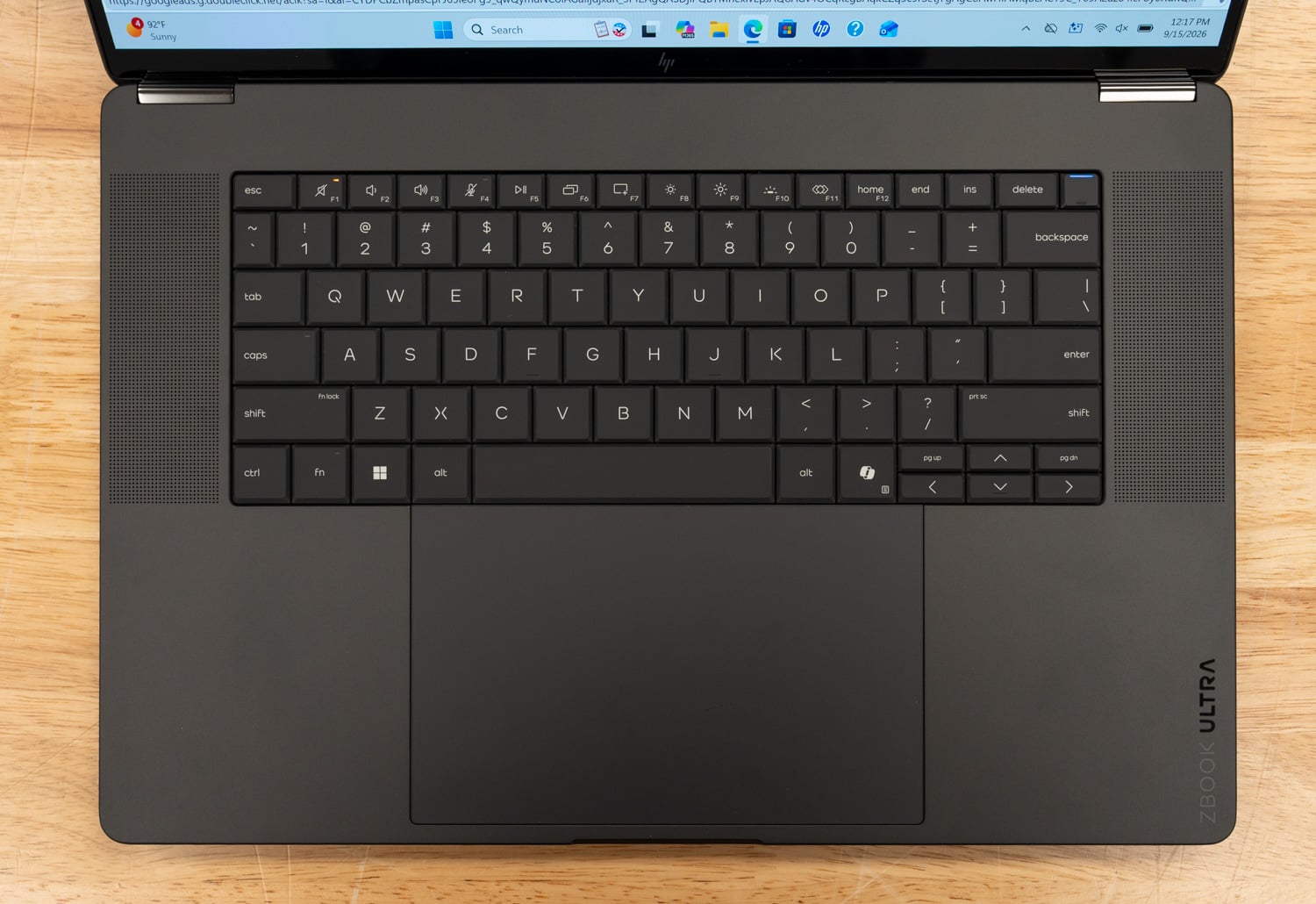
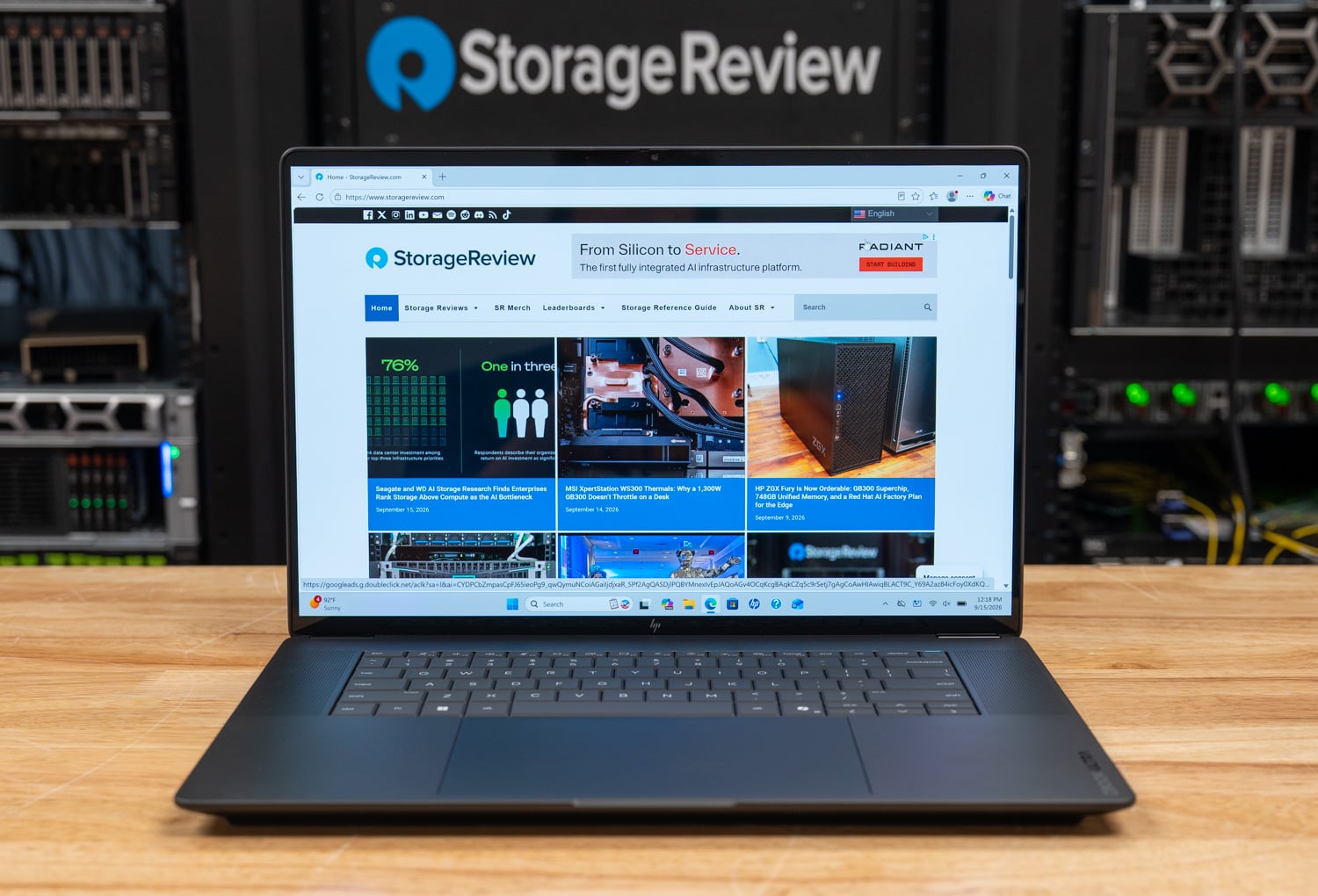
Het apparaat is voorzien van een morsbestendig toetsenbord met achtergrondverlichting en HP's DuraKeys-coating, een groot Precision-touchpad en luidsprekerroosters aan weerszijden van de toetsen voor het Poly Studio-audiosysteem met vier luidsprekers. Ons testmodel heeft het 16-inch WQUXGA-paneel, een IPS-scherm met een resolutie van 3840 x 2400 pixels, een verversingssnelheid van 120 Hz en een helderheid van 500 nits, HP DreamColor-kalibratie en 100% DCI-P3-dekking. HP biedt ook een 2.8K OLED-touchscreen met 500 nits, een 2.5K-paneel met 100% Adobe RGB en een energiezuiniger WUXGA-paneel voor kopers die meer waarde hechten aan een lange batterijduur dan aan een hoge pixeldichtheid.
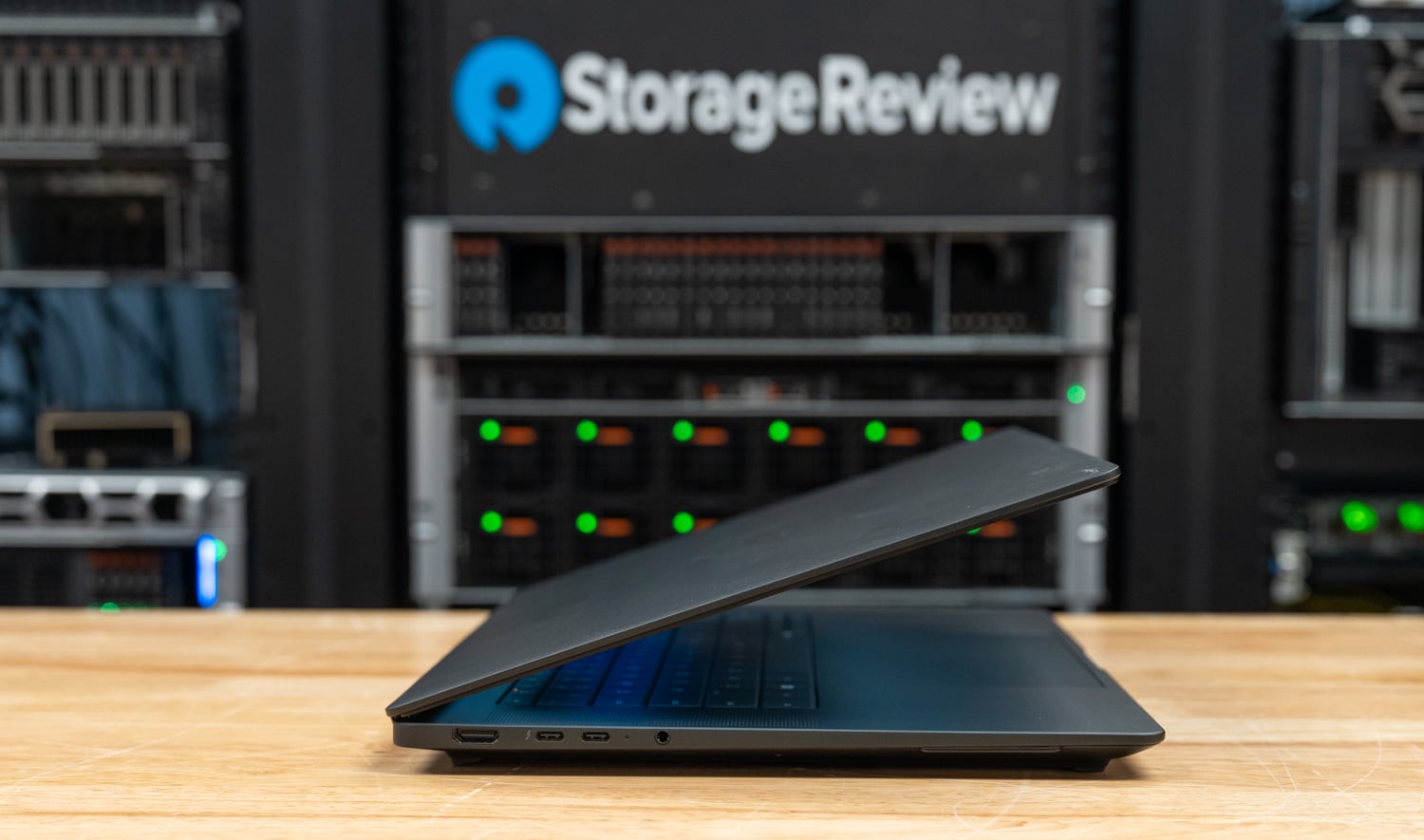
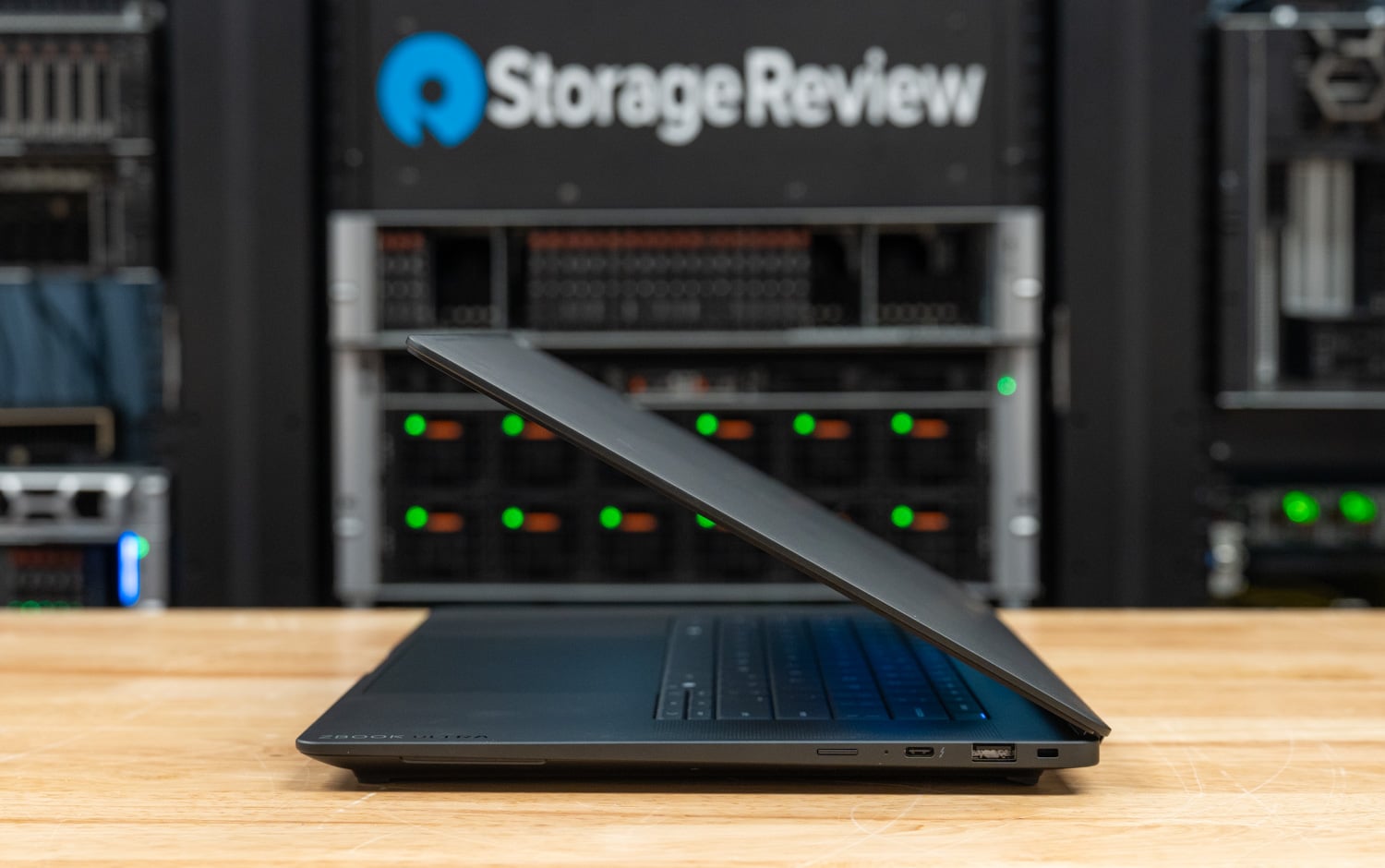
Aan de linkerkant bevinden zich een HDMI 2.1-poort, een Thunderbolt 4-poort met een snelheid van 40 Gbps, een USB-C-poort van 10 Gbps met Power Delivery en DisplayPort 1.4, en een hoofdtelefoonaansluiting. Aan de rechterkant bevindt zich een tweede Thunderbolt 4-poort, een USB-A-poort van 10 Gbps en een sleuf voor een nano-beveiligingsslot. De draadloze verbinding wordt verzorgd door MediaTek Wi-Fi 7 met Bluetooth 6.0, en HP biedt 5G WWAN aan, inclusief de HP Go-connectiviteitsdienst, als optie. De webcam is een 5MP IR-unit met Windows Hello, en de lijst met besturingssystemen omvat Ubuntu 26.04 LTS naast Windows 11 Pro.
Perplexity, Revit en de vaardigheden van HP
Perplexity Computer wordt standaard meegeleverd met de G3a 16, inclusief een MCP-connector voor Autodesk Revit. Hierdoor kan een lokaal model direct op de computer werken met projectgegevens, zonder dat er propriëtaire bestanden naar een cloudserver hoeven te worden geüpload. Gebruikers kunnen het model vervolgens naar wens overzetten naar een cloudomgeving. HP en Perplexity hebben samen ook een set taakgerichte Skills ontwikkeld, exclusief voor HP-klanten. Ons pre-productiemodel werd geleverd met een schone Windows-installatie, wat gebruikelijk is in dit stadium. We zullen de Perplexity-stack en de Revit-connector daarom later bekijken op een productieversie. HP biedt ondersteuning voor Autodesk Revit 2027, Autodesk 3ds Max en Chaos Enscape-visualisatie, de ontwerp- en visualisatieworkloads die de AEC-klanten voor wie dit systeem bedoeld is, al gebruiken.
"Professionals hebben behoefte aan krachtige, betrouwbare en in hun werkwijze geïntegreerde AI-ervaringen", aldus Jim Nottingham, senior vice president en divisiepresident van Advanced Compute and Solutions bij HP. HP positioneert de G3a 16 als onderdeel van een breder portfolio met lokale AI-oplossingen, waaronder de ZGX Nano en de ZGX Fury , die nu te bestellen is en momenteel in ons lab wordt getest, samen met HP Boost en HP Remote System Controller. HP publiceert ook een Local AI Value Calculator op HP.com om de kosten te berekenen van het verplaatsen van AI-workloads van de cloud naar Z-werkstations. Voor desktop-pc's in dit segment staan de ZGX Nano en zijn GB10- en Strix Halo-concurrenten hoog in onze ranglijst van beste desktops voor lokale AI , op basis van dezelfde tests die we hier zullen uitvoeren.
Specificaties van de HP ZBook Ultra G3a 16
| Specificaties | HP ZBook Ultra G3a 16 |
|---|---|
| Platformoverzicht | |
| Gegevensverwerker | AMD Ryzen AI Max+ PRO 495 (16C/32T, tot 5.2 GHz, 64 MB L3) zoals getest. De Ryzen AI Max PRO 490-, 485- en 480-configuraties zijn beschikbaar. |
| grafiek | Geïntegreerde AMD Radeon 8065S (8050S en 8040S op lagere modellen) |
| NPU | AMD Ryzen AI, 55 TOPS (50 TOPS op lagere SKU's) |
| Geheugen | Tot 192 GB LPDDR5X-8533 gecombineerd geheugen Tot 160 GB is gereserveerd voor de GPU. |
| Opslag | 1 x M.2 PCIe Gen5 x4 NVMe, tot 8 TB 2TB SK Hynix PCB01 zoals getest |
| Scherm | 16-inch WQUXGA 3840×2400 IPS, 120Hz, 500 nits, 100% DCI-P3, HP DreamColor (zoals getest) 16-inch 2.8K 2880×1800 OLED-touchscreen, tot 120Hz, 500 nits, 100% DCI-P3 16-inch 2.5K 2560×1600, tot 120Hz, 400 nits, 100% Adobe RGB 16-inch WUXGA-monitor met een resolutie van 1920×1200, 400 nits, laag energieverbruik en 100% sRGB-dekking. |
| Connectiviteit | |
| Havens (links) | 1 x HDMI 2.1 1 x Thunderbolt 4 (USB-C, 40 Gbps, PD, DisplayPort 2.1) 1 x USB-C 10 Gbps (PD, DisplayPort 1.4) 1 x hoofdtelefoon / microfoon combo |
| Havens (rechts) | 1 x Thunderbolt 4 (USB-C, 40 Gbps, PD, DisplayPort 2.1) 1 x USB-A 10 Gbps 1 x sleuf voor nano-beveiligingsslot |
| Wireless | MediaTek Wi-Fi 7 MT7925 (2×2) met Bluetooth 6.0 Optionele 5G WWAN (HP R18, HP Go) en LTE LPWAN |
| Camera en audio | 5MP IR AI-camera 4 stereoluidsprekers met aparte versterkers, dubbele microfoonarray (Poly Studio) |
| Kracht en fysiek | |
| Aanhoudende kracht | Tot 100W (G1a: 55W) |
| Accu | 96Wh 6-cellige accu, door de gebruiker vervangbaar. Tot 14 uur (HP-vermogen), 50% opladen in 30 minuten. |
| Power Adapter | 180W of 140W USB-C GaN |
| Afmetingen | 14.02 x 9.45 x 0.70 inch (35.6 x 24.0 x 1.79 cm) |
| Gewicht | Vanaf 1.9 kg (4.2 lb) |
| Besturingssystemen | Windows 11 Pro, Windows 11 Home, FreeDOS, Ubuntu 26.04 LTS |
| Beschikbaarheid | Oktober 2026, prijs wordt nog bekendgemaakt |
Wat we vervolgens gaan testen
De G1a 14 bewees het nut van een geïntegreerd geheugen in een laptop: modellen die geen enkele notebook met een aparte GPU aankon, draaiden lokaal op een machine van slechts 1,5 kg. Waar de G1a 14 echter tekortschoot, was de generatiesnelheid. Grote modellen produceerden slechts enkele tokens per seconde binnen een vermogenslimiet van 55 W. De G3a 16 is specifiek gericht op de veeleisende gebruiker die meer nodig heeft. De 160 GB GPU-toewijzing vergroot de capaciteitsvoorsprong die de G1a in zijn categorie heeft behaald, en het thermische budget van 100 W biedt een Strix Halo-laptop de eerste kans om de prestatiekloof met de RTX PRO-machines in de top van de ranglijst te dichten. Hoeveel die kloof daadwerkelijk gedicht wordt, zal blijken in de volledige review.
Wanneer de eerste systemen arriveren, waarschijnlijk in oktober, zullen we dezelfde UL Procyon AI Text Generation-suite gebruiken die elke laptop op de ranglijst plaatst. Vervolgens zullen we LM Studio en Ollama testen met de modellen van de 70B-klasse en groter die het geheugenpakket toelaat, en de continue kloksnelheid, het stroomverbruik en de batterijduur meten. Als het budget van 100W gedurende een lange generatie standhoudt, kan dit systeem de eerste plaats innemen in de categorie grote modellen, waar de G1a die nu al bekleedt.
Ranglijst: De HP ZBook Ultra G3a 16 staat vermeld in onze ranglijsten 'Beste laptops voor lokale AI' en 'Beste mobiele werkstations' en wordt na een volledige review in de ranglijst opgenomen.



 Amazon