

Solidigm D7-P5520 to dysk SSD klasy korporacyjnej z serii D7, zorientowanej na wydajność, charakteryzujący się zerową tolerancją na błędy danych, stabilną wydajnością i dostępny w szerokiej gamie pojemności i formatów. Oparty na 144-warstwowej technologii pamięci TLC 3D NAND, dysk P5520 to pierwsza szeroka wersja nowo utworzonej firmy Solidigm.
Solidigm P5520
Firma Solidigm Technology została uruchomiona na początku tego roku przez firmę SK Hynix, która powstała w wyniku przejęcia przez nią technologii NAND i SSD firmy Intel za kwotę 9 miliardów dolarów. Solidigm z siedzibą w San Jose działa jako samodzielna amerykańska spółka zależna SK Hynix Inc. i obecnie zarządza rozwojem produktów, produkcją i sprzedażą przejętych aktywów.
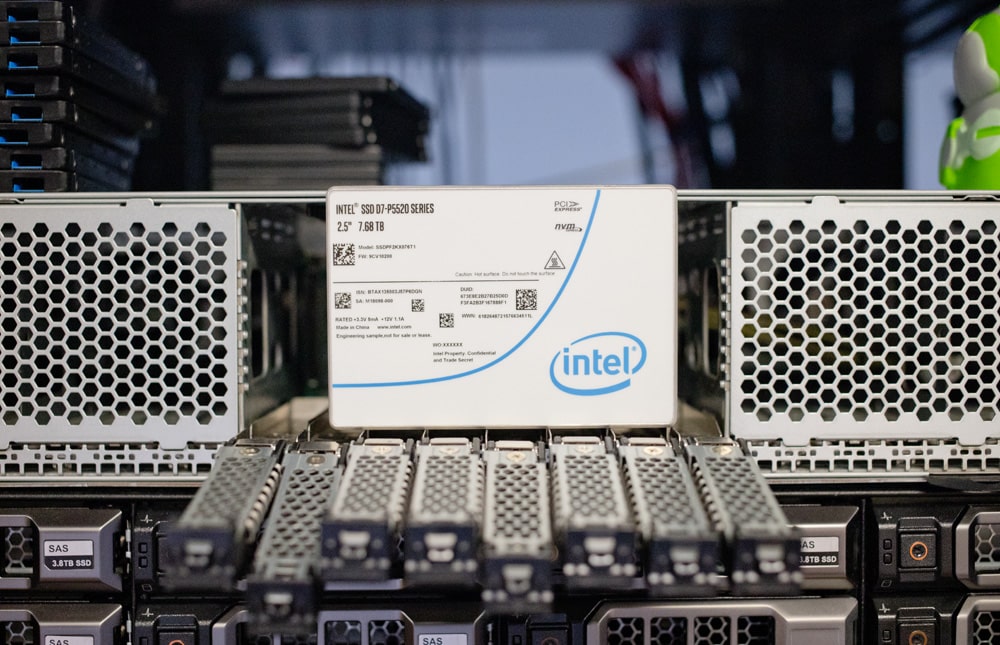
Solidigm P5520
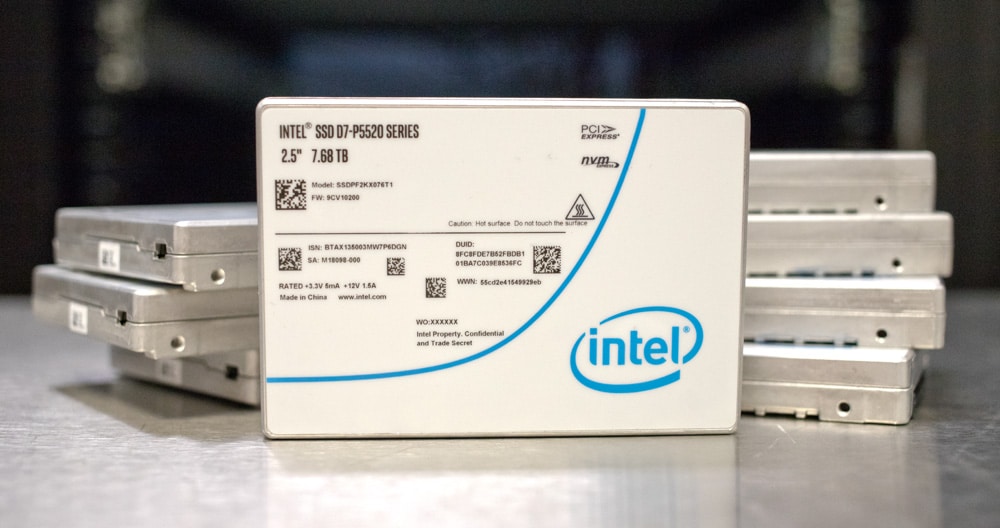
Mimo to premiera P5520 jest dość wyjątkowa. Początkowo był to dysk Intela i nosił naklejkę Intel P5520, ale w ogólnodostępnej wersji został zapowiedziany jako dysk SSD Solidigm. Znajduje się więc gdzieś pośrodku, ale biorąc pod uwagę sukces poprzednika P5510, P5520 budzi bardzo duże oczekiwania w nowej firmie.
Dysk Solidigm P5520 jest dostępny w różnych pojemnościach i formatach, w tym w popularnym modelu U.2 15 mm, dostępnym w wersjach o pojemności 1.92 TB, 3.84 TB, 7.68 TB i 15.36 TB. Organizacje mają również do wyboru kilka modeli E1 (lub „linijek”) , formatu, który zyskuje ostatnio na popularności. Jest to istotne, ponieważ pozwoli na tworzenie ciekawszych konfiguracji serwerów dzięki unikalnemu połączeniu rozmiaru, wbudowanych funkcji chłodzenia i wydajności. Oczywiście, linijki cieszą się również popularnością wśród hiperskalerów.
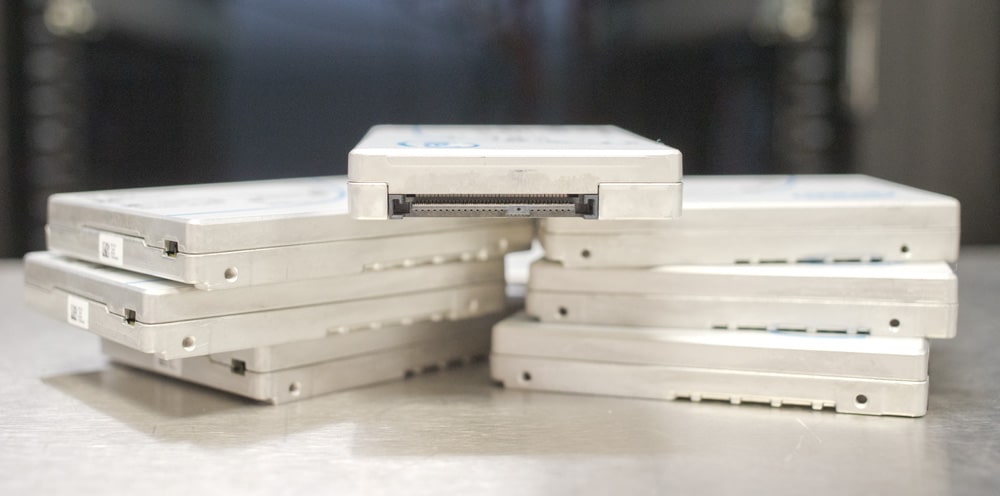
Solidigm P5520 Stacked
W związku z tym linia P5520 jest dostępna w formacie E1.S (9.5 mm/15 mm) o pojemnościach 1.92 TB, 3.84 TB i 7.68 TB. Solidigm oferuje również format E1.L o formacie 9.5 mm (znacznie większą wersję linijki), który jest dostępny tylko w modelu o pojemności 15.36 TB. Ten format będzie prawdopodobnie przeznaczony wyłącznie do wdrożeń na bardzo dużą skalę, wymagających gęstości oferowanej przez E1.L. Jest to również standardowy dysk NAND TLC, pozostałe dyski SSD o dużej pojemności (P5316) były dotychczas dyskami QLC. Solidigm zdecydował się nie uwzględniać formatu E3.S w tej wersji, co jest interesujące, ponieważ ten format wydaje się być popularny wśród niektórych producentów serwerów i macierzy pamięci masowej.
Solidigm P5520 vs. P5510
Nowa seria dysków D7 firmy Solidigm została zauważalnie ulepszona w porównaniu z poprzednią generacją dysków PCIe 4.0, w tym w aplikacjach mieszanych i intensywnie wykorzystujących odczyt. Na przykład, w porównaniu z dyskiem P5510, Solidigm odnotowuje poprawę nawet o 42% w przypadku losowych odczytów (1.1 mln IOPS) i o 17% w przypadku losowych zapisów 4K (200 000 IOPS). Wydajność sekwencyjna wynosi 7.1 GB/s podczas odczytu i 4.2 GB/s podczas zapisu.
Ten ulepszony profil wydajności, w połączeniu z rozszerzonym zakresem pojemności, może przełożyć się na większe możliwości oszczędności dla organizacji. Na przykład, patrząc na konfigurację 365 TB (model 15.36 TB), Solidigm deklaruje o 50% mniejszą powierzchnię fizyczną i o 44% niższe zużycie energii w porównaniu z dyskiem P4510 o pojemności 8 TB.
Dysk Solidigm P5520 oferuje również szereg ulepszonych funkcji klasy enterprise, w tym obsługę wielu rozmiarów sektorów (512/520/4,096/4,104/4,160 B), OPAL 2.0, konfigurowalne blokowanie przestrzeni nazw, bezpieczne usuwanie danych, ulepszone dzienniki telemetryczne (w tym inteligentne śledzenie i rejestrowanie błędów), dynamiczne wiele przestrzeni nazw i autotest urządzenia.
W tej recenzji przyjrzymy się dyskowi U.2 P5520 o pojemności 7.68 TB, objętemu 5-letnią gwarancją.
Specyfikacja dysku SSD Solidigm P5520
| NAND | Solidigm 144-L 3. generacji 3D NAND |
| Pojemności i współczynniki kształtu |
|
| Interfejs | PCIe 4.0 x4, NVMe 1.4, NVMe-MI 1.1 |
| Możliwość zarządzania dyskiem |
|
| Wydajność |
|
| Wytrzymałość (DWPD, 5 lat) | Do 1 |
| Gwarancja | Pięcioletnia ograniczona gwarancja |
Wydajność dysku SSD Solidigm D7-P5520
Testowanie tła i porównań
Laboratorium testowe StorageReview Enterprise oferuje elastyczną architekturę do przeprowadzania testów porównawczych urządzeń pamięci masowej klasy enterprise w środowisku porównywalnym z tym, z jakim administratorzy spotykają się w rzeczywistych wdrożeniach. Laboratorium testowe Enterprise obejmuje różnorodne serwery, sieci, urządzenia do kondycjonowania zasilania i inną infrastrukturę sieciową, co pozwala naszym pracownikom na stworzenie rzeczywistych warunków i dokładną ocenę wydajności podczas testów.
Uwzględniamy te informacje dotyczące środowiska laboratoryjnego i protokołów w recenzjach, aby specjaliści IT i osoby odpowiedzialne za pozyskiwanie pamięci masowej mogli zrozumieć warunki, w jakich osiągnęliśmy poniższe rezultaty. Żadna z naszych recenzji nie jest opłacana ani nadzorowana przez producenta testowanego sprzętu. Dodatkowe informacje na temat laboratorium testowego StorageReview Enterprise Test Lab oraz przegląd jego możliwości sieciowych są dostępne na odpowiednich stronach.
Porównywalne:
Stanowisko testowe
Nasze testy dysków SSD PCIe Gen4 Enterprise wykorzystują dysk Lenovo ThinkSystem SR635 do testów aplikacyjnych i syntetycznych testów porównawczych. ThinkSystem SR635 to dobrze wyposażona platforma jednoprocesorowa AMD, oferująca moc obliczeniową znacznie przekraczającą wymagania dotyczące wydajnej lokalnej pamięci masowej. Jest to również jedyna platforma w naszym laboratorium (i jedna z niewielu dostępnych obecnie na rynku) z zatokami PCIe Gen4 U.2. Testy syntetyczne nie wymagają dużych zasobów procesora, ale nadal wykorzystują tę samą platformę Lenovo. W obu przypadkach celem jest zaprezentowanie lokalnej pamięci masowej w jak najlepszym świetle, zgodnie z maksymalnymi specyfikacjami dysków oferowanymi przez producentów pamięci masowej.
Platforma syntetyczna i aplikacyjna PCIe Gen4 ( Lenovo ThinkSystem SR635 )
- 1 x AMD 7742 (2.25 GHz x 64 rdzenie)
- 8 x 64 GB pamięci DRAM DDR4-3200 MHz z funkcją ECC
- CentOS 7.7 1908
- ESXi 6.7u3
Wydajność serwera SQL
Każda maszyna wirtualna SQL Server jest skonfigurowana z dwoma dyskami wirtualnymi: woluminem 100 GB na rozruch i woluminem 500 GB na bazę danych i pliki dziennika. Z perspektywy zasobów systemowych, skonfigurowaliśmy każdą maszynę wirtualną z 8 procesorami wirtualnymi, 64 GB pamięci DRAM i wykorzystaliśmy kontroler LSI Logic SAS SCSI. Podczas gdy nasze obciążenia Sysbench testowane wcześniej obciążały platformę zarówno pod względem operacji wejścia/wyjścia, jak i pojemności pamięci masowej, test SQL sprawdza wydajność pod kątem opóźnień.
W tym teście wykorzystano SQL Server 2014 działający na gościnnych maszynach wirtualnych z systemem Windows Server 2012 R2 i poddano go testowi Quest Benchmark Factory for Databases. Protokół testowania OLTP Microsoft SQL Server firmy StorageReview wykorzystuje aktualną wersję roboczą testu Benchmark C (TPC-C) organizacji Transaction Processing Performance Council, internetowego testu porównawczego przetwarzania transakcji, który symuluje działania występujące w złożonych środowiskach aplikacji. Test TPC-C jest bliższy niż syntetyczne testy wydajnościowe oceny mocnych stron i wąskich gardeł infrastruktury pamięci masowej w środowiskach baz danych. Każda instancja naszej maszyny wirtualnej SQL Server w ramach tego testu korzysta z bazy danych SQL Server o pojemności 333 GB (w skali 1,500) i mierzy wydajność transakcyjną oraz opóźnienia przy obciążeniu 15 000 użytkowników wirtualnych.
Konfiguracja testowania serwera SQL Server (na maszynę wirtualną)
- Windows Server 2012 R2
- Zajętość pamięci masowej: 600 GB przydzielonych, 500 GB wykorzystanych
- SQL Server 2014
-
- Rozmiar bazy danych: skala 1,500
- Obciążenie wirtualnego klienta: 15 000
- Bufor RAM: 48 GB
- Długość testu: 3 godziny
- 2.5 godziny przygotowania wstępnego
- 30-minutowy okres próbny
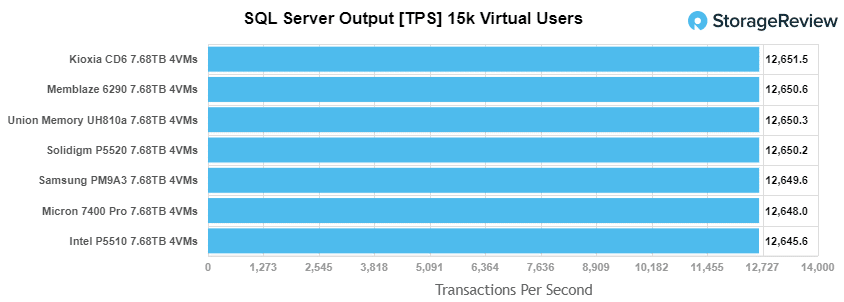
W naszym teście transakcyjnym SQL Server Solidigm P5520 znalazł się w czołówce z wynikiem 12 650,2 TPS.
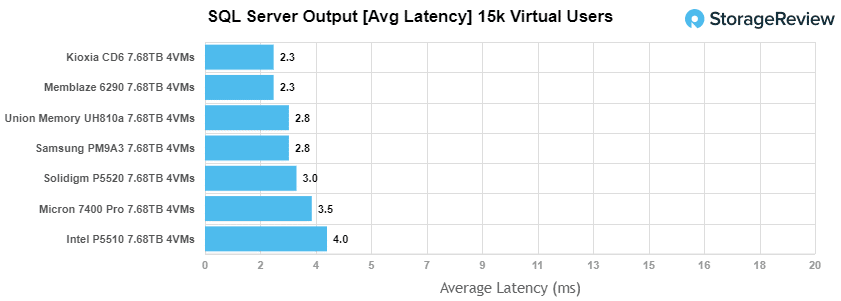
 Przy średnim opóźnieniu serwera SQL Server dysk P5520 osiągnął średnie opóźnienie na poziomie zaledwie 3 ms — solidny wynik, który zapewnił dyskowi 5. miejsce (zarówno dyski na pierwszym, jak i drugim miejscu zajęły ex aequo).
Wydajność Sysbench
Kolejny test porównawczy aplikacji obejmuje bazę danych Percona MySQL OLTP, mierzoną za pomocą SysBench. Test ten mierzy również średnią liczbę transakcji na sekundę (TSP), średnie opóźnienie oraz średnie opóźnienie na poziomie 99. percentyla.
Każda maszyna wirtualna Sysbench jest skonfigurowana z trzema dyskami wirtualnymi: jednym do rozruchu (~92 GB), jednym z predefiniowaną bazą danych (~447 GB) i trzecim dla testowanej bazy danych (270 GB). Z perspektywy zasobów systemowych, skonfigurowaliśmy każdą maszynę wirtualną z 8 procesorami wirtualnymi, 60 GB pamięci DRAM i wykorzystaliśmy kontroler LSI Logic SAS SCSI.
Konfiguracja testów Sysbench (na maszynę wirtualną)
- CentOS 6.3 64-bit
- Percona XtraDB 5.5.30-rel30.1
-
- Tabele bazy danych: 100
- Rozmiar bazy danych: 10 000 000
- Wątki bazy danych: 32
- Bufor RAM: 24 GB
- Długość testu: 3 godziny
- 2 godziny wstępnego kondycjonowania 32 wątków
- 1 godzina 32 wątki
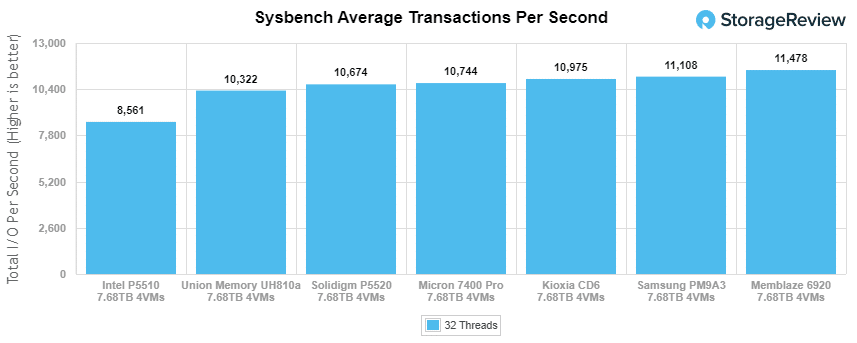
Jeśli chodzi o nasz test transakcyjny Sysbench, Solidigm P5520 osiągnął wyniki średnie (5. miejsce) z wynikiem 10 674 TPS.
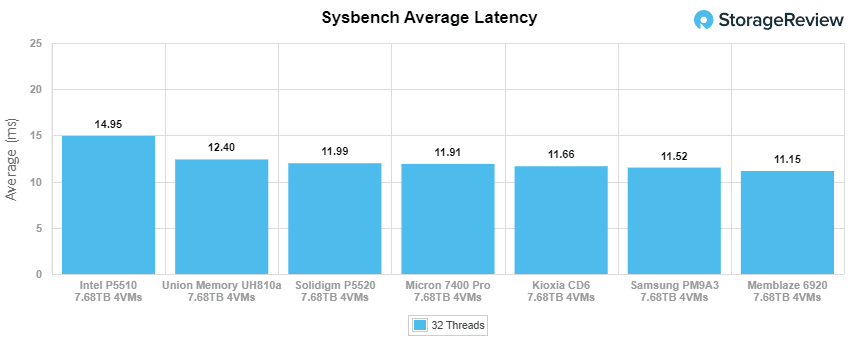
W teście Sysbench średnie opóźnienie dysku P5520 wyniosło 11.99 ms, co pozwoliło mu zająć 5. miejsce wśród testowanych dysków (nieco poniżej dysku Micron).
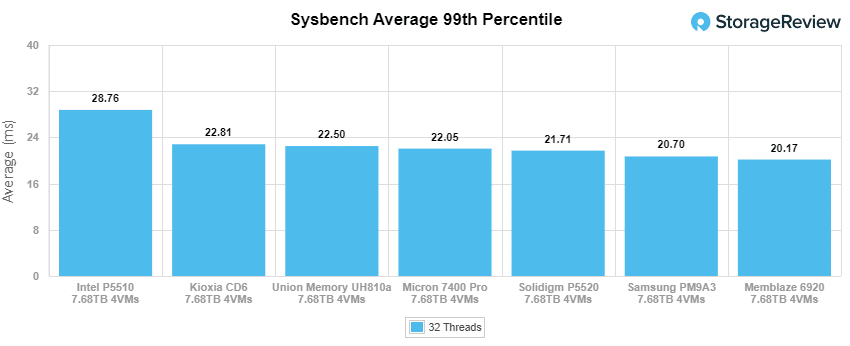
W najgorszym scenariuszu opóźnienia (99. percentyl) Solidigm P5520 zajął trzecie miejsce z opóźnieniem 21.71 ms.
Analiza obciążenia VDBench
W przypadku benchmarkingu urządzeń pamięci masowej, testy aplikacji sprawdzają się najlepiej, a testy syntetyczne plasują się na drugim miejscu. Chociaż testy syntetyczne nie odzwierciedlają idealnie rzeczywistych obciążeń, pomagają one w ustaleniu punktu odniesienia dla urządzeń pamięci masowej, zapewniając powtarzalność, która ułatwia porównywanie konkurencyjnych rozwiązań. Obciążenia te oferują szereg różnych profili testowych, od testów „czterech kątów”, przez testy rozmiaru transferu w typowych bazach danych, po przechwytywanie śladów z różnych środowisk VDI.
Wszystkie te testy wykorzystują wspólny generator obciążeń vdBench z silnikiem skryptowym do automatyzacji i przechwytywania wyników w dużym klastrze obliczeniowym. Pozwala nam to na powtarzanie tych samych obciążeń na szerokiej gamie urządzeń pamięci masowej, w tym macierzach flash i indywidualnych urządzeniach pamięci masowej. Nasz proces testowania tych benchmarków polega na wypełnieniu całej powierzchni dysku danymi, a następnie partycjonowaniu sekcji dysku równej 25% pojemności dysku, aby symulować potencjalną reakcję dysku na obciążenia aplikacji. Różni się to od testów pełnej entropii, które wykorzystują 100% dysku i wprowadzają go w stan stabilny. W rezultacie te wartości będą odzwierciedlać wyższe, stałe prędkości zapisu.
Profile:
- Losowy odczyt 4K: 100% odczytu, 128 wątków, 0-120% ioratu
- 4K losowy zapis: 100% zapisu, 128 wątki, 0-120% ioracji
- 16K Sekwencyjny odczyt: 100% odczytu, 32 wątków, 0-120% ioracji
- 16K Sekwencyjny zapis: 100% zapisu, 16 wątków, 0-120% ioratu
- 64K Sekwencyjny odczyt: 100% odczytu, 32 wątków, 0-120% ioracji
- 64K Sekwencyjny zapis: 100% zapisu, 16 wątków, 0-120% ioratu
- 4K, 8K i 16K 70R/30W losowy miks, 64 wątki, 0-120% joranu
- Syntetyczna baza danych: SQL i Oracle
- Ślady pełnego klonu VDI i klonów powiązanych
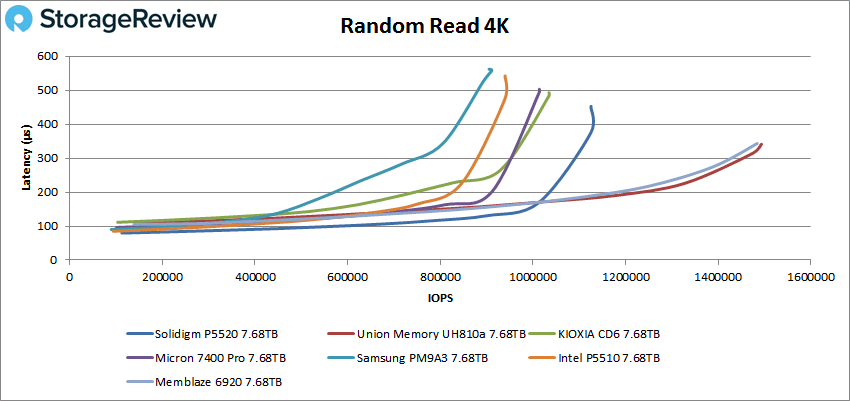
W naszej pierwszej analizie obciążenia VDBench, losowym odczycie 4 KB, dysk Solidigm P5520 osiągnął solidną szczytową wydajność na poziomie 1.12 mln IOPS przy opóźnieniu 450 µs, co dało mu 3. miejsce wśród testowanych dysków (choć nadal znacznie ustąpiło to dyskom Union Memory i Memblaze).
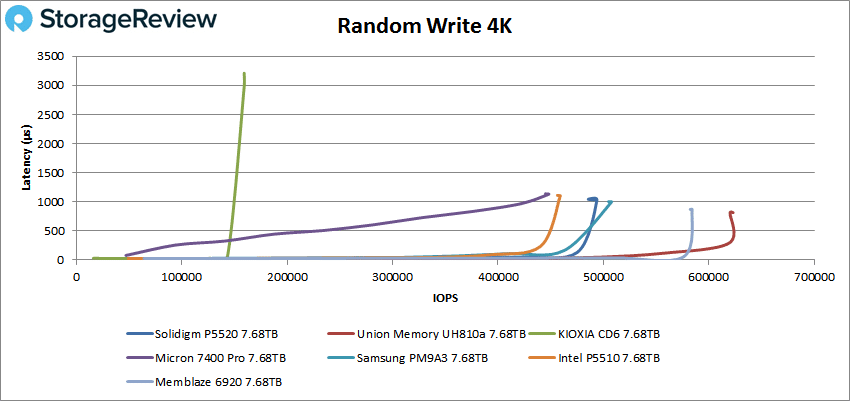
 W przypadku losowego zapisu 4K, P5520 spadł na czwarte miejsce (tuż za Samsung PM9A3), osiągając szczytową wartość 492K IOPS i opóźnienie 1,026.7 µs.
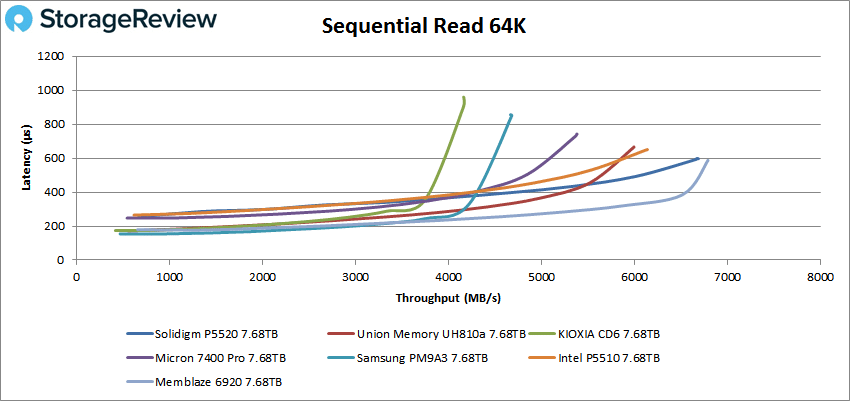
Po przełączeniu na obciążenia sekwencyjne 64 KB, dysk P5520 wypadł znakomicie, osiągając odczyt na poziomie 6.66 GB/s (106 640 IOPS) przy opóźnieniu odczytu 599 µs. To plasowało go tuż za dyskiem Samsunga na drugim miejscu wśród testowanych dysków SSD i nieznacznie za dyskiem Memblaze.
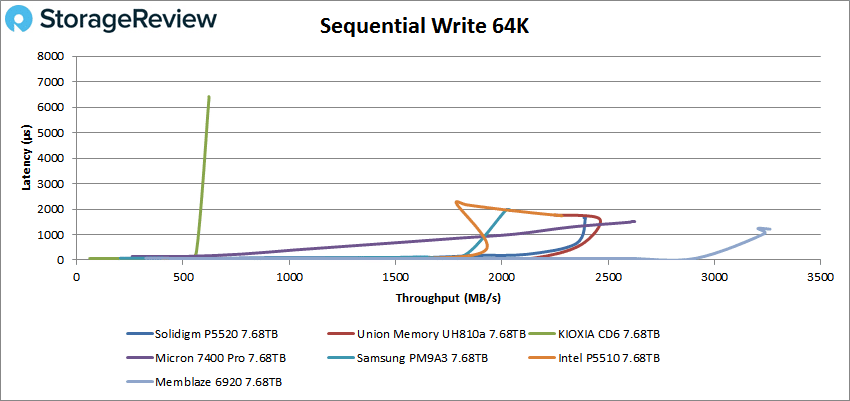
W zapisie 64K procesor P5520 osiągnął szczytową przepustowość 2.39 GB/s (38 286 IOPD) przy opóźnieniu 1,662 µs, co dało mu trzecie miejsce.
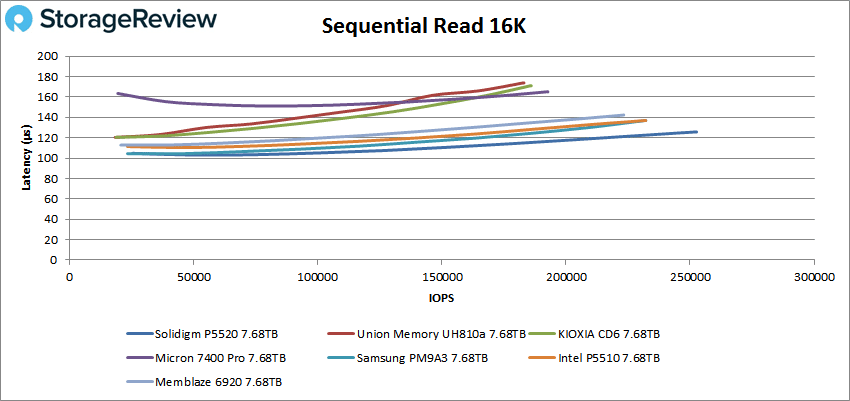
Teraz czas na naszą sekwencyjną wydajność 16K. W przypadku odczytu, P5520 osiągnął imponujący i wiodący wynik 3.95 GB/s (252 523 IOPS) przy opóźnieniu 125.8 µs.
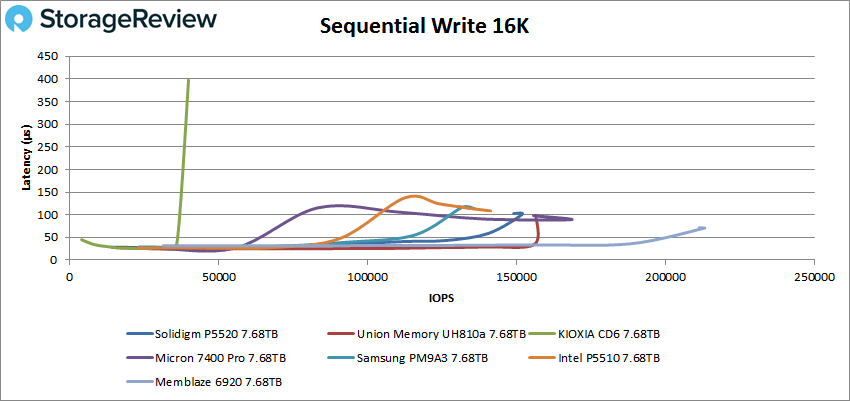
Dysk Solidigm spadł o kilka miejsc w teście 16K, osiągając wynik zaledwie 2.37 GB/s (151 874 IOPS) i opóźnienie wynoszące 100.7 µs.
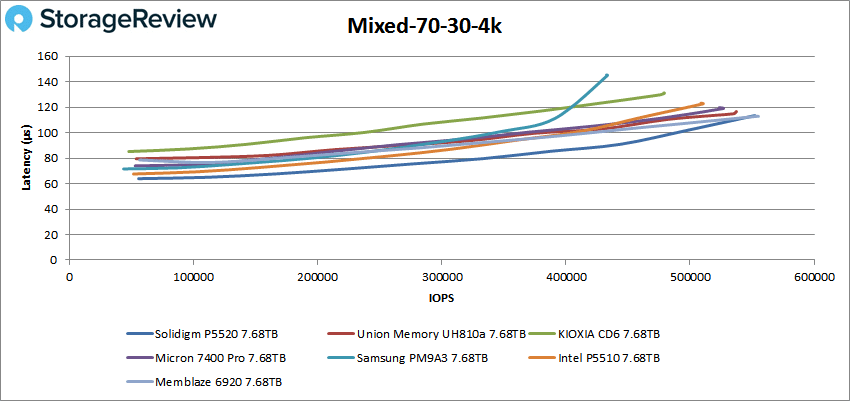
W naszym mieszanym profilu 70/30 4k (70% odczytu, 30% zapisu), P5520 osiągnął kolejny imponujący wynik, osiągając szczytową wartość 552 tys. IOPS przy opóźnieniu 113.4 µs. Był to wynik nieznacznie gorszy od Memblaze 6920, który zajął drugie miejsce.
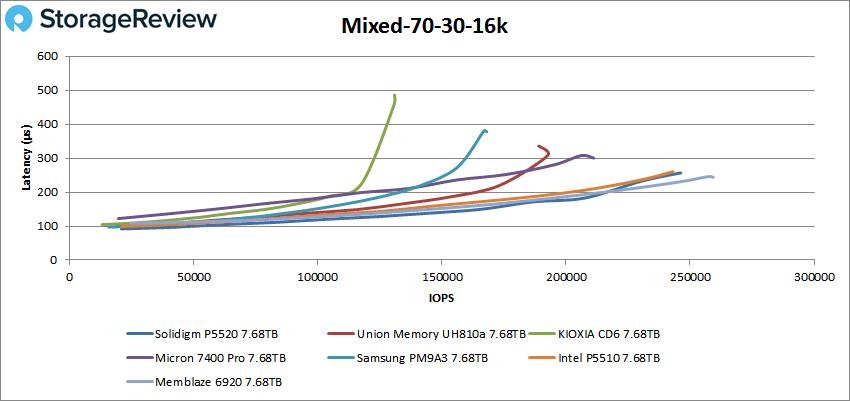
W naszym mieszanym profilu 70/30 16k, P5520 osiągnął 246K IOPS przy opóźnieniu 256.9 µs, plasując się na ostatnim miejscu, ponownie nieznacznie ustępując Memblaze.
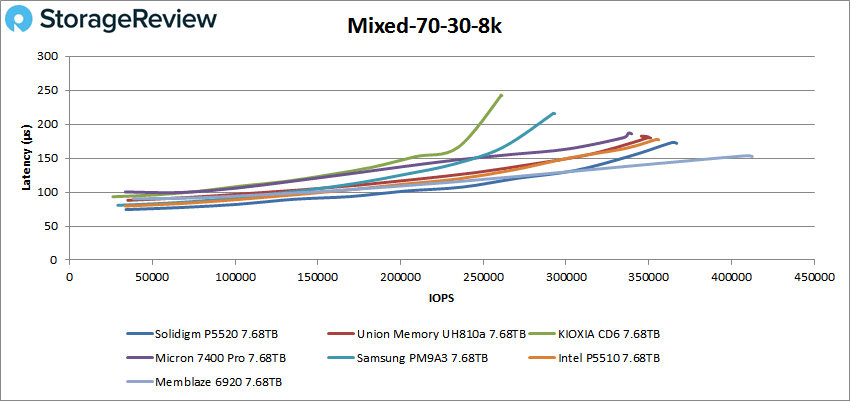
W naszym ostatnim mieszanym profilu (70/30 8k) P5520 osiągnął solidne 364 134 IOPS przy opóźnieniu 171.8 µs.
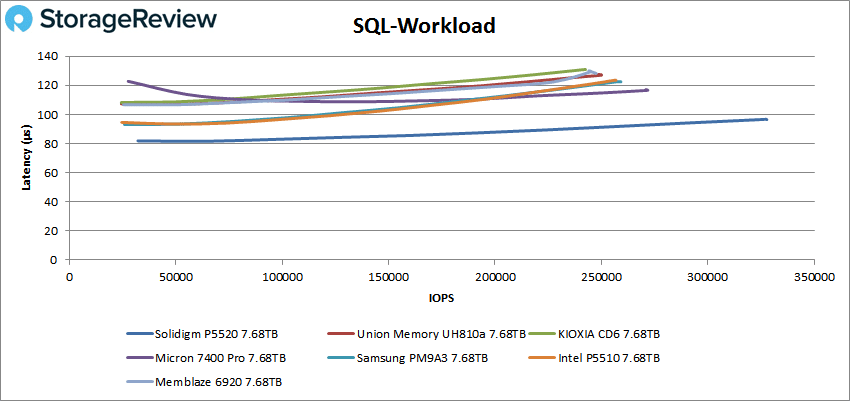
Kolejnym zestawem testów były obciążenia SQL: SQL, SQL 90-10 i SQL 80-20. Wszystkie z nich pokazały, że dysk Solidigm prowadzi z zauważalną przewagą. Zaczynając od SQL, P5520 osiągnął szczytową wydajność 327 tys. IOPS przy opóźnieniu zaledwie 96.7 µs. Kolejnym najlepszym dyskiem był Micron 7400 Pro, który plasował się znacznie poniżej dysku Solidigm z wynikiem 271 tys. IOPS.
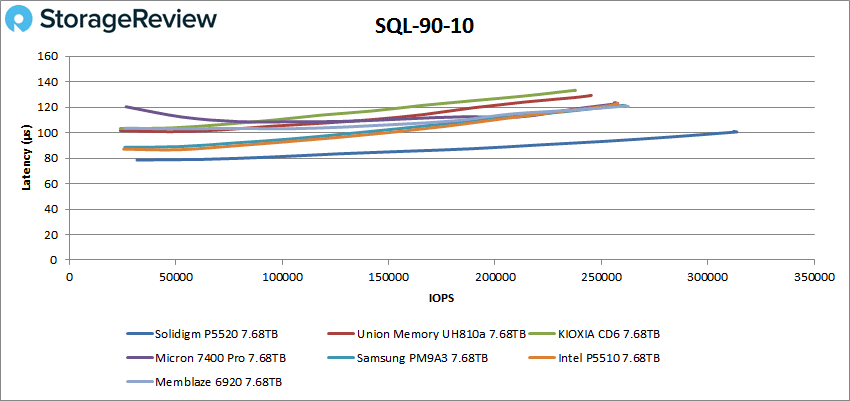
 W przypadku SQL 90-10 zaobserwowaliśmy podobną sytuację, gdyż dysk P5520 okazał się zdecydowanie najwydajniejszy, osiągając szczytową liczbę 314 tys. operacji wejścia/wyjścia na sekundę (IOPS) i opóźnienie 101.1 µs.
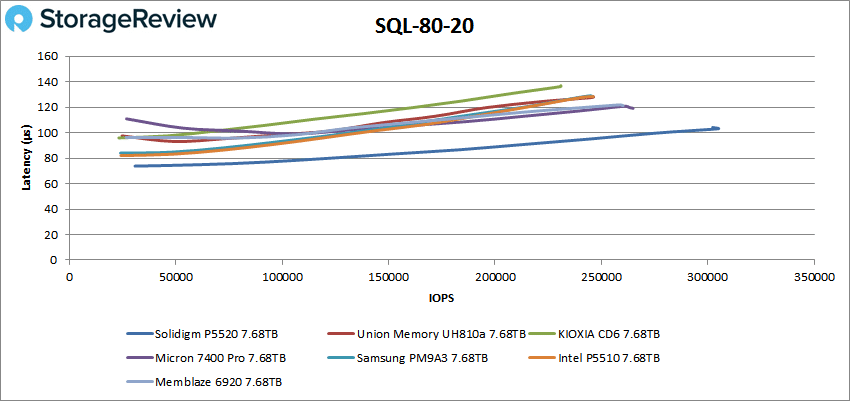
W przypadku SQL 80-20 procesor P5520 osiągnął imponujące 305 tys. IOPS przy opóźnieniu 103.1 µs, co ponownie dało mu zauważalną przewagę na pierwszym miejscu.
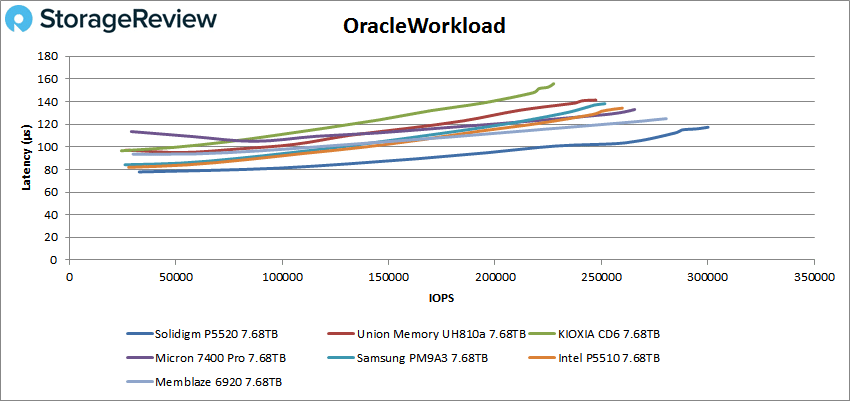
Następnie mamy obciążenia Oracle: Oracle, Oracle 90-10 i Oracle 80-20. Podobnie jak w testach porównawczych SQL, P5520 nadal zajmował pierwsze miejsce we wszystkich naszych testach. Zaczynając od ogólnego obciążenia Oracle, P5520 osiągnął szczytową wydajność 300 tys. operacji wejścia/wyjścia na sekundę (IOPS) przy 117.3 µs.
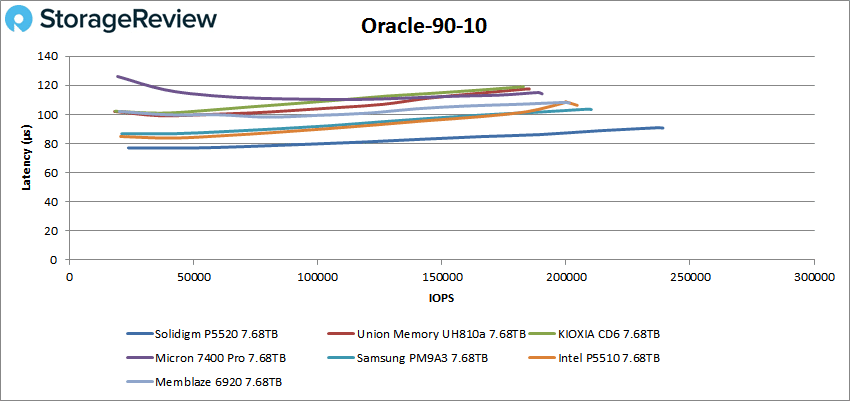
 W przypadku Oracle 90-10 P5520 osiągnął szczytową wydajność 237 tys. operacji wejścia/wyjścia na sekundę (IOPS) przy opóźnieniu 90.7 µs.
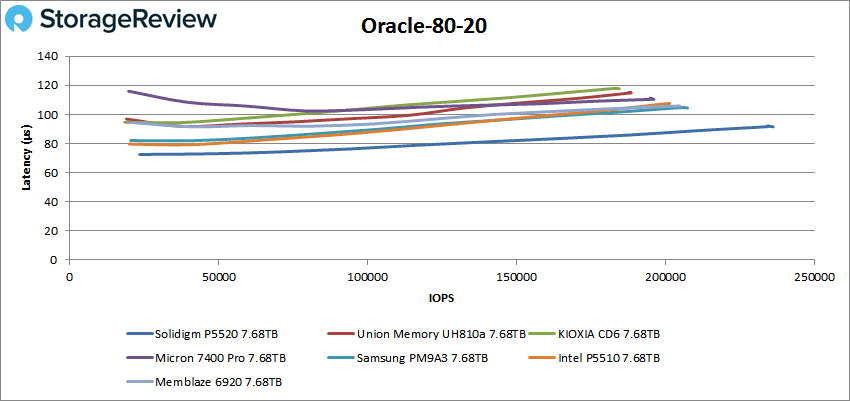
W porównaniu z Oracle 80-20, P5520 osiągnął szczytową wydajność 236 tys. IOPS przy 91.5 µs.
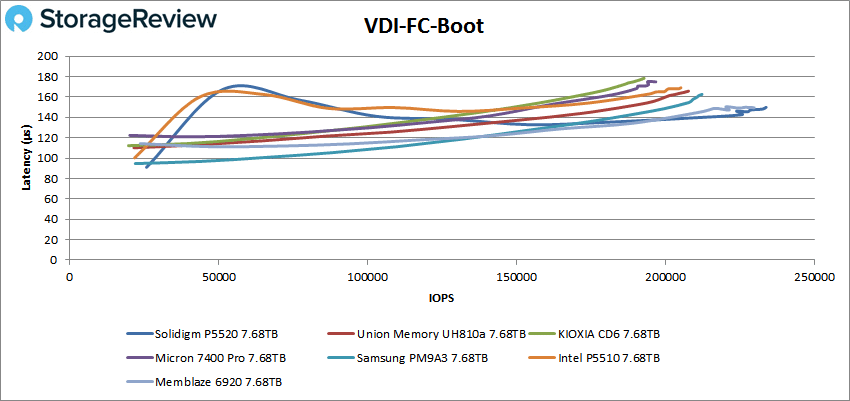
Następnie przeszliśmy do testu klonowania VDI, pełnego i połączonego. W przypadku rozruchu pełnego klonowania VDI (FC), procesor P5520 kontynuował świetną wydajność, osiągając szczytową wartość 233 tys. operacji wejścia/wyjścia na sekundę (IOPS) i opóźnienie 148.2 µs.
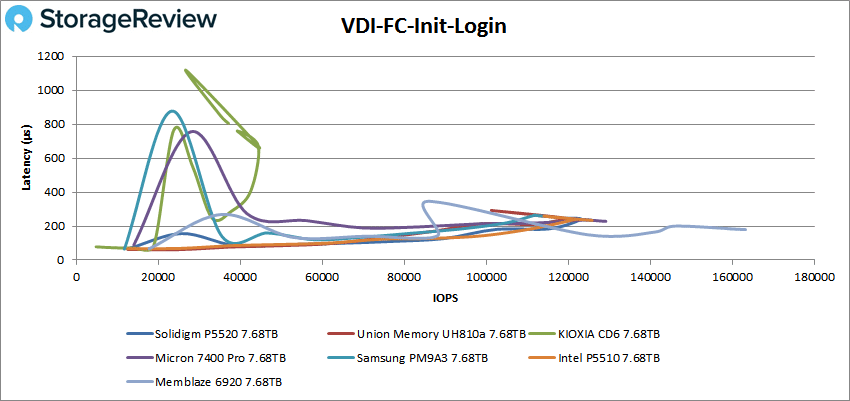
 Choć na poniższym wykresie może to być trudne do wywnioskowania, dysk P5520 okazał się jednym z bardziej stabilnych podczas początkowego logowania do VDI FC, osiągając szczytową wydajność 127 tys. operacji wejścia/wyjścia na sekundę (IOPS) i opóźnienie 232.8 µs.
W teście VDI FC Monday Login dysk Solidigm P5520 zajął trzecie miejsce (zaraz za dyskiem Union Memory) z wynikiem 95 tys. operacji wejścia/wyjścia na sekundę (IOPS) i opóźnieniem 164.4 µs.
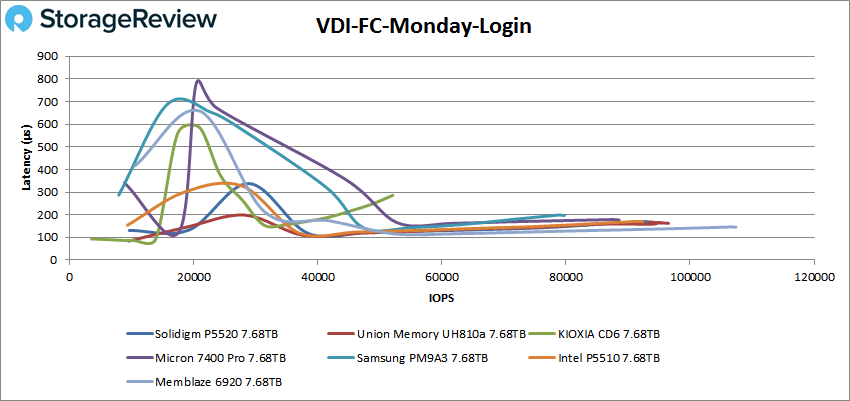
W przypadku rozruchu VDI Linked Clone (LC) układ P5520 zachował stabilną wydajność (choć nieco spadł w rankingu), osiągając szczyt na poziomie 79 tys. IOPS przy 200.2 µs.
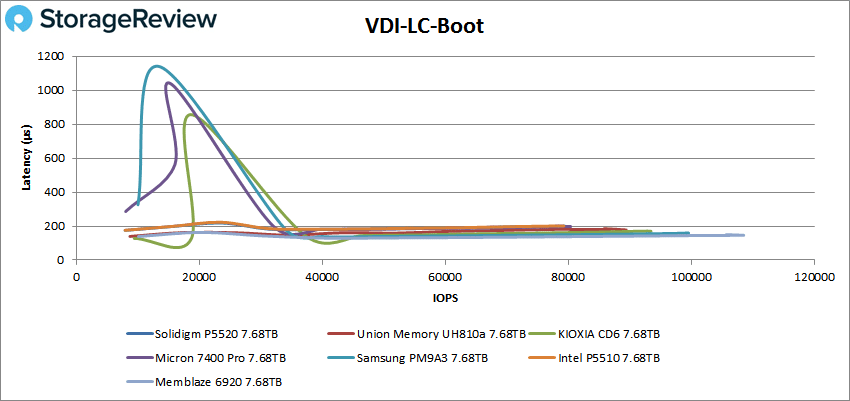
W teście VDI LC Initial Login wydajność dysku P5520 początkowo nieco szwankowała (podobnie jak innych dysków), ale ostatecznie osiągnęła solidny wynik 50 tys. IOPS i 149 µs, co pozwoliło mu zająć trzecie miejsce.
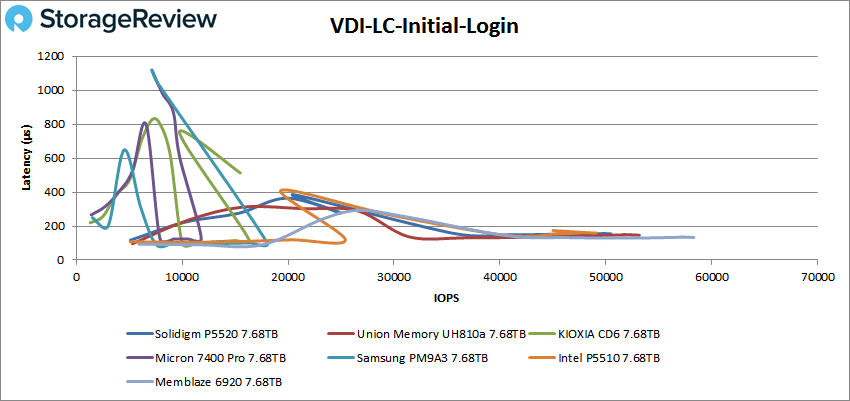
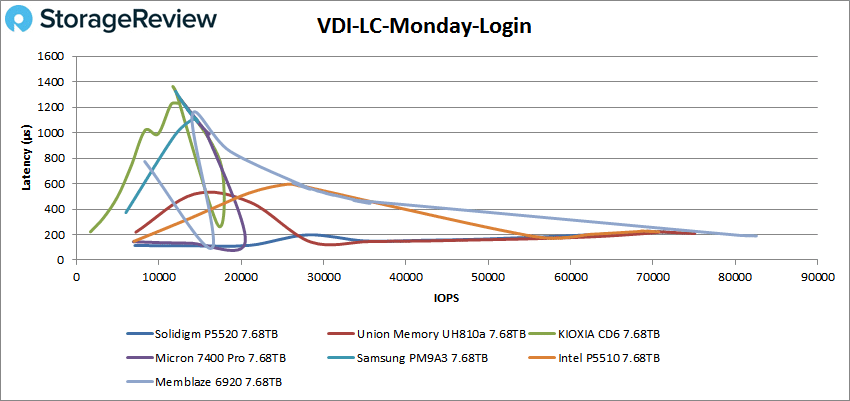
W teście VDI LC Monday Login układ P5520 wykazał się bardzo stabilną wydajnością, osiągając szczytową liczbę 72 tys. operacji wejścia/wyjścia na sekundę (IOPS) i opóźnienie 218.7 µs.
Wniosek
Solidigm P5520 to bez wątpienia udany debiut nowo powstałej firmy. Ten dysk klasy enterprise wykorzystuje interfejs PCIe 4.0 i jest dostępny w różnych formatach i pojemnościach, w tym w standardowym formacie U.2, a także w modelach z linijkami E1.S i E1.L. Ponadto, dysk P5520 został zbudowany z pamięci 3D NAND 144-L Solidigm trzeciej generacji i oferuje szereg zaawansowanych funkcji klasy enterprise, takich jak OPAL 2.0, konfigurowalne blokowanie przestrzeni nazw, sanityzacja, bezpieczne wymazywanie danych i bezpieczeństwo danych.
Mimo to, jego ogólna wydajność była głównym atutem, ponieważ P5520 konsekwentnie plasował się w czołówce podczas naszych testów porównawczych. Dysk Solidigm przetestowaliśmy na tle sześciu innych dysków SSD PCIe Gen4 klasy enterprise o pojemności 7.68 TB o podobnej specyfikacji i zastosowaniach: Samsung PM9A3, Memblaze 6920, Intel P5510, KIOXIA CD6, Intel P5510 i Micron 7400 Pro. Podczas analizy przeanalizowaliśmy zarówno obciążenie aplikacji, jak i obciążenie VDBench.
W naszych testach Sysbench zauważyliśmy, że P5520 osiągnął wyniki średnie, osiągając łączny wynik 10 674 TPS, 11.99 ms średniego opóźnienia i 21.71 ms w najgorszym scenariuszu. Znacznie lepsze wyniki uzyskaliśmy w naszym teście transakcyjnym SQL Server, gdzie uzyskaliśmy 12 650,2 TPS i średnie opóźnienie 3 ms.
Po przejściu na VDBench, P5520 wykazał się doskonałą ogólną wydajnością. Najważniejsze wyniki to 1.12 mln IOPS odczytu i 492 tys. IOPS zapisu w obciążeniach 4K, a także 6.66 GB/s przy odczycie 64K, 2.39 GB/s przy zapisie 64K, 3.95 GB/s przy odczycie 16K i 2.37 GB/s przy zapisie 623 MB/s podczas obciążeń sekwencyjnych. Nasze mieszane profile 70/30 odnotowały 552 tys. IOPS w 4K, 364 tys. IOPS w 8K i 246 tys. IOPS w 16K.
W naszych testach SQL, P5520 osiągnął szczyty 327 tys. IOPS (pierwszy z zauważalną przewagą), 314 tys. IOPS w SQL 90-10 i 305 tys. IOPS w SQL 80-20, co dało mu pierwsze miejsce w klasyfikacji. Obciążenia Oracle prezentowały podobny wynik, rejestrując 300 tys. IOPS, 237 tys. IOPS w Oracle 90-10 i 236 tys. IOPS w Oracle 80-20.
Następnie przeprowadziliśmy testy klonu VDI, pełnego i połączonego. W pełnym klonie zanotowaliśmy 233 tys. IOPS podczas rozruchu, 127 tys. IOPS podczas pierwszego logowania i 95 tys. IOPS podczas poniedziałkowego logowania. W połączonym klonie dysk Solidigm osiągnął szczytowe wartości 79 tys. IOPS podczas rozruchu, 50 tys. IOPS podczas poniedziałkowego logowania i 72 tys. IOPS podczas pierwszego logowania.
W połączeniu z imponującym profilem wydajności oraz szeroką gamą dostępnych formatów i pojemności, P5520 spełni praktycznie każde potrzeby centrum danych. Chociaż nasz egzemplarz testowy to dysk marki Intel, jeśli P5520 jest jakimkolwiek wskaźnikiem tego, czego możemy oczekiwać od przyszłych premier Solidigm, z niecierpliwością czekamy na kolejne dyski SSD tej firmy w testach laboratoryjnych. Ogólnie rzecz biorąc, P5520 to znaczący postęp i powinien być popularnym wyborem dla producentów OEM i konstruktorów systemów.


 Amazon