StorageReview.com
Enterprise  ◇  Power Management

In the Lab: Eaton BladeUPS Power System Upgrade

Its been roughly one year since StorageReview overhauled its main lab, outfitted with Eaton S-Series racks, Eaton metered and managed G3 PDUs as well as an Eaton BladeUPS Power System. The BladeUPS Power System is unique in the datacenter space, where future expansions can be approached in a modular fashion and installed without calling in


Enterprise  ◇  Enterprise Storage

Mangstor NX6320 NVMe over Fabrics Review

The Mangstor NX-Series of all-flash arrays (AFA) are a family of appliances that are designed to bring the performance and low-latency benefits of NVMe to a shared storage environment. Shared storage of course isn't new, but being able to leverage the benefits of NVMe in a shared environment is. Conceptually, NVMe over Fabrics takes the power

Enterprise  ◇  Small NAS

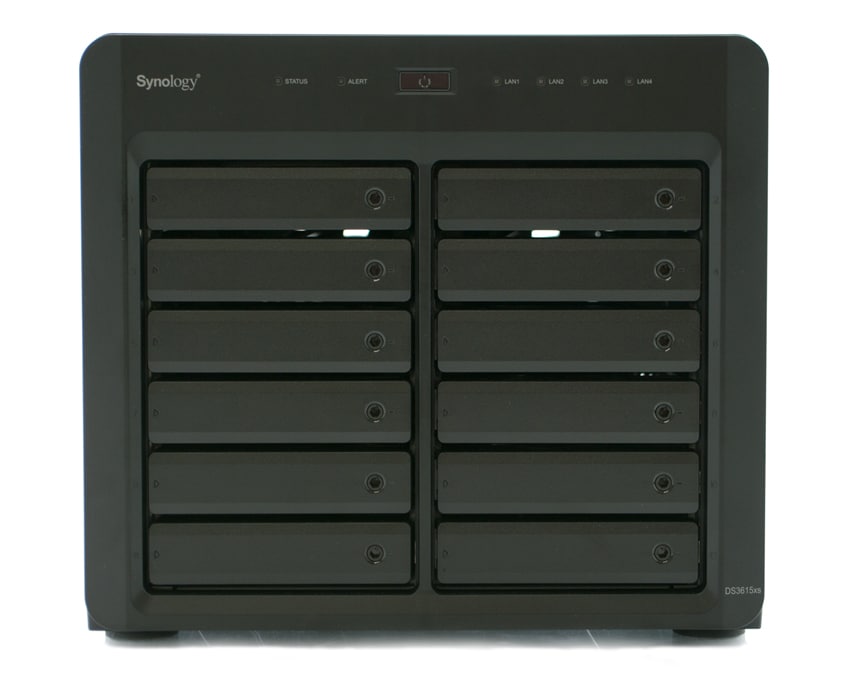
Synology DiskStation DS3615xs Review

The DS3615xs is Synology’s top-performing and highest-capacity DiskStation (tower form factor), with reported transfer speeds of 2,214MB/s (read) and up to 288TB of raw storage (with two DX1215 expansion units). This NAS was designed to serve large-scale businesses that want to set up a comprehensive server while retaining the option of expanding their storage capabilities

Client SSD  ◇  Consumer

Plextor M7V Series SSD Review

Available in both 2.5 inch and M.2 form factors, the release of the Plextor M7V Series SSD marks the company’s first venture into TLC NAND. Traditionally, this type of NAND is featured in budget drives, as it is less expensive than other NAND technology and is thus making it much more affordable for consumers. TLC

Client SSD  ◇  Consumer

SanDisk X400 SSD Review

The X400 SSD release establishes SanDisk as one of the only companies currently offering 1TB of storage in a single-sided M.2 card. Although the X400 also comes in a 2.5″ 7mm-height form factor (which is the focus of our review), the M.2 configuration is the main selling point of this line of SSDs. Installing a

Consumer  ◇  Portable Storage

Seagate Backup Plus Ultra Slim Review

Comprised of a variety of different sizes and designs, the Seagate Backup Plus family is the company’s line of portable storage solutions focused on capacity, performance, and portability. The Ultra Slim was announced in January of this year and touted as one the thinnest 2TB portable hard drives on the market. Using the company's latest 7mm 2.5” HDD technology,

Client Accessories  ◇  Consumer

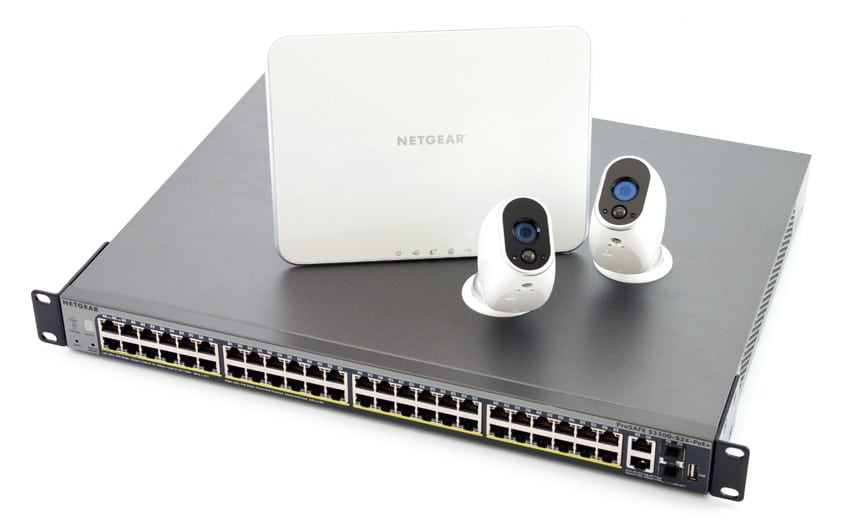
Netgear Arlo Security Cameras for Home Security

The Arlo Wire-Free HD security cameras are designed to offer reliable home security no matter if they are exposed to the elements or used indoors. Previously, we reviewed the Arlo Wire Free HD Camera System, which we found seamless to setup and manage. The Arlo platform is ideal for those who don’t have on-premise storage and need a

Client HDD  ◇  Consumer

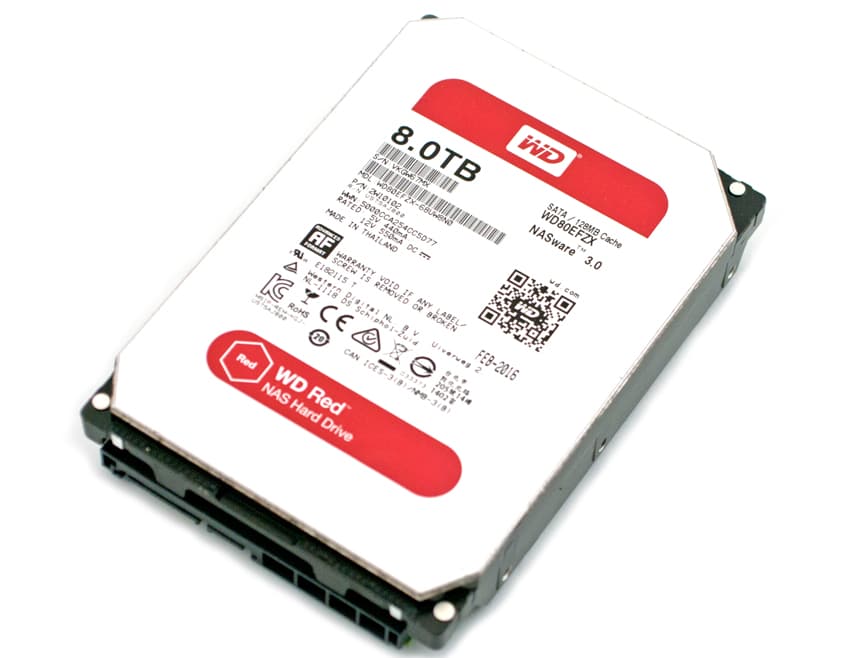
WD Red 8TB Review

Western Digital has expanded their Red line to include an 8TB model, increasing the maximum capacity of 8-bay NAS units to 64TB so that SOHO users can get even more out of their initial server investment. WD is using their HelioSeal helium-technology to get the higher capacity much like the HGST Ultrastar Helium Drives. WD Reds

Enterprise  ◇  HDD

Seagate NAS HDD 8TB Review

Seagate's new NAS 8TB HDD expands their NAS line of drives that is intended to more efficiently serve multi-drive use cases while maintaining the performance and price-point desired by SOHO users. The Seagate NAS HDD utilizes NASWorks firmware, which specifically hones drives for server functionality. In addition to enhancing host compatibility, NASWorks reduces HDD power consumption, which also

Enterprise  ◇  Enterprise Storage

EMC VxRack Node powered by ScaleIO: VMmark Performance Review (2-layer)

We've already taken a look at how well the VxRack Node All Flash PF100 does in two key areas relating to database applications. First we saw how well ScaleIO did scaling near-linearly to full capacity with MySQL, then we honed in on SQL Server performance, purely from a transactional latency perspective. Now we turn to a well understood benchmark