StorageReview.com
Attached Storage  ◇  Enterprise

SuperMicro SuperChassis 846BE1C-R1K28B Review

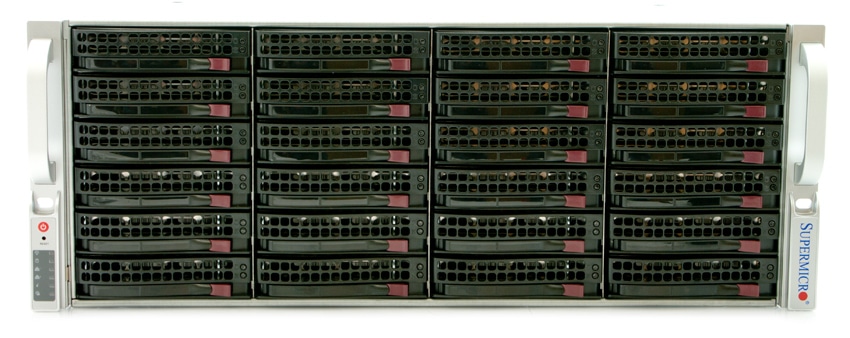
The SuperMicro SuperChassis 846BE1C-R1K28B is a 24-bay JBOD. The drive trays are hot-swappable and made for 3.5” HDDs (though an adaptor can be used to put in 2.5” HDDs or SSDs). If one were to use 8TB drives, such as HGST’s He8 drives, it would bring total maximum capacity up to 192TB. The SuperChassis can
Enterprise  ◇  SSD

Mangstor MX6300 NVMe SSD Review

The Mangstor MX6300 is a Full Height, Half Length SSD that uses NVMe interface. The MX6300 comes in three capacities: 2.0TB, 2.7TB, and 5.4TB. The drive leverages enterprise MLC NAND and can be placed in x86 server PCIe slots. Using NVMe and MLC NAND gives the MX6300 tremendous performance benefits. Mangstor claims the drive can

Client HDD  ◇  Consumer

Seagate Laptop SSHD 1TB Review

Seagate has updated their 2.5 inch laptop SSHD line with potential for improved performance as well as a slight increase in capacity from 750GB to 1TB. The Seagate 2.5″ SSHD is equipped with a SATA interface and a 5400-RPM spindle speed, is compatible with PC, Mac, and even certain gaming consoles. Like its predecessor, the

Consumer  ◇  Portable Storage

Toshiba TransMemory U362 USB 3.0 Review

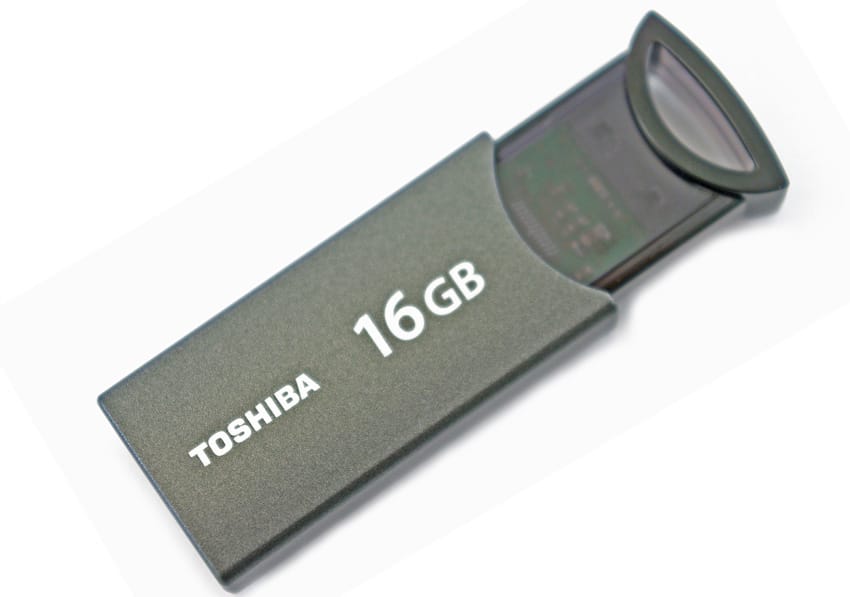
Toshiba’s new TransMemory line (U362) seems to be their attempt to produce a stripped down and inexpensive flash drive. There aren’t really any groundbreaking features with this line, other than the fact that it only costs between $0.63 and $0.55 per GB (16GB model and 64 GB model, respectively). While there are other flash drives

Enterprise  ◇  SSD

Toshiba PX04S Enterprise SSD Review

The Toshiba PX04S Series is a third generation enterprise SAS SSD. The PX04S Series are 2.5”, 15mm SSDs with the largest capacity currently available of any 12Gbps SSD, at 3.84TB. The Toshiba PX04S family is comprised of 4 different models that cater to specific needs. There is a High-Endurance, Mid-Endurance, Value-Endurance, and Read Intensive model.

Enterprise  ◇  Hyperconverged

VMware Virtual SAN Review: SQL Server Performance

Continuing on the path of VMware VSAN performance testing, the next test looks at Microsoft SQL Server TPC-C running across the cluster. This test uses SQL Server 2014 running on Windows Server 2012 R2 guest VMs, being stressed by Dell's Benchmark Factory for Databases. While our traditional usage of this benchmark has been to test

Data Protection  ◇  Enterprise

Veeam Backup And Replication v8 Review

Veeam Backup and Replication is data protection software for virtualized applications and data, regardless of size or complexity. Veeam Backup and Replication unifies both processes into a single solution to “increases the value of backup and reinvents data protection for VMware vSphere and Microsoft Hyper-V virtual environments.” The solution offers many benefits such as fast,

Consumer  ◇  Memory Card

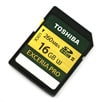
Toshiba Exceria Pro SD Card Review

Toshiba's new Exceria Pro expands the company's line of SD cards to include a performance-focused model geared towards industry professionals. With quoted transfer speeds of 260MB/s read and 240MB/s, the Exceria Pro is in line with other popular professional SD cards on the market. This release represents a big step in both performance and price

Enterprise  ◇  SSD

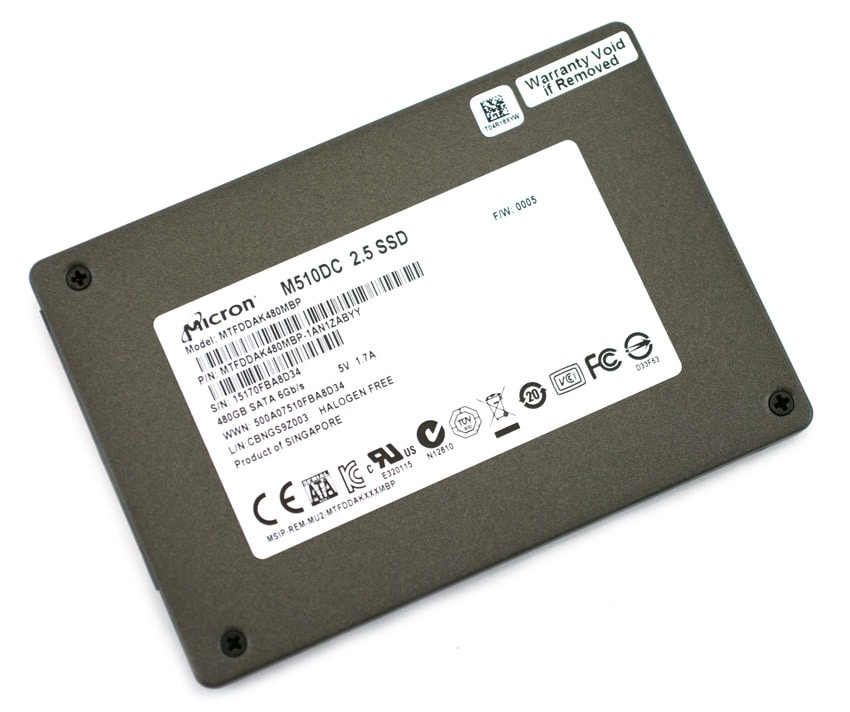
Micron M510DC SSD Review

The Micron M510DC SSDs are built for optimization during read-heavy workloads including content delivery and virtualization, fitting alongside (and not replacing) the existing M500DC line. This new line of light enterprise drives are based off of proven technology designed to hit low price points rather than delivering blistering performance. As such, the M510DC SSDs fit a very important demographic

Enterprise  ◇  Hyperconverged

VMware Virtual SAN Review: Sysbench OLTP Performance

To measure the performance of the VMware VSAN cluster in transactional database workloads, we first leverage the Sysbench OLTP benchmark, paying close attention to total aggregate performance. The Sysbench OLTP benchmark runs on top of Percona MySQL leveraging the InnoDB storage engine operating inside a CentOS installation. While a traditional SAN infrastructure can better cope with large single workloads,