

Seria dysków Intel SSD DC P4610 to najnowsza linia dysków firmy Intel do centrów danych, zaprojektowana specjalnie z myślą o wydajności, jakości usług (QoS) i pojemności. Wykorzystując specyfikację NVMe 1.2 w obudowie U.2 2.5”, ten nacisk na wydajność pamięci masowej pozwala organizacjom minimalizować przerwy w działaniu usług i efektywnie zarządzać centrami danych w dużej skali. Nowa linia produktów Intel pomaga również zwiększyć elastyczność i wykorzystanie serwerów oraz przyspieszyć działanie aplikacji w różnorodnych obciążeniach chmurowych.
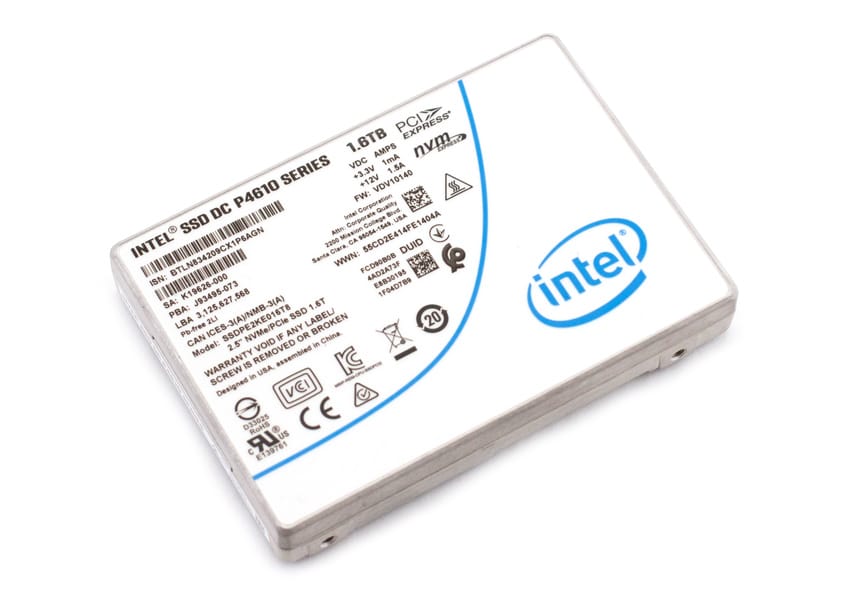
Tym razem Intel zastosował 64-warstwową technologię TLC 3D NAND, co pozwoliło na zwiększenie maksymalnej pojemności serii P4610 nawet o 20% w porównaniu z poprzednią linią (P4600). Intel wskazuje, że pozwoli to na zwiększenie liczby aplikacji obsługujących obciążenia, w tym większą liczbę użytkowników dla dostawców usług chmurowych i korporacyjnych oraz na poprawę poziomu usług transmisji danych.
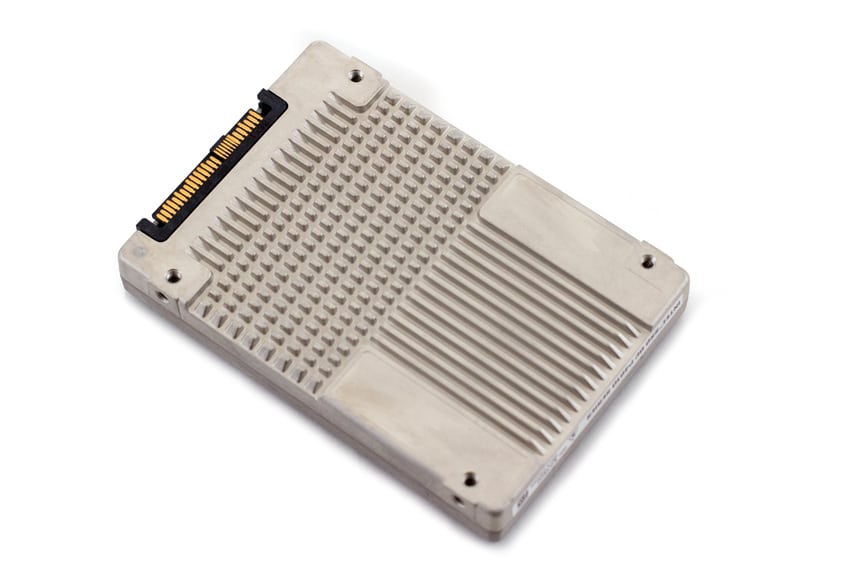
Jeśli chodzi o wydajność, seria DC P4610 ma osiągnąć sekwencyjne prędkości odczytu i zapisu odpowiednio do 3,200 MB/s i 2,100 MB/s, natomiast odczyt i zapis losowy mają wynieść 620 000 IOPS i 200 000 IOPS. Intel twierdzi, że przełoży się to na 35% większą szybkość zapisu, zwiększoną wytrzymałość nawet o 35% na dysk oraz nawet czterokrotnie krótszy czas obsługi przy wskaźniku QoS na poziomie 99.99% dostępności dla obciążeń z dostępem losowym.
Seria dysków SSD Intel DC P4610 jest dostępna w pojemnościach 1.6 TB, 3.2 TB, 6.4 TB i 7.68 TB. W tej recenzji przyjrzymy się dyskowi SSD o najmniejszej pojemności.
Specyfikacje dysków SSD Intel serii DC P4610
| Budowa | U.2 | ||||
| Pojemność | 1.6TB | 3.2TB | 6.4TB | 7.68TB | |
| NAND | 64-warstwowa pamięć 3D TLC NAND | ||||
| Interfejs | PCIe NVMe 3.1x4 | ||||
| Protokół | NVMe 1.2 | ||||
| Wydajność | |||||
| Odczyt sekwencyjny (128 KB) | 3,200MB / s | 3,200MB / s | 3,000MB / s | 3,200MB / s | |
| Zapis sekwencyjny (128 KB) | 3,200 MB / s | 3,000MB / s | 2,900MB / s | 3,200MB / s | |
| Ciągły losowy odczyt (4 KB) | 640000 IOPS | 640000 IOPS | 640000 IOPS | 640000 IOPS | |
| Utrzymywany losowy zapis (4 KB) | 220000 IOPS | 200000 IOPS | 220000 IOPS | 220000 IOPS | |
| Opóźnienie odczytu | 77 μs | ||||
| Średni czas między awariami (MTBF) | 2 Miliony | ||||
| Waga | 139g | ||||
| Gwarancja | 5 roku | ||||
| Pobór mocy (aktywny/bezczynny) | 5W / 13.3W | 5W / 13.8W | 5W / 14.6W | 5W / 14.8W | |
Wydajność
Stanowisko testowe
Nasze testy dysków SSD klasy Enterprise wykorzystują Lenovo ThinkSystem SR850 do testów aplikacyjnych oraz Dell PowerEdge R740xd do testów syntetycznych. ThinkSystem SR850 to dobrze wyposażona platforma czteroprocesorowa, oferująca moc obliczeniową znacznie przekraczającą wymagania dotyczące wydajnej pamięci lokalnej. Testy syntetyczne, które nie wymagają dużych zasobów procesora, wykorzystują bardziej tradycyjny serwer dwuprocesorowy. W obu przypadkach celem jest zaprezentowanie pamięci lokalnej w jak najlepszym świetle, zgodnie z maksymalnymi specyfikacjami dysków oferowanymi przez producentów pamięci masowej.
Lenovo Think System SR850
- 4 x procesor Intel Platinum 8160 (2.1 GHz x 24 rdzenie)
- 16 x 32 GB pamięci DRAM DDR4-2666 MHz z funkcją ECC
- 2 x RAID 930-8i 12 Gb/s Karty RAID
- 8 zatok NVMe
- VMware ESXI 6.5
Dell PowerEdge R740xd
- 2 procesory Intel Gold 6130 (2.1 GHz x 16 rdzeni)
- 16 x 16 GB pamięci DRAM DDR4-2666 MHz z funkcją ECC
- 1x karta RAID PERC 730 2 GB 12 Gb/s
- Dodatkowy adapter NVMe
- Ubuntu-16.04.3-komputer stacjonarny-amd64
Testowanie tła i porównań
Laboratorium testowe StorageReview Enterprise oferuje elastyczną architekturę do przeprowadzania testów porównawczych urządzeń pamięci masowej klasy enterprise w środowisku porównywalnym z tym, z jakim administratorzy spotykają się w rzeczywistych wdrożeniach. Laboratorium testowe Enterprise obejmuje różnorodne serwery, sieci, urządzenia do kondycjonowania zasilania i inną infrastrukturę sieciową, co pozwala naszym pracownikom na stworzenie rzeczywistych warunków i dokładną ocenę wydajności podczas testów.
Uwzględniamy te informacje dotyczące środowiska laboratoryjnego i protokołów w recenzjach, aby specjaliści IT i osoby odpowiedzialne za pozyskiwanie pamięci masowej mogli zrozumieć warunki, w jakich osiągnęliśmy poniższe rezultaty. Żadna z naszych recenzji nie jest opłacana ani nadzorowana przez producenta testowanego sprzętu. Dodatkowe informacje na temat laboratorium testowego StorageReview Enterprise Test Lab oraz przegląd jego możliwości sieciowych są dostępne na odpowiednich stronach.
Główne porównania w tej recenzji:
- Memblaze PBlaze5 910 3.84 TB
- Pamięć PBlaze5 910 7.86 TB AIC
- IIntel P4510 2TB
- Intel P4510 8TB
- Huawei ES3000 v5 3.2 TB
- Element ciekły AIC
- Memblaze PBlaze5 916 3.2 TB
Analiza obciążenia aplikacji
Aby zrozumieć charakterystykę wydajności urządzeń pamięci masowej klasy enterprise, niezbędne jest modelowanie infrastruktury i obciążeń aplikacji występujących w środowiskach produkcyjnych. Nasze testy porównawcze dla Intel P4610 opierają się zatem na wydajności MySQL OLTP za pomocą SysBench . W przypadku obciążeń aplikacji, każdy dysk będzie obsługiwał 2–4 identycznie skonfigurowane maszyny wirtualne. Uwaga: Model o pojemności 1.6 TB nie był wystarczająco duży dla naszych obciążeń aplikacji SQL, dlatego nie został uwzględniony w tej recenzji.
Wydajność Sysbench
Kolejny test porównawczy aplikacji obejmuje bazę danych Percona MySQL OLTP, mierzoną za pomocą SysBench. Test ten mierzy również średnią liczbę transakcji na sekundę (TSP), średnie opóźnienie oraz średnie opóźnienie na poziomie 99. percentyla.
Każda maszyna wirtualna Sysbench jest skonfigurowana z trzema dyskami wirtualnymi: jednym do rozruchu (~92 GB), jednym z predefiniowaną bazą danych (~447 GB) i trzecim dla testowanej bazy danych (270 GB). Z perspektywy zasobów systemowych, skonfigurowaliśmy każdą maszynę wirtualną z 16 procesorami wirtualnymi, 60 GB pamięci DRAM i wykorzystaliśmy kontroler LSI Logic SAS SCSI.
Konfiguracja testów Sysbench (na maszynę wirtualną)
- CentOS 6.3 64-bit
- Percona XtraDB 5.5.30-rel30.1
- Tabele bazy danych: 100
- Rozmiar bazy danych: 10 000 000
- Wątki bazy danych: 32
- Bufor RAM: 24 GB
- Długość testu: 3 godziny
- 2 godziny wstępnego kondycjonowania 32 wątków
- 1 godzina 32 wątki
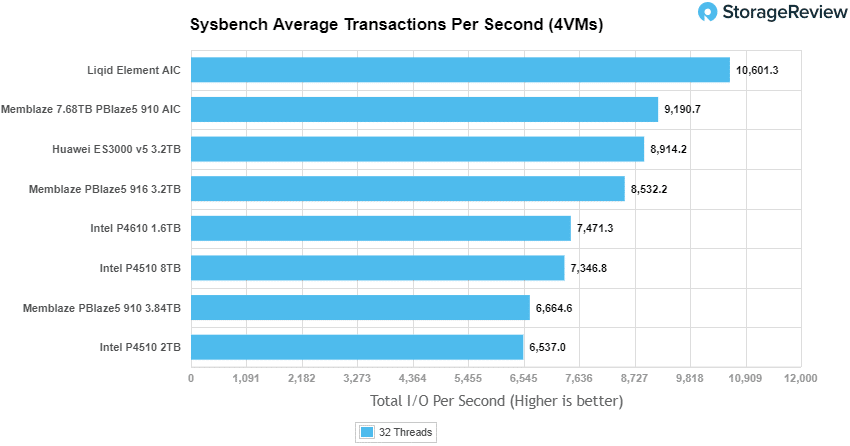
W teście transakcyjnym Sysbench procesor Intel 4610 osiągnął solidny wynik 7,471.3 TPS, co pozwoliło mu zająć piąte miejsce.
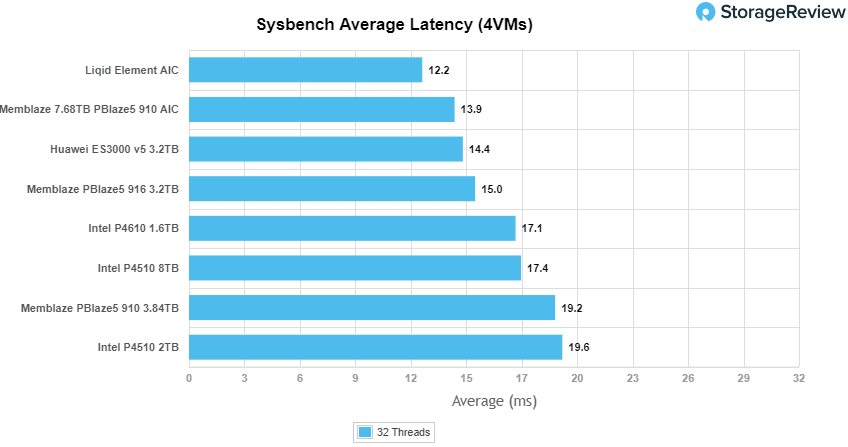
Pod względem średniego opóźnienia w Sysbench procesor Intel 4610 po raz kolejny uplasował się na piątym miejscu wśród porównywalnych układów z opóźnieniem wynoszącym 17.1 ms.
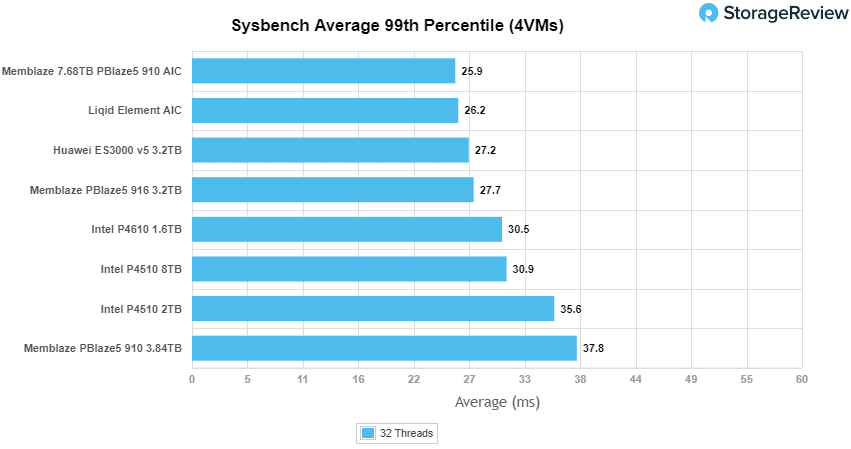
W naszym teście najgorszego scenariusza opóźnienia procesor Intel 4610 znalazł się ponownie na piątym miejscu z wynikiem 30.5 ms.
Houdini od SideFX
Test Houdini został zaprojektowany specjalnie do oceny wydajności pamięci masowej w kontekście renderowania CGI. Platformą testową dla tej aplikacji jest wariant serwera Dell PowerEdge R740xd, którego używamy w laboratorium, z dwoma procesorami Intel 6130 i 64 GB pamięci DRAM. W tym przypadku zainstalowaliśmy system Ubuntu Desktop (ubuntu-16.04.3-desktop-amd64) działający bez systemu operacyjnego. Wynik testu porównawczego jest mierzony w sekundach, przy czym im mniej sekund, tym lepiej.
Demo Maelstrom przedstawia fragment procesu renderowania, który uwypukla możliwości wydajnościowe pamięci masowej, demonstrując jej zdolność do efektywnego wykorzystania pliku wymiany jako formy pamięci rozszerzonej. Test nie zapisuje danych wynikowych ani nie przetwarza punktów, aby wyizolować wpływ opóźnienia na bazowy komponent pamięci masowej. Sam test składa się z pięciu faz, z których trzy uruchamiamy w ramach benchmarku:
- Ładuje spakowane punkty z dysku. Jest to czas odczytu z dysku. Jest to proces jednowątkowy, co może ograniczać ogólną przepustowość.
- Rozpakowuje punkty do pojedynczej, płaskiej tablicy, aby umożliwić ich przetworzenie. Jeśli punkty nie są zależne od innych punktów, zbiór roboczy można dostosować tak, aby pozostał w rdzeniu. Ten krok jest wielowątkowy.
- (Nie uruchomiono) Przetwarzaj punkty.
- Przepakowuje je do bloków zbiorczych, które można zapisać z powrotem na dysku. Ten krok jest wielowątkowy.
- (Nie uruchamiaj) Zapisz podzielone bloki z powrotem na dysk.
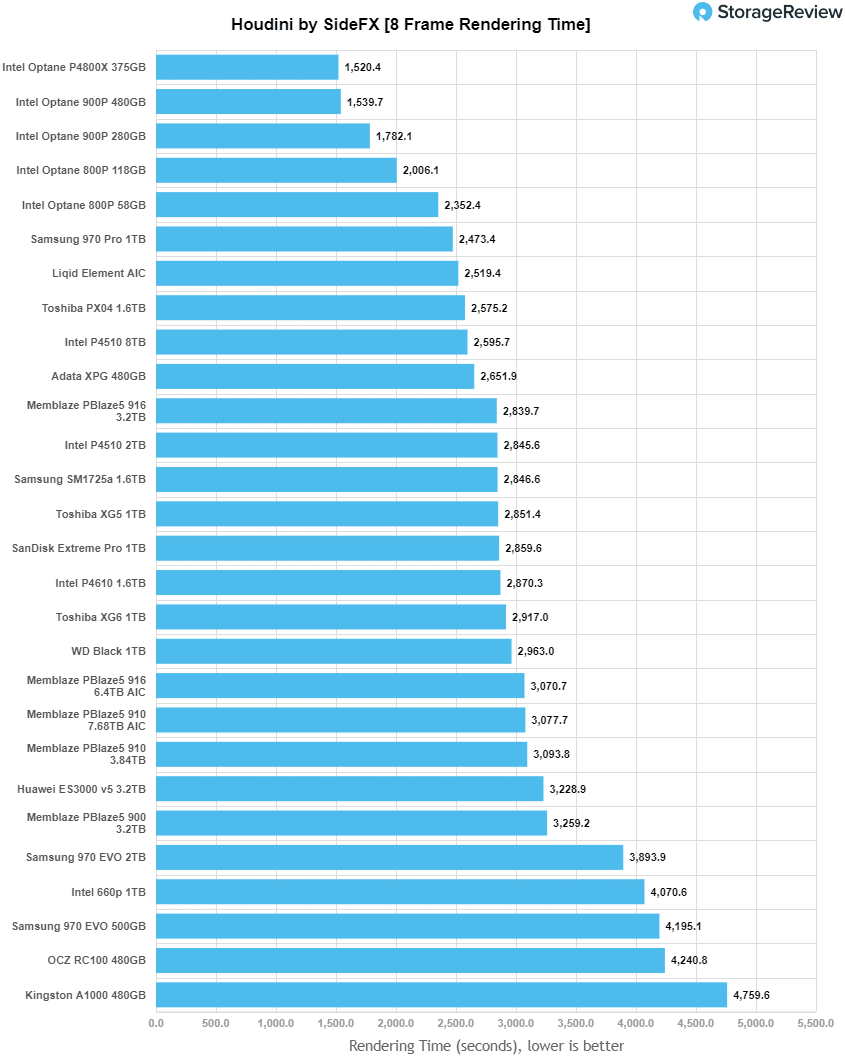
W teście Houdini procesor Intel P4610 został umieszczony w górnej środkowej części zestawu.
Analiza obciążenia VDBench
W przypadku benchmarkingu urządzeń pamięci masowej, testy aplikacji są najlepsze, a testy syntetyczne plasują się na drugim miejscu. Chociaż nie odzwierciedlają one idealnie rzeczywistych obciążeń, testy syntetyczne pomagają w ustaleniu punktu odniesienia urządzeń pamięci masowej dzięki współczynnikowi powtarzalności, który ułatwia porównywanie konkurencyjnych rozwiązań. Obciążenia te oferują szereg różnych profili testowych, od testów „czterech kątów”, przez testy rozmiaru transferu danych, po przechwytywanie śladów z różnych środowisk VDI. Wszystkie te testy wykorzystują generator obciążeń vdBench z silnikiem skryptowym do automatyzacji i przechwytywania wyników w dużym klastrze obliczeniowym. Pozwala to nam powtarzać te same obciążenia dla szerokiej gamy urządzeń pamięci masowej, w tym macierzy flash i pojedynczych urządzeń pamięci masowej. Nasz proces testowania tych benchmarków polega na wypełnieniu całej powierzchni dysku danymi, a następnie partycjonowaniu sekcji dysku równej 25% pojemności dysku, aby symulować potencjalną reakcję dysku na obciążenia aplikacji. Różni się to od testów pełnej entropii, które wykorzystują 100% dysku i wprowadzają go w stan ustalony. W rezultacie liczby te będą odzwierciedlać wyższe, stałe prędkości zapisu.
Profile:
- Losowy odczyt 4K: 100% odczytu, 128 wątków, 0-120% ioratu
- 4K losowy zapis: 100% zapisu, 64 wątki, 0-120% ioracji
- 64K Sekwencyjny odczyt: 100% odczytu, 16 wątków, 0-120% ioracji
- 64K Sekwencyjny zapis: 100% zapisu, 8 wątków, 0-120% ioratu
- Syntetyczna baza danych: SQL i Oracle
- Ślady pełnego klonu VDI i klonów powiązanych
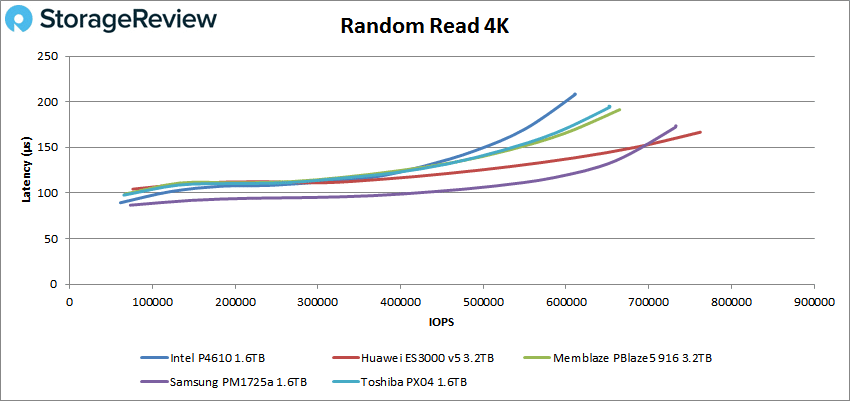
W naszej pierwszej analizie obciążenia VDBench, losowym odczycie 4K, procesor Intel P4610 utrzymał czas poniżej 1 ms, osiągając szczytową wartość 610 532 IOPS i opóźnienie 208.3 μs, co plasuje go na końcu stawki.
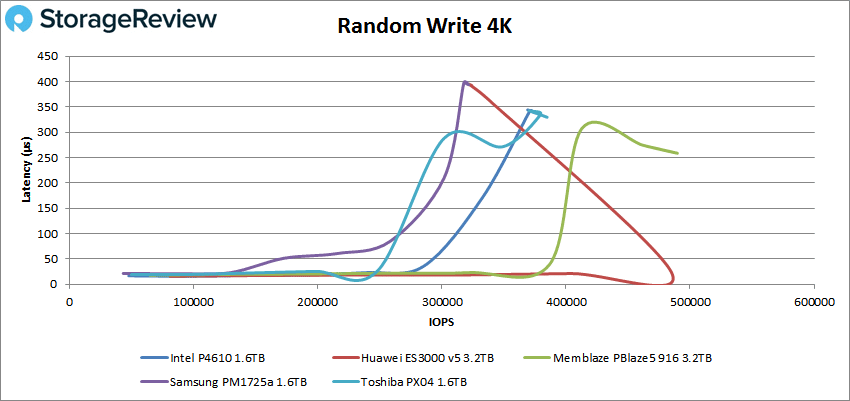
W losowych zapisach 4K, P4610 ponownie zanotował opóźnienie poniżej milisekundy, zajmując trzecie miejsce. Dokładnie, osiągnął maksymalną wydajność 375 251 IOPS i opóźnienie 338.3 μs.
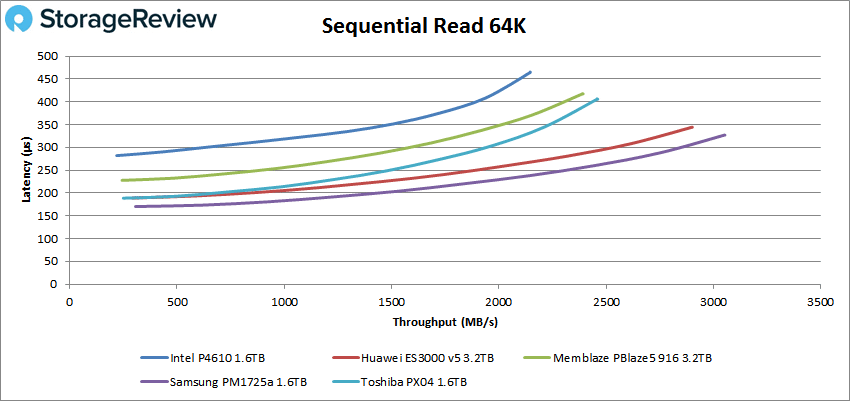
Po przełączeniu na obciążenia sekwencyjne, P4610 ponownie znalazł się na ostatnim miejscu w przypadku odczytów 64 KB, osiągając szczytowy wynik 34 336 IOPS (lub 2.15 GB/s) i opóźnienie 464.6 μs.
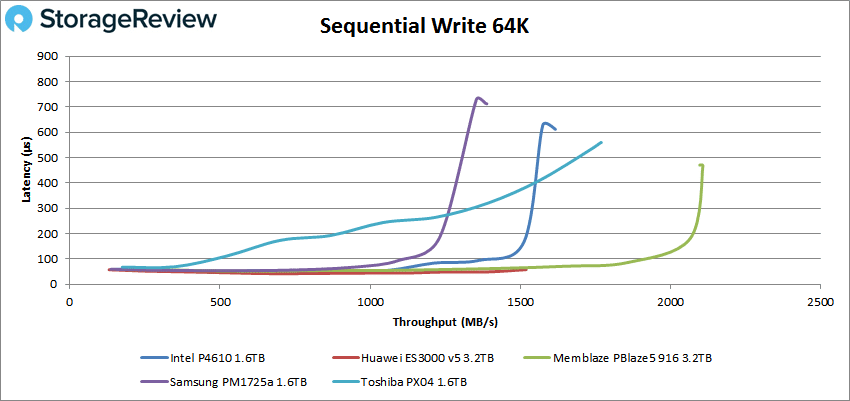
W naszym teście sekwencyjnym 64K dysk P4610 po raz kolejny zajął trzecie miejsce pod względem wydajności zapisu, uzyskując 25 661 IOPS (lub 1.6 GB/s) i 611.6 μs.
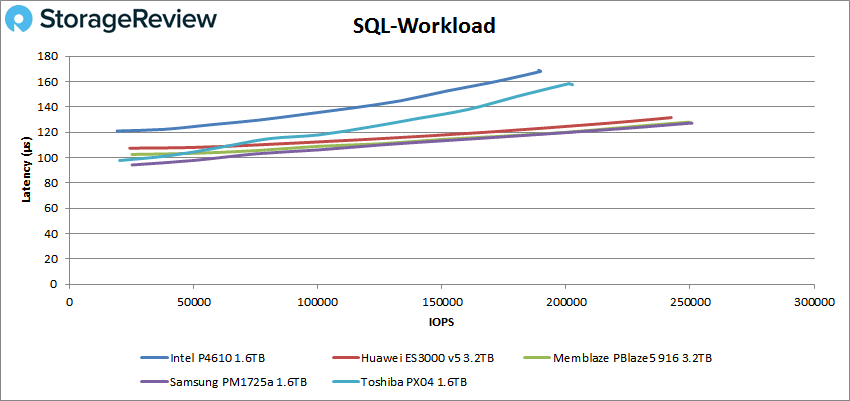
Jeśli chodzi o obciążenia SQL, P4610 osiągnął szczytową wydajność na poziomie 188 997 IOPS i opóźnienie 168.9 μs, plasując się na końcu stawki.
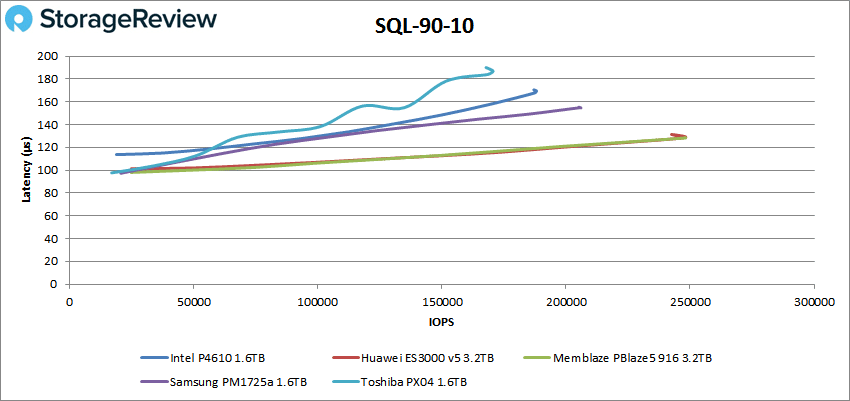
W teście SQL 90-10 procesor P4610 utrzymał czwarte miejsce z wynikiem szczytowym 187 357 IOPS i opóźnieniem 169.5 μs, co plasuje go w środku stawki.
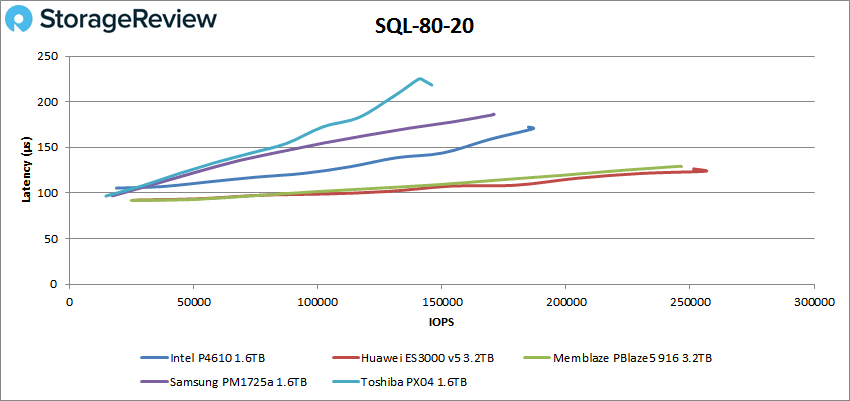
W teście porównawczym SQL 80-20 procesor P4610 osiągnął szczytową wartość 186 197 IOPS przy opóźnieniu 170.6 μs.
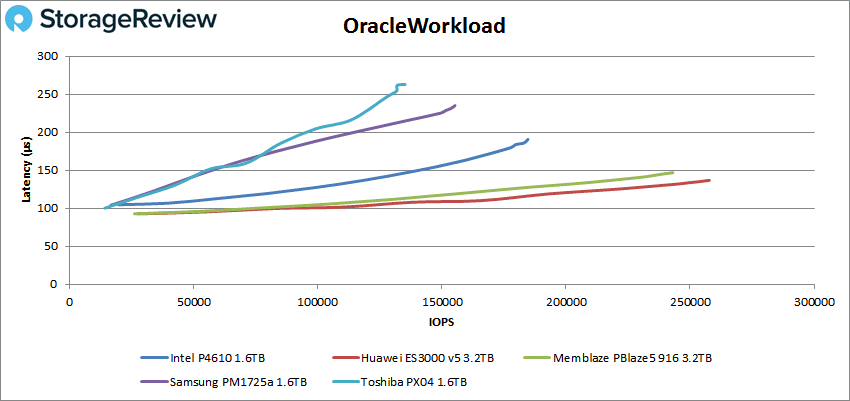
Przy obciążeniu Oracle P4610 nadal ustępował Memblaze i Huawei, osiągając wynik 184 659 OPS i opóźnienie 190.7 μs.
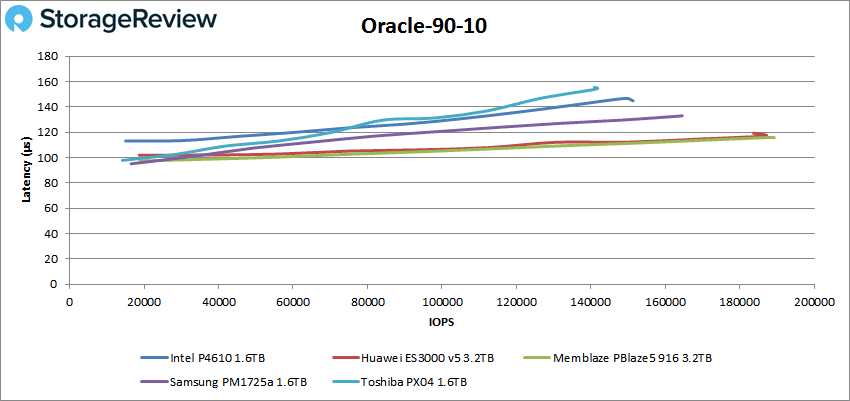
W przypadku Oracle 90-10, P4610 osiągnął szczytową wydajność 151 174 IOPS i opóźnienie 145 μs, co dało mu drugie miejsce od końca.
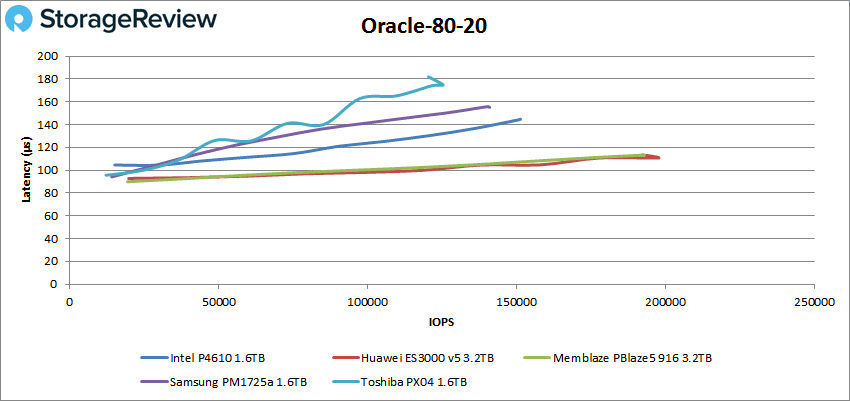
W środku stawki znalazł się procesor P4610, który w naszym Oracle 80-20 osiągnął szczytową wydajność na poziomie 150 698 IOPS i opóźnienie wynoszące 144.2 μs.
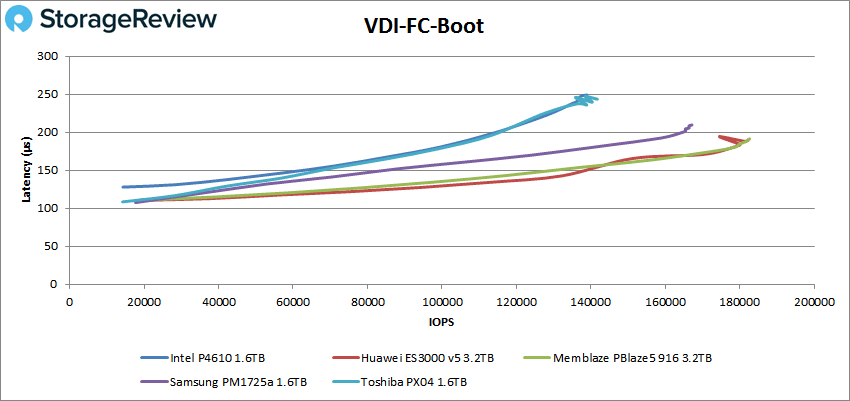
Następnie przechodzimy do testów pełnego i połączonego klonowania VDI. W przypadku pełnego klonowania VDI, P4610 osiągnął maksymalną wydajność 137 610 IOPS i opóźnienie 248 μs.
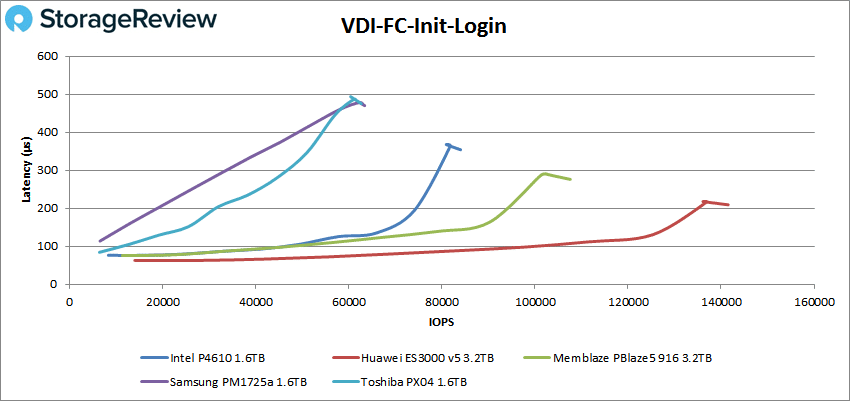
W teście początkowego logowania VDI FC procesor P4610 osiągnął szczytową wydajność na poziomie 84 026 IOPS i opóźnienie 353.9 μs, co dało mu trzecie miejsce.
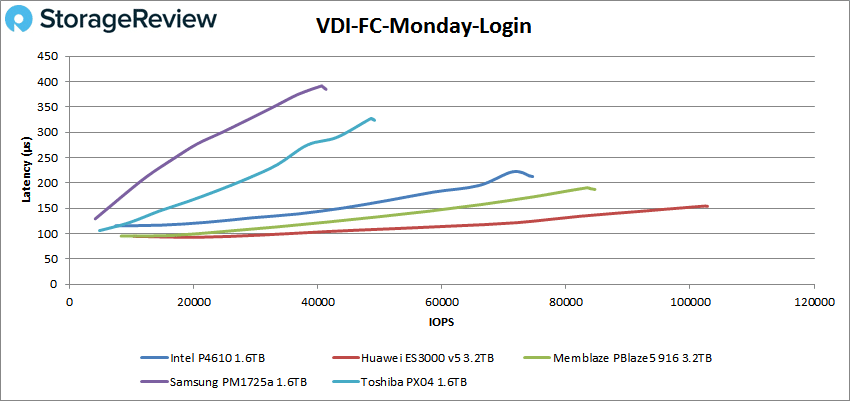
Dzięki poniedziałkowemu logowaniu VDI FC P4610 osiągnął szczytową wydajność na poziomie 74 635 IOPS i opóźnienie 212.5 μs.
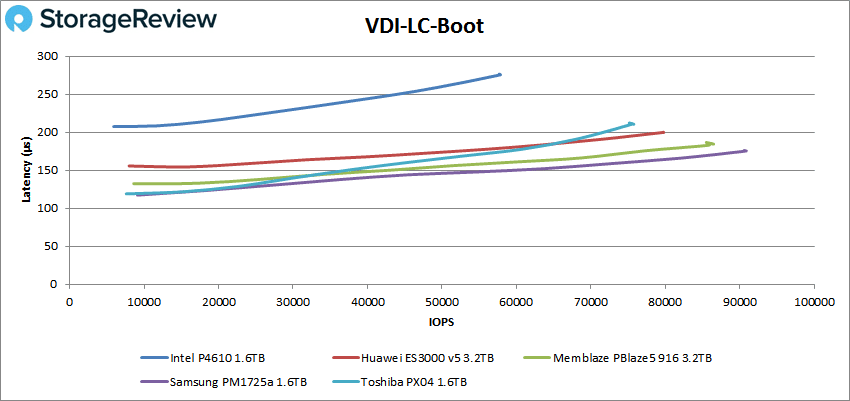
Przechodząc do Linked Clone (LC), najpierw przyjrzymy się testowi rozruchu, w którym P4610 uzyskał wynik 74 635 IOPS i opóźnienie 275.7 μs.
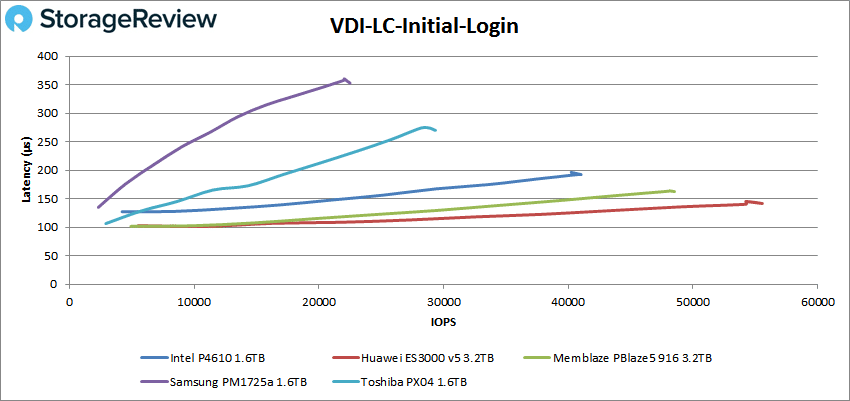
Podczas początkowego logowania do VDI LC P4610 osiągnął maksymalną wydajność 40 236 IOPS i opóźnienie 196.3 μs.
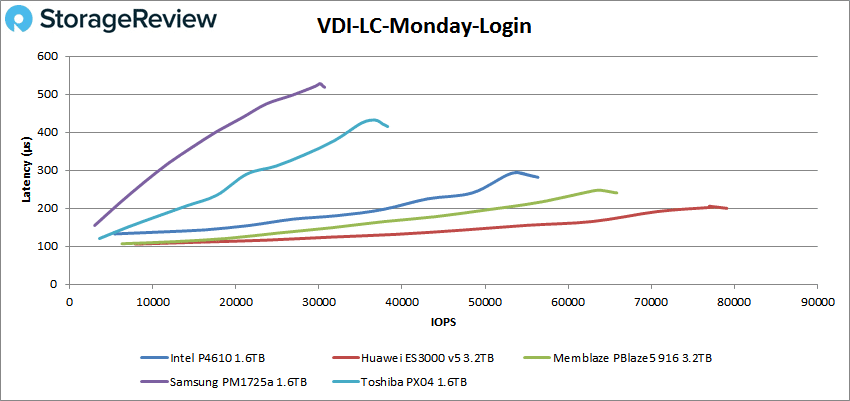
Wreszcie, VDI LC Monday Login uzyskało szczytową wartość P4610 na poziomie 56 350 IOPS i opóźnienie 281.4 μs, co dało mu trzecie miejsce.
Wniosek
Seria dysków SSD Intel DC P4610 to nowy, ulepszony model w linii wydajnych dysków NVMe do centrów danych. Nowy dysk P4610 wyposażony jest w 64-warstwową pamięć 3D NAND, jest dostępny w formacie U.2 i dostępny w pojemnościach 1.6 TB, 3.2 TB, 6.4 TB i 7.68 TB. Ten pierwszy testowaliśmy w ramach tej recenzji. Intel deklaruje lepszą wydajność w porównaniu z poprzednią generacją, deklarując prędkości odczytu i zapisu odpowiednio do 3,200 MB/s i 2,100 MB/s oraz losowy odczyt i zapis na poziomie 620 000 IOPS i 200 000 IOPS. Intel stworzył linię dysków SSD P4610 z myślą o zapewnieniu najwyższej wydajności w wymagających warunkach, a jednocześnie obsłudze większych obciążeń w chmurze, co pozwala obniżyć koszty.
Analizując wydajność naszej aplikacji w sysbench, P4610 osiągnął solidne 7,471.3 TPS, średnie opóźnienie 17.1 ms i opóźnienie w najgorszym przypadku 30.5 ms, plasując się w czołówce kilku innych dysków. W naszym teście Houdini by SideFX, nowy dysk Intel uzyskał 2,870.3 sekundy, co plasuje go w środku stawki. Rozmiar próbki 1.6 TB był zbyt mały do naszego testu SQL Server, dlatego nie został on przeprowadzony w ramach tej recenzji.
W teście VDBench, P4610 wykazał opóźnienie poniżej milisekundy we wszystkich testach. Kluczowe wyniki to 610 532 IOPS przy odczycie 4K, 375 251 IOPS przy zapisie 4K, 2.15 GB/s przy odczycie 64K i 1.6 GB/s przy zapisie 64K. Oracle osiągnął odpowiednio 184 659 IOPS, 151 174 IOPS i 150 698 IOPS dla obciążenia 90-10 i 8020, podczas gdy testy SQL obejmowały od 186 000 IOPS do 189 000 IOPS.
Ogólnie rzecz biorąc, dysk Intel P4610 wykazał się przeciętną lub rozczarowującą wydajnością, w zależności od wybranej aplikacji. W naszym teście renderowania Houdini wypadł wolniej niż dysk P4510, zorientowany na odczyt. W naszych obciążeniach, które koncentrowały się na wydajności odczytu, wypadł słabiej w porównaniu z innymi dyskami o mieszanym obciążeniu w tej kategorii. W testach z pewnym naciskiem na zapis wydajność wzrosła, ale do bardziej środkowego poziomu. W zależności od kosztów, dysk P4610 może jednak okazać się dobrą inwestycją w przypadku aplikacji, które nie są szczególnie wrażliwe na opóźnienia.


 Amazon