

Canonical has released LXD 6.9 with updates aimed squarely at storage teams: a native driver for Dell PowerStore arrays, a new Fibre Channel connector for remote storage generally, and support for Dell PowerFlex 5. For a platform that started life as a container manager, that is a notable amount of enterprise SAN plumbing in a single release.
For readers who have not tracked it, LXD is Canonical’s open-source virtualization platform that manages both system containers and full KVM virtual machines across clustered hosts. It has gained attention as organizations reassess their hypervisor options in the wake of Broadcom’s VMware licensing changes, and Canonical has been steadily building out the enterprise features (clustering, live migration, a Kubernetes CSI driver, disaster-recovery replication) that a VMware alternative needs. The missing piece for many has been the storage they already have, and this release addresses much of it.
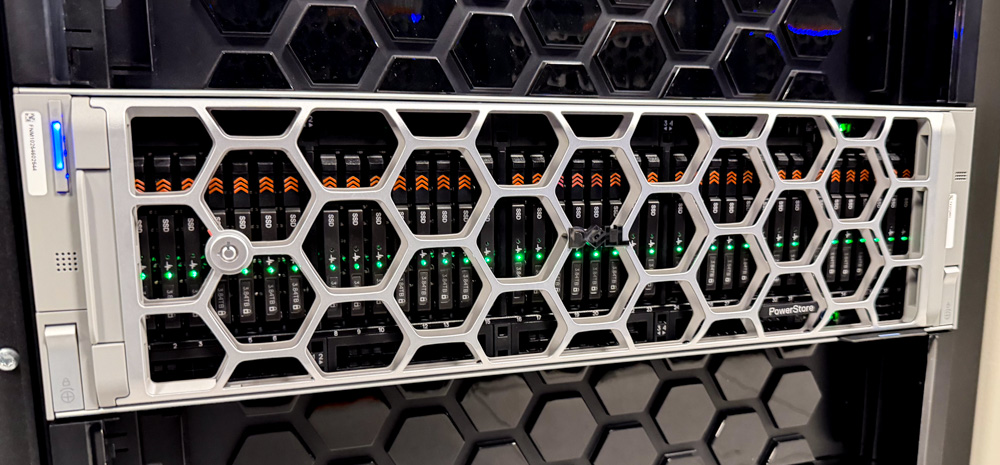
The reason a native driver matters comes down to where instance data lives. Without one, LXD typically puts VM and container volumes on host-local ZFS, LVM, or Btrfs, or on a Ceph cluster, which means an existing array is reduced to serving LUNs that the host then carves up itself. With a native driver, LXD provisions each instance volume directly on the array, so snapshots, clones, and thin provisioning are handled by the array’s own data services, and volumes are reachable from any cluster member. PowerStore now joins Dell PowerFlex, Pure Storage, and HPE Alletra on that list, with both iSCSI and Fibre Channel connectivity supported at launch.
The Fibre Channel connector is arguably the bigger long-term change. Until now, LXD’s remote storage drivers supported only iSCSI or NVMe/TCP, which excluded the large installed base of FC fabrics that dominate legacy SAN estates. The connector is a general transport layer, so drivers beyond PowerStore can adopt it. In related housekeeping, the NVMe/TCP pool mode has been renamed from nvme to nvme/tcp, with existing pools migrated automatically on upgrade.
On the PowerFlex side, the driver now supports PowerFlex 5, including thin clone support, and automatically detects the array’s software version while remaining compatible with PowerFlex 4. The ZFS driver also gains a practical speedup: LXD now caches image variants matching an instance’s configuration, so repeated deployments from the same image no longer rebuild the clone.
Beyond storage, 6.9 adds load balancer pools for OVN networks with health checking, OWASP-compliant security event logging that can be routed to Grafana Loki, and quorum protection for cluster evacuations. The release also lands fixes for eleven CVEs, several of which involved symlink attacks in crafted images or project restriction bypasses.
One caveat: 6.9 is a feature release, which Canonical explicitly does not recommend for production use. Shops that want these capabilities on a supported footing will be waiting for the next LTS. For everyone else, the release is available now via snap install lxd --channel=6/stable, with the snap base moving from core24 to core26.
The full release notes are available on Canonical’s LXD documentation site.



 Amazon