

HPE has announced that it has expanded its collaborations with eight quantum technology companies as it works to develop hybrid computing environments that combine high-performance computing (HPC) and quantum systems. The effort is designed to accelerate the development of practical classical-quantum workflows and support future large-scale scientific and industrial applications.
Building on its position as a global leader in HPC, where it is the builder of the three fastest exascale supercomputers in the world, as verified by the November 2025 TOP500 list, HPE is focusing on the infrastructure required to integrate emerging quantum technologies into existing supercomputing environments. The company is working with partners spanning quantum processing, quantum control, and quantum error correction to create hybrid architectures that leverage both classical and quantum resources.
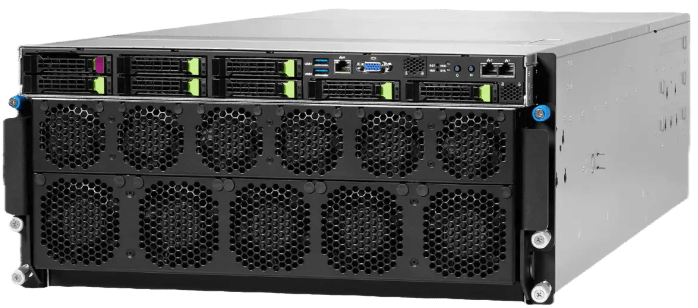
The effort aims to move quantum computing beyond research environments and toward operational use cases by coupling quantum technologies with established HPC infrastructure. “By bringing supercomputing and quantum technologies together in a hybrid platform, we will accelerate the transition from research to real-world application,” said Trish Damkroger, senior vice president and general manager, HPC & AI Infrastructure Solutions at HPE. “Our new strategic collaborations will extend world-class HPC infrastructure to make quantum accessible, scalable, and operational.”
Building a Full-Stack Hybrid Quantum Platform
HPE’s expanded ecosystem includes Intel, IQM, Qblox, Quantinuum, QuEra Computing, Quantum Machines, Rigetti, and Riverlane. Together, the companies are developing a full-stack hybrid quantum supercomputing platform that supports multiple quantum hardware approaches and enables closer integration with HPC and AI environments.
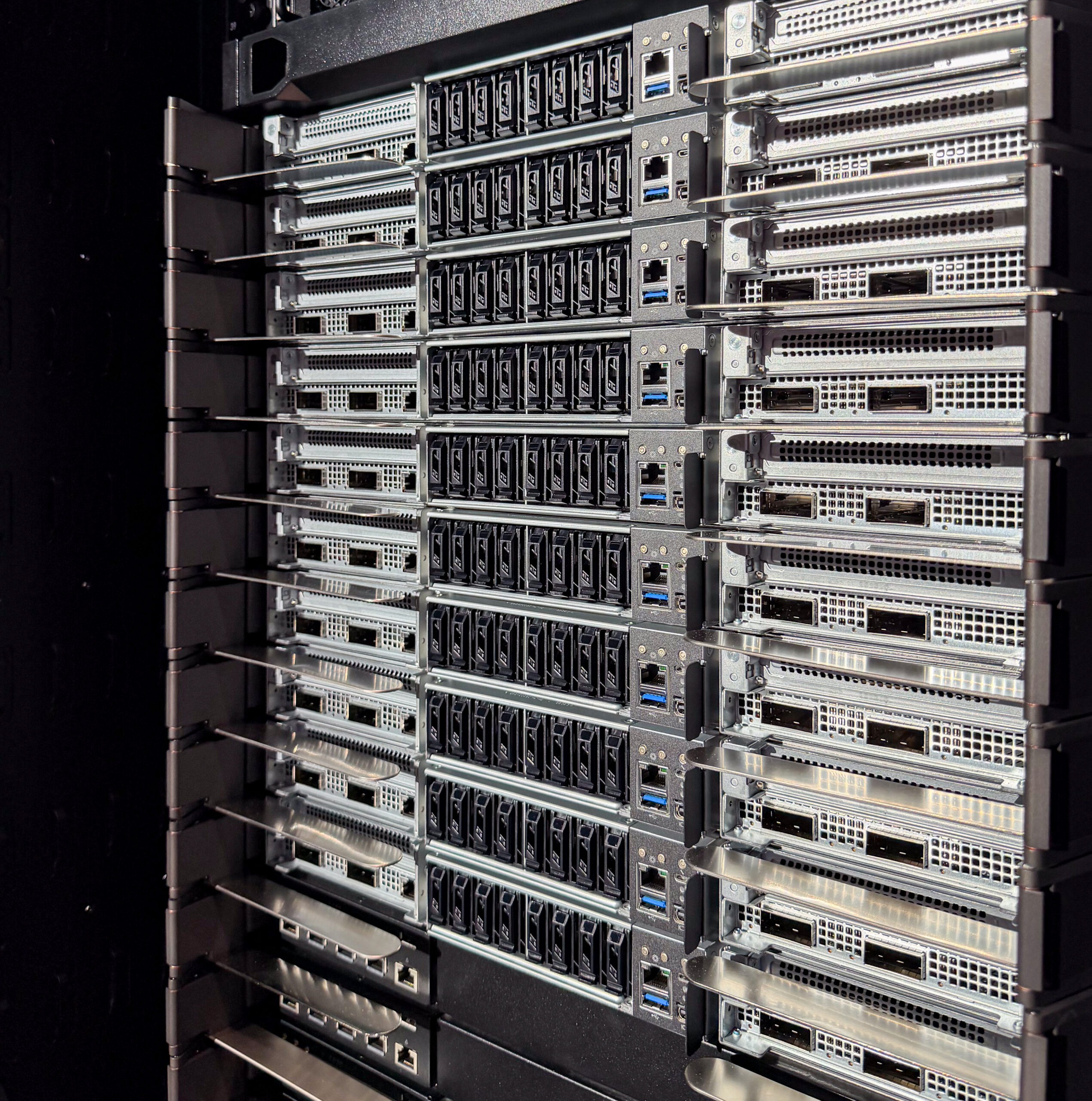
The collaborations are expected to focus on integrated testbeds for hybrid algorithm co-design, software interoperability, and system-level performance benchmarking across HPC and AI environments. These environments will allow researchers and developers to evaluate how quantum systems can work alongside traditional supercomputers and AI infrastructure while measuring application-level performance across different architectures.
Supporting Multiple Quantum Modalities
A key aspect of the initiative is support for several quantum computing modalities rather than a single hardware approach. HPE is working across neutral-atom, ion-trap, superconducting, and silicon-spin qubit technologies, while also incorporating quantum control and error-correction platforms.
By supporting a diverse set of quantum architectures, HPE aims to help researchers evaluate technology trade-offs and identify the most effective approaches for specific workloads. The integrated environments will also support the development, testing, and benchmarking of hybrid quantum applications running alongside HPC and AI systems.
Expanding Hybrid Computing Capabilities
The expanded partnerships reflect a broader industry effort to connect quantum technologies with established supercomputing infrastructure rather than treating them as standalone systems. HPE’s strategy centers on integrating quantum resources into existing HPC environments, enabling hybrid workflows that leverage both classical and quantum processing capabilities.
As quantum technologies continue to mature, hybrid architectures are expected to play a significant role in scientific research, national security applications, and industrial computing workloads that require capabilities beyond those available from classical systems alone.
See It at HPE Discover
Attendees can explore hybrid classical-quantum computing at HPE Discover demo #629 on the show floor, or attend either of two quantum sessions during the week.
“The future of AI and quantum in the public sector” runs June 16 from 1:00 to 1:45 p.m. PT in Titan 2303 (session PNL P1604). “The next leap: Innovating with quantum, agentic AI, and HPC” runs June 17 from 12:15 to 1:15 p.m. PT in Titan 2201a (session TB1394).


 Amazon