

At HPE Discover 2026, HPE announced a broad set of networking enhancements to support AI infrastructure, autonomous operations, and zero-trust security. The updates span AI data center networking, AIOps, routing, and secure access, extending the company’s self-driving networking strategy across AI factories, enterprise data centers, and edge deployments.
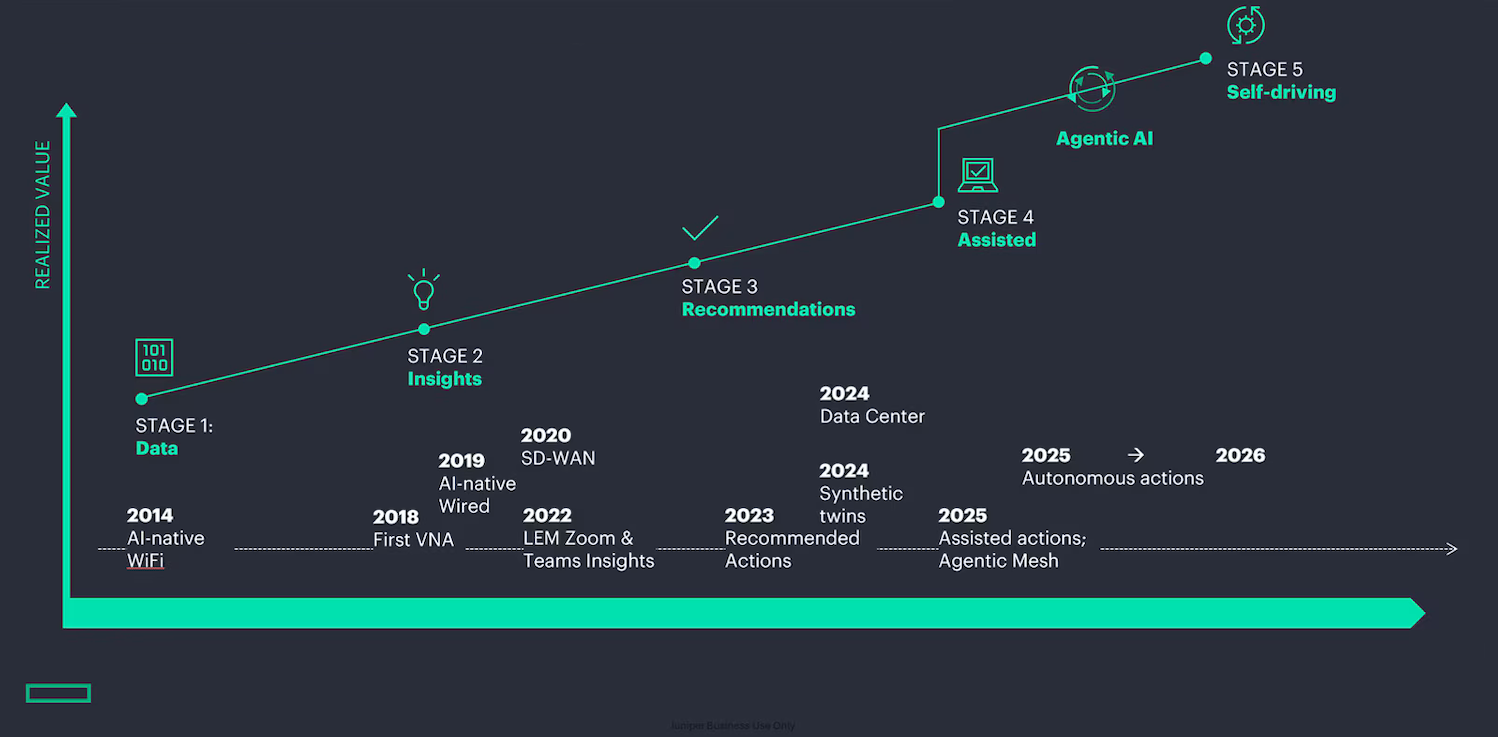
The announcements build on HPE’s agentic enterprise vision, where networking serves as a foundational layer for autonomous IT operations. The latest additions include expanded AI-driven automation, new AI-optimized switching platforms, deeper integration between HPE Aruba Networking and HPE Juniper Networking technologies, and a unified AI-native Secure Access Service Edge (SASE) platform.
“The success of agentic AI in the enterprise depends on a modern networking foundation built for autonomous workflows, where network performance, reliability, and intelligence determine the effectiveness of the entire AI architecture,” said Rami Rahim, executive vice president, president and general manager, Networking, HPE. “HPE is delivering that foundation, enabling enterprises to deploy agentic AI with greater control, confidence, security, and operational simplicity.”
New Networking Platforms Target AI Infrastructure
HPE is expanding its AI Data Center Solution by integrating HPE Juniper Networking QFX switches, managed via HPE Networking Data Center Director. The addition extends HPE’s full-stack AI infrastructure portfolio across compute, storage, networking, software, and services while providing a validated architecture designed to accelerate AI data center deployments.
The company said the enhanced design improves interoperability and provides a scalable foundation for AI training and inference environments, including emerging rack-scale platforms such as AMD Helios.
Two new switching products were introduced as part of the expansion.
The HPE Juniper Networking QFX5140 switch is designed for AI inference clusters and edge AI deployments, addressing the growing demand for distributed inference infrastructure. HPE positions the platform as a key component in extending AI Factory architectures beyond centralized data centers.
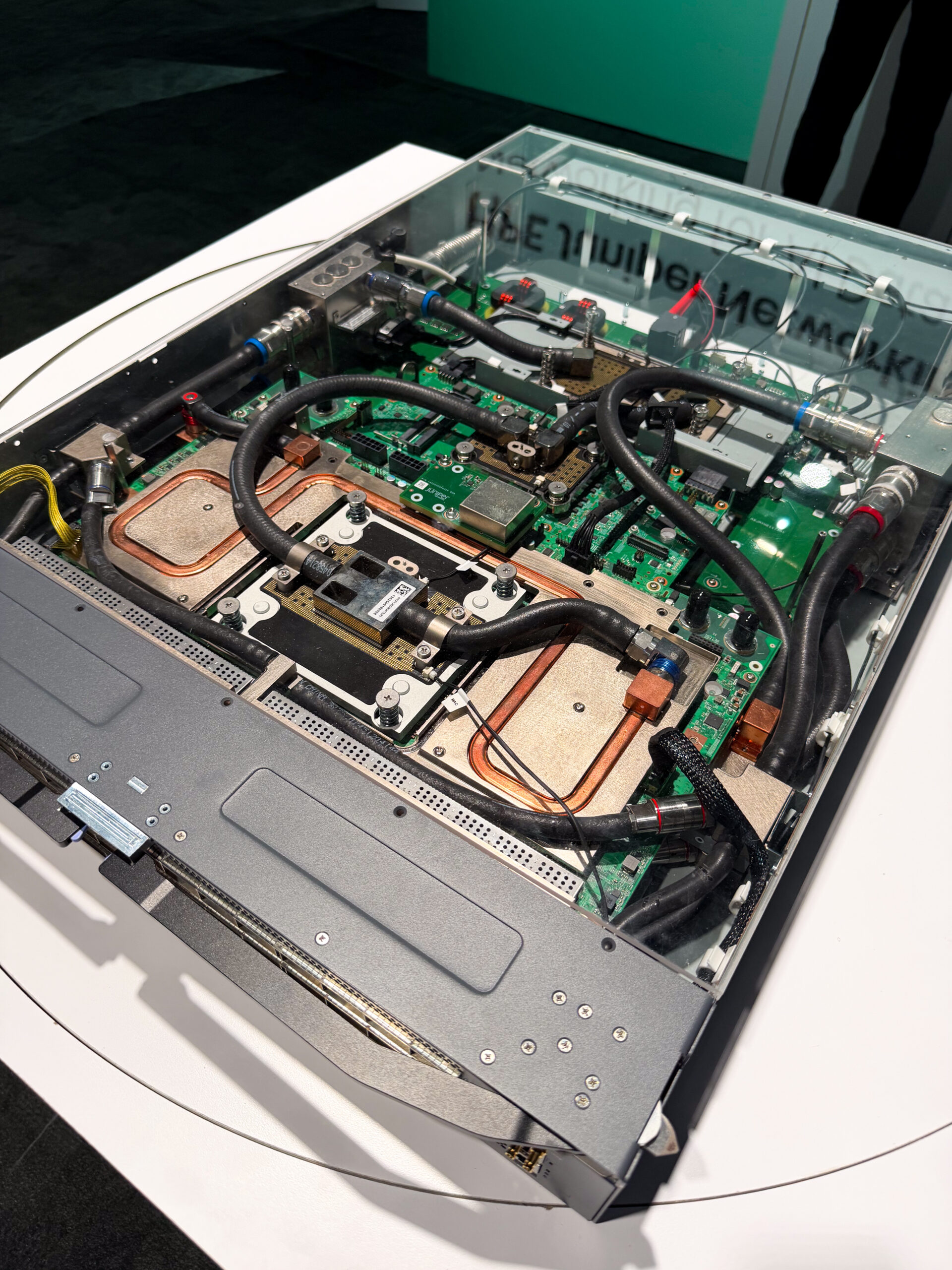
HPE also introduced the HPE Juniper Networking QFX5252 switch tray for AMD Helios. Designed as a scale-up networking module for rack-scale AI systems, the platform provides low-latency, high-bandwidth connectivity intended to maximize GPU utilization and reduce network bottlenecks in large-scale AI environments.
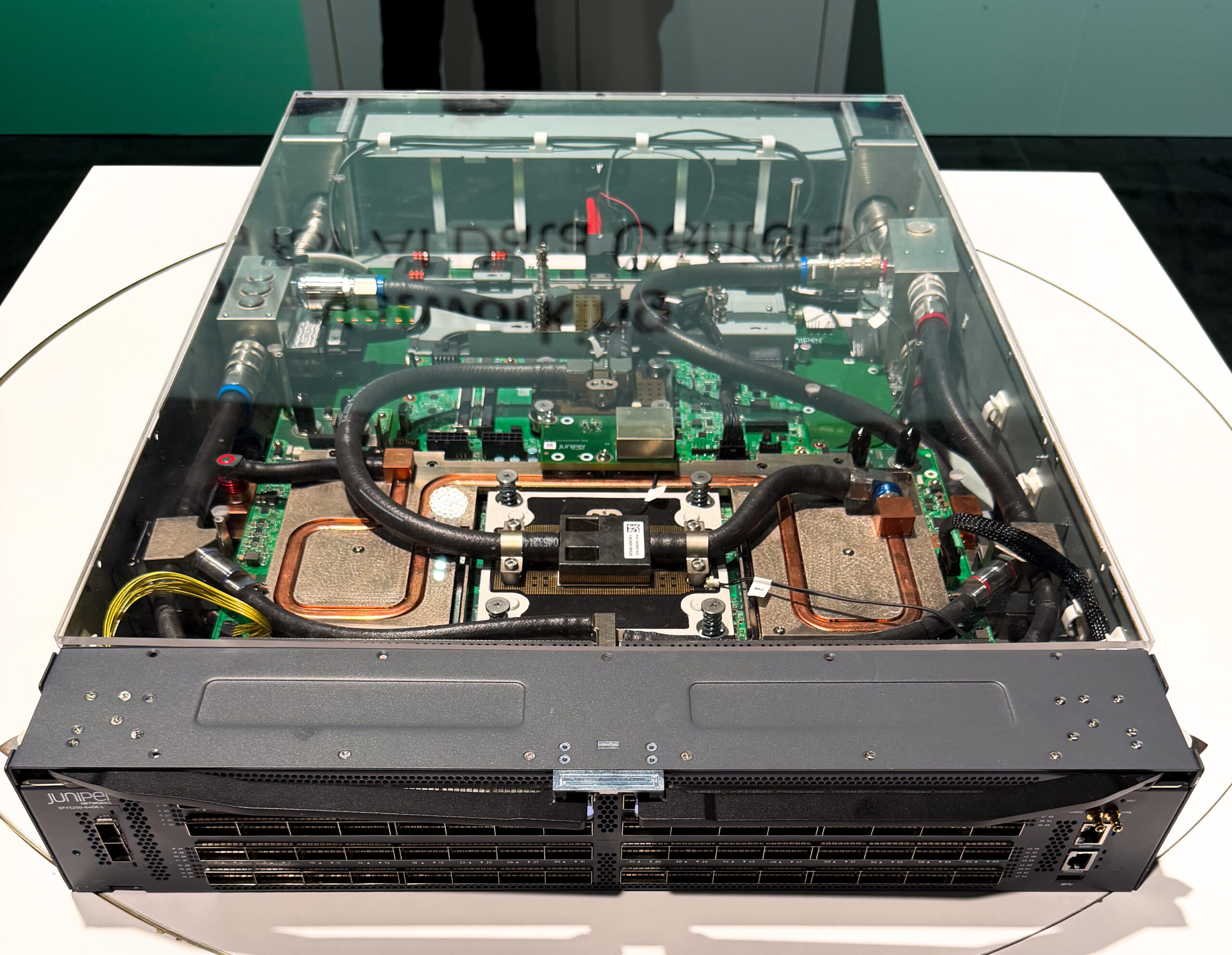
HPE said the new switching platforms are designed to improve infrastructure efficiency by reducing idle GPU time caused by network limitations, helping organizations move AI workloads from proof of concept to production deployments.
Expanded AIOps Across Aruba and Juniper Platforms
HPE continues to merge operational capabilities across its Aruba Networking and Juniper Networking portfolios as part of its broader networking integration strategy.
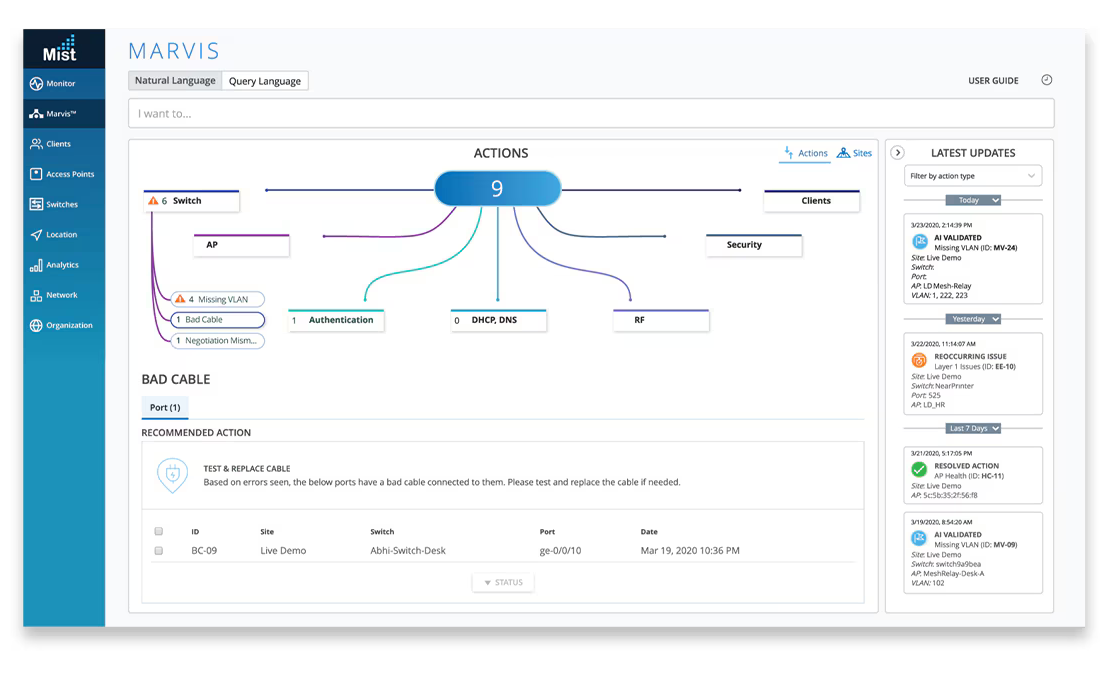
A key announcement is support for HPE Networking CX wired access switches on the HPE Mist AIOps platform. The integration gives CX customers access to Mist’s AI-driven operational capabilities, including AI-native visibility, zero-touch provisioning, wired assurance, dynamic packet capture, service-level insights, and HPE Marvis-driven automation.
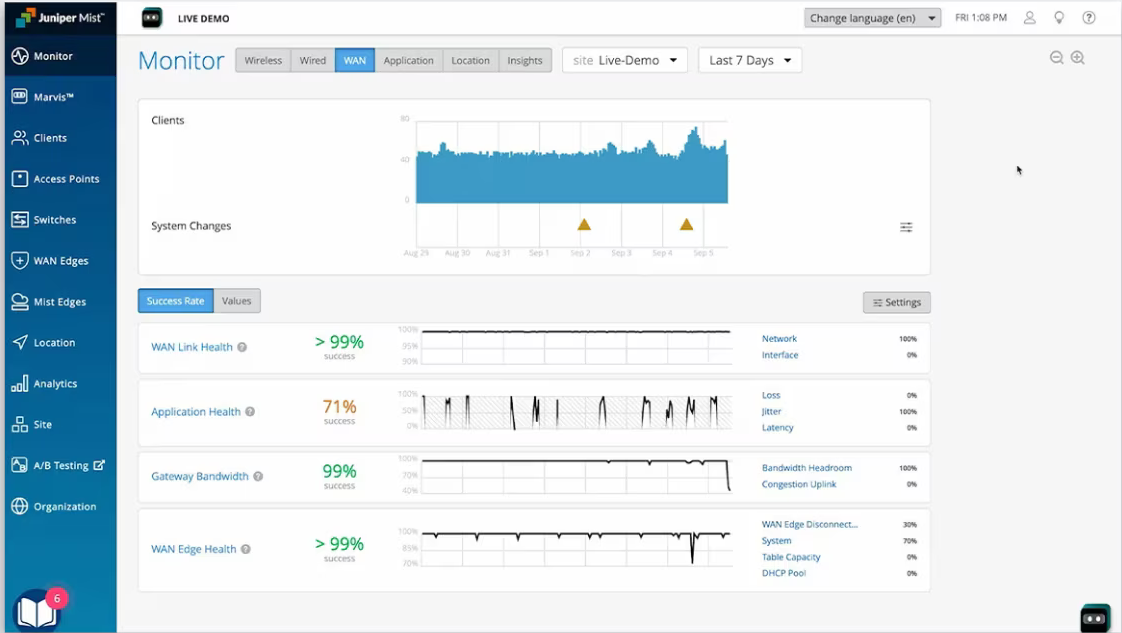
HPE also announced that Marvis AI-powered self-driving networking capabilities are now available within HPE Aruba Central. New automated remediation functions include wired-port troubleshooting and corrective actions designed to reduce manual operational tasks further.
New Agentic AI Capabilities for Data Center Operations
The HPE Mist platform is also gaining additional AI-driven operational capabilities focused on data center environments.
One new capability uses predictive analytics to identify potential hardware and optical failures before service disruption occurs. HPE said the system combines AI and machine learning with multidimensional visualization techniques to improve resiliency and reduce unplanned outages.
A second enhancement introduces an advanced reasoning agent designed to automate root cause analysis and remediation workflows. The platform continuously analyzes operational telemetry, historical support data, and contextual information from HPE Networking Data Center Director to identify issues and recommend corrective actions.
The goal is to accelerate troubleshooting while reducing operational complexity in increasingly large and distributed AI infrastructure environments.
Tighter Integration Across Networking, Compute, and Hybrid Cloud
HPE is also extending integrations across its infrastructure management portfolio following the integration of HPE OpsRamp Software and HPE Morpheus Software.
HPE Mist Networking Data Center Assurance is now integrated with HPE Compute Ops Management, providing cross-domain visibility across networking and compute infrastructure. HPE said the integration reduces management tool sprawl while enabling operations teams to scale infrastructure more efficiently.
The same networking assurance capabilities are now integrated into the HPE GreenLake platform, creating a more unified management experience across hybrid cloud and data center environments.
These integrations support HPE’s longer-term objective of building a self-driving data center that operates through coordinated automation across networking, compute, and cloud infrastructure domains.
Unified SASE Platform Combines Networking and Security
HPE also introduced a new unified SASE platform built on HPE Networking EdgeConnect technology.
The platform combines SD-WAN and Security Service Edge (SSE) capabilities within a single AI-native management framework, allowing organizations to manage networking and security policies from a common console.
Among the key features is an embedded SSE connector that accelerates zero-trust deployments without requiring a separate Zero Trust Network Access infrastructure. A dedicated Secure Web Gateway tunnel extends web protection capabilities to a broader range of devices, including IoT endpoints.
HPE said the platform also supports sovereign SASE architectures by keeping traffic within enterprise-controlled boundaries rather than routing through external cloud security points of presence.
Operationally, the platform incorporates AI-assisted analytics and natural-language interactions via SASE Copilot, helping administrators identify security gaps and resolve issues more quickly.
Financing Program Targets AI Network Upgrades
To support infrastructure modernization efforts, HPE Financial Services announced a new Network Migration Program to help organizations transition to AI-ready networking environments.
The program brings together better-than-cash hardware financing, 0% software financing, and a new IT Asset Program that unlocks value from existing gear to help fund new networking deployments.
HPE said the initiative is intended to reduce the financial and operational barriers associated with upgrading networks to support AI-driven workloads and autonomous operations.


 Amazon