

Updated October 13, 2026: Copy pass for house style; picks and data unchanged.
Every drive on this page has been through the StorageReview lab. External SSDs, the portable drives that live on a USB or Thunderbolt port, are one of the few categories where the marketing number on the box and the number you get can differ by a wide margin, because the interface, the enclosure’s thermals, and the host port all cap real throughput before the flash does. Everything below is ranked on what we measured, and every pick links to the review holding the data.
The category split hard this cycle, because USB4 and Thunderbolt 5 drives now deliver better than 3GB/s, roughly double the fastest USB 3.2 Gen 2×2 drives, but they cost more and only pay off on a host that can feed them. Meanwhile the magnetic phone-attach class matured into a usable tool for video work, and capacities pushed to 8TB, and the picks below cover all of it.
Affiliate disclosure: links in the Buy (affiliate) column, and the Buy links in the Also Tested section, are affiliate links to Amazon. If you purchase through one, StorageReview may earn a commission at no extra cost to you. Affiliate relationships never affect our testing, our conclusions, or which products we rank.
At a Glance
| Category | Drive | Interface | Measured Read / Write | Durability | Full Review | Buy (affiliate) |
|---|---|---|---|---|---|---|
| Best Overall Portable SSD | LaCie Rugged SSD4 | USB4 40Gbps | 3,183.1 / 3,185.4 MB/s | IP54, 3m drop | Rugged SSD4 Review | Amazon (2TB) · 1TB |
| Best USB4 Alternative | SanDisk Extreme PRO USB4 | USB4 Gen 3×2 | 3,172.3 / 2,863.6 MB/s | IP65, 2m drop | Extreme PRO USB4 Review | Amazon |
| Most Rugged | LaCie Rugged SSD Pro5 | Thunderbolt 5 | ~3,085 / ~2,958 MB/s* | IP68, 3m drop, 2-ton crush | Rugged Pro5 Review | Amazon (4TB) |
| Best for Phones | Lexar ES5 Magnetic | USB 3.2 Gen 2×2 | 1,823.8 / 1,797.2 MB/s | IP65, 3m drop | Lexar ES5 Review | Amazon |
| Best High Capacity | Crucial X10 | USB 3.2 Gen 2×2 | 1,784.2 / 1,801.4 MB/s | IP65, 3m drop | Crucial X10 Review | Amazon |
| Best Value | TEAMGROUP PD20 | USB 3.2 Gen 2×2 | 1,800.7 / 1,633.5 MB/s | IP54 | PD20 Review | Amazon |
| Best Pocketable | Seagate Ultra Compact | USB 3.2 Gen 2×1 | 893.9 / 927.3 MB/s | IP54, 3m drop | Ultra Compact Review | Amazon (1TB) |
| Best DIY Enclosure | ORICO X50 | Thunderbolt 5 | 3,824.6 MB/s write* | not stated | ORICO X50 Review | Amazon |
| Best Mainstream Availability | Samsung T9 | USB 3.2 Gen 2×2 | 1,566 / 1,581.6 MB/s | No IP rating | Samsung T9 Review | Amazon (1TB) · 2TB · 4TB |
| Best Proven Rugged | Samsung T7 Shield | USB 3.2 Gen 2 | 893.8 / 936.5 MB/s | IP65 | T7 Shield 4TB Review | Amazon (1TB) · 2TB · 4TB |
Read/write figures are Blackmagic Disk Speed Test results measured in our lab. *The LaCie Pro5 and ORICO X50 were tested under different conditions; see How We Rank.
The Picks
Best Overall Portable SSD: LaCie Rugged SSD4
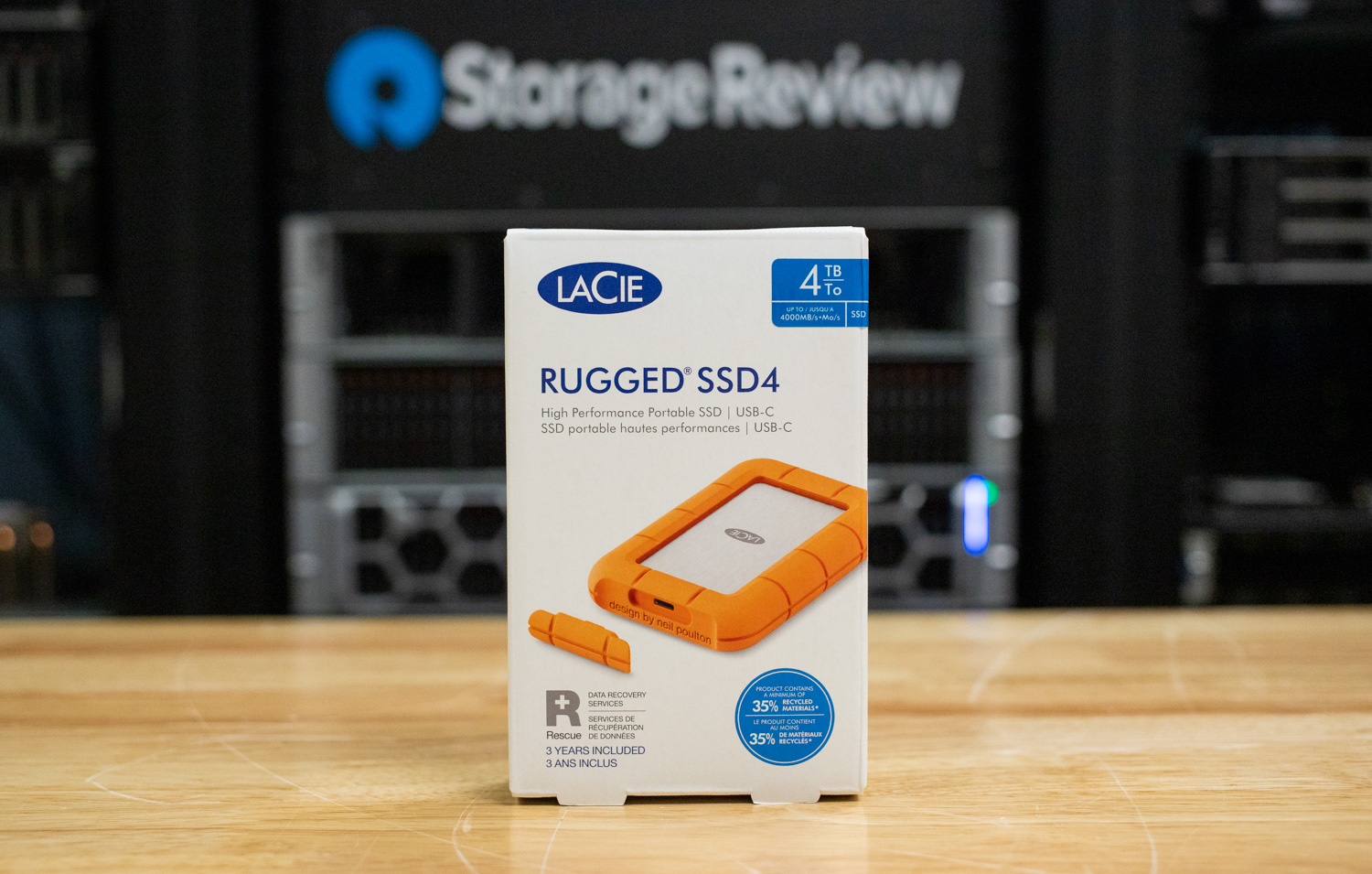
The Rugged SSD4 posts the best balanced result in the field: 3,183.1 MB/s read and 3,185.4 MB/s write in Blackmagic, the only drive here to clear 3.1GB/s in both directions. Push it with more queue depth and it goes further, hitting 3,731.76 MB/s read and 3,532.25 MB/s write at four threads in IOMeter, the fastest numbers we recorded on our standard test rig.
It gets there over USB4 at 40Gbps, which also means it falls back cleanly to Thunderbolt and older USB without drama. LaCie wraps it in the orange bumper the line is known for, rated IP54 with three-meter drop resistance, and it runs to 4TB. Our review called it one of the strongest portable USB4 drives currently available, and the data supports that. Pricing at review was $134.99 for 1TB up to $479.99 for 4TB.
Review: LaCie Rugged SSD4 Review: USB4 Performance in a Tough, Travel-Ready Shell
Best USB4 Alternative: SanDisk Extreme PRO with USB4
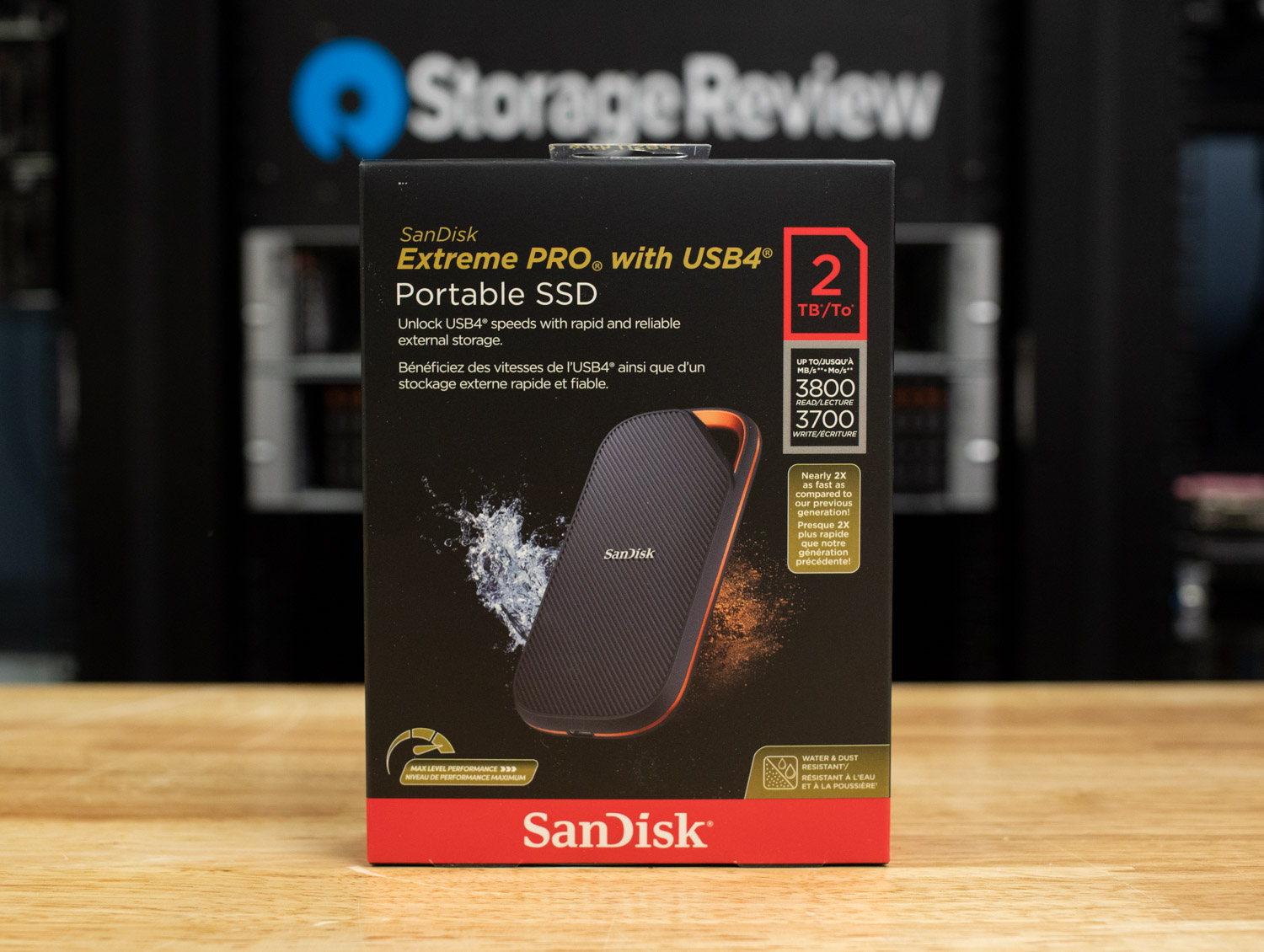
The Extreme PRO USB4 lands within a whisker of the LaCie on reads at 3,172.3 MB/s, giving up ground on writes at 2,863.6 MB/s. It counters with a higher IP65 rating, PCMark 10 and 3DMark storage scores that beat the Rugged SSD4 in places, and compatibility with Xbox Series X|S and PS5.
The tradeoff is size, because at 140mm long and 172 grams it is the biggest and heaviest drive on this page, closer to a paperback than a pocket drive. For a drive that lives in a camera bag, that is a fair trade for the ruggedness. It was $279 for 2TB and $429 for 4TB at review.
Review: SanDisk Extreme PRO with USB4 Review: Fast, Rugged, Huge
Most Rugged: LaCie Rugged SSD Pro5
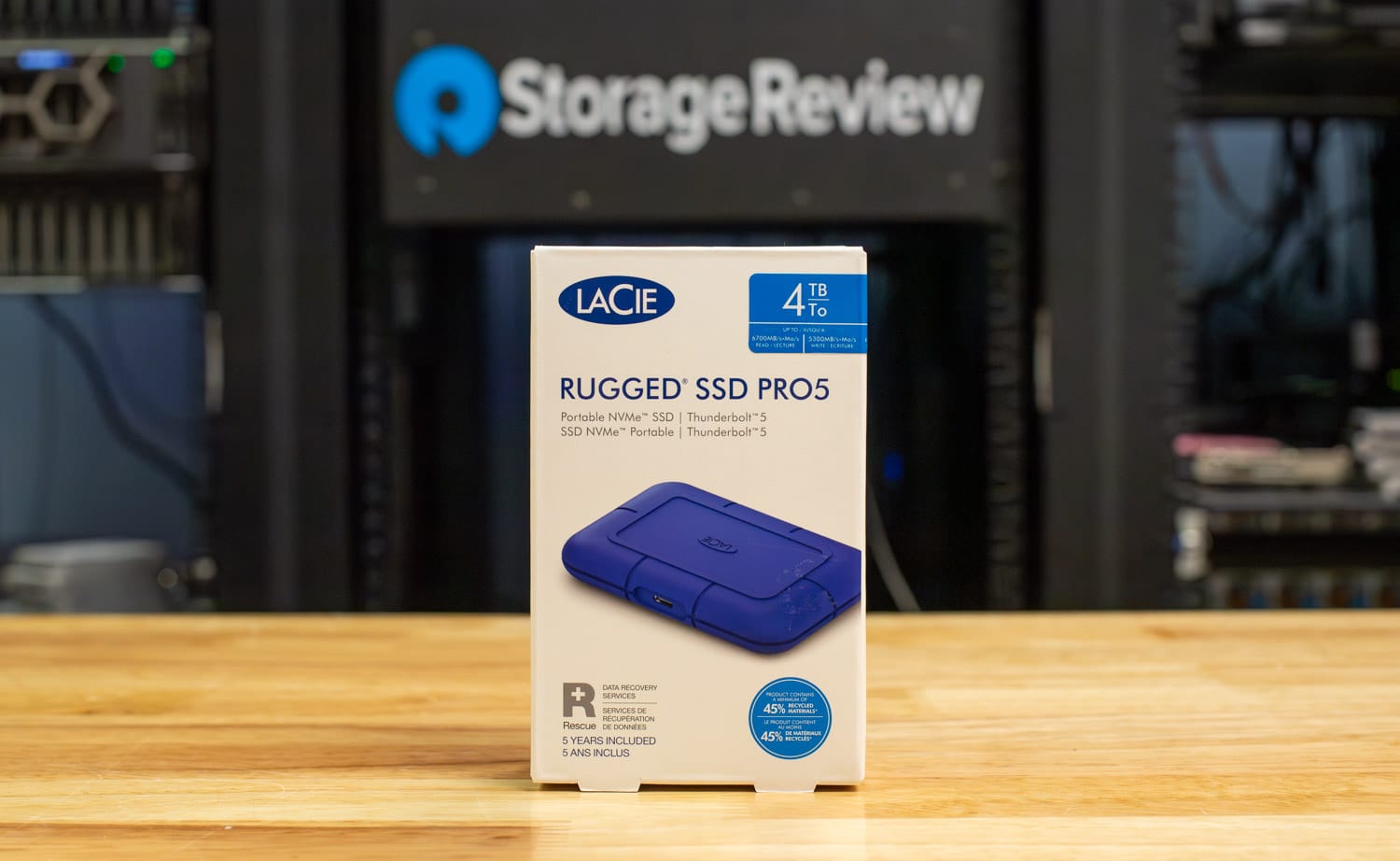
Nothing else here is built like this: the Pro5 is rated IP68, meaning dust-proof and waterproof to two meters indefinitely where most of this field offers splash resistance, survives a three-meter drop, and is rated to take the weight of a two-ton vehicle. It is the drive for people who work outdoors and have already killed a drive.
Speed is the asterisk, because it is a Thunderbolt 5 drive and we tested it on a Thunderbolt 4 MacBook Pro, so our 3,085 MB/s read and 2,958 MB/s write figures reflect the host, not the drive’s ceiling. ATTO reached 3,723 MB/s read. LaCie rates it up to 6,700 MB/s on a TB5 host, and sustained writes settle near 1,400 MB/s on the 2TB after the cache fills. At $399.99 and $599.99 it is also the most expensive drive on this page.
Review: LaCie Rugged SSD Pro5 Lives Up To Its Name
Best for Phones: Lexar ES5 Magnetic
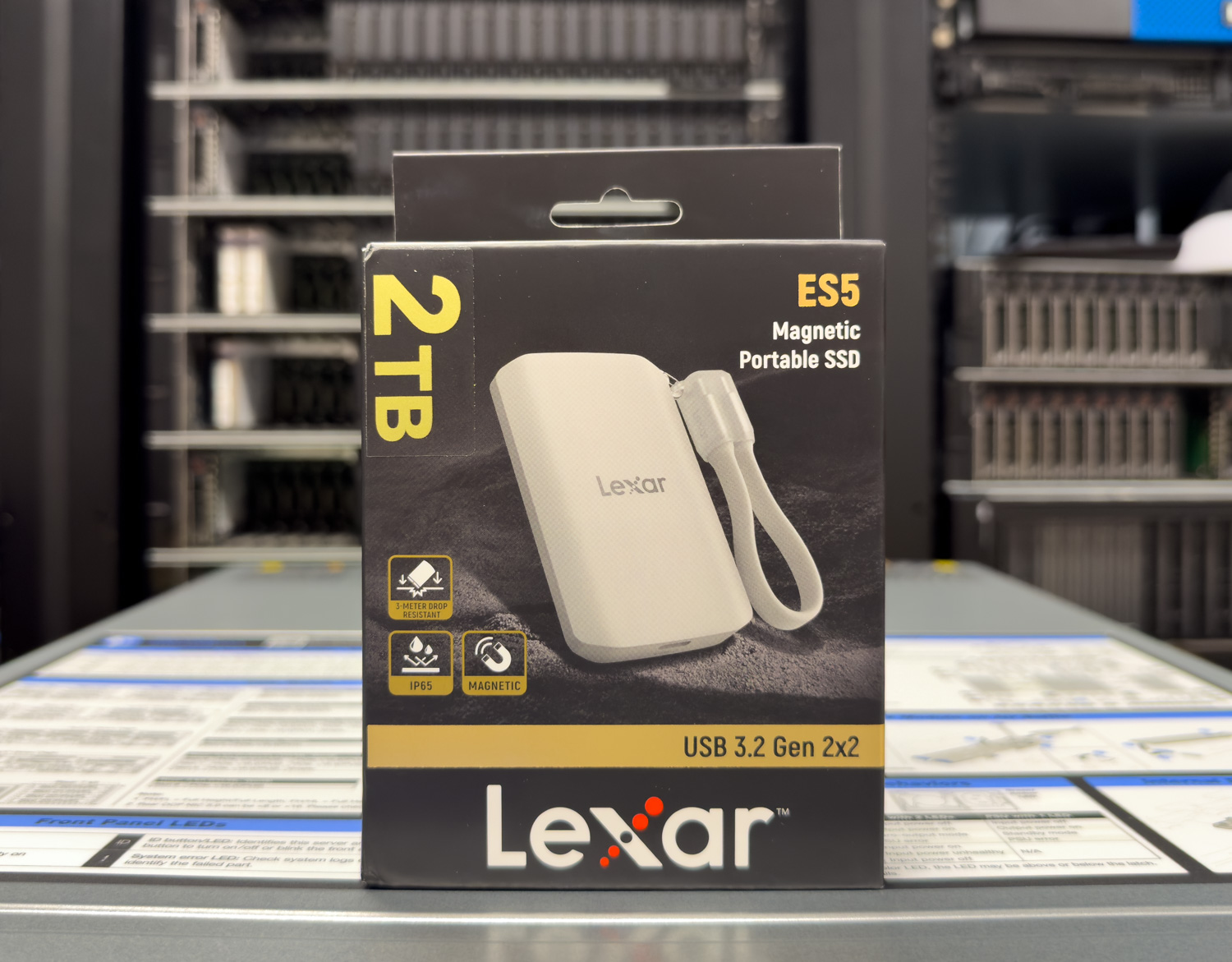
Of the four magnetic drives we have tested, the ES5 is the fastest, at 1,823.8 MB/s read and 1,797.2 MB/s write, scaling past 2GB/s at higher queue depth. That matters because the use case is recording ProRes 4K120 from an iPhone or 8K30 from a Samsung directly to the drive, which is a sustained write job rather than a burst.
It snaps on cleanly, weighs 49 grams, and carries IP65 with three-meter drop protection, which is the right spec for something clipped to a phone that gets dropped. It was $119.99 for 1TB and $199.99 for 2TB at review, with 4TB announced.
Review: Lexar ES5 Magnetic Portable SSD Review
Best High Capacity: Crucial X10
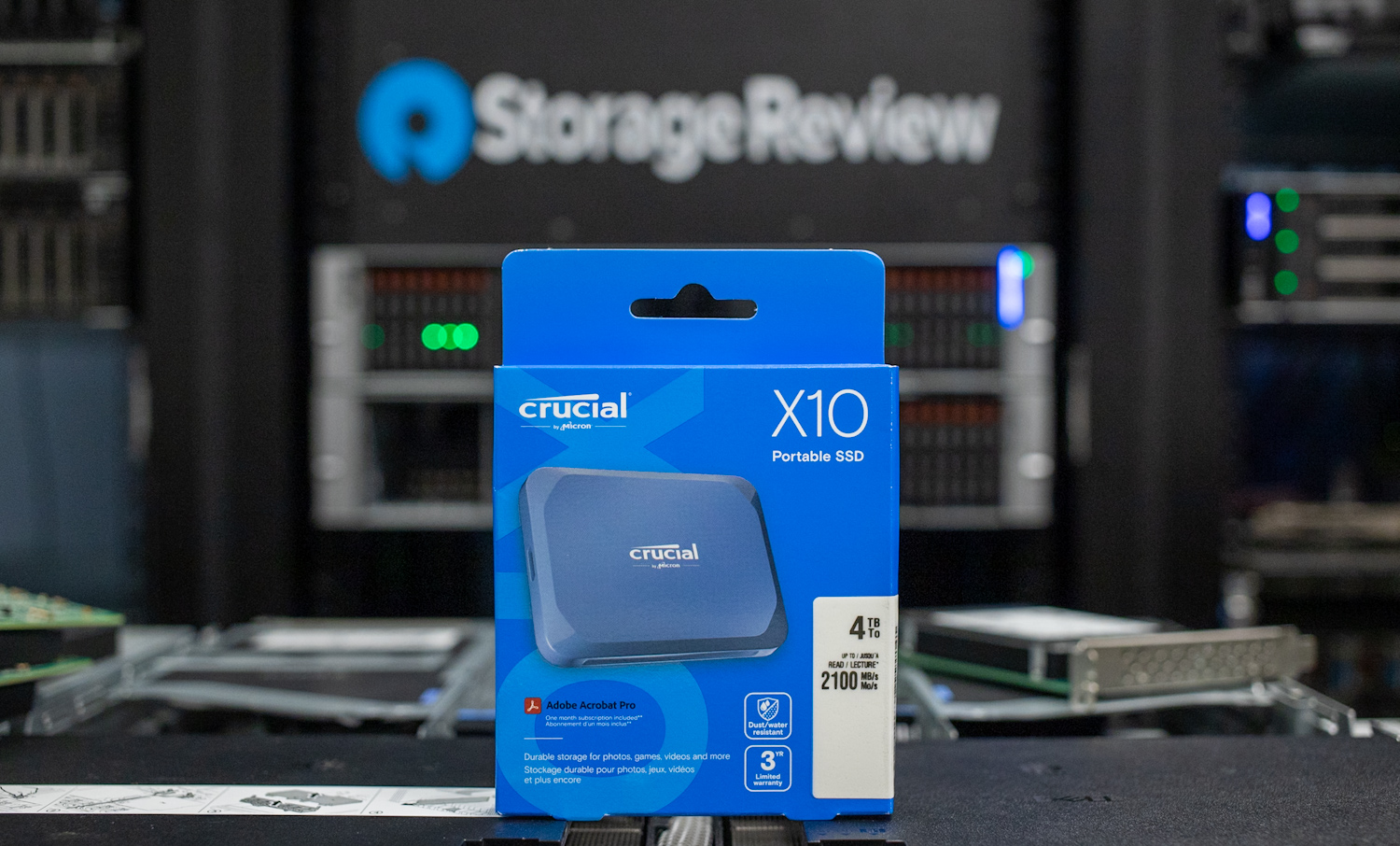
The X10 runs to 8TB, double anything else on this page, and it does not trade speed for that reach: 1,784.2 MB/s read and 1,801.4 MB/s write over USB 3.2 Gen 2×2, scaling to just over 2GB/s at higher queue depth. At 42 grams and roughly the size of a credit card it stays pocketable at capacities where most drives get bulky.
IP65 and three-meter drop protection cover the basics. One oddity worth knowing before you shop: at review the 8TB listed at $440 while the 6TB listed at $559, which looks like a pricing error rather than a deal, so check current numbers carefully at those capacities.
Review: Crucial X10 Review: A Compact SSD with Massive Capacity
Best Value: TEAMGROUP PD20
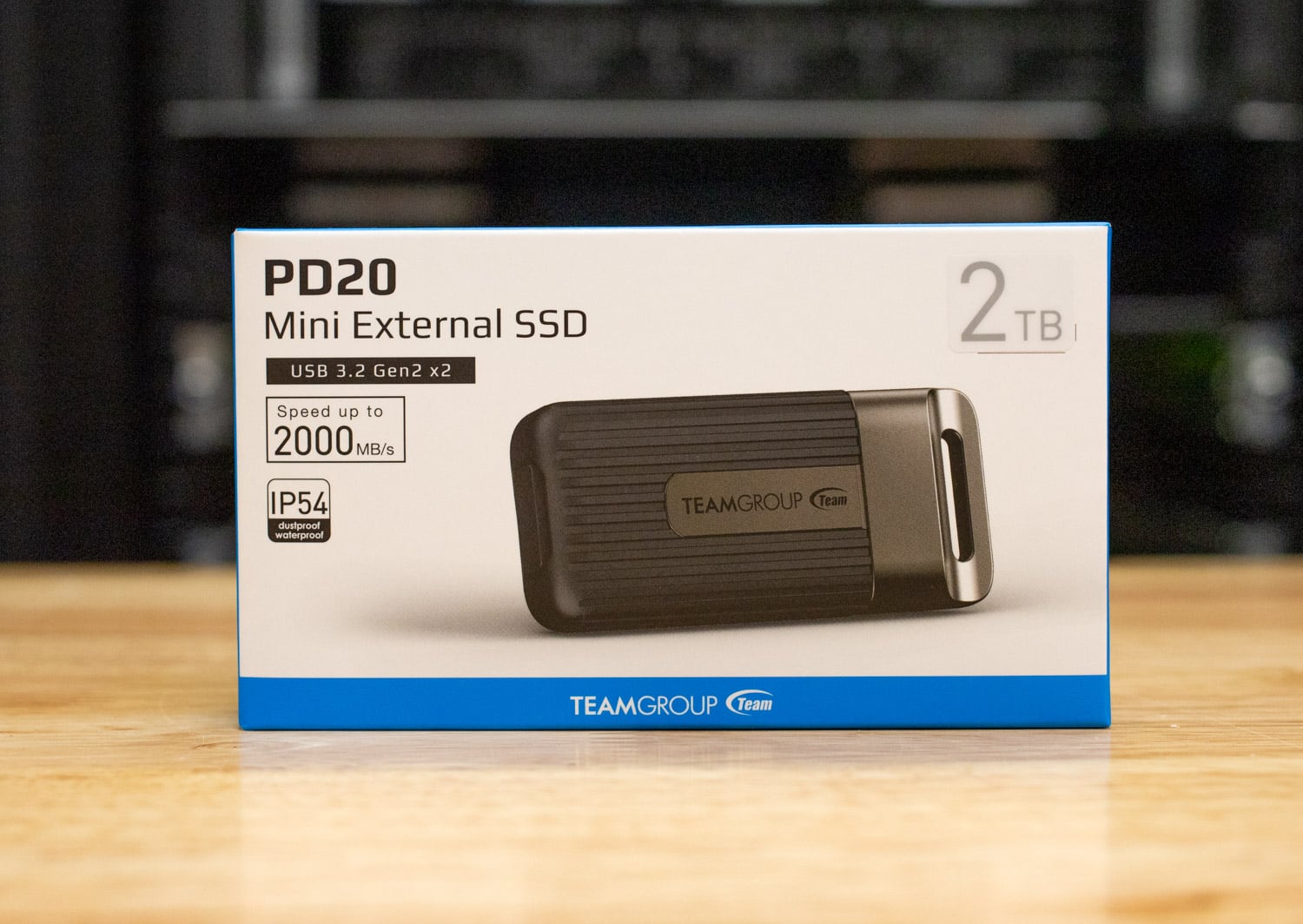
The PD20 delivers the same class of performance as drives costing considerably more: 1,800.7 MB/s read and 1,633.5 MB/s write, within a few percent of the Lexar ES5 and Crucial X10, at $89 for 1TB and $148 for 2TB at review. That is the best speed per dollar in this field.
You give up some polish: it is IP54, not IP65, there is no drop rating, and read throughput regressed at higher queue depth in our testing, dropping to 1,505.85 MB/s at four threads where its peers scaled up. For a drive that lives in a bag and moves project files, none of that is disqualifying at the price.
Review: TEAMGROUP PD20 Portable SSD Review
Best Pocketable: Seagate Ultra Compact SSD
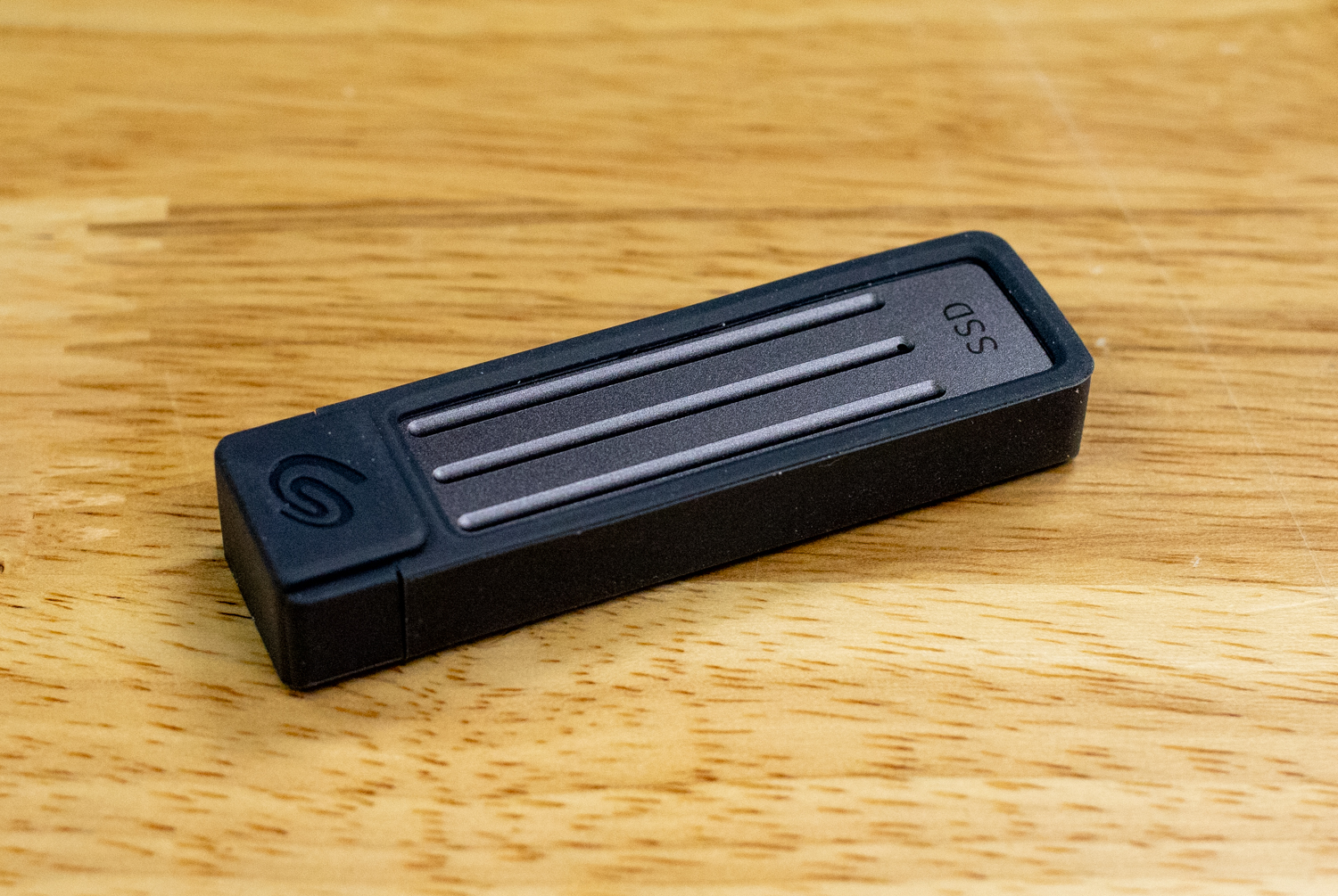
At 70mm long and 24 grams, this is a thumb-drive-sized device that behaves like a real SSD: 893.9 MB/s read and 927.3 MB/s write, rising past 1GB/s at four threads, with 89,159 IOPS on 4K random writes. It is capped by its USB 3.2 Gen 2×1 interface rather than its flash, which is the right compromise at this size.
The aluminum body and rubber sleeve carry IP54 and a three-meter drop rating, which is more protection than most drives this small offer. It was $99.99 for 1TB and $179.99 for 2TB.
Review: Seagate Ultra Compact SSD Review
Best DIY Enclosure: ORICO X50
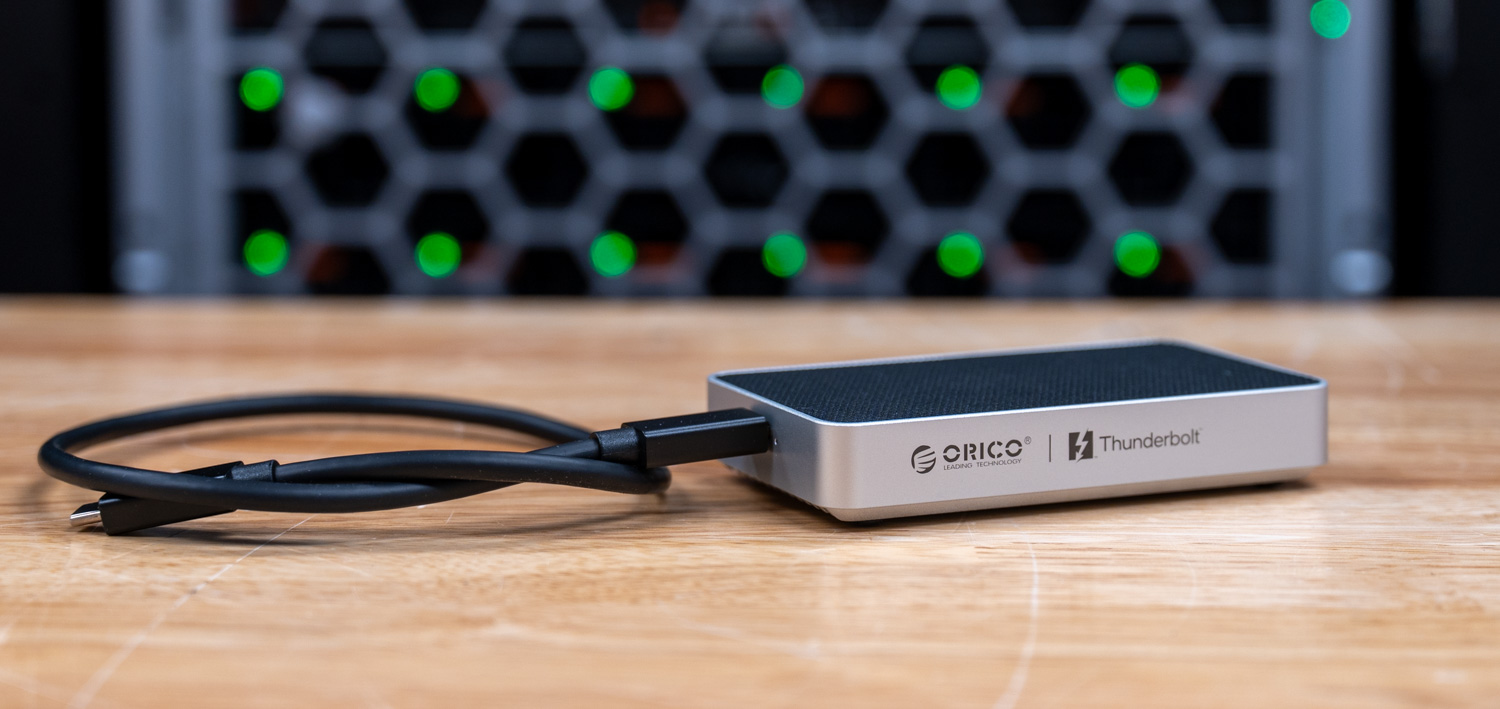
The X50 is the outlier here, and deliberately so: a $199.99 diskless Thunderbolt 5 enclosure you fill with your own M.2 NVMe drive. With a 2TB Samsung 990 Pro installed it reached 3,824.6 MB/s write in Blackmagic and 5,934.9 MB/s read in IOMeter at two queues, the highest single number anywhere in this field.
Two caveats keep it out of the top slot: those results come from a drive we supplied on a different host system, so they are not directly comparable to the sealed drives above, and the value depends entirely on the NVMe SSD you put inside. If you already have a fast spare drive, it is the cheapest route to Thunderbolt 5 speeds on this page.
Review: ORICO X50 Review: Thunderbolt 5 Speed in a Portable SSD Enclosure
Best Mainstream Availability: Samsung T9
The T9 is the drive we point most people to when they want speed without hunting for stock. It measured 1,566 MB/s read and 1,581.6 MB/s write in Blackmagic, roughly double what the T7 generation managed, over USB 3.2 Gen 2×2. That puts it a step behind the USB4 leaders on this page but comfortably ahead of anything using plain Gen 2, and it is sold in 1TB, 2TB and 4TB by more sellers than any other drive in this roundup.
There is no IP rating, so it is a desk-and-bag drive rather than a jobsite one. Three years after launch it is still current, which is exactly why the eligibility window on this page is longer than on our laptop leaderboards. Review: Samsung T9 Portable SSD Review Buy: Amazon (1TB) · 2TB · 4TB
Best Proven Rugged: Samsung T7 Shield
The T7 Shield is the longest-serving rugged drive we still recommend, and the one with the most field history behind it. We measured 893.8 MB/s read and 936.5 MB/s write on the 4TB model, with the 2TB landing in the same range at 914 / 939. Those are Gen 2 numbers and no match for the USB4 drives above, but the T7 Shield earns its place on durability and availability rather than throughput: IP65 sealing, a rubberized shell that has survived years of reader abuse, and stock in 1TB through 4TB.
If the LaCie Rugged Pro5 is the flagship rugged pick, this is the one people keep buying. Review: Samsung T7 Shield 4TB Portable SSD Review Buy: Amazon (1TB) · 2TB · 4TB
Also Tested
These drives went through the same lab process and are worth a look for specific needs, even though they do not hold a category spot.
- Lexar SL500: another magnetic option at 1,780.1 MB/s read, with a magnetized sleeve rather than a built-in magnet; IP54 and a 2m drop rating put it behind the ES5.
- TEAMGROUP PD20M MagSafe: 1,790.7 MB/s read at $81.99 for 1TB, the cheapest magnetic drive we have tested, but with no IP rating at all and a plastic housing.
- Lexar Professional Go with Hub: 976.1 MB/s read in a 13-gram body that clips to a phone, with an included four-port USB-C hub; the most interesting form factor here.
- SanDisk Creator Phone SSD: MagSafe and IP65 with a 3m drop rating, but 945.3 MB/s read puts it last in its comparison group.
- Kingston Dual Portable SSD: USB-C at one end and USB-A at the other at 1,001.5 MB/s; note sustained writes fell to roughly 80 MB/s at 75C in our testing. Buy: Amazon (2TB) · 512GB
- SanDisk Extreme PRO Dual Drive: the other dual-connector option at 916.4 MB/s in a 23-gram metal body, with no stated IP or drop rating.
- Seagate Game Drive PS5 SSD: officially PlayStation licensed at 924.5 MB/s, but our review flagged the limitation that matters, which is that PS5 games cannot be played from it. Seagate has since retired this model; only the hard drive versions remain available.
- SanDisk Extreme Fit USB-C: 3 grams and 18.5mm long at 389.8 MB/s read; a flash drive rather than an NVMe portable SSD, listed here because it competes for the same pocket. Buy: Amazon (1TB) · 256GB · 128GB
How We Rank
Every drive here ran the same suite in our lab: Blackmagic Disk Speed Test for real-world sequential throughput, IOMeter at one and four threads for scaling behavior, and PCMark 10 and 3DMark storage traces where the drive class warrants them. The read and write figures in the tables are Blackmagic results, because that is the test most representative of the large sequential transfers portable drives see.
Two drives carry an asterisk, and it matters: the LaCie Rugged SSD Pro5 is a Thunderbolt 5 drive we tested on a Thunderbolt 4 host, so its numbers reflect the host’s ceiling rather than the drive’s. The ORICO X50 is a diskless enclosure benchmarked with an NVMe SSD we supplied, on a different host system. Both are ranked on what they are, with throughput weighed accordingly, and neither result should be compared directly against the sealed drives tested on our standard rig.
Prices shown are what the drive cost when we reviewed it. Portable SSD pricing moves constantly with capacity and promotions, so treat these as a reference point and check current pricing before buying.
A Note on Eligibility and Pricing
Portable drives are not like laptops, because a model launched three years ago is often still the current product on the shelf, still shipping firmware updates, and still worth buying. So this leaderboard uses a longer eligibility window than our system leaderboards: any drive we have tested in our lab is eligible as long as it is still widely sold new, regardless of when the review ran. Our laptop and workstation boards stay tight to the current generation because those products turn over every year, and drives do not.
Pricing is the other thing to know right now. The industry is in the middle of a NAND shortage, and portable SSD street prices have risen sharply across every brand on this page. The LaCie Rugged SSD4 was $134.99 for 1TB when we reviewed it and is currently listed near four times that. A Samsung T7 Shield 4TB, normally a value pick, is listed close to the same price as the LaCie.
The “price at review” figures in each entry below are what we paid at test time and are not a guide to what you will pay today. Rankings on this page reflect measured performance and build, not current street price, because street price is moving too fast to rank on, and if you are not in a hurry, waiting is the better move.
Portable SSD FAQ
What is the fastest portable SSD?
Of the sealed drives on our standard test rig, the LaCie Rugged SSD4, at 3,183.1 MB/s read and 3,185.4 MB/s write in Blackmagic and 3,731.76 MB/s read at higher queue depth. The ORICO X50 enclosure produced a higher peak number, 5,934.9 MB/s read in IOMeter, but that was with a drive we supplied on a different host, so it is not a like-for-like comparison.
Is USB4 or Thunderbolt 5 worth it over USB 3.2?
Only if your host supports it and you move large files. The USB4 drives here roughly double the throughput of the fastest USB 3.2 Gen 2×2 drives, around 3.2GB/s against 1.8GB/s, which is real time saved on a 100GB video transfer. If you are moving documents and photos, or your laptop tops out at 10Gbps, a Gen 2×2 drive at half the price is the better buy. Note also that a Thunderbolt 5 drive on an older port runs at the older port’s speed, which our Pro5 testing shows.
What do IP ratings mean for a portable drive?
The second digit is water and the first is dust. IP54 means splash resistance, which handles rain and a spilled drink. IP65 steps up to jets of water. IP68, which only the LaCie Pro5 carries here, means submersion. Drop ratings are separate and usually two or three meters. If a drive lists no IP rating, like the TEAMGROUP PD20M or the Kingston Dual, treat it as an indoor drive.
Do magnetic portable SSDs work with any phone?
They attach reliably to iPhones with MagSafe and to Android phones with a magnetic case or ring. The more important question is sustained write speed, because recording high-bitrate video directly to the drive is a continuous write rather than a burst. That is why the Lexar ES5 holds the phone slot at 1,797.2 MB/s write, well clear of the slower magnetic options.
How much capacity do I need?
For documents and photos, 1TB is plenty and it is where the price per terabyte is usually worst. For video work, 2TB is the practical floor and 4TB is comfortable. Above that, the Crucial X10 is the only drive here reaching 8TB, and at those capacities the price gaps between tiers stop being linear, so it pays to compare cost per terabyte rather than sticker price.


 Amazon