It’s been a busy week for NVIDIA, and they are not finished. NVIDIA is rolling out an AI foundry service on Microsoft Azure, and it’s a powerful new tool for businesses diving into custom generative AI.
Scality is expanding its horizons by introducing its first hardware appliance. This significant move aligns with its vision of offering customers freedom of choice and sustainable, cost-effective storage solutions. This new venture begins with ARTESCA, Scality’s endeavor to democratize S3 object storage with a user-friendly and affordable solution.
Supermicro has announced new server offerings that incorporate NVIDIA’s latest HGX H200 GPUs (with H200 Tensor Core GPUs), which are set to provide significant advancements in the field of generative AI and LLM training.
MSI unveiled its latest server technology at the SC23 convention, enhancing its position within the enterprise, organizational, and data center markets. At the event, MSI showcased its new GPU and CXL memory expansion servers, which are integrated with cutting-edge processors from AMD and Intel. They promise to address the growing demand for more robust data
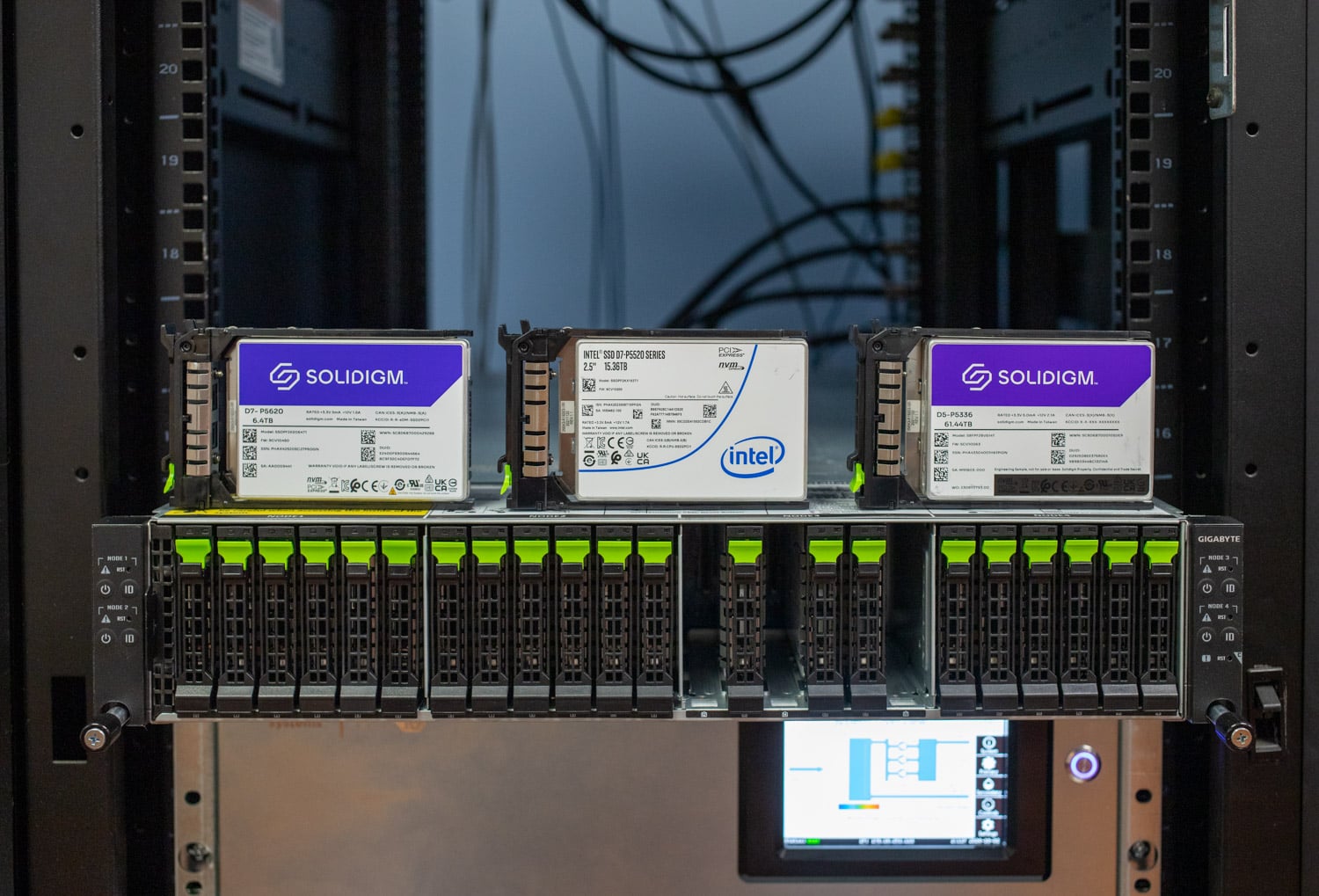
In the last five years or so, there have been massive strides and advancements in Enterprise Data Storage and Delivery systems. One advancement that has taken the computing world by storm is All-NVMe Flash storage. The technology has finally advanced to a point where it is both technologically feasible and financially reasonable to upgrade those
NVIDIA has announced the JUPITER class of supercomputers, a groundbreaking AI-driven system for scientific advancements, set to be powered by the NVIDIA Grace Hopper accelerated computing architecture. This architecture is designed to provide unparalleled computing power for AI and simulation workloads.
Michael Kuehn and Davide Vodola at BASF are pioneering quantum computing in the chemical industry, pushing the boundaries of what’s possible in scientific simulation. They’re demonstrating the power of quantum algorithms to reveal attributes of NTA, a compound used in removing toxic metals from wastewater, which traditional simulations can’t detect.
Dozens of new supercomputers dedicated to scientific computing are gearing up to go live, all powered by NVIDIA’s groundbreaking GH200 Grace Hopper Superchip. This superchip is a game-changer for AI and high-performance computing (HPC), enabling scientists and researchers to tackle some of the world’s most complex challenges by accelerating AI and HPC applications that handle
NVIDIA has made a significant leap in AI computing by introducing the NVIDIA HGX H200. Based on the NVIDIA Hopper architecture, this new platform features the NVIDIA H200 Tensor Core GPU, tailored for generative AI and high-performance computing (HPC) workloads, handling massive data volumes with advanced memory capabilities.
ASRock Rack is showcasing a diverse array of server systems designed for AI and high-performance computing (HPC) applications at the SC’23 conference. Their booth will feature NVIDIA-certified GPU systems, a new range of products incorporating NVIDIA’s latest GPUs, and several groundbreaking server systems and server boards.