

ASUS has announced a new server portfolio based on 6th Gen AMD EPYC 9006 processors, built specifically around the efficiency-optimized SP8 socket rather than the 256-core SP7 flagship. The lineup includes dual-socket RS700A and RS720A systems designed for maximum compute density, alongside single-socket RS500A and RS520A systems targeting more space-constrained enterprise deployments.
The new platforms support PCIe Gen6 connectivity, advanced DDR5 memory configurations, and E3.S NVMe storage. ASUS is positioning the systems for enterprise AI inference, virtualization, simulation, cloud infrastructure, and storage-intensive workloads.
Dual-Socket RS700A/720A Targets High-Density Compute
The dual-socket RS700A/720A series is the higher-density option in the new portfolio. The systems support 32 DIMM slots and MRDIMM memory configurations, allowing the platform to address workloads requiring substantial memory capacity and bandwidth.
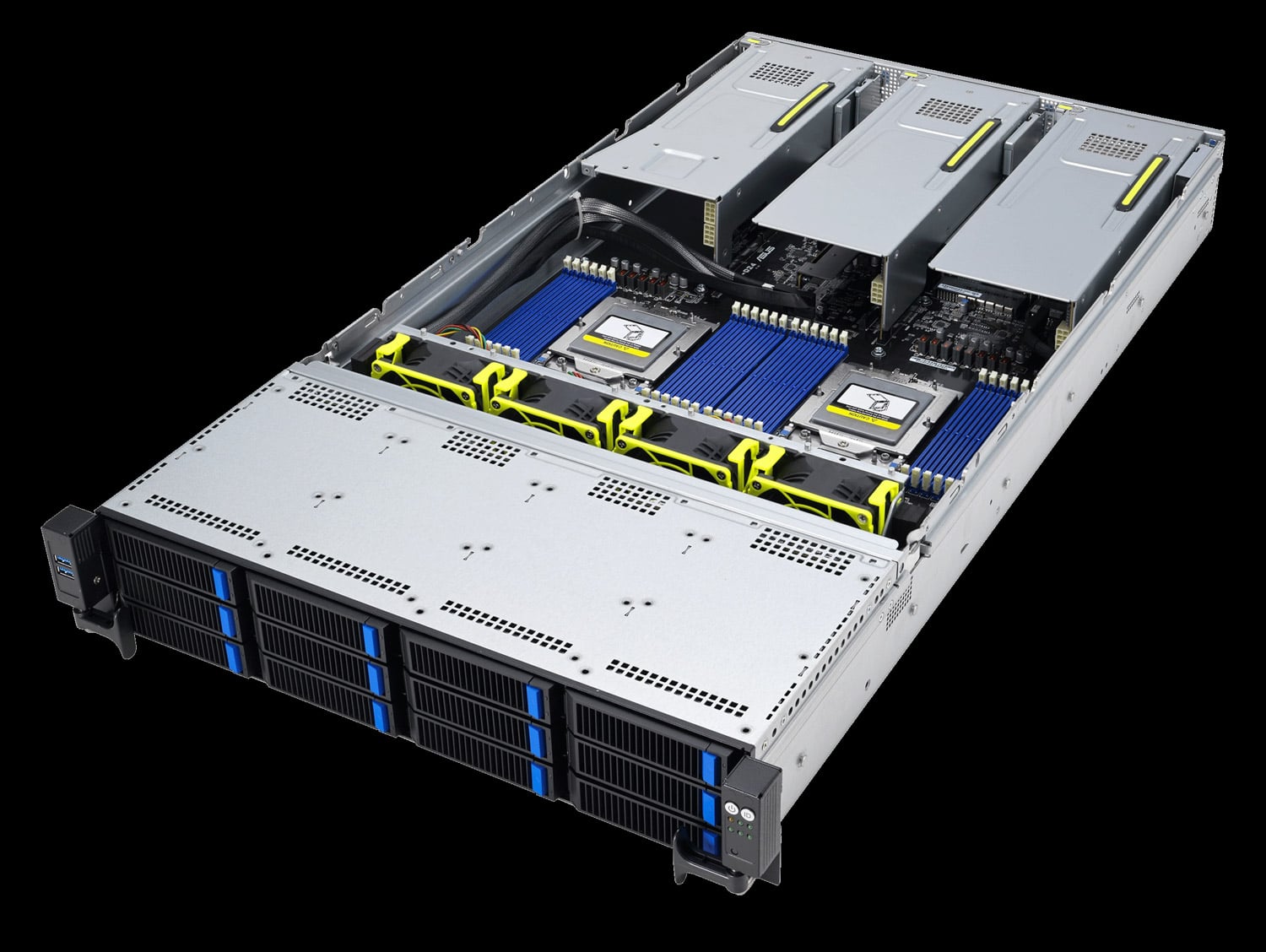
ASUS also specifies support for up to 32 E3.S storage bays in a 2U chassis. Combined with PCIe Gen6, this configuration is aimed at high-throughput environments that require dense NVMe capacity, accelerator connectivity, or large-scale network expansion.
The RS700A/720A systems are intended for AI inference infrastructure, technical computing, complex simulations, and enterprise applications where compute density and memory bandwidth are key design considerations.
Single-Socket RS500A/520A Focuses on Deployment Efficiency
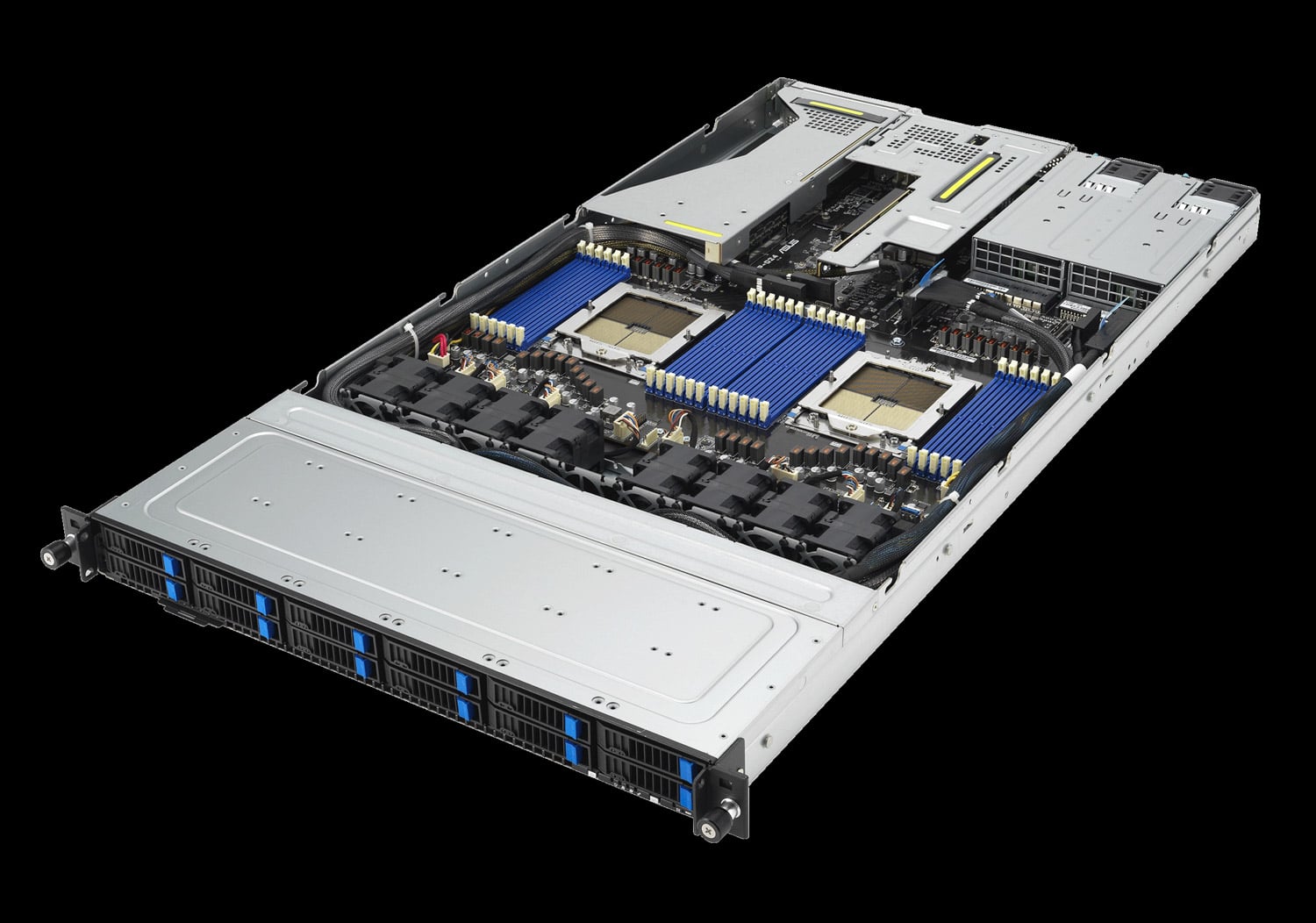
The RS500A/520A series uses a single AMD EPYC 9006 processor socket and is designed for mainstream enterprise infrastructure and rack-constrained environments. ASUS specifies a chassis depth of less than 800 mm, which may simplify deployment in locations with limited cabinet depth or edge-oriented infrastructure.
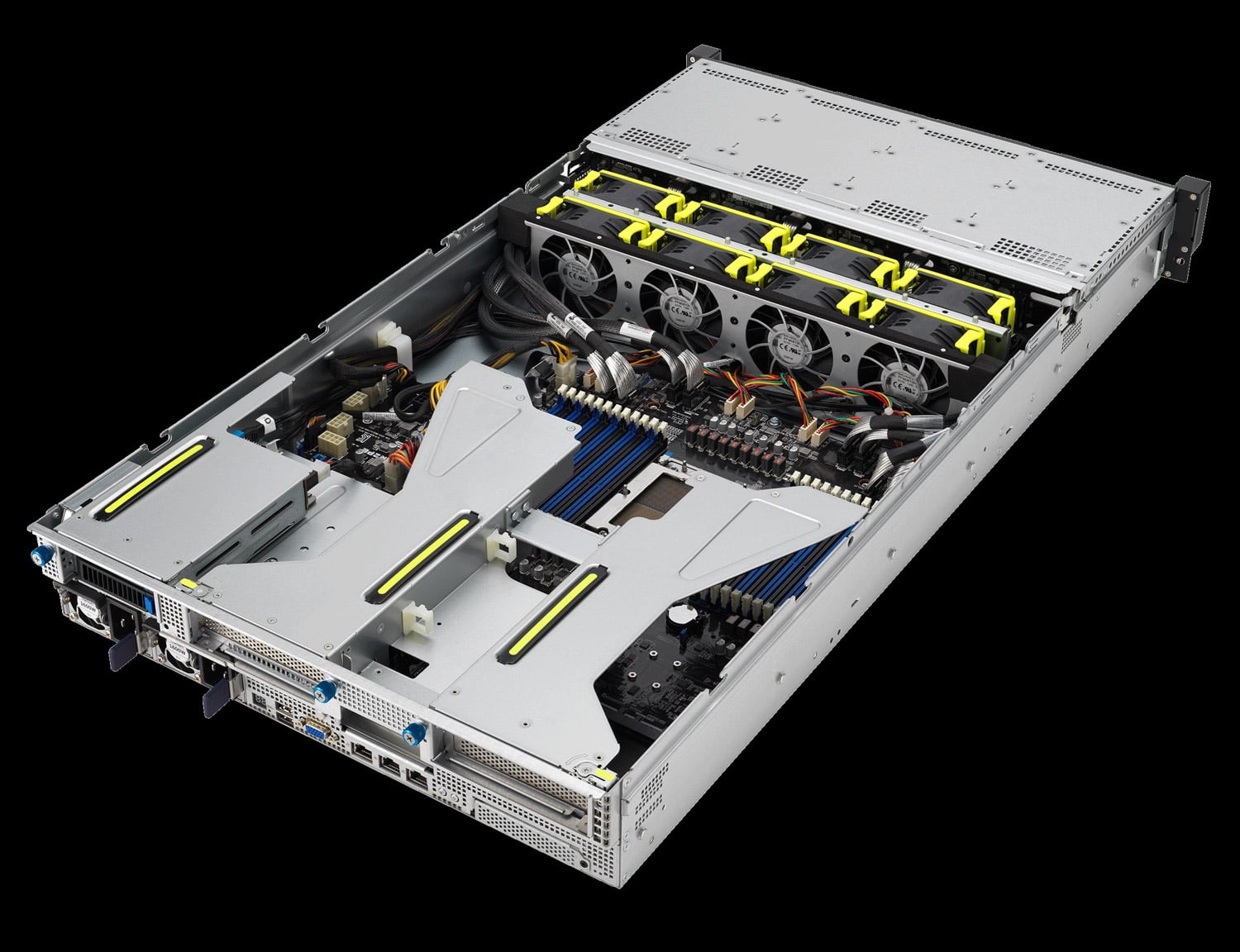
Despite its smaller footprint, the single-socket series retains support for PCIe Gen6 E3.S storage. ASUS also notes shared modular components with the larger RS700A and RS720A platforms, which could simplify platform qualification, service processes, and component inventory for organizations standardizing across both system classes.
Platform Engineering and Serviceability
ASUS has incorporated its DC-MHS modular architecture into the new systems. The design separates I/O, high-power module, fan, and storage components into distinct chassis zones. This architecture is intended to simplify service access and provide a more modular platform design across server configurations.
The company also includes its DIMM.2 implementation, which places M.2 storage in the DIMM area rather than a conventional motherboard location. ASUS states that this placement uses the airflow available around the memory subsystem to improve M.2 SSD cooling and reduce the risk of thermal throttling without adding dedicated heatsinks.
Thermal Radar 3.0 with PID control provides dynamic fan-speed management. The system adjusts fan behavior in real time based on thermal conditions to balance component cooling requirements against system power consumption and acoustic output.
ASUS also highlighted tool-less serviceability features intended to reduce maintenance time and support faster component replacement. This approach is increasingly relevant in AI and HPC environments, where sustained utilization and infrastructure availability can make scheduling service windows difficult.
Availability
ASUS has not published pricing or a firm release date for the RS700A/720A and RS500A/520A series, saying only that the platforms are coming soon.


 Amazon