

Giga Computing, a GIGABYTE subsidiary, has announced support for AMD’s 6th Gen EPYC server processors across its server portfolio. The company also introduced its first system based on the AMD EPYC 9006 platform at AMD Advancing AI 2026 in San Francisco.
AMD’s 6th Gen EPYC platform introduces two-socket options designed to address different data center deployment models. The SP7 platform targets performance-sensitive infrastructure with higher memory bandwidth, PCIe Gen6 connectivity, and support for up to 256 cores and 512 threads per socket. The SP8 platform focuses on scalable, power-conscious deployments for virtualization, databases, and edge workloads.
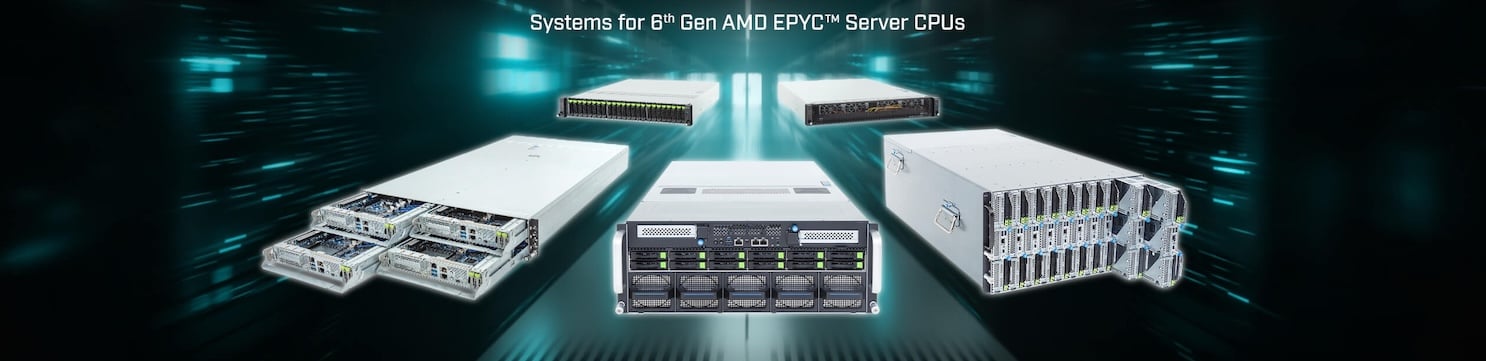
Both socket platforms support AMD’s “Zen 6” and density-oriented “Zen 6c” core designs. This gives system builders flexibility to prioritize per-core performance or core density depending on the workload.
SP7 Targets AI, HPC, and High-Throughput Infrastructure
The EPYC 9006 SP7 platform supports 16-channel DDR5 memory and PCIe Gen6, positioning it for GPU-dense AI infrastructure, HPC, hyperscale cloud, and telecommunications workloads. The increased core count and I/O capacity are designed to support high VM density, data-intensive services, and CPU orchestration workloads that feed large GPU clusters.
Giga Computing stated that SP7-based systems could scale beyond 40,000 CPU cores in a single liquid-cooled rack configuration. Such designs would be targeted at large AI deployments where CPUs handle data preparation, pipeline orchestration, storage and network services, and concurrent agent workflows alongside accelerators.
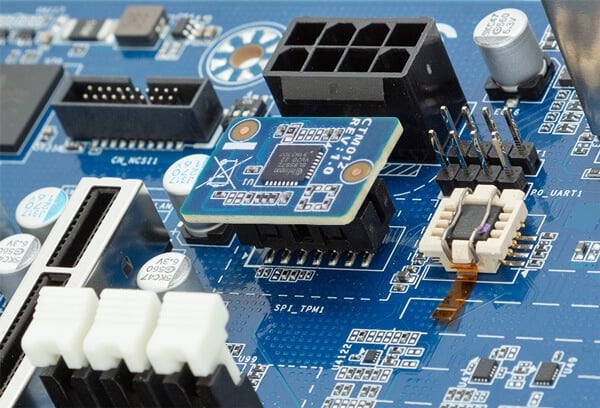
New SP7 systems include the R165-DG2-CS1, a 1U single-socket rack server with closed-loop liquid cooling that supports processors with up to 256 cores at maximum power. Giga Computing also highlighted the B685-D80-LS1, a 6U, ten-node blade server with direct liquid cooling for high-density HPC environments.
SP8 Emphasizes Density and Efficiency
The SP8 platform is aimed at deployments that prioritize performance per watt, space efficiency, and consistent scale-out operation. AMD EPYC 9006 SP8 processors support up to 128 PCIe Gen6 lanes and two DIMMs per memory channel, providing substantial I/O and memory expansion in a smaller platform footprint.
Giga Computing is positioning SP8 systems for virtualization, database, enterprise infrastructure, and edge deployments where power and rack constraints can be as important as absolute compute density. The platform is intended to offer a lower-footprint alternative to larger EPYC configurations while retaining current-generation PCIe and DDR5 capabilities.
According to Giga Computing, systems based on AMD EPYC 9006 SP7 processors are expected to begin shipping alongside AMD’s November 2026 launch. SP8-based systems are scheduled to follow in March 2027.
GIGABYTE Adds CXMT DDR5 Memory Support to AMD and Intel Motherboards
Separately, GIGABYTE TECHNOLOGY announced expanded support for DDR5 modules based on CXMT memory chips across its AMD and Intel desktop motherboard platforms. The update is intended to broaden memory sourcing options during ongoing DDR5 supply constraints.
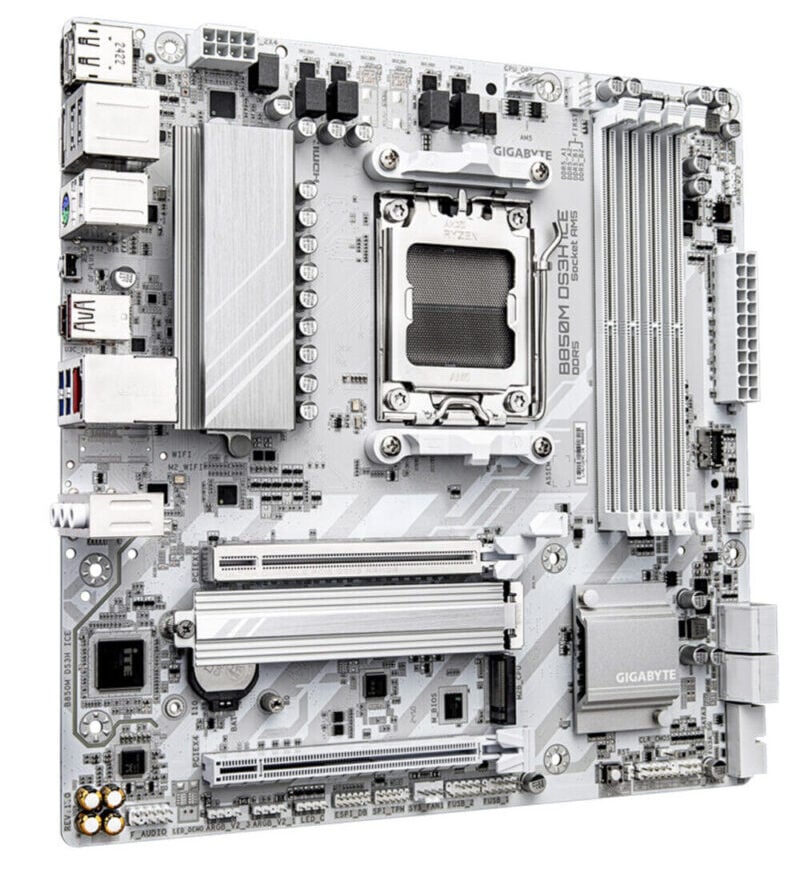
GIGABYTE’s AMD AM5 800- and 600-series motherboards now support CXMT-based 16Gb and 24Gb DDR5 DIMMs through updated BIOS releases. The company stated that, following AMD AGESA 1.3.0.1c support and GIGABYTE memory optimization work, compatible systems can operate CXMT-based modules at speeds up to 8200 MT/s.
Intel 800- and 700-series motherboard platforms already support CXMT DDR5 memory using current BIOS releases, according to GIGABYTE. No additional update is required for those platforms.
The new compatibility gives system builders another qualified DDR5 source as memory availability and pricing continue to affect the broader PC component market. Updated BIOS versions for AMD 800- and 600-series boards are available through GIGABYTE’s product support pages.


 Amazon