

IBM has successfully integrated and cooled two cryogenic modules within a single shared environment, a step the company calls critical to scaling quantum systems that can eventually link hundreds of quantum chips. The achievement supports IBM’s stated timeline for delivering IBM Quantum Starling in 2029, a system the company expects to be the first fault-tolerant quantum computer, incorporating advances in error correction, processor design, decoding, and overall systems engineering.
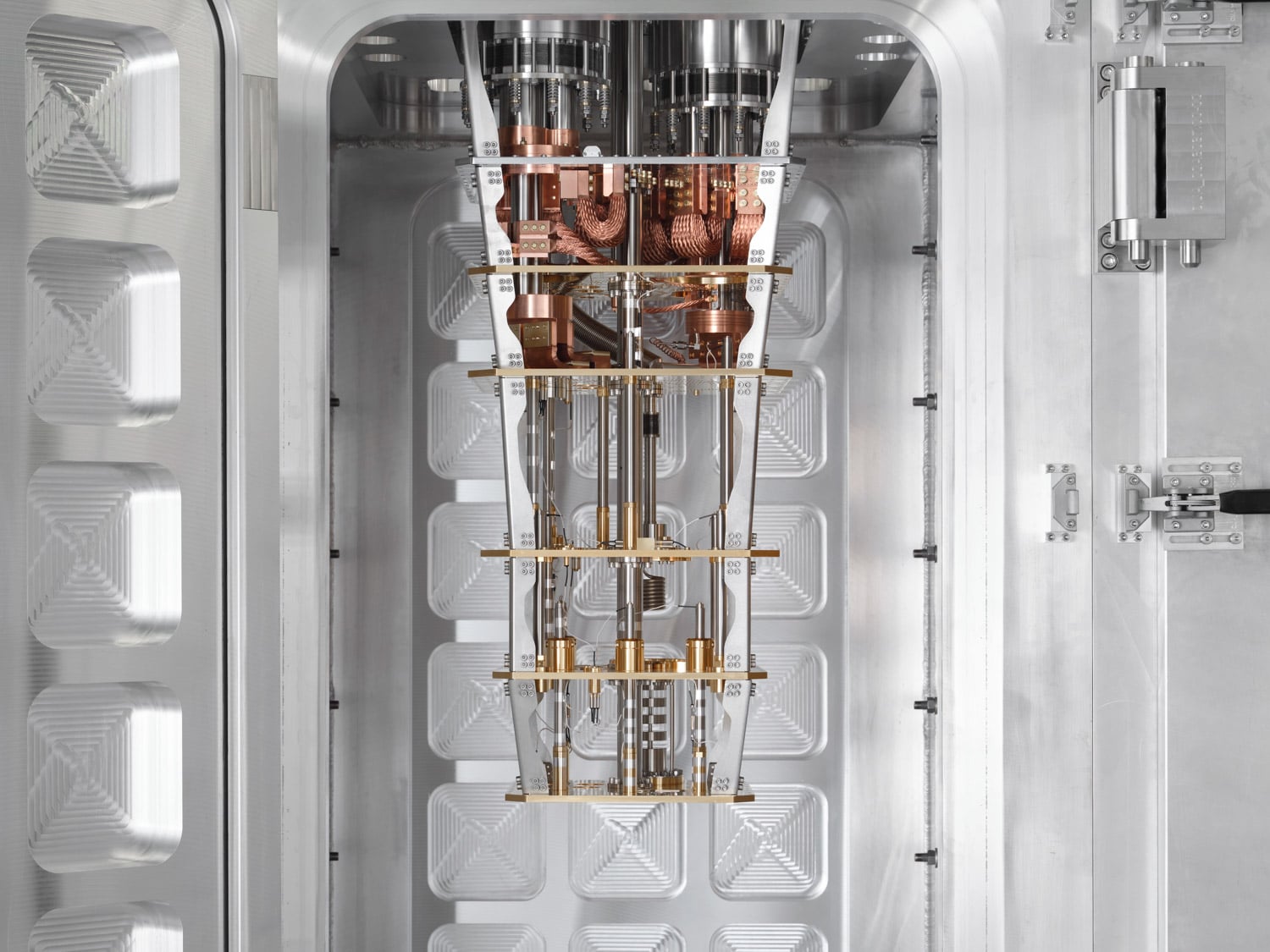
The interior of IBM’s scalable and modular cryogenic system to support fault-tolerant quantum computing. (Credit: IBM)
The combined two-module setup measures more than 8 feet tall and 8 feet wide. During initial testing, the modules cooled together to 4 Kelvin, the temperature of liquid helium, in under five days, then reached below 15 millikelvin shortly afterward, more than 180 times colder than deep space. Each module’s vacuum enclosure provides up to 12 times more wiring space than the most widely used IBM quantum systems, a design change intended to support a higher density of chip-to-chip connections both within individual modules and across linked modules.
The modules use a box-shaped design that allows multiple units to connect in a tight row. This layout, combined with the added internal wiring space, enables direct linking of quantum processors through IBM’s L-coupler technology. L-couplers connect separate quantum chips, enabling them to exchange information and function together as components of a larger quantum computer.
Linking 1,000 Qubits
IBM’s roadmap calls for L-couplers to connect multiple processors into a combined system of at least 1,000 programmable qubits by 2027. Programmable qubits are those that can be directly applied to computations. As part of this effort, IBM plans to install its Quantum Nighthawk processors into the cryogenic modules later this year to continue performance testing. When Starling reaches deployment, IBM intends for each cryogenic module to house thousands of qubits.
IBM first outlined its plans for Starling last year, introducing an error-correction code designed to significantly reduce the physical resource overhead required for fault tolerance. Since that announcement, the company has reported continued progress, including demonstrations of core hardware components and advances in more efficient error-correction decoding.
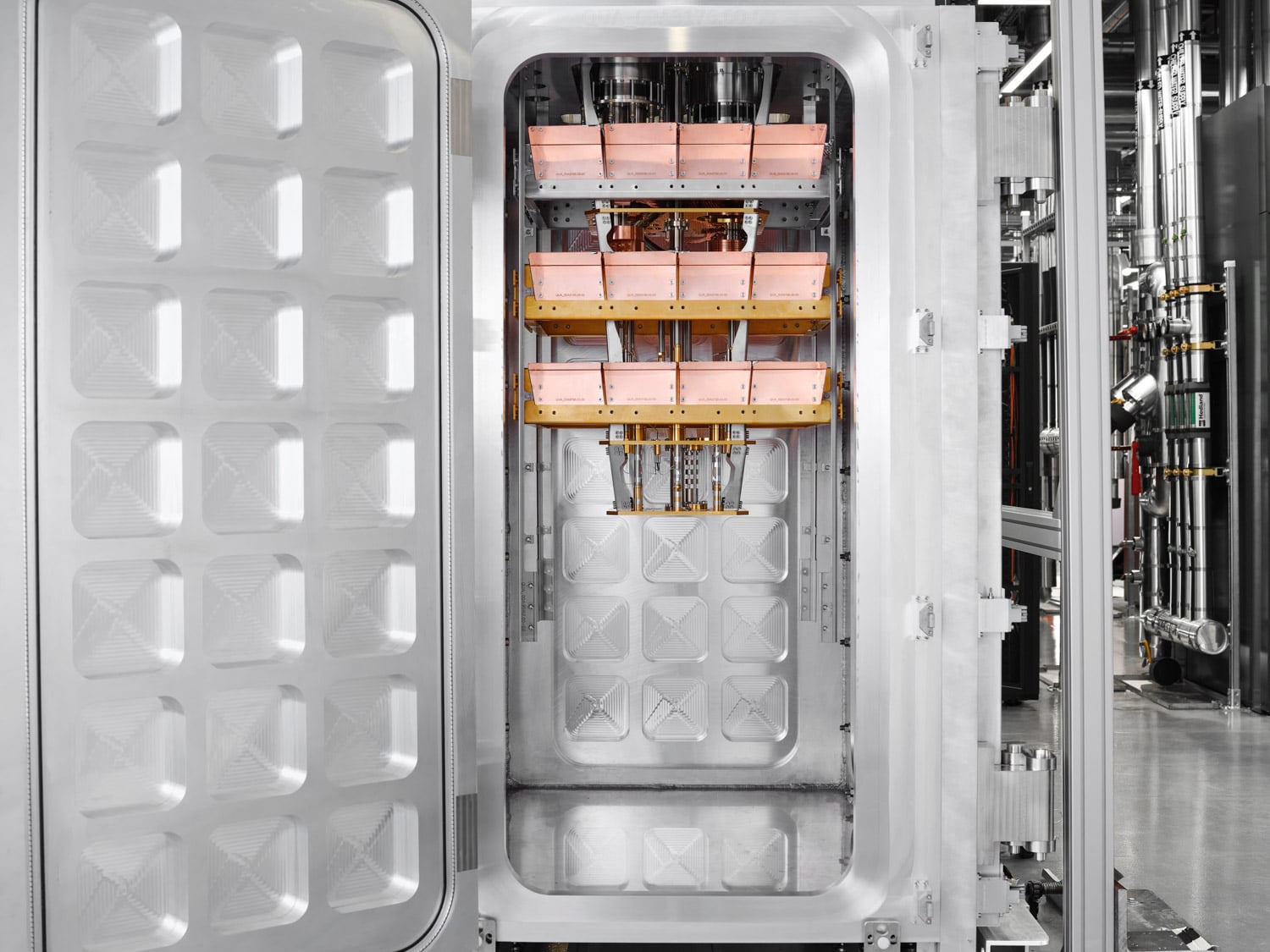
The interior of IBM’s scalable and modular cryogenic system to support fault-tolerant quantum computing. (Credit: IBM)
Speeding the Development Cycle
“Bringing fault-tolerant quantum computers to industries depends on several fundamental advances,” said Jay Gambetta, Director of IBM Research and IBM Fellow. “The successful connection and operation of these cryogenic modules signals a leap forward in that direction and will accelerate our progress alongside continued innovation in quantum hardware, software, and algorithms.”
IBM expects the modular cryogenic architecture to speed up its development cycle. Three core components of the System Two environment are now built into the new module design, which allows each component to be tested, refined, and iterated on independently rather than as part of a single integrated unit. IBM frames the completed module integration as evidence that it continues to execute against its published quantum roadmap, clearing another technical hurdle on the path toward fault-tolerant quantum computing.


 Amazon