

NVIDIA released Dynamo deployment recipes for four Korean open models at AI Day Seoul: SK Telecom’s A.X K2, LG AI Research’s K-EXAONE 2.0, Upstage’s Solar Open 2, and Motif Technologies’ Motif-3. The recipes are tuned for NVIDIA B200 GPUs, and NVIDIA says they deliver up to 2x performance out of the box without naming the baseline, workload, or serving configuration behind that figure. The recipes landed alongside a wider set of Korea announcements covering agent security, sovereign infrastructure, and startup investments.
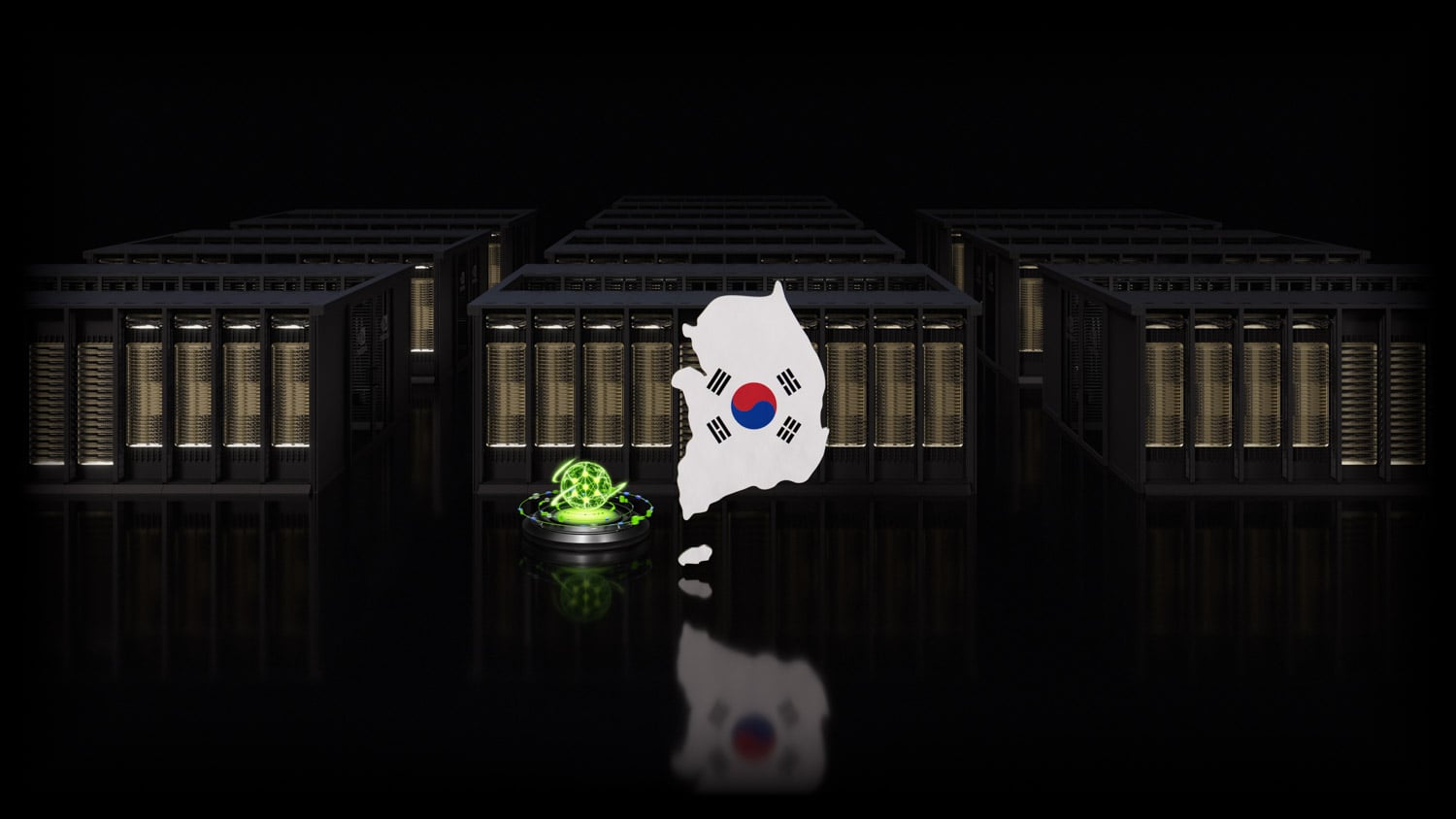
Dynamo Recipes for Four Korean Open Models
Dynamo is NVIDIA’s open-source distributed inference-serving framework for multi-node deployments at data center scale, and it handles request routing and the communication between GPUs when a model spans more than one. A recipe packages the serving configuration for a specific model so a team can stand it up in production without tuning from scratch.
NVIDIA says the four recipes are meant to move Korea’s open models into production faster and into the services funded under the government’s AI for All initiative. Under that initiative, NVIDIA will work with three selected consortia and four Korean foundation model builders to optimize and scale inference on Dynamo.
Agent Security
Hyundai Motor Group is exploring NVIDIA NemoClaw blueprints and the NVIDIA OpenShell runtime for enterprise AI agents. OpenShell is part of NVIDIA’s Open Agent Safety Platform and provides sandboxed execution and policy-based controls over sensitive data, enterprise tool access, and autonomous agent actions.
AIM Intelligence, a Korean AI security company, is integrating its Starfort agent control platform with OpenShell, pairing OpenShell’s runtime access controls with Starfort’s detection of malicious instructions and data leakage. AIM Intelligence is weighing a preliminary proof of concept in the public energy sector, with enterprise, industrial, and robotics deployments as later possibilities.
LG AI Research is opening API access to K-EXAONE-2.5, which it developed using NVIDIA Nemotron datasets, including Nemotron-Personas-Korea, a set of 7 million fully synthetic Korean personas. NVIDIA’s posts use two version numbers for the LG model: the API announcement names K-EXAONE-2.5, and the Dynamo recipe targets K-EXAONE 2.0.
Sovereign AI Infrastructure and Startups
NVIDIA and Korea’s Ministry of Science and ICT are expanding their collaboration from AI semiconductors and data center infrastructure to talent, startups, models, agents, and security. The agreement gives Korean NPU and XPU companies a path to explore the NVLink Fusion ecosystem, and the first concrete result is the Rebellions R200 and SK Telecom plan, with NVIDIA GPUs on prefill, Rebellions NPUs on decode, and systems targeted for 2028. The collaboration also covers NVIDIA training and certification programs, hackathons, and technical seminars aimed at raising GPU utilization.
On the startup side, NVIDIA announced an investment in Point2 and planned investments in Motif Technologies, RLWRLD, and Upstage, two of which are among the four Dynamo recipe model builders. Vice Minister of Science and ICT Ryu Je-myung met more than 20 Korean startups at an MSIT-NVIDIA AI Startup Partnership Forum, and NVIDIA counts more than 1,000 Korea-based members in its Inception program.


 Amazon