

Scality has made Maestro 1.1 generally available, a fleet management platform for service providers running large numbers of Scality ARTESCA object storage deployments on behalf of their customers. The target is the backup-as-a-service business that starts as a handful of ARTESCA clusters and grows to tens or hundreds, each sitting inside a different customer’s network and each needing monitoring, software and firmware updates, and capacity tracking for the monthly bill. Maestro puts all of that behind one console, with no VPN tunnel into any customer site.

What Scality Maestro Manages
Scality says it co-developed Maestro with its cloud and service provider partners and that it’s already in production. Fleet-wide health monitoring and alerting shows every ARTESCA deployment from a single view. Lifecycle management reaches down to the hardware, so ARTESCA software upgrades and server firmware updates can be pushed across the whole fleet at once. Capacity utilization is aggregated across all customer sites and fed into automated pay-as-you-go billing, which replaces the end-of-month reports assembled by hand. The screenshot Scality supplied shows the scale it’s built for: 114 deployments, 12.15PiB under management, and an “upgrade all” control for the clusters that have fallen behind the current ARTESCA release.
“Service providers building BaaS businesses on Scality ARTESCA are managing infrastructure at a scale that demands enterprise-grade operational tooling,” said Thomas Danan, Sr. Product Director at Scality. “Maestro was built with our SCSP partners to solve the real operational problems they face every day with centralized visibility, automated management, and the billing infrastructure to run a sustainable managed service. The fact that it requires no VPN and no network reconfiguration on the customer side was a hard requirement from day one.”
Outbound Only: How the No-VPN Model Works
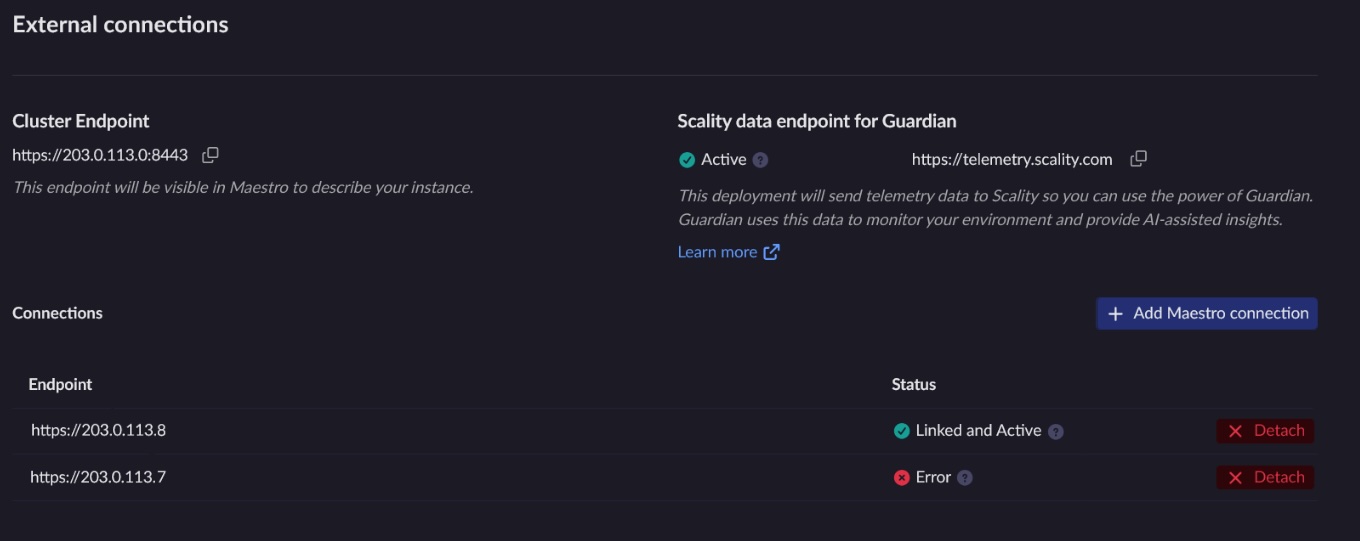
The design choice Danan is describing is worth understanding. Managing infrastructure you don’t own usually means opening a tunnel into every customer environment, with the network reconfiguration and standing access that implies. Maestro inverts the connection: each ARTESCA deployment opens a connection out to Maestro and reports in, and Maestro never reaches back into the customer network. That single rule removes the VPN requirement and the customer-side firewall work, and it’s why the platform can scale from dozens of sites to hundreds without each new customer becoming a network project.
Autodata, which runs ARTESCA deployments across customer sites in the UK and Ireland for its backup service, is one of the early users. Before Maestro, CEO Dominic McLoughlin said, every one of those deployments was “independently managed, with separate logins, VPN tunnels, manual update cycles, and monthly capacity reports assembled by hand. Instead, Maestro gives us a single view of the entire fleet. Software updates that consume hours of staff time can now be monitored centrally, and we can grow the fleet without adding operational headcount.”
Although it was designed for the service provider market, Scality says Maestro fits enterprises that run ARTESCA across branch offices, edge locations, or as part of a distributed data protection architecture, where the same inflection point arrives once deployments grow past a handful of sites. Maestro 1.1 is available now as an on-premises deployment and supports all ARTESCA installations running version 4.0.3 or later. A SaaS delivery model is planned for a future release, and documentation is available to Scality service providers through the partner portal.


 Amazon