

Veeam has released Data Platform v13.1 alongside Veeam Data Cloud Vault Archive, combining a broad backup and recovery update with a new managed storage tier for long-term retention. Version 13.1 expands hypervisor and enterprise application coverage, extends malware detection to more data locations, and adds identity recovery and cryptography features. Vault Archive offers organizations a lower-cost place to keep older backups and large unstructured data sets that require immutability, encryption, and residency control.
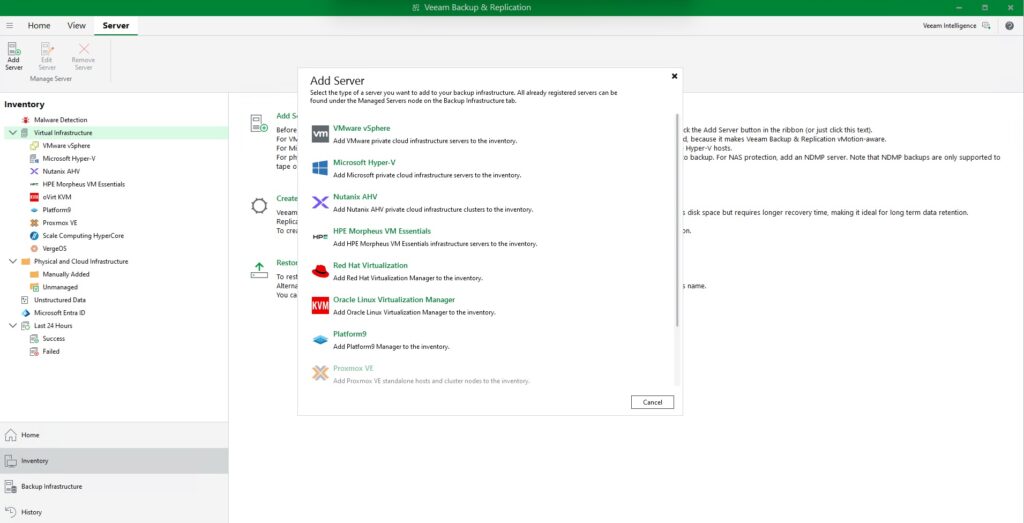
Veeam Data Platform v13.1 is now generally available, with the Red Hat OpenShift Virtualization plug-in scheduled for later in Q3. Veeam Data Cloud Vault Archive is also available and integrates with v13.1 for policy-based tiering and direct archiving of NAS data.
Veeam Data Platform v13.1 Adds Six Hypervisor Platforms
Hypervisor coverage in Veeam Data Platform v13.1 spans 14 platforms, with Red Hat OpenShift Virtualization, Sangfor aSV, XCP-ng, Citrix XenServer, VergeIO, and Platform9 joining the list. Veeam also plans to use its Universal Hypervisor API to extend protection to more platforms.
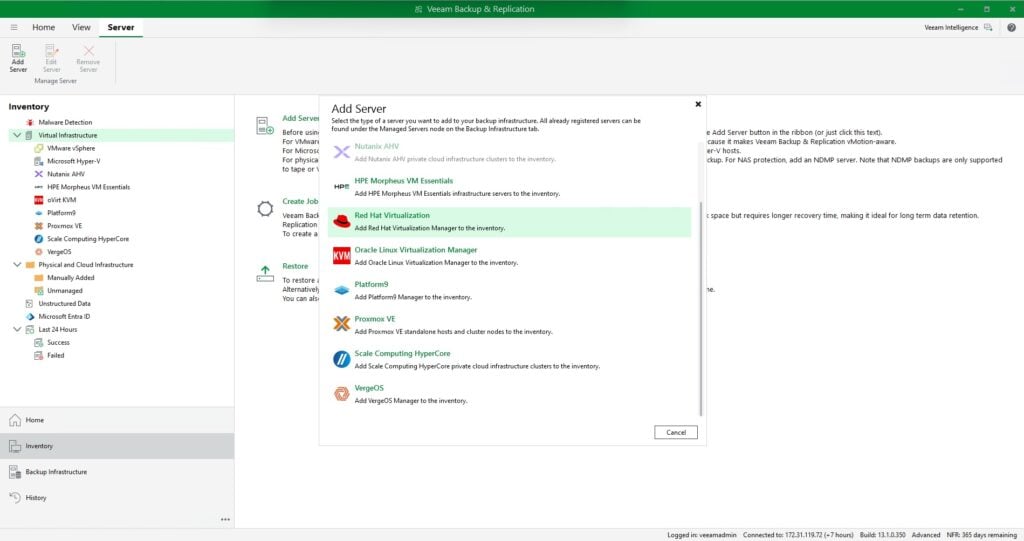
Enterprise application protection now covers EPIC EHR, Db2 on Windows, and Oracle with incremental merge. V13.1 also introduces an Application Backup Repository for custom applications, bringing those workloads under the reporting, security, and recovery orchestration tools used elsewhere in the platform.
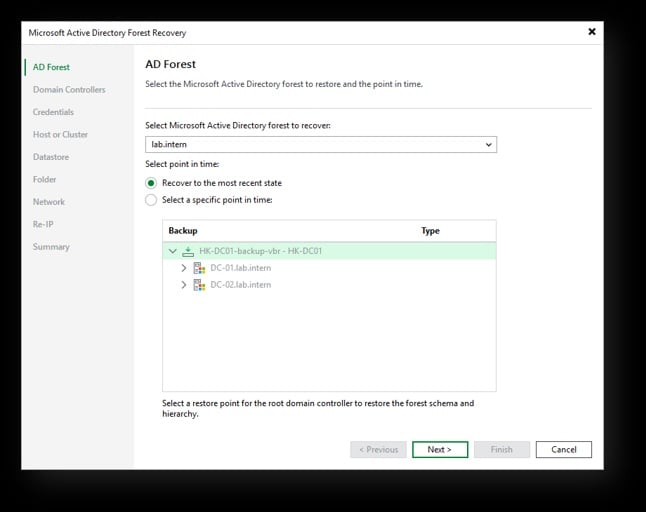
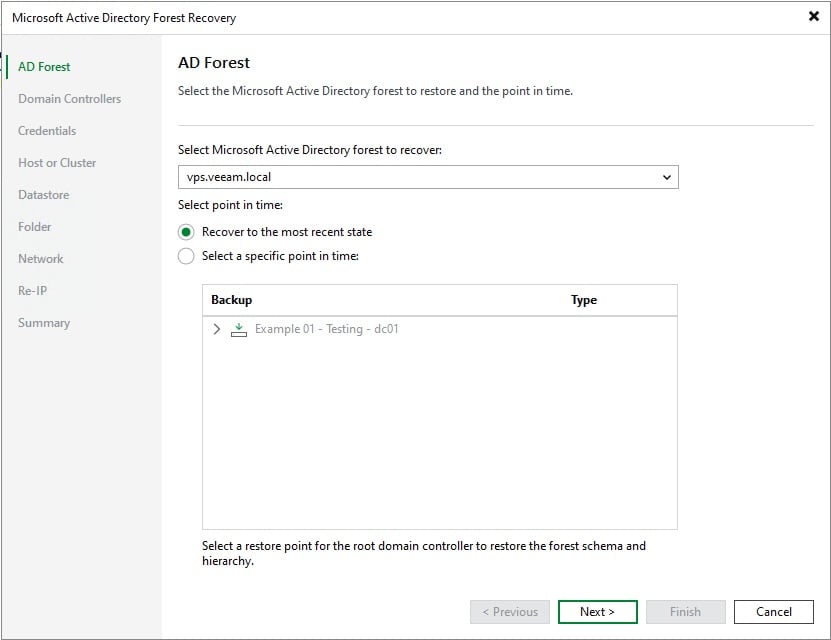
Security and recovery updates extend malware scanning to NAS and add more cloud threat detection for Microsoft Azure. Active Directory Forest Recovery supports identity restoration after an attack. Restore-point scanning lets administrators inspect data for threats before returning it to production, a capability Veeam relies on most. The company cites its own 2026 Data Trust and Resilience Report finding that 90% of organizations are confident they can recover from a cyber incident, while fewer than one in three ransomware victims actually recovered all their data. Post-quantum cryptography aligned with NIST standards and hybrid FIPS support are also part of the release.
NAS changes expand long-term retention options for older backups and large unstructured data sets. Administrators can send this data directly to AWS S3 Glacier, Azure Archive, other compatible archive storage, or Veeam Data Cloud Vault Archive instead of keeping it on higher-cost storage designed for faster recovery.
Veeam Data Cloud Vault Archive Targets Long-Term Retention
Veeam Data Cloud Vault Archive adds an archival object storage tier for aged backups, large unstructured data sets, and redundant, obsolete, or trivial data. Policy-based tiering moves older backups from Veeam Data Cloud Vault to the Archive tier, while NAS Direct to Archive sends large NAS datasets directly to long-term cloud storage. Veeam’s case for treating an archive as a security asset rather than a cost line rests on two of its own figures: backup repositories are targeted in 96% of ransomware attacks, and 58% of organizations say data residency and sovereignty are the most important factors in deciding where data is stored.
Archived data uses WORM immutability, logical air-gapping, and AES-256 encryption with customer-controlled keys. Organizations can select from supported storage locations to meet residency requirements, and alternate-location recovery is available when archived data must be restored at a location other than its original site.
“Long-term retention of that data has become a cyber resilience, compliance, and cost challenge all at once,” said Rehan Jalil, President of Products and Technology at Veeam. “Veeam Data Cloud Vault Archive gives customers a secure, immutable, and cost-effective way to tier aging backups, cold, and ROT data off premium storage while keeping a trusted copy on storage better suited for long-term retention.”
Typical retrieval from Vault Archive takes more than 15 hours, compared to the retrieval times listed in minutes for Veeam Vault Foundation and Advanced, and the tier carries a 180-day minimum retention period compared to 30 days for the other two. The read allowance moves in the same direction: Archive includes no reads and bills them in arrears, Foundation is fair use, and Advanced is unlimited. Archive is also rated at 11 nines of durability, whereas Advanced goes up to 12 nines with synchronous geo-copies, and its data locality choice is at the region level rather than the country level, as Foundation offers. The tier is intended for compliance copies, aging backup chains, and data that must be retained but is rarely accessed, and the trade-offs read accordingly.
Vault Archive can also serve as the immutable or air-gapped copy in Veeam’s 3-2-1-1-0 backup model. As a managed cloud service, it removes physical media handling, transport, and off-site logistics associated with tape while keeping archived data recoverable when needed.
Veeam Data Cloud Vault Archive Pricing and Availability
Veeam Data Cloud Vault Archive is generally available now through Veeam’s authorized partners, resellers, distributors, cloud marketplaces, and online store. Archive pricing is $4.50 per TB per month, billed annually upfront, which is roughly a third of the $14 per TB per month Foundation tier and less than a fifth of the Advanced tier at $24. Storage and write activity are included, while reads and restores are not and are billed in arrears. The tier requires a minimum 180-day retention period. Availability varies by region, and Archive is not offered everywhere Veeam Vault is: most United States and Canada regions carry all three tiers, while Brazil South currently lists Foundation and Advanced only. Veeam publishes a per-region tier map on its Vault page.


 Amazon