

VMware Explore kicked off Monday morning, though the schedule felt unusual compared to past VMworld Explore events, as Broadcom moved the traditional opening keynote to the afternoon.
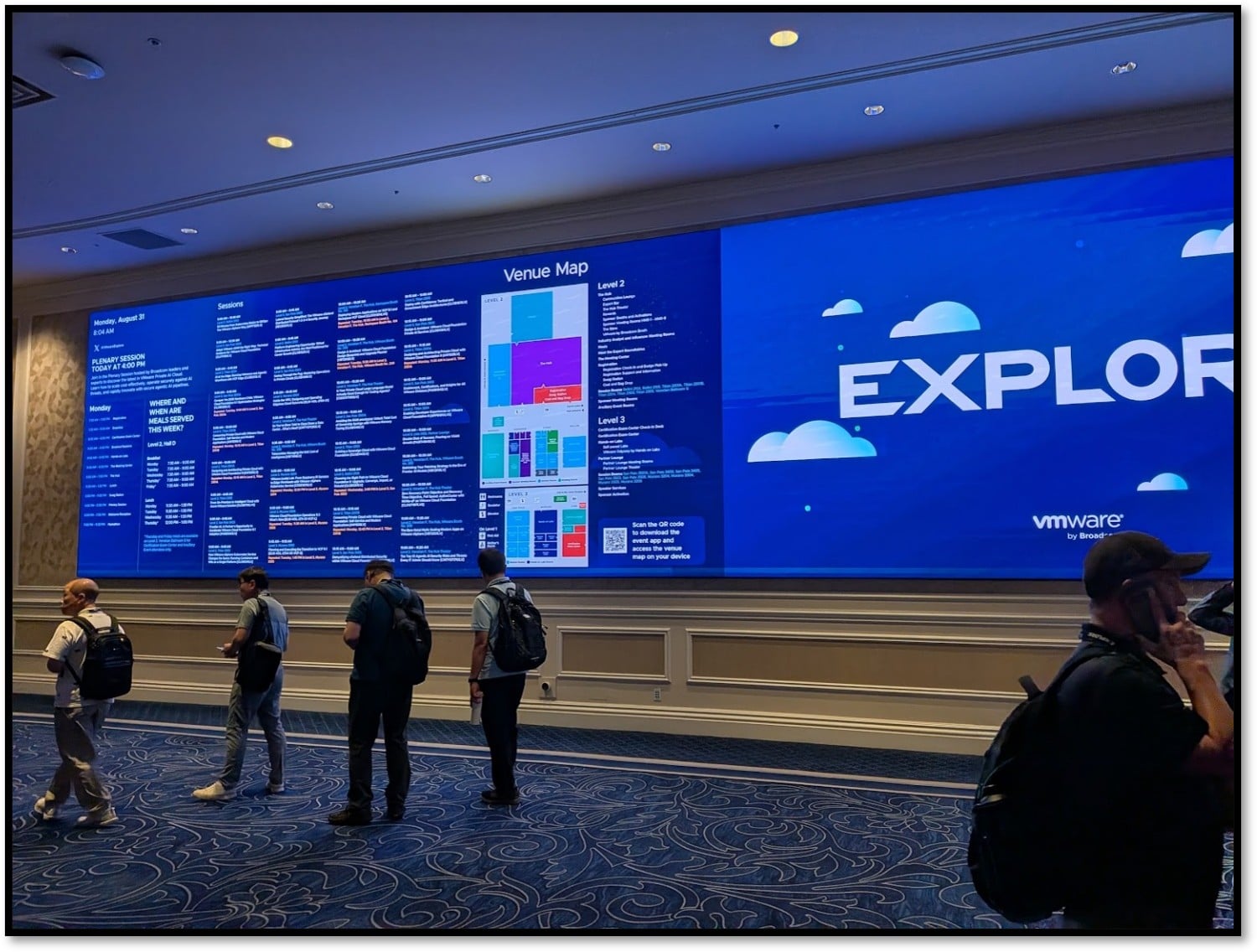
That was not necessarily a bad thing, as it gave us time to catch a few breakout sessions and catch up with vendors on the show floor. In this piece, we’ll dive into the keynote announcements, along with notes from the one-on-one interviews and roundtable panels we attended throughout the conference. Our earlier on-the-ground report covered Lenovo’s turnkey AI and memory-crunch conversation.
Keynote: Shaping the Future of Private AI Cloud and Agentic Innovation
We covered VMware’s morning news releases in an earlier post, but the general session keynote added technical and economic context to those announcements. The morning press releases focused on VMware Private AI Cloud, validated models, and deny-by-default runtime agent security; the keynote focused on operational realities of IT. Broadcom leadership spent their time on stage addressing the economics facing modern IT departments.
Ram Velaga, president of Broadcom’s Infrastructure Software Group, set the tone for the keynotes by emphasizing that hardware cost inflation, particularly pressure on memory pricing, has become a significant infrastructure-planning concern rather than a temporary supply-chain hiccup. The takeaway wasn’t a call to forklift everything to the public cloud, but rather a call for pragmatic workload repatriation. Velaga hammered home VMware’s foundational argument: enterprise IT succeeds by decoupling complex compute, storage, and networking layers from the applications running on top of them.
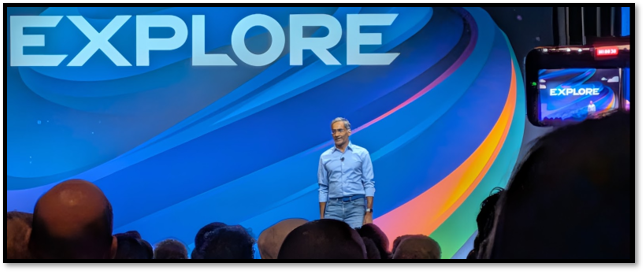
Next up, Paul Turner and his engineering team demonstrated the VCF AI Assistant and VMware’s live-patching capabilities. This demonstration addressed a familiar operational challenge: remediating critical vulnerabilities without introducing unnecessary downtime. During the live demo, the system detected administrative configuration drift (in this case, a cluster in which DRS had been inadvertently disabled weeks earlier), ran automated pre-checks, and applied ESXi live patches to resolve performance bottlenecks. This was all accomplished without bouncing virtual machines, which could have caused expensive and unnecessary downtime.
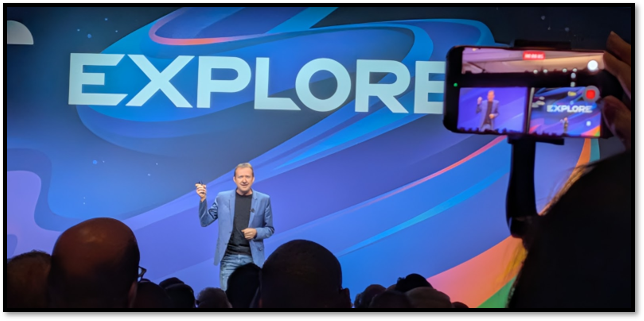
One of the more insightful portions of the keynote was the customer perspective from Hemant Deshpande of Standard Chartered Bank, who walked the audience through their standardized, factory-integrated rack build.
For anyone who has managed multi-rack deployments, the appeal is obvious: pre-cabling, validation, and configuration of compute, networking, and vSAN storage at the supplier facility cut deployment timelines from months to days while establishing clean, isolated failure domains. As a bonus, moving to high-density virtualized clusters dropped their data center power consumption by 40 to 45 percent. We loved how they showed that a standardized software-defined footprint directly curbs capital and operating expenses.
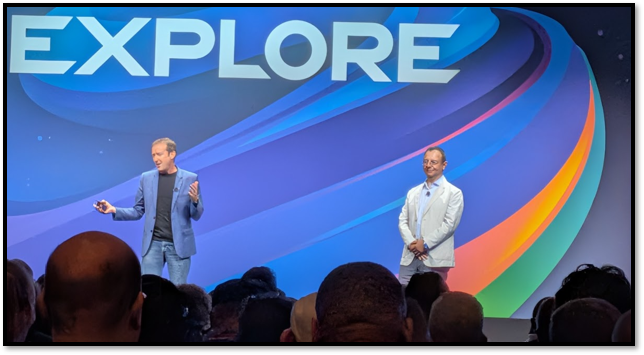
Continuing the customer-focus theme, United Airlines took the stage to address the platform engineering side, detailing its adoption of VMware’s Kubernetes capabilities on VCF. Rather than running separate environments for containers and legacy VMs, they integrated infrastructure provisioning directly into their CI/CD pipelines via Terraform and Avi Global Server Load Balancing. This gives application teams active-active microservices across multiple on-prem sites and hybrid clouds without submitting help desk tickets, offering developers a public-cloud-style experience while keeping infrastructure tightly managed on-premises.
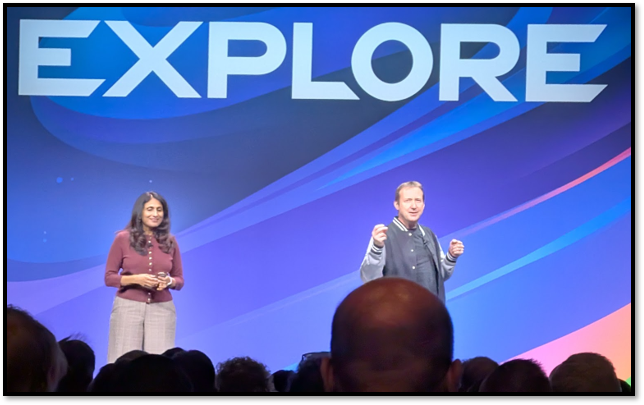
Finally, Purnima Padmanabhan, VP and General Manager of the Tanzu Division, stepped up to address something that we have been pondering lately: vulnerabilities in the AI software supply chain. To address these issues, Broadcom’s Tanzu division announced TrueSource on Monday. Autonomous and agentic AI pipelines frequently pull dependencies for Python, Java, Node.js, and Spring from public repositories, exposing a significant security risk. Their new product, TrueSource, serves as a curated, cryptographically signed, and continuously patched upstream repository for both runtime frameworks and core data stores including PostgreSQL, MySQL, RabbitMQ, and Valkey. This can be layered alongside Tanzu agent sandboxing and hypervisor-level distributed firewalls. The message was clear: enterprise AI governance requires locking down everything from bare metal to the model runtime before agents touch production environments.
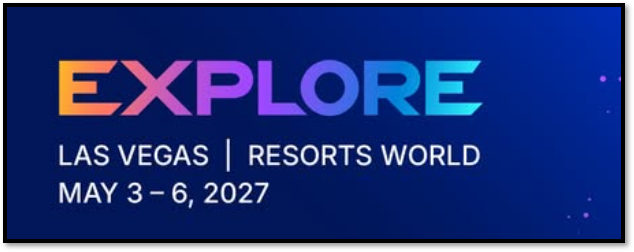
They ended the Keynote with the announcement that Explore 2027 will still be in Las Vegas but moves to Resorts World and to May 3 through 6, 2027.
Once the keynote was wrapped, we headed over to The Hub for the Welcome Reception.
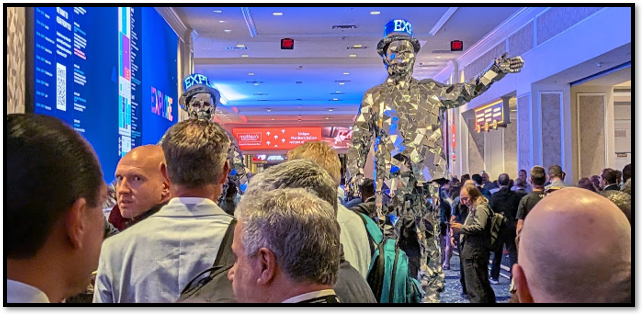
In the sections below, we break down what we learned from our discussions, interviews, and small-group panels across the rest of day one.
What We Heard from VMware Leadership
During our discussion, Dilpreet Bindra, Senior Director of Engineering at VMware by Broadcom, reflected on how the definition of an enterprise “workload” has expanded from traditional virtual machines to encompass cloud-native containers and advanced AI applications.
Both Bindra and I have been attending KubeCon religiously, so Kubernetes and container technology seemed like a good place to start our conversation.
Bindra began our conversation by discussing his involvement in the Cloud Native Computing Foundation (CNCF) and his experiences navigating the CNCF and the energy at KubeCon.
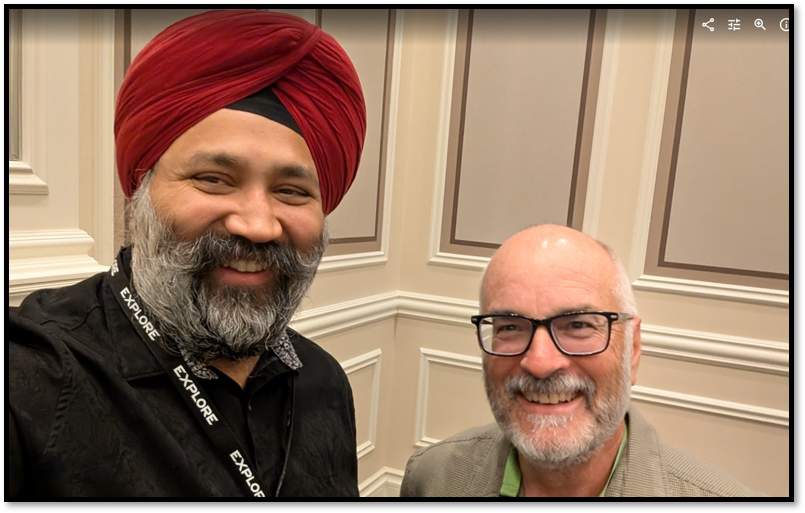
He highlighted the shift in VMware’s engineering culture toward open-source contributions, prioritizing upstream collaboration to ensure innovations don’t remain locked inside proprietary products. Bindra noted that VMware has accelerated Kubernetes innovation by actively engaging with the CNCF community. My feeling was that for him, Kubernetes on VCF is a critical arena for aligning enterprise-grade orchestration with the incredibly fast-paced, community-driven ecosystem that modern developers rely on.
He then drew on his deep background in core VMware technologies, including ESXi and vMotion. He explained that foundational principles like resource isolation and mobility remain as critical today as ever. However, they must be adapted to avoid the bottlenecks inherent in legacy infrastructure. He emphasized that the true promise of VMware Cloud Foundation (VCF) 9.1 lies in its ability to converge distinct workloads, such as VMs, containers, and AI, onto a unified platform. Bindra sees VCF 9.1 as a way to bring VMs, containers, and AI workloads onto a common infrastructure platform. The goal is to give IT teams the controls they need without forcing developers to navigate separate infrastructure stacks for each workload type.
Addressing the rapid evolution of Private AI and autonomous infrastructure, Bindra offered pragmatic advice for architects designing tomorrow’s data centers. He cautioned against rigid architectural lock-in, given how quickly GPU capabilities, model sizes, and network demands are changing in the AI space. When we touched on the AIOps workflows showcased at VMware Explore 2026, he drew a distinct line between AI-assisted operations and full autonomy. Bindra argued that while AI is becoming exceptionally good at recommending optimizations, establishing true trust in autonomous infrastructure takes time. He recommended that platform teams start by delegating routine, low-risk operational tasks to AI agents, keeping critical production decisions firmly under human supervision until technology and organizational trust mature.
Later, we sat down with Sabina Anja, Chief Technologist and Executive Advisor for VMware Cloud Foundation, to discuss how modern infrastructure is rapidly evolving under the weight of AI workloads and distributed systems. But before diving into that, we touched on my fascination with agentic AI troubleshooting tools, which led to a deeper conversation about the role of AI assistants.
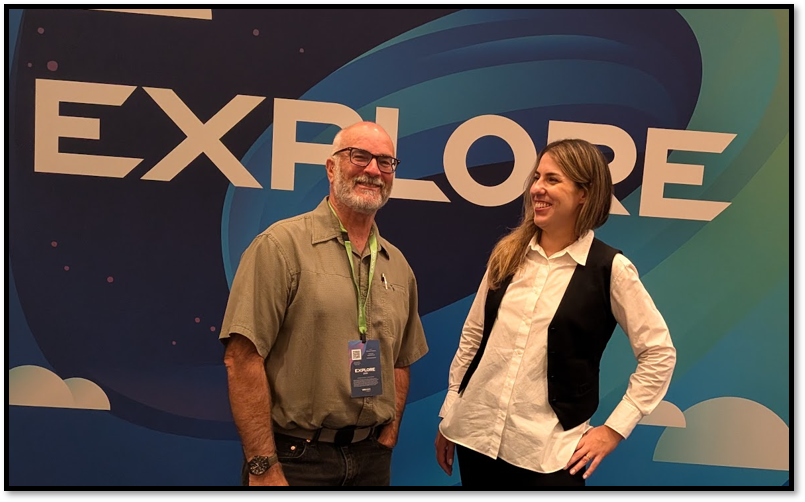
Sabina argued that the growing complexity of modern environments is increasingly overwhelming the people responsible for operating them. With environments growing increasingly complex and distributed, an AI assistant shouldn’t just be an automated script; it needs to synthesize tribal best practices, correlate logs with historical telemetry, and surface critical insights so engineers don’t spend hours manually correlating data across disconnected logging and telemetry tools.
From there, our conversation turned toward the physical realities of the modern data center, particularly resource allocation, traffic patterns, and memory tiering. Sabina, drawing on her deep networking background, pointed out that as AI agents constantly communicate, we will see consistent, saturated traffic that demands smarter workload localization, quality of service, and traffic engineering.
Wrapping up our discussion, we touched on the economic and physical constraints facing infrastructure today, from volatile DRAM costs driving the adoption of memory tiering using NVMe to the staggering power demands of new accelerators. Ultimately, Sabina’s advice to architects was straightforward: look ahead, understand the true power and cooling requirements of your workloads, and design for where data demand is headed rather than relying on legacy assumptions.
Sabina also delivered a standout keynote segment detailing how distributed intelligence must map directly to the realities of physical data centers.
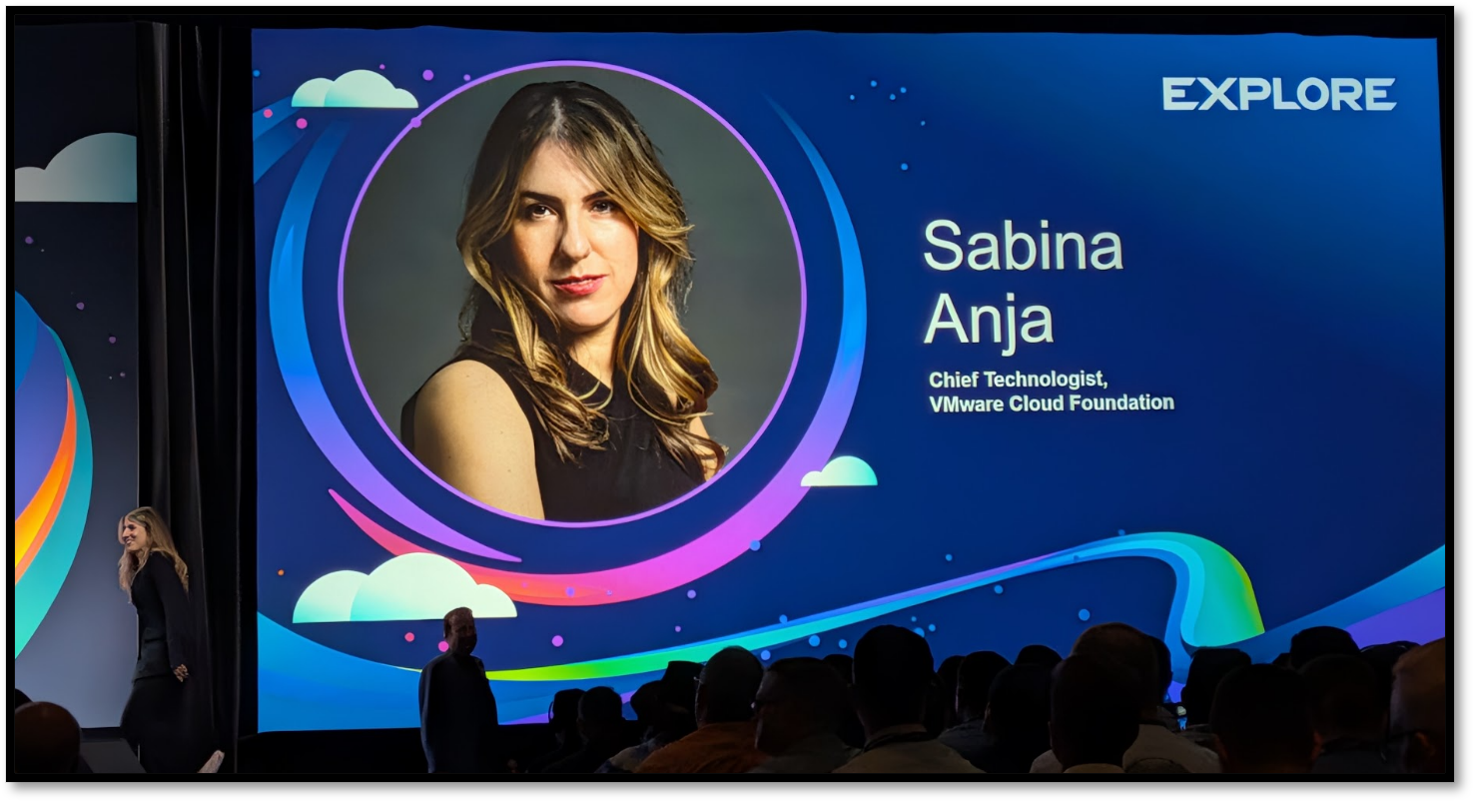
We had a chance to sit down with Chris Wolf, Global Head of AI and Advanced Services at Broadcom’s VMware Cloud Foundation Division, and reflect on VMware’s private AI journey, which he initiated three years ago.
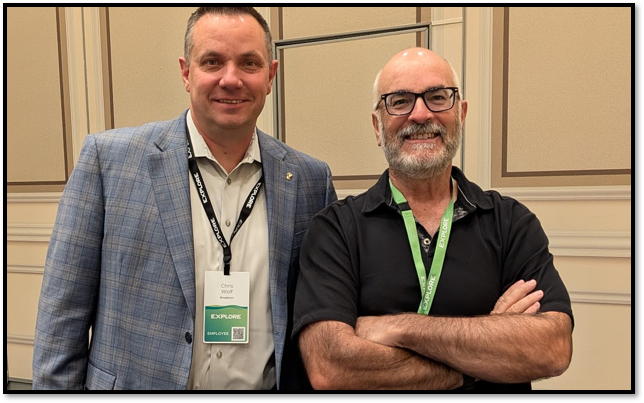
We first asked him how his early assumptions about private AI held up against reality. He explained that while foundational bets on open-source runtimes like vLLM (an open-source large language model (LLM) serving runtime) and Harbor container registries proved spot-on, they were initially ahead of their time, and it took the market a couple of years to catch up. Wolf said VMware initially placed greater emphasis on NVIDIA vGPU technology, but customer demand for practical edge deployments pushed the team toward simpler, more cost-effective passthrough configurations. He then went on to say that they were very much in touch with their customer base and, in response to customer demand for practical edge deployments, they adapted VMware’s virtualization stack to accommodate simpler, cost-effective passthrough configurations.
As our conversation turned to the broader data center landscape, we pressed him on whether organizations were beginning to silo their infrastructure again around traditional virtual machines, containers, and AI workloads. Chris pointed out that the opposite is happening: he argued that rising power demand and cooling requirements, along with the operating costs of cloud-based AI consumption, are prompting organizations to reconsider where they run AI workloads. Wolf argued that modern virtualization overhead is sufficiently low for many AI workloads that organizations can consolidate infrastructure without giving up meaningful performance, and, as such, enterprises can greatly reduce their physical footprints, rein in software licensing costs, and deploy modest GPU clusters that maximize efficiency without incurring high public cloud expenses.
Looking toward the future, we asked Chris to forecast the next evolution of enterprise infrastructure and where agentic AI fits into the equation. While he is optimistic that specialized smaller models and autonomous agents will relieve human operators of tedious operational toil, he emphasized the critical need for strict governance, human-in-the-loop approvals, and audit trails to prevent unmonitored scripts from destabilizing mission-critical environments. Wolf’s view was that enterprise AI will increasingly rely on distributed architectures and smaller, specialized models rather than depending exclusively on massive centralized models.
Q & A with Ram Velaga
We, along with a few other journalists, were invited to a question-and-answer session with Ram Velaga, president of Broadcom’s Infrastructure Software Group.
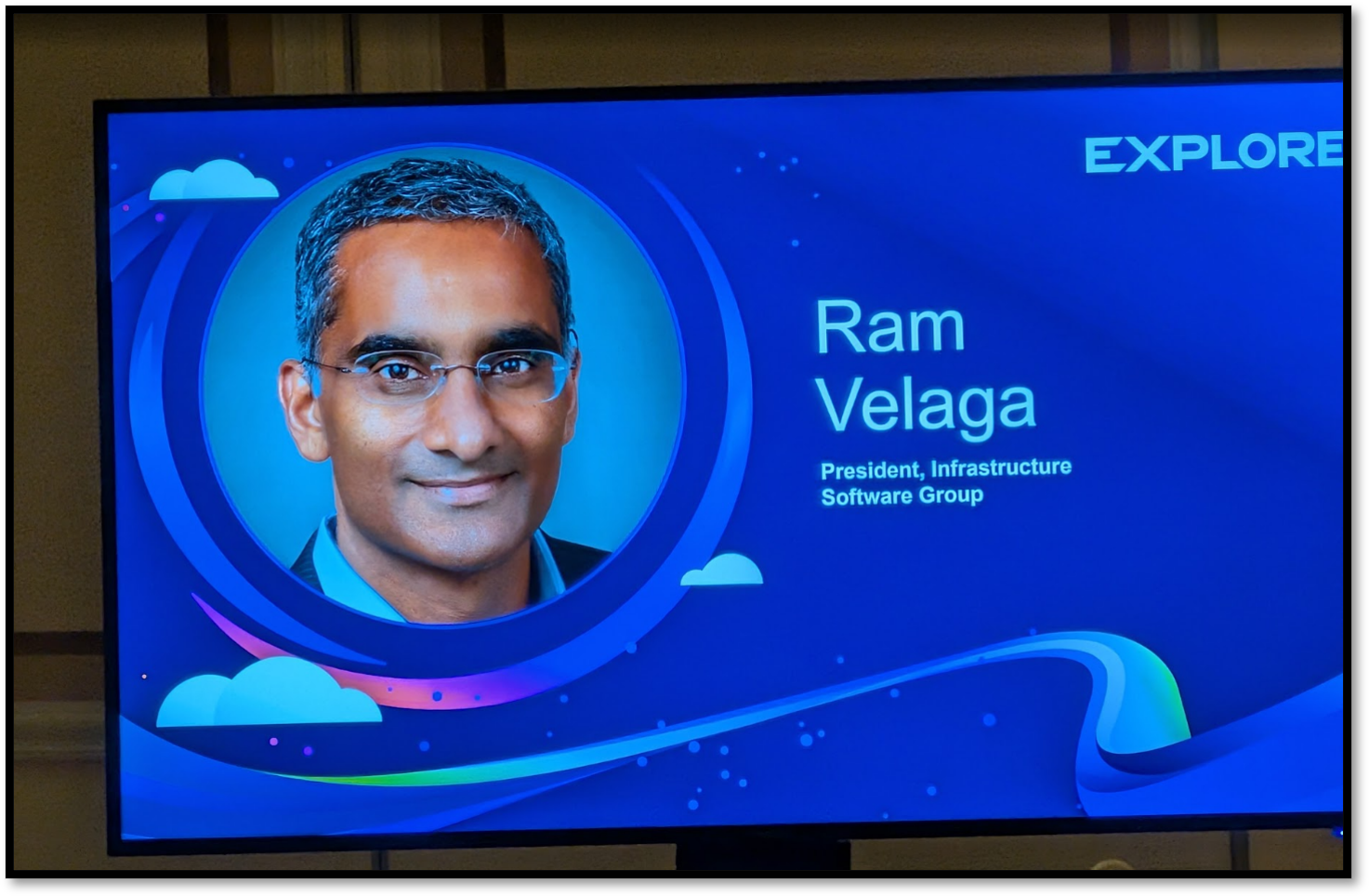
The session started with a question about how Broadcom is prioritizing its engineering resources to support enterprise customers as they transition agentic AI workloads into production. He was quick to put the numbers in perspective, revealing that Broadcom is investing well over $5 billion annually in software engineering. However, he made it clear that they are not pouring every dollar into AI features and that between 50% and 60% of their engineering capacity is strictly devoted to core operational foundations: compute, networking, and storage, to provide rock-solid reliability and seamless, zero-downtime fleet updates that VMware customers have come to expect.
Ram then went on to say that rather than buying into dense, single-vendor architectures, he outlined a future driven by heterogeneous pools of compute connected over high-speed network fabrics with shared memory. He pushed back firmly against industry buzzwords like “control plane.” He argued that VMware’s role remains the same: abstracting underlying infrastructure so customers can run workloads across different processors, accelerators, and storage technologies.
Culturally, he described VMware as an efficiency-first business. While public hyperscalers profit when customers consume excess storage and compute resources, VMware proves its value by reducing resource footprints and optimizing on-premises hardware utilization. To reinforce this across its portfolio, Broadcom has been tearing down internal silos, for example by mobilizing Symantec’s engineering team to deliver EDR-like hypervisor defense and virtual patching directly within VMware Cloud Foundation.
He broke down the broader market forces driving enterprise workloads back to private clouds. Ram pointed out that the rush to on-premises infrastructure is not just about avoiding unpredictable public cloud token bills but also about preserving corporate costs. Velaga felt that data sovereignty and intellectual property concerns are becoming important factors in private AI adoption. For organizations in regulated industries, keeping sensitive data and AI workflows under tighter control can be as important as managing the cost of public AI services.
On the partner front, he defended VMware’s aggressive overhaul of the Cloud Service Provider (CSP) ecosystem. Likening the previous setup to an uncurated franchise in which low-value resellers undercut quality operators, he explained that Broadcom is deliberately trimming out transactional intermediaries to elevate true partners who invest in hardware, delivery, and the customer experience. Moving forward, his priority is to eliminate surprises, deliver seamless monthly maintenance releases, and leverage AI internally to write better, more resilient code.
The Partner Perspective
VMware has become more focused and reliant on its partners. VMware brought Stephen Ayoub, Co-Founder and President at AHEAD, and Ryan Sheehan, Senior Vice President of Advanced Solutions at SHI International Corp.
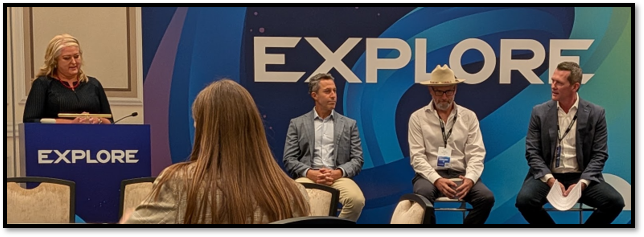
The RoundTable opened with an overview of how customer conversations have shifted over the past 12 to 18 months. The panelists agreed that infrastructure conversations have shifted away from purely operational spending toward investments that must demonstrate measurable business outcomes. Instead of infrastructure discussions being limited to technical managers, modern purchases now require alignment among the CEO, CFO, CIO, and business stakeholders who demand measurable outcomes in revenue, security, and productivity before greenlighting multi-million-dollar investments. Stephen from AHEAD noted that while AI experimentation has rapidly matured, organizations are deeply concerned about “shadow AI,” data leakage, and unpredictable tokenomics. Consequently, enterprises are prioritizing architectural foundations such as VMware Cloud Foundation (VCF 9) to secure their data, govern access, and rein in runaway public cloud costs.
The panel was pressed on how Broadcom’s restructuring, specifically slashing thousands of complex SKUs down to core product bundles, is playing out with customers. While acknowledging that pricing adjustments initially triggered emotional pushback, the panelists agreed that their customers have started to accept the changes.
Ryan from SHI and Stephen agreed that the traditional transactional reseller model is becoming less viable as customers increasingly expect partners to take responsibility for architecture, implementation, and operational outcomes. Today, clients demand technical systems integrators who take full accountability for deploying the entire stack.
To wrap up the RoundTable, Broadcom discussed how they are evolving their go-to-market strategy and partner enablement to ensure customers actually turn on and adopt what they purchase. They reiterated that Broadcom is strictly a product and innovation company with no internal professional services wing, meaning the business is completely dependent on elite channel partners to drive deployment. To support this, Broadcom is heavily funding deployment services and expanding rigorous, hands-on training initiatives, which give partner engineers direct access to VMware’s core product teams.
vSphere Standard in the News
Paul Turner told reporters at the show that Broadcom plans to update vSphere Standard, a move first reported by The Register. If confirmed, the move could be significant for smaller organizations that do not require the full VMware Cloud Foundation stack.
Final Thoughts: The Economics Behind the AI Message
In reflection, VMware Explore 2026 made it clear that Broadcom’s private AI strategy is about far more than running large language models. Across the keynote, executive interviews, and partner discussions, the recurring themes were infrastructure economics, operational efficiency, and the practical challenges of deploying AI at scale.
Broadcom executives discussed everything from live patching and workload consolidation to AI governance, power consumption, cooling constraints, and the growing pressure on memory and accelerator resources. Conversations with VMware leaders reinforced a common message: the next generation of enterprise infrastructure must support traditional VMs, containers, and AI workloads on a common platform while giving organizations greater control over costs, security, and data location.


 Amazon