

HPE has added hybrid flash and hard drive configurations to its Cray Supercomputing Storage Systems E2000, pairing SSDs with new 32TB SAS-4 HDDs in new SAS-4 enclosures that hold 74 or 100 drives. HPE rates a rack at up to 116GB/s of read throughput and 92GB/s of write throughput and calls the result the fastest hybrid supercomputing storage available. Alongside the storage update, the company introduced the HPE Rack Management Controller, which handles liquid cooling monitoring, leak detection, and automated control for high-density racks, starting with the Cray Supercomputing GX5000.
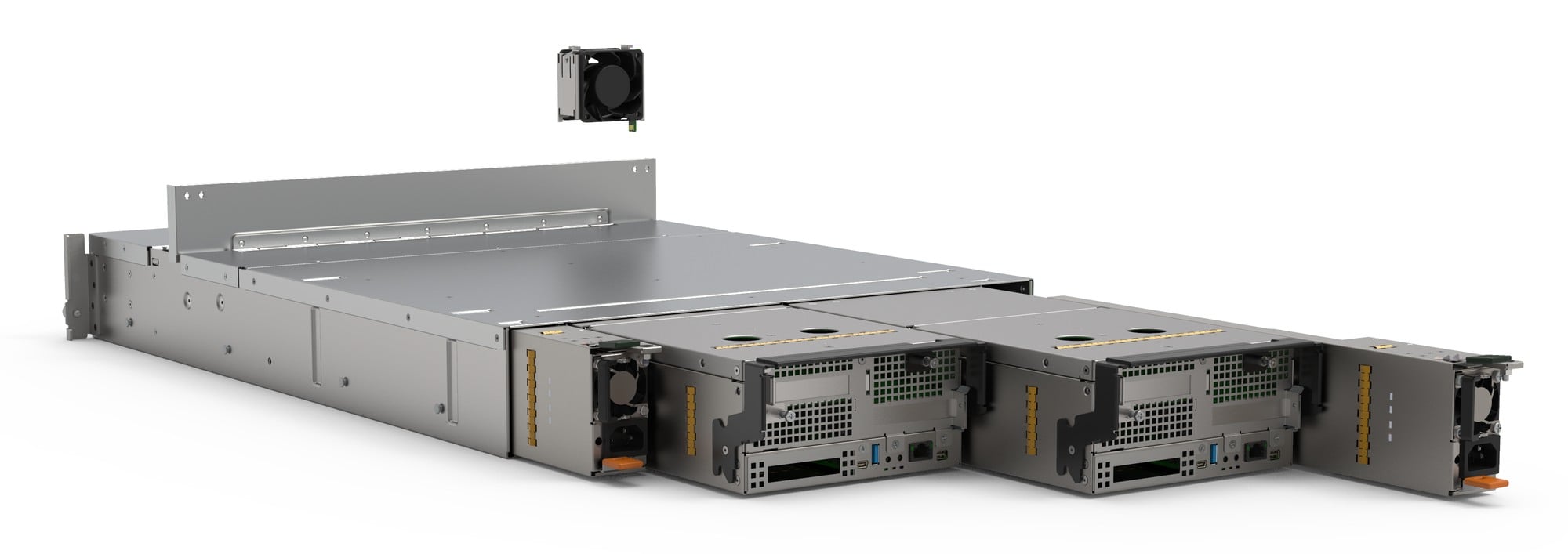
E2000 Hybrid Configurations
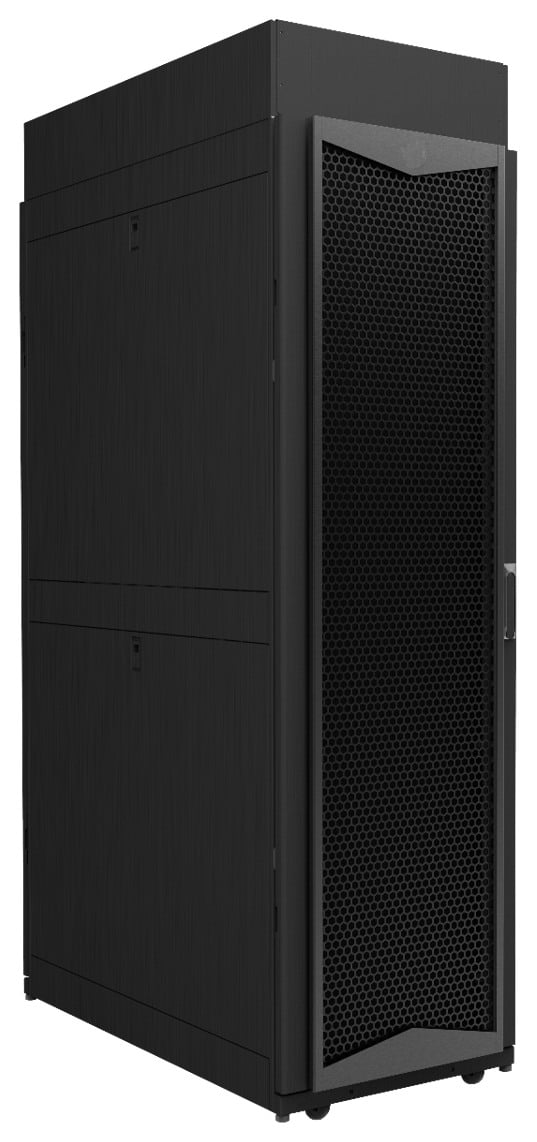 The E2000 is HPE’s Luster-based parallel file system for supercomputing sites, and its hybrid option had topped out at 24TB hard drives. The move to 32TB SAS-4 drives and the denser enclosures yields up to 32% more usable capacity per rack than the hybrid E2000 currently shipping, in the same floor space. In a briefing ahead of the announcement, Marten Terpstra, vice president of product management for HPC and AI Infrastructure Solutions at HPE, said the headline figures are based on a mix of roughly 10% flash and 90% hard drive capacity, a ratio HPE adjusts to each customer’s workload.
HPE says prices for high-capacity SSDs have climbed as demand for data-intensive workloads has grown, and Terpstra put the run-up at the past 12 to 18 months, which is what prompted the update. The company is aiming the hybrid configurations at research institutions and national laboratories that would otherwise have to trade compute nodes for storage inside a fixed procurement. “Budgets are not keeping up with the cost of the infrastructure that people want to go and buy,” Terpstra said.
HPE attaches two competitive claims to the new configurations, the first being up to 41% more throughput in GB/s per storage rack than the next hybrid supercomputing storage competitor, which HPE identifies as DDN. The second is up to 82% lower acquisition cost for the same capacity than the next all-flash supercomputing storage competitor, a figure HPE bases on the street price of 15PB of usable capacity that meets NVIDIA’s performance specifications for a 1,024-GPU cluster. These are HPE comparisons, and we did not run or audit them. HPE did not publish the competing configurations behind either number.
The software side of a hybrid system determines how often the hard drive tier gets in the way. Terpstra said the E2000 stack already includes tiering and data movers that track which data is in active use. He also sees room to tie job schedulers into that process so data is staged onto the flash tier before a job starts, though he described that as a direction and did not commit to a feature or a date.
HPE Rack Management Controller
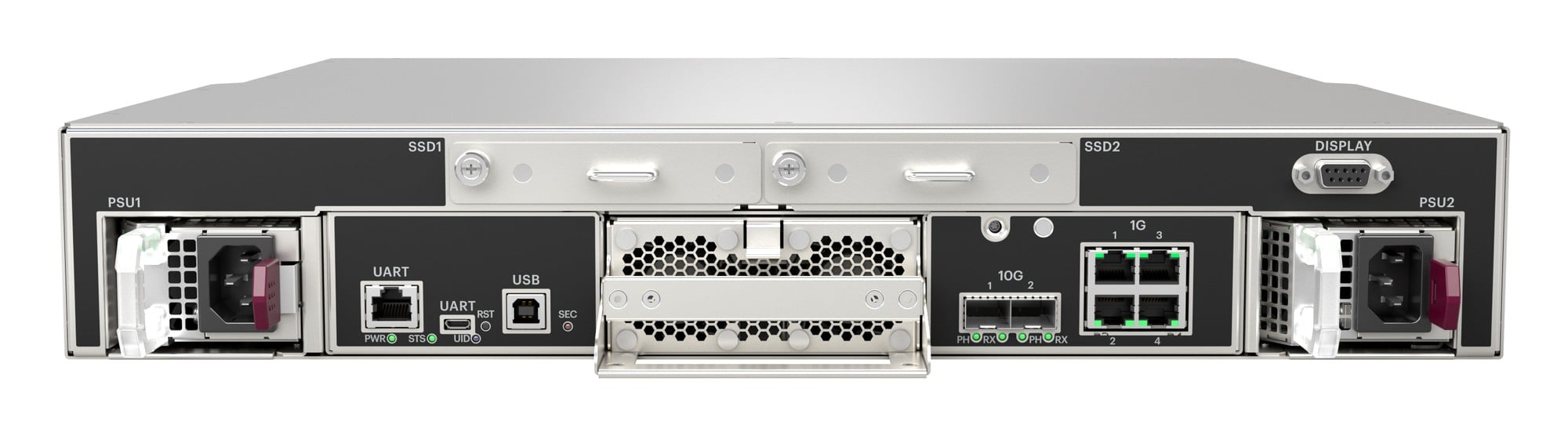
The second announcement targets the liquid cooling plumbing that now comes with every dense HPC and AI rack. The HPE Rack Management Controller provides real-time monitoring, leak detection, automated control, and rack-level visibility, and ships in platform-specific variants matched to each rack-scale system. It supports the Cray Supercomputing GX5000 first. HPE says support for AMD rack-scale systems and one additional platform will follow. HPE has already aligned with AMD and Broadcom on the Helios rack-scale architecture, though the company did not specify which AMD systems the controller will cover.
Terpstra said the design descends from the controller HPE has shipped in Cray EX systems for six to seven years, extended to the GX5000 and then generalized for the other rack-scale systems HPE sells. He pointed to racks reaching 300kW to 500kW and said the controller can respond to a leak by shutting off an individual blade or an entire rack and closing valves. Terpstra also expects the controller to reach the high end of the ProLiant DL portfolio for customers that buy those servers a rack at a time.
The controller reports into the HPE Supercomputing Management Software suite, which includes Foundation for infrastructure management, Composable for resource sharing, and Observability for operational monitoring. Rack-level telemetry and control are shared with that suite, which HPE says makes large liquid-cooled environments easier to operate and expand. Terpstra described the result as a single management plane with open APIs for sites that run in-house tooling.
Availability
HPE plans to ship the new hybrid configurations of the Cray Supercomputing Storage Systems E2000 in early 2027. The HPE Rack Management Controller for Cray Supercomputing GX systems, along with the Supercomputing Management Software suite integration, is scheduled for March 2027. Support for AMD rack-scale systems and the additional platform follows in June 2027. HPE did not disclose pricing for either product.



 Amazon