

Verda, a European AI cloud provider, has selected Supermicro’s liquid-cooled, NVIDIA Blackwell-accelerated rack-scale systems to power a vertically integrated AI cloud built for frontier model developers, AI-native scaleups, and regulated enterprises. The infrastructure is being deployed across Europe and serves customers in Europe, the United States, and Asia.
At the core of the deployment is Supermicro’s rack-scale infrastructure built around NVIDIA Blackwell and Blackwell Ultra GPU architectures. These systems are engineered to meet the growing demand for large-scale AI training and inference, especially among organizations developing frontier models and deploying production-grade AI services. Verda’s platform targets a mix of AI-native startups, research organizations, and enterprises operating in regulated environments where data sovereignty and performance are critical.
Rack-Scale AI Infrastructure Built for Modern Workloads
Verda’s deployment includes a range of Supermicro systems optimized for different tiers of AI workloads. The infrastructure features NVIDIA GB300 NVL72 rack-scale systems, designed for dense GPU clustering and large-model training, alongside NVIDIA HGX B300 and HGX B200 platforms that provide flexible scaling for training and inference. Additional capacity is delivered by RTX PRO 6000 Blackwell Server Edition GPUs, which are suited for enterprise AI applications, visualization, and edge-adjacent workloads.
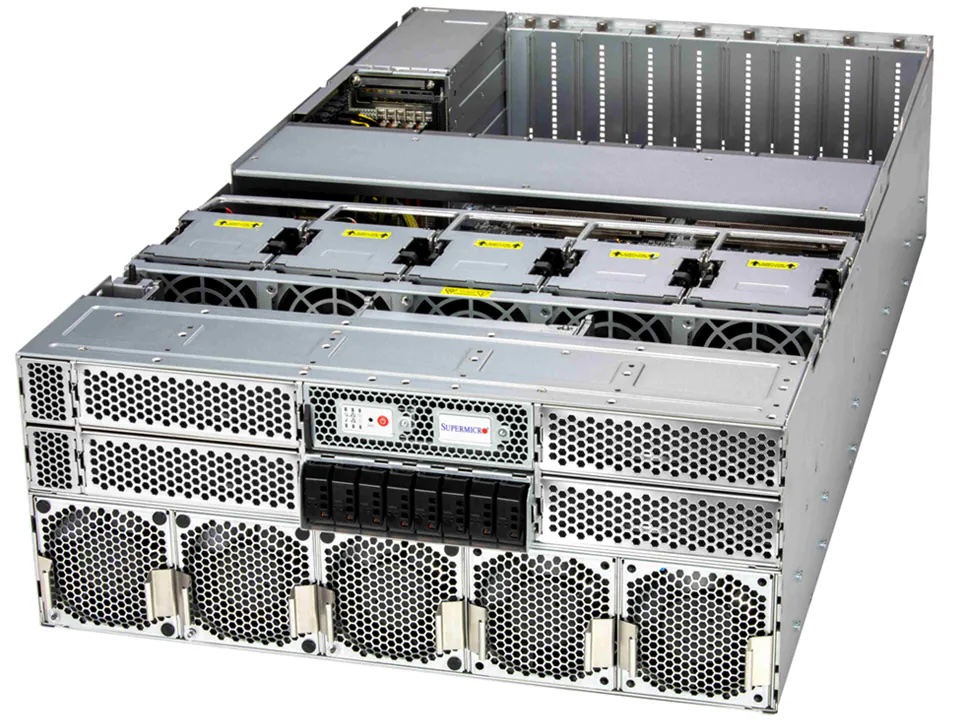
This mix of systems enables Verda to support a broad range of AI use cases, including large language model training, multimodal AI pipelines, robotics development, and enterprise inference workloads. By combining multiple GPU architectures on a unified platform, Verda can align infrastructure resources with workload requirements while maintaining high utilization.
Full-Stack AI Cloud with Flexible Consumption Models
Verda is positioning its platform as a full-stack AI cloud, integrating infrastructure, orchestration, and service delivery into a single offering. The environment provides access to GPU resources through multiple consumption models, including self-service instances and clusters, serverless container environments, and managed inference endpoints.
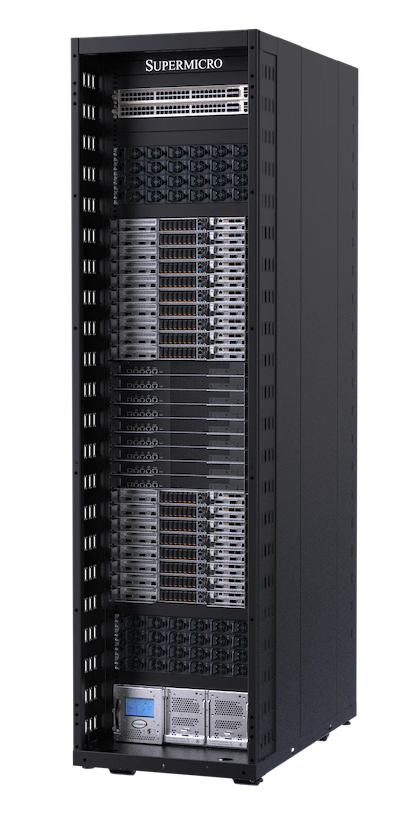
This approach reflects a broader shift in the AI infrastructure market toward on-demand access to high-performance compute. Organizations increasingly need the ability to scale GPU resources dynamically without managing the underlying hardware. Verda’s platform abstracts this complexity while preserving direct access to high-performance NVIDIA infrastructure.
Accelerated Deployment Through Pre-Validated Systems
Supermicro’s role in the deployment extends beyond hardware supply. Its Data Center Building Block Solutions (DCBBS) framework provides pre-validated, modular infrastructure that simplifies integration at the rack and data center levels. This includes validated combinations of compute, storage, networking, and software components.
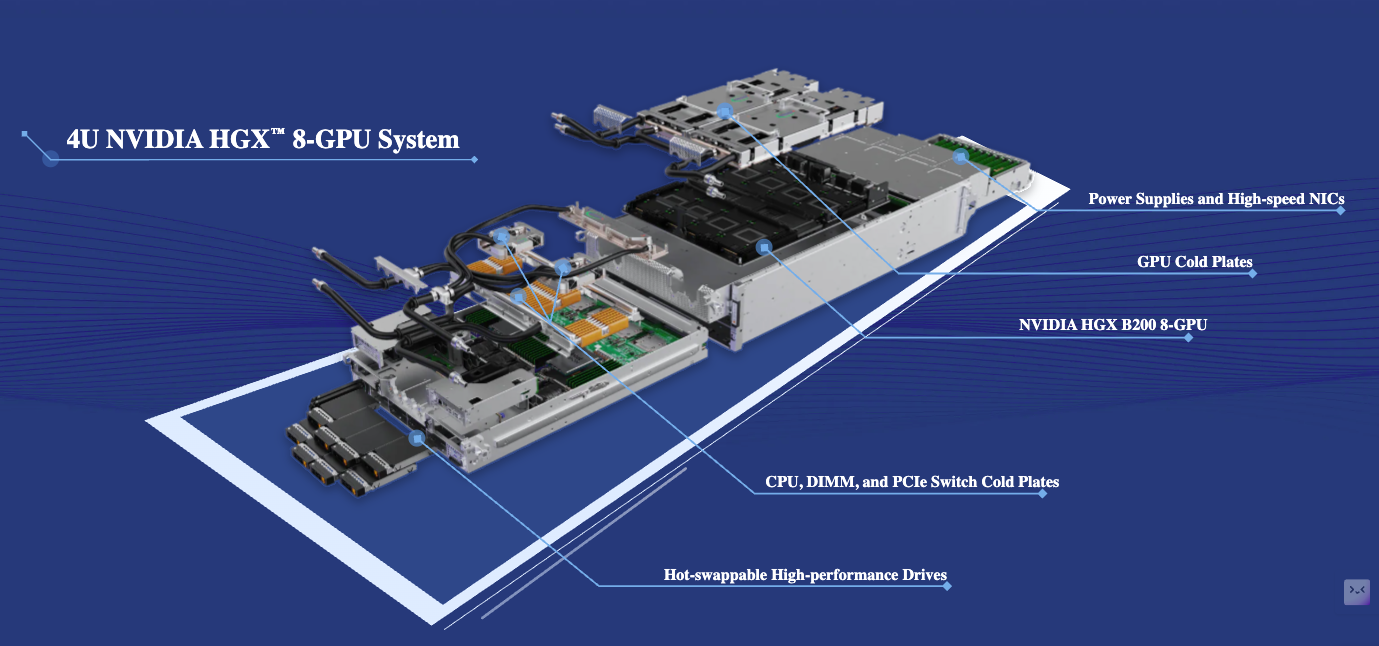
By leveraging these pre-tested configurations, Verda reduced deployment timelines and mitigated integration risk. Rack-scale integration also improves system-level performance by optimizing power delivery, thermal management, and interconnect topology. This is particularly relevant for Blackwell-based systems, where power density and cooling efficiency are key design considerations.
Efficiency and Sustainability as Design Priorities
Energy efficiency is central to the deployment. The Blackwell-based systems are designed to deliver higher performance per watt than previous GPU generations, directly affecting operational costs and scalability. Supermicro’s system-level optimizations further reduce the total cost of ownership by improving utilization and lowering infrastructure overhead.
Verda complements these efficiencies with a sustainability-focused operating model. The company reports that its data centers are powered by 100 percent renewable energy. It is also working with regional utilities to repurpose waste heat from its facilities to support residential heating for up to 15,000 homes. This type of heat reuse is increasingly common in high-density AI deployments, where thermal output can be significant.
Aligning Infrastructure with AI Market Demands
The collaboration highlights a broader trend in the AI infrastructure market toward vertically integrated, rack-scale solutions. As models grow larger and workloads become more complex, traditional server-based deployments are being replaced by tightly integrated systems that optimize performance across compute, networking, and power.
Supermicro’s DCBBS approach reflects this shift by enabling organizations to deploy modular infrastructure that can scale from individual servers to full data center builds. For providers like Verda, this flexibility supports rapid expansion while maintaining consistency across regions.
As demand for GPU-accelerated infrastructure continues to outpace supply, partnerships between system vendors and cloud providers are becoming critical. Verda’s deployment demonstrates how pre-integrated, Blackwell-based platforms can deliver high-performance AI services at scale while meeting operational efficiency and sustainability requirements.


 Amazon