

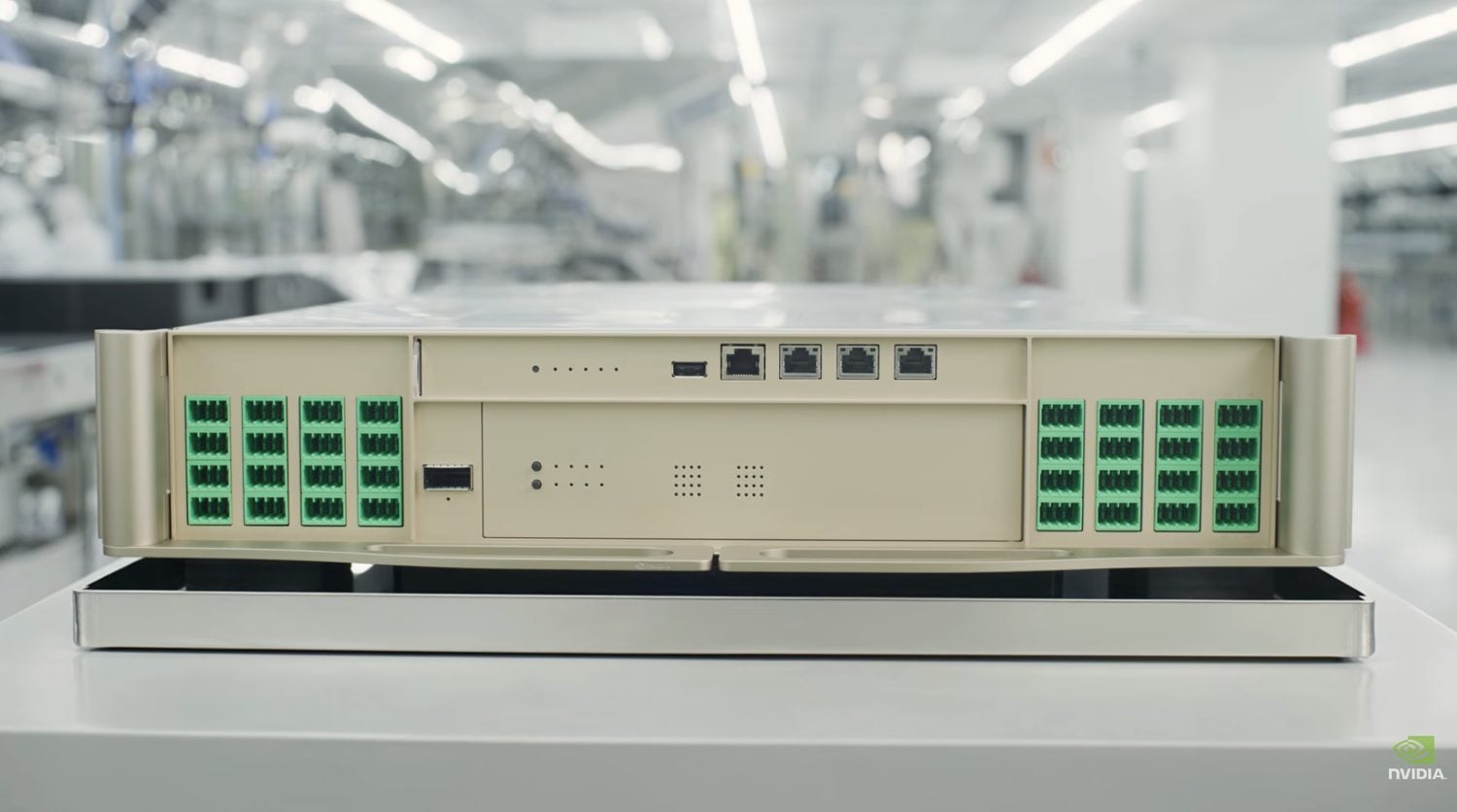
NVIDIA has moved Spectrum-X Ethernet Photonics, its co-packaged optics (CPO) Ethernet switch platform, into full production. The company puts the gains at 4x fewer lasers, 5x lower power consumption, and 10x higher mean time between incidents, and it named the five manufacturing partners building the switch at each stage of the supply chain. The milestone lands as the Vera Rubin compute platform it is designed to network moves toward its own production shipments this fall.
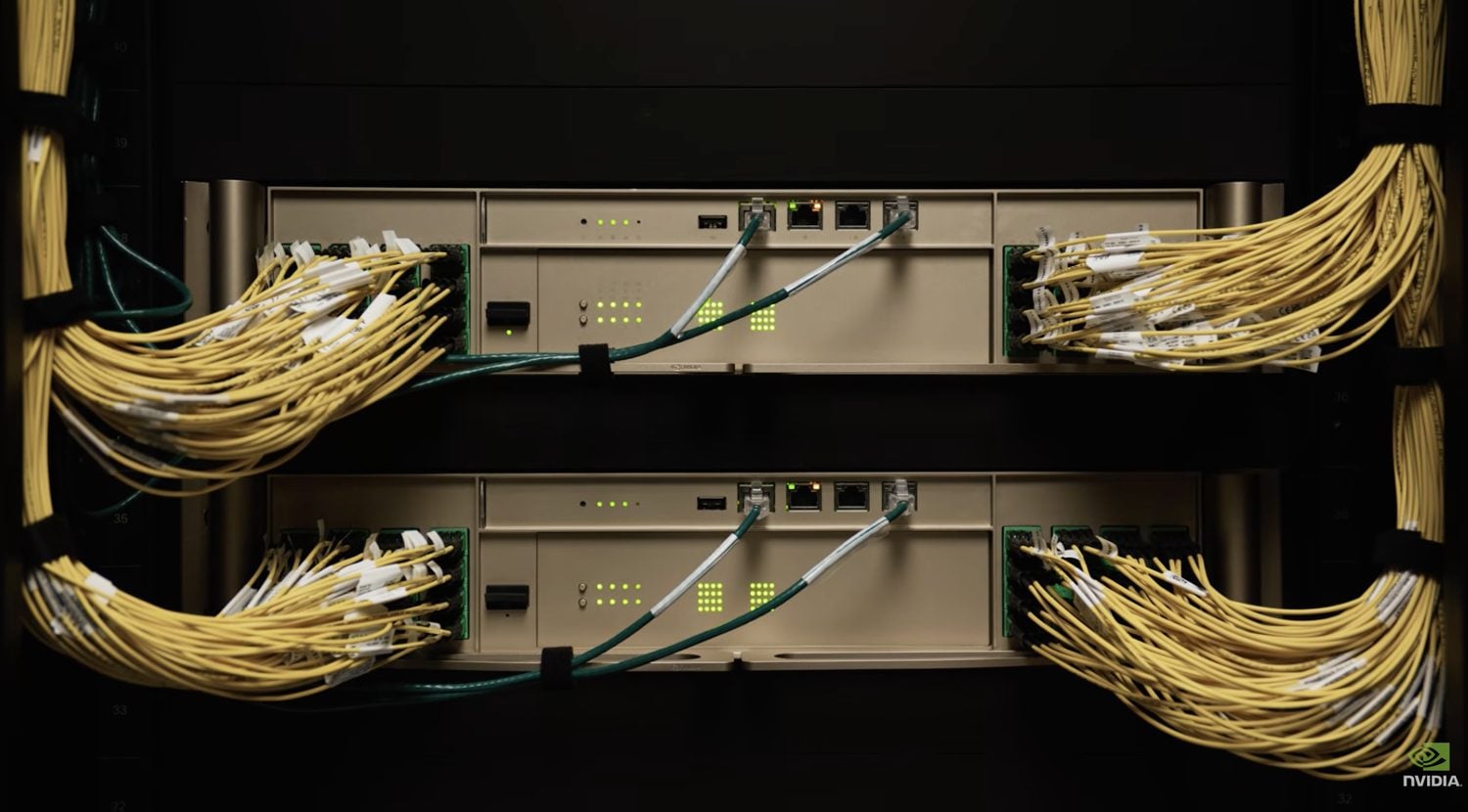
Inside the Co-Packaged Optics Switch
Conventional switches rely on pluggable optical transceivers, discrete modules that each carry their own laser and plug into the switch faceplate. Spectrum-X Ethernet Photonics instead integrates optical engines directly adjacent to the switching silicon, built on co-packaged optics with 200Gb/s SerDes. Removing the pluggable tier is what drives the laser count down by a factor of four, and fewer lasers mean fewer discrete components that can fail in a fabric that may span hundreds of thousands of links.
Those failure points are the reason the reliability figure matters more than the power figure for most operators. NVIDIA’s 10x higher mean time between incidents is a claim about how often something in the optical path takes a link down, not about raw throughput. Lowering the thermal and electrical footprint of the networking tier also frees power headroom within the data center envelope for accelerator compute, a concern that drives NVIDIA’s 800 VDC power architecture as well. When NVIDIA first detailed the platform, it framed the same advantages against networks using traditional transceivers as 5x better power efficiency, 5x longer AI uptime, and 1.3x faster time to deployment.
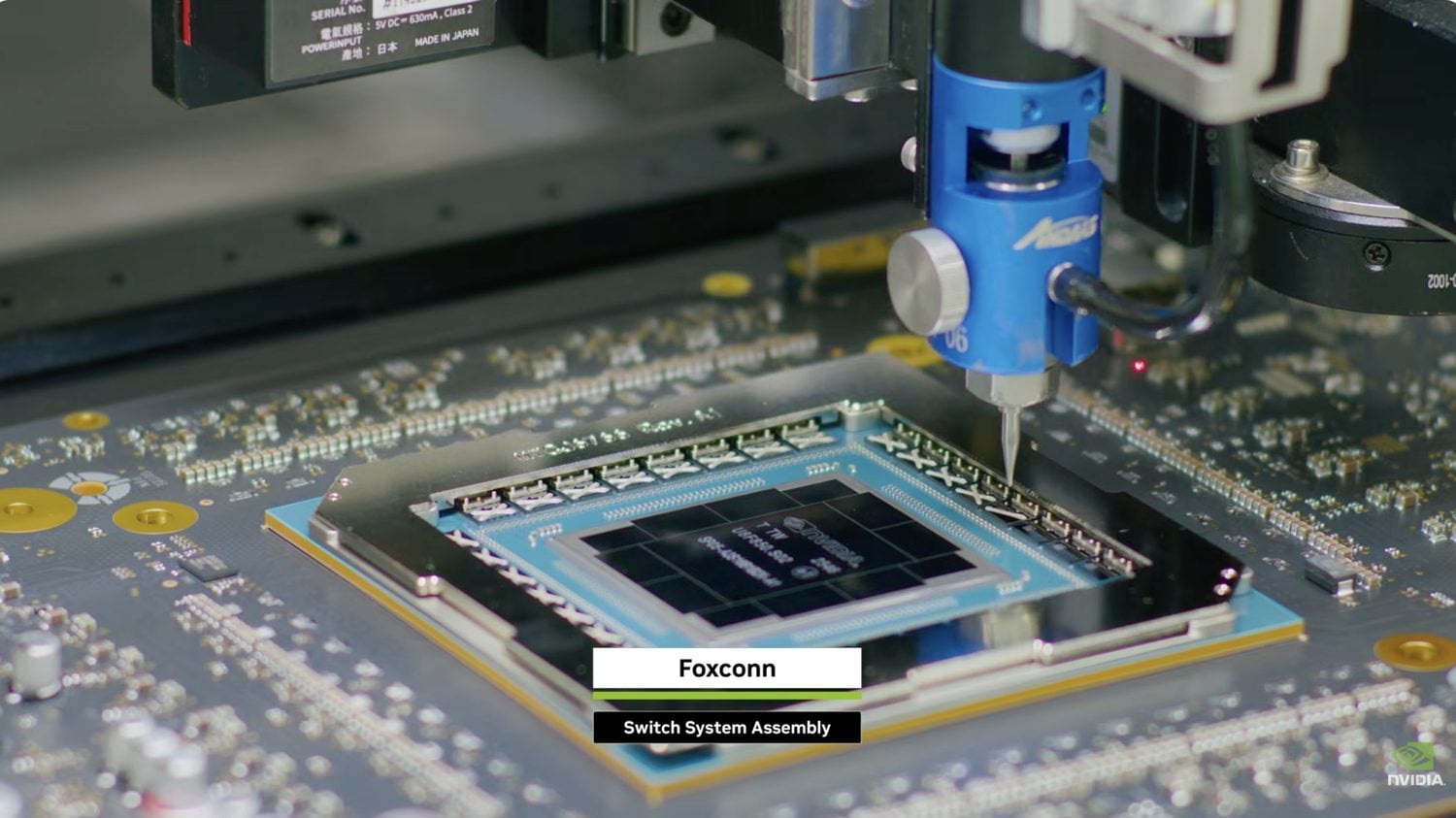
The CPO Supply Chain, Named Stage by Stage
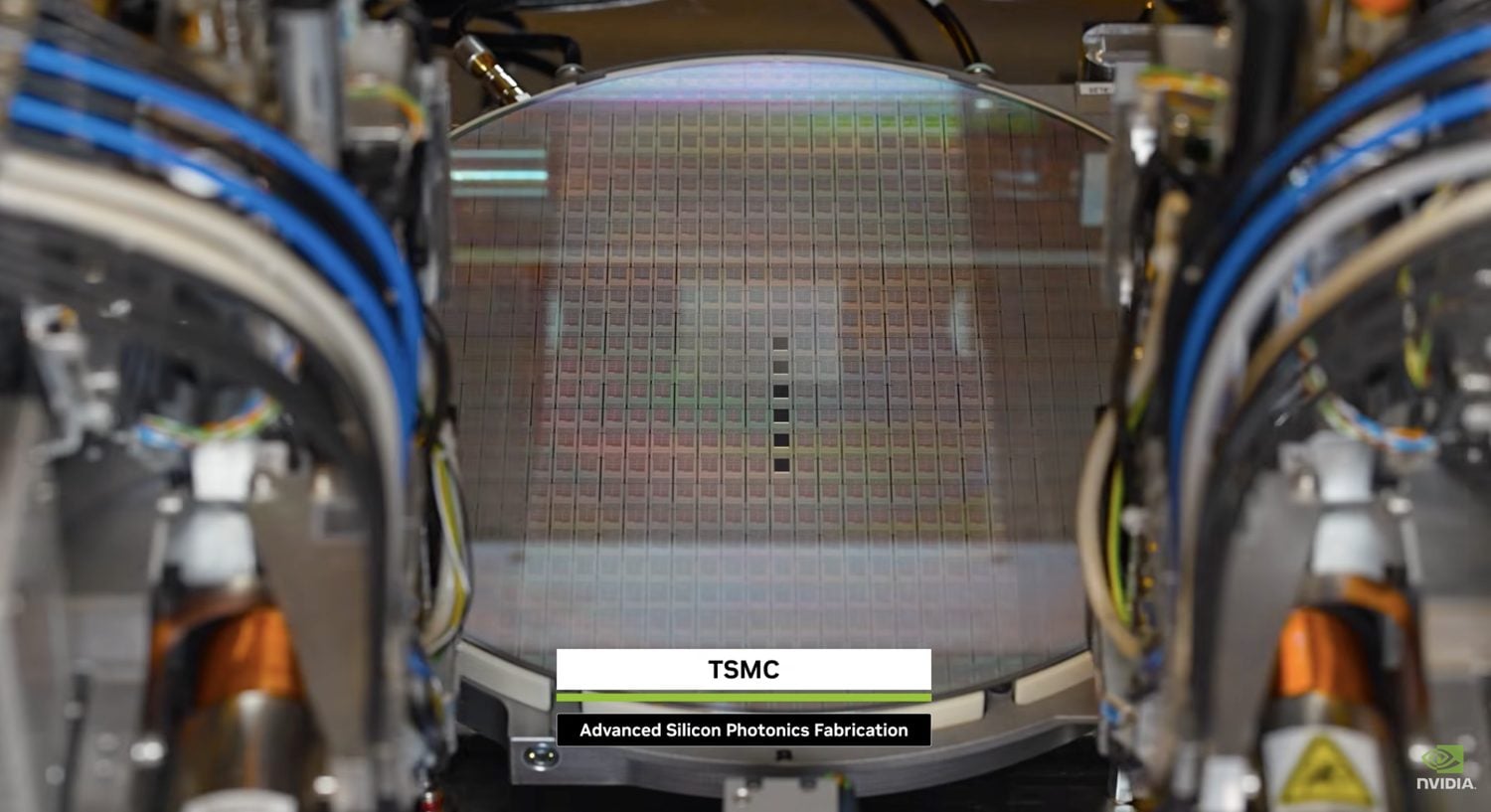
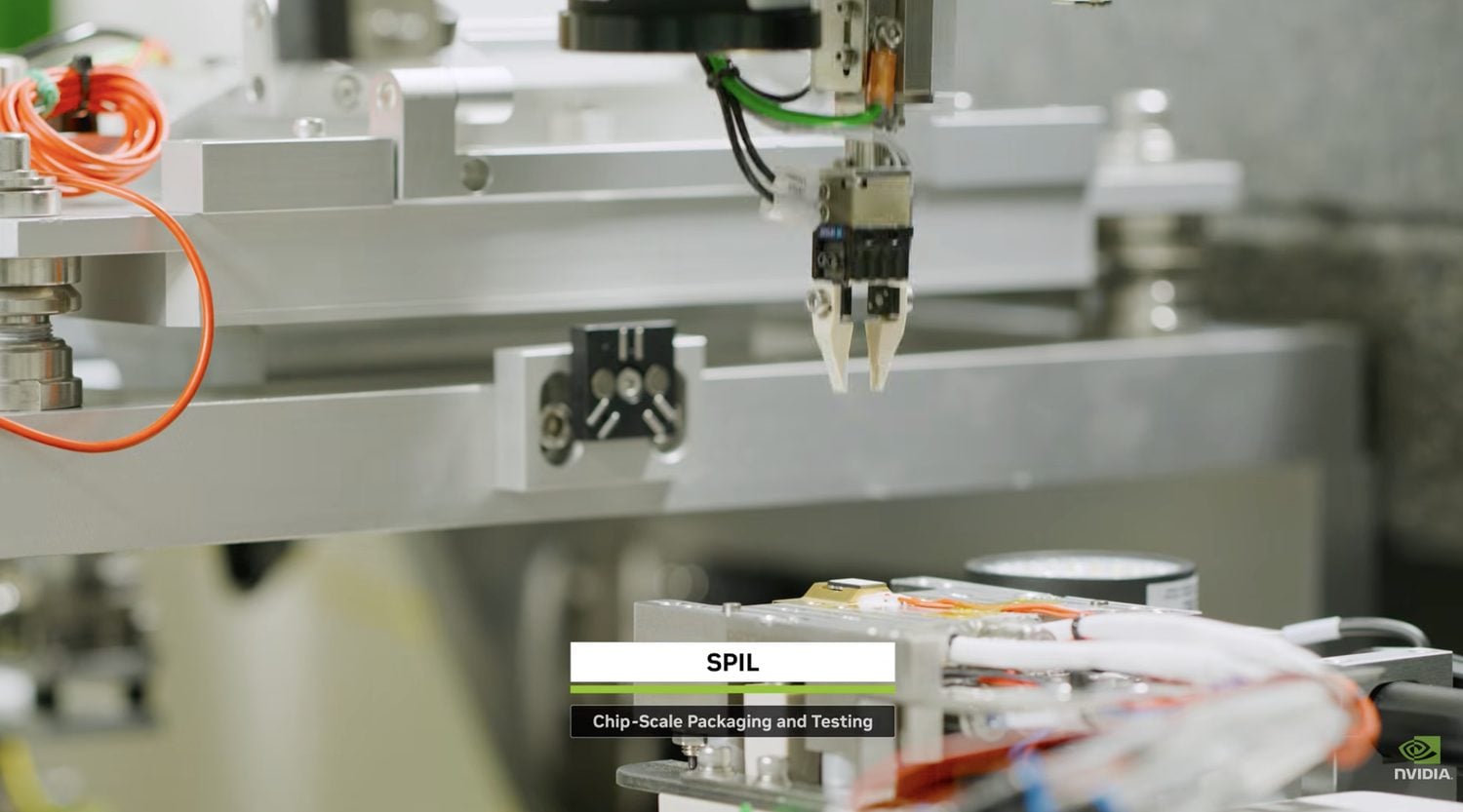
The more unusual disclosure is the manufacturing chain itself, which NVIDIA broke out by stage. TSMC handles silicon photonics fabrication. SPIL performs chip-scale packaging and testing. Lumentum fabricates the laser chips, and TFC Communication builds the laser module subassemblies. Foxconn does the final switch system assembly. Co-packaged optics has spent years as a technology that looked good in demonstrations and proved difficult to yield at volume, so a named, five-vendor chain running in production is a concrete signal of maturity.
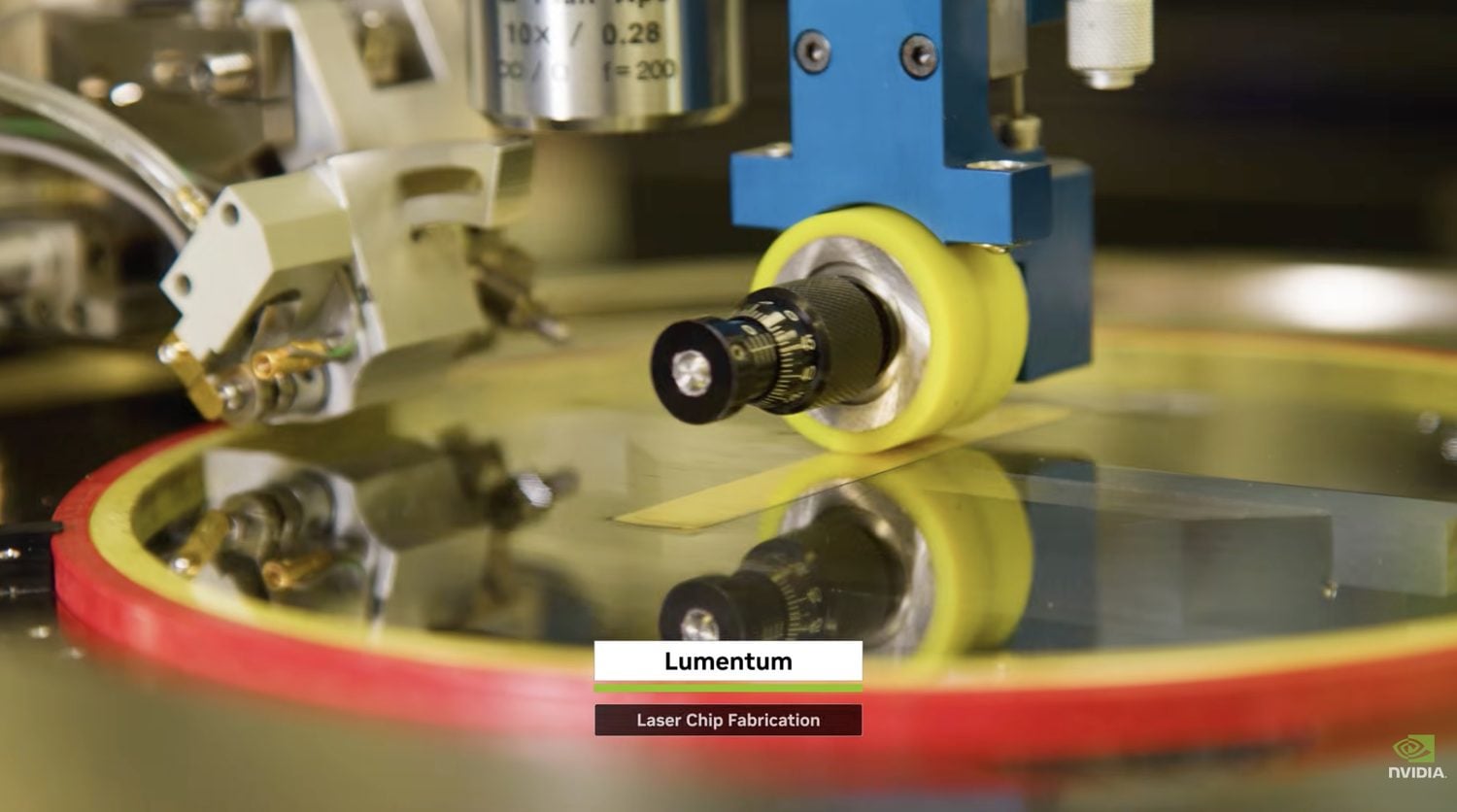
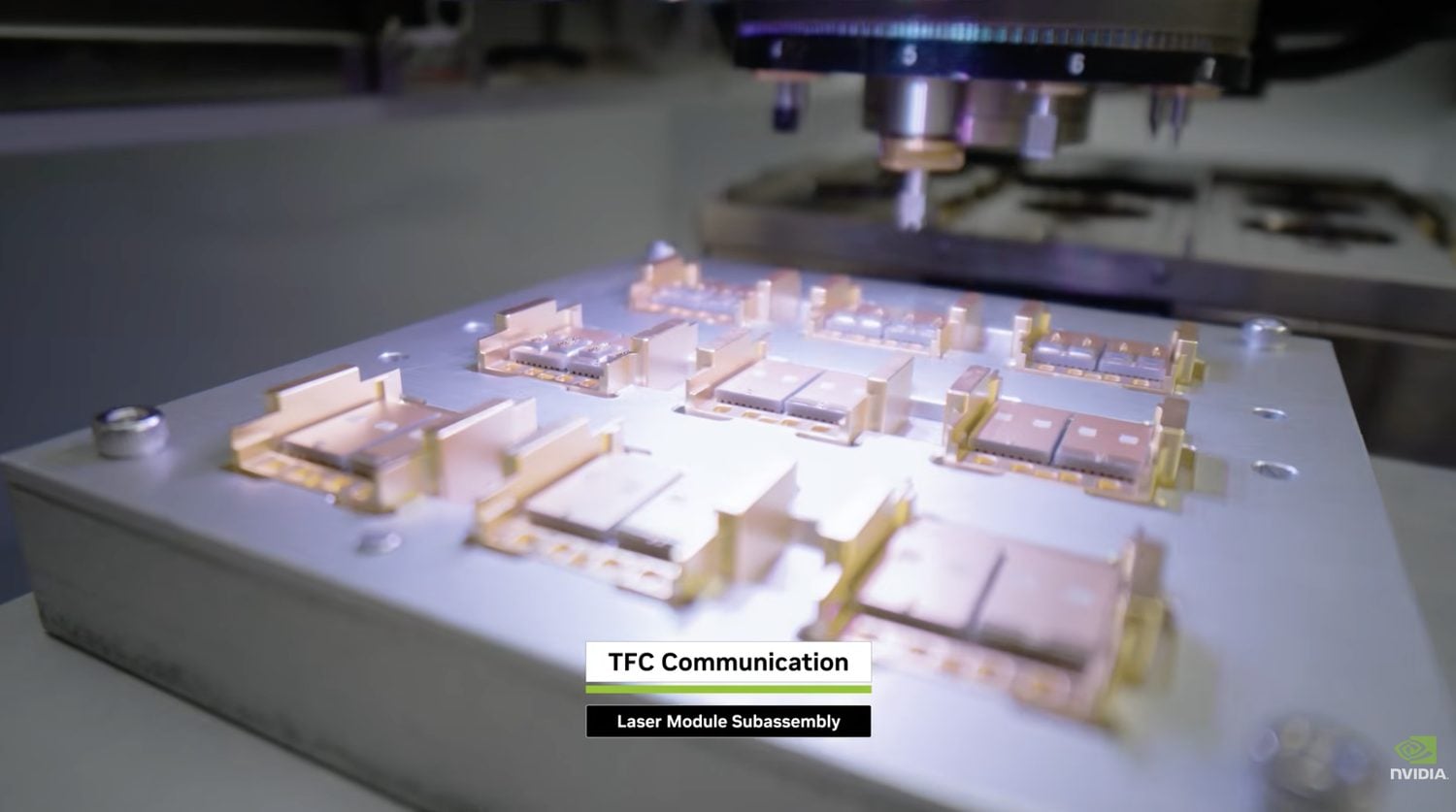
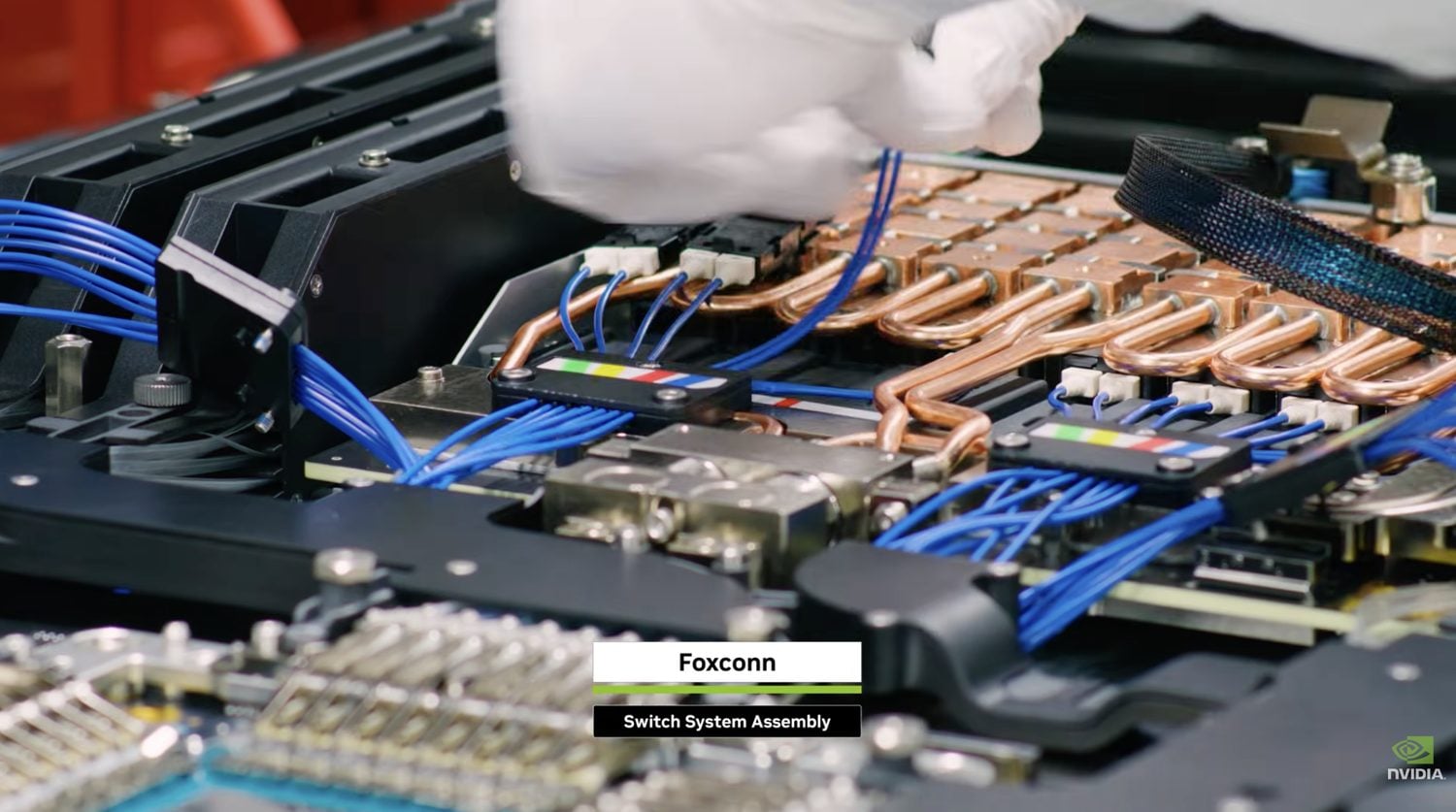
Cloud providers, including CoreWeave, Lambda, Oracle Cloud Infrastructure, Microsoft Azure, IBM Cloud, and Nebius, are among the early adopters integrating the CPO fabric.
Vera Rubin, the Platform Being Networked
The switch exists to feed Vera Rubin, which NVIDIA said at GTC Taipei in late May had entered full-scale manufacturing, with production shipments set to begin this fall. Representing the third generation of NVIDIA MGX rack-scale design, the platform is engineered to deliver up to 10x higher agentic AI throughput at scale compared to the previous-generation Grace Blackwell architecture. Systems manufacturing spans Tier 1 server vendors, including Dell Technologies, HPE, Lenovo, and Supermicro, alongside ASUS, ASRock Rack, Compal, Foxconn, GIGABYTE, Inventec, MSI, Pegatron, Quanta Cloud Technology, Wistron, and Wiwynn. On the storage and infrastructure software side, NVIDIA names Cloudian, DDN, Hitachi Vantara, IBM, MinIO, NetApp, Nutanix, VAST Data, and WEKA among partners in full-scale production on the platform.
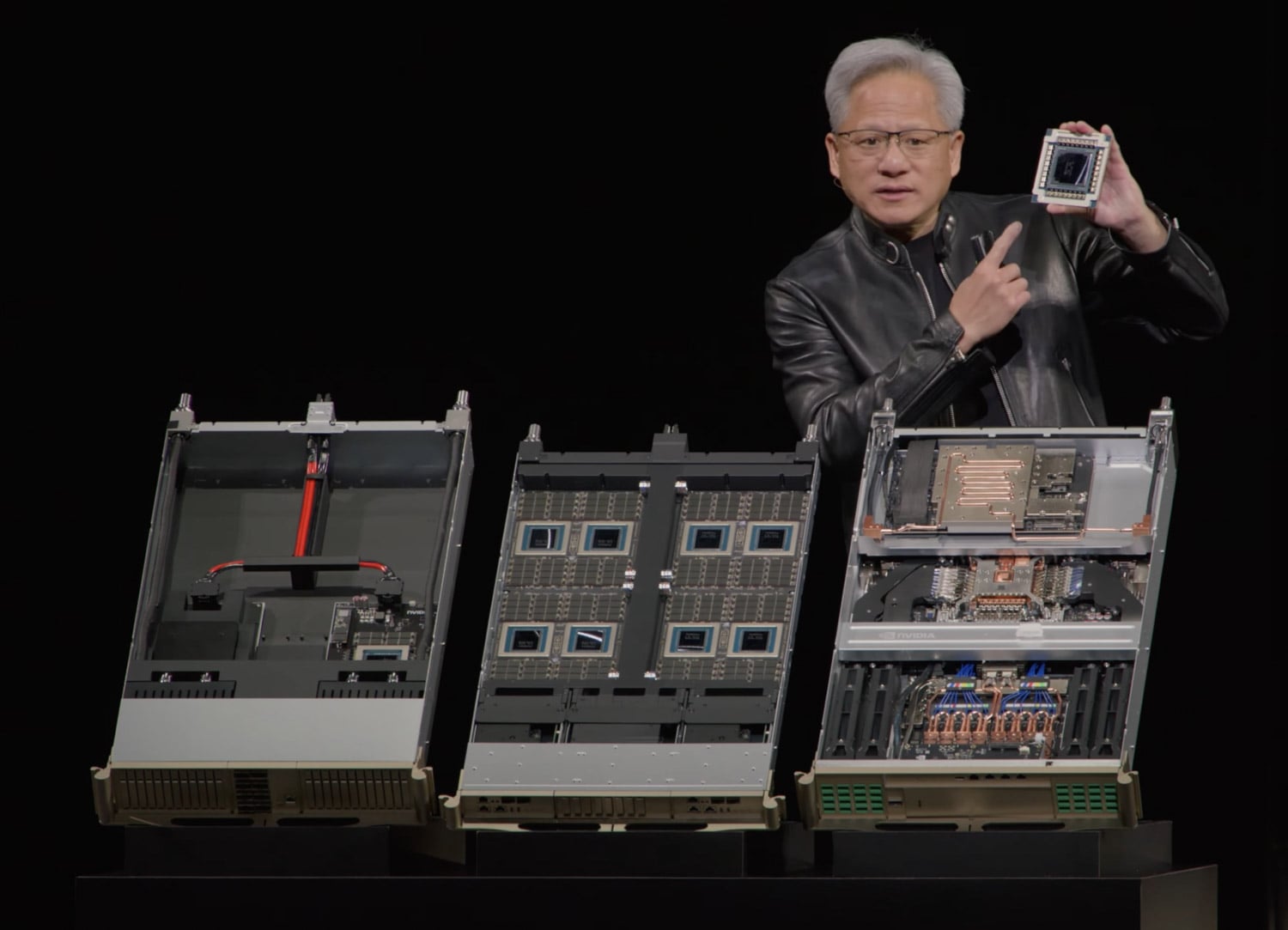
At the rack level, the Vera Rubin NVL72 integrates Vera CPUs, Rubin GPUs, and sixth-generation NVLink networking into a unified compute envelope. To address multi-tenant compliance and enterprise data protection, the architecture incorporates full-stack NVIDIA Confidential Computing. This implementation establishes a rack-scale Trusted Execution Environment (TEE) featuring hardware-level attestation and end-to-end line-rate encryption across high-speed interconnects to prevent physical and firmware-level tampering.
“Agentic AI is a new kind of workload. One prompt can launch a thousand-step journey of reasoning, retrieval, tool use and response generation,” said Jensen Huang, founder and CEO of NVIDIA. “Vera Rubin was built for this moment,” he added, describing it as “an AI factory engine that delivers intelligence at scale, with the performance, efficiency and security needed to power the next industrial revolution.”
BlueField-4 DPU Integration for Multi-Tenant Isolation
The Vera Rubin architecture also incorporates NVIDIA BlueField-4 Data Processing Units (DPUs) to offload infrastructure workloads from primary host processors. Operating at software-defined networking line rates up to 800 Gb/s, BlueField-4 delivers hardware-isolated multi-tenant networking, telemetry, and storage virtualization. Utilizing the BlueField-4 Advanced Secure Trusted Resource Architecture, cluster operators can enforce granular traffic isolation, automate policy enforcement, and manage control planes across large-scale distributed deployments.
With the optics now in volume manufacturing and Rubin shipments slated to start this fall, the practical question shifts from whether the hardware is real to how quickly operators can prepare for it.



 Amazon