

Intel laid out its high-performance computing plans for SC26, with Diamond Rapids, its next-generation Xeon server architecture, at the center. Intel says the platform will scale to 256 performance cores with up to 1.6TB/s of memory bandwidth and up to 1.28GB of last-level cache. The outline came from Jeff McVeigh, vice president and general manager of Data Center Strategic Programs, and it also covers the Intel GPU D-series, HPC software, silicon photonics, and quantum development. Intel gave no launch date for Diamond Rapids.
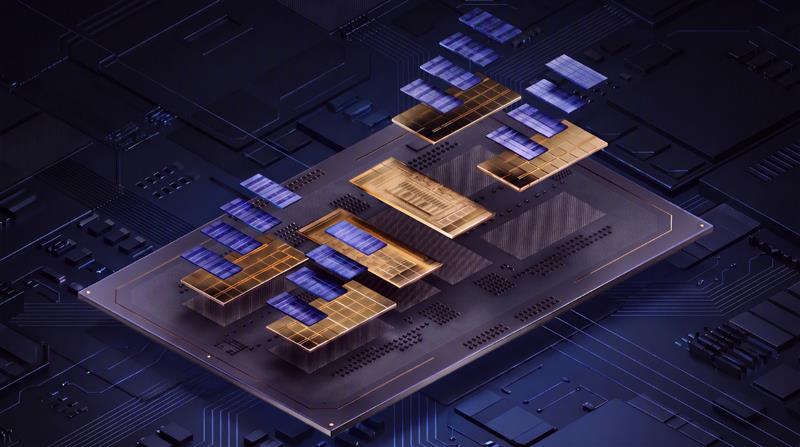
Diamond Rapids CPU Architecture
Intel describes Diamond Rapids, which it detailed at Hot Chips as an 18A-P design, as pairing higher compute density with more memory bandwidth, larger caches, and expanded CPU acceleration. Intel Advanced Performance Extensions (APX) are aimed at per-thread performance, and what Intel calls a unified memory fabric delivers the 1.6TB/s figure. Intel has not said how many memory channels or what memory speed sit behind that number, or whether it applies per socket.
The architecture also supports Intel AVX 10.2 and enhanced Intel Advanced Matrix Extensions (Intel AMX). Intel calls the next-generation Xeon the only x86 server CPU with built-in matrix compute for HPC and AI workloads. For reference on core count, the top AMD EPYC Venice parts we reviewed carry 256 Zen 6c cores per socket.
McVeigh framed the roadmap around mixed systems in which CPUs orchestrate workflows and run parallel communication libraries while accelerators take the AI work, writing that the future of HPC is “open, heterogeneous and balanced.”
Intel GPU D-series and HPC Software
The Intel GPU D-series pairs AI acceleration with double-precision (FP64) compute in an air-cooled PCIe card, with datatype support running from FP4 and MXFP4 through FP64. The Intel-branded GPU D270 carries 160GB of LPDDR5X with 1.5TB/s of memory bandwidth, and partner-designed configurations scale to 480GB. Intel’s argument for research sites centers on memory capacity, since keeping larger working datasets on the card reduces the partitioning and host-to-accelerator transfers that slow scientific workflows, and Intel also pitches the card for always-on AI agents that generate code and launch compute jobs.
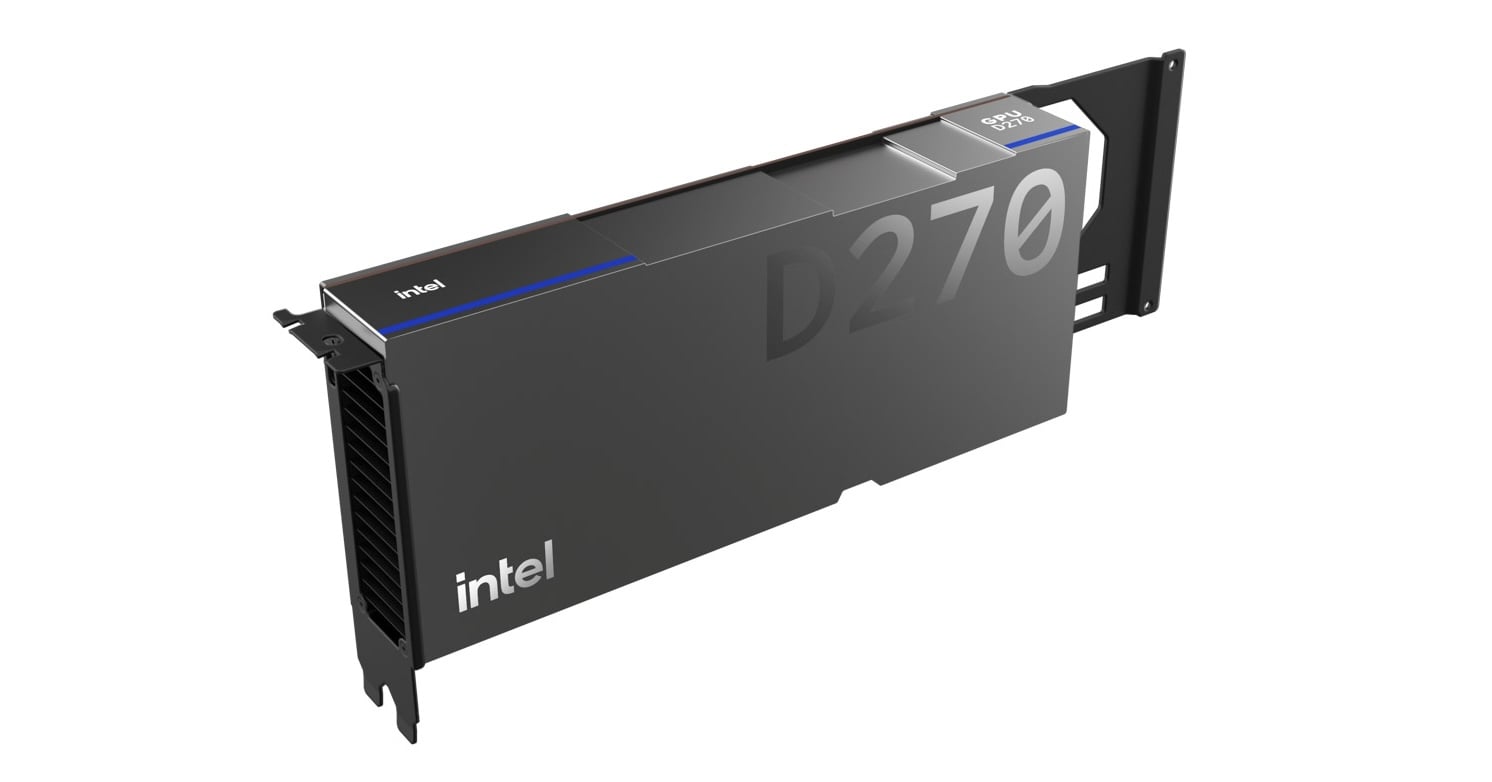
Intel is running two live demos of the GPU D270, the D-series card formerly code-named Crescent Island, at its SC26 booth. The first is a seismic imaging mini-application from Veridien that was ported from HIP and CUDA to SYCL in less than a month, and Intel says 90% of its kernels ran well with no Intel-specific optimization. The second splits an inference pipeline between D270 cards that handle prefill and SambaNova SN50 units that handle decode, with Xeon 6 and Xeon 6+ processors orchestrating.
Intel also published comparisons against NVIDIA’s RTX PRO 6000 Blackwell Server Edition. On FP64 financial workloads, it claims up to 5.9x the throughput on European Monte Carlo, 5.6x on European Black-Scholes, 4.6x on binomial pricing, and 1.92x on American Black-Scholes, with the D270 at 350W and the NVIDIA card at 600W. For inference, Intel claims up to 29% lower latency on Drex v2.0 and 1.12x the output token throughput on Qwen3-30B-A3B at FP8.
These are vendor results on pre-production silicon, and we did not run or audit them. Intel’s financial test configuration lists eight NVIDIA cards against a single D270 and does not say whether the results are normalized per card, and the NVIDIA inference runs used an AWS virtual machine.
On software, Intel says it will keep investing in Intel MPI, Fortran, compiler optimizations, and oneAPI so existing parallel codebases keep running well on mixed CPU and GPU systems. It is also working on upstream integration with AI frameworks, inference runtimes, and deployment environments. The stated goal is for standard models and tools to run on new hardware such as the D-series from the first day it is deployed.
Optical Connectivity and Quantum Development
Intel also pointed to its silicon photonics work, which uses light to move data over longer distances at what the company describes as a fraction of the energy of copper links. Intel did not attach figures or a product timeline to that claim.
On quantum, Intel restated the case for its proposed acquisition of Classiq, which would combine Classiq’s automated quantum algorithm synthesis platform with Intel’s silicon spin-qubit technology and chip manufacturing. Intel has said it expects the deal to close in the first half of 2027, pending regulatory approval.


 Amazon