

Proxmox has released Proxmox Datacenter Manager 1.1, a new update to its centralized management platform for overseeing distributed Proxmox environments. The release adds automated installation workflows, centralized subscription management, unified Ceph monitoring, and broader guest and snapshot management capabilities, and updates the underlying software stack.
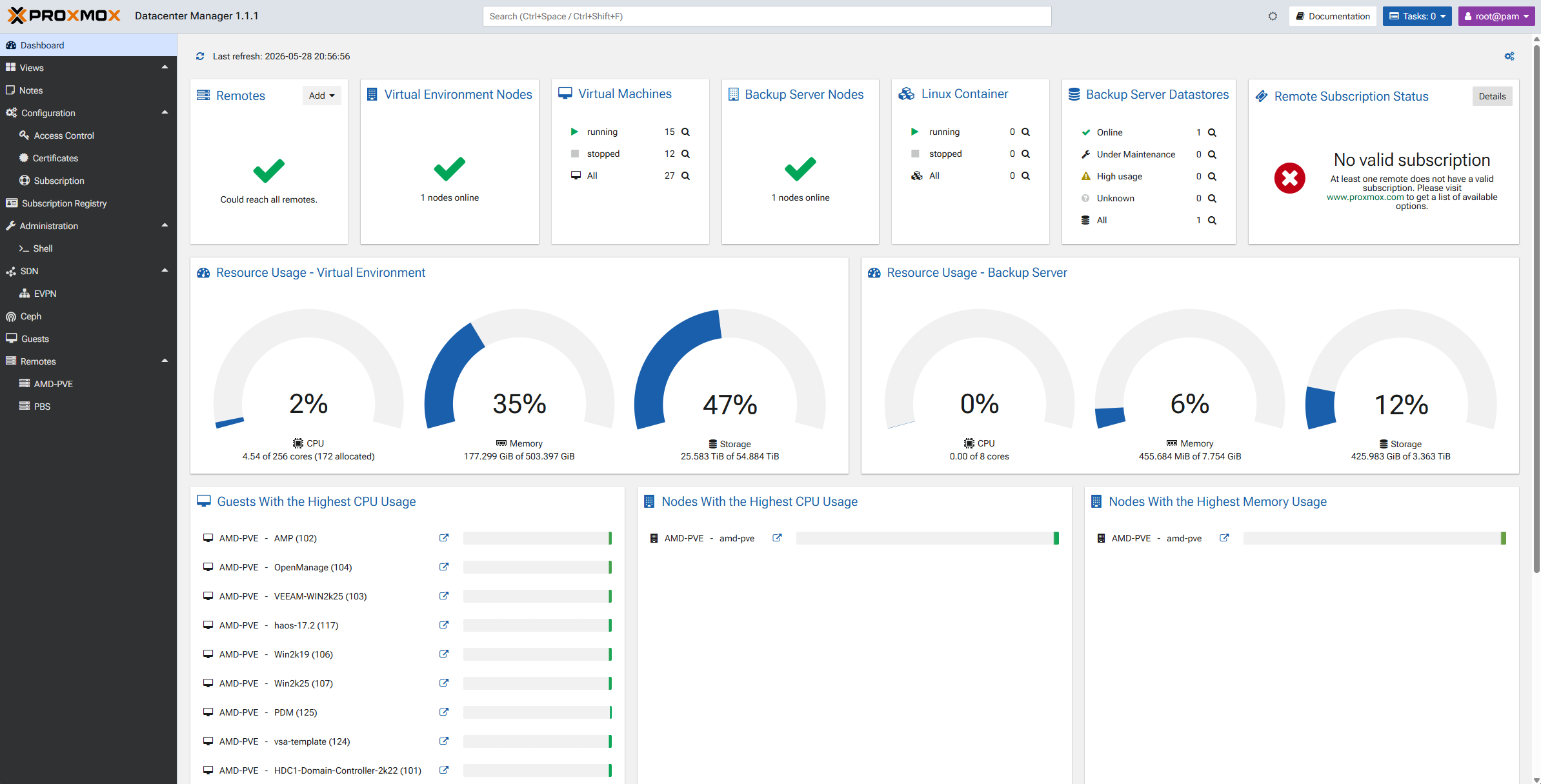
The update is mostly focused on simplifying administration across larger deployments where clusters and infrastructure may be spread across multiple sites. Several of the new additions aim to reduce repetitive setup work while improving visibility into storage, resource usage, and guest operations.
Automated Installation Workflows Added For Provisioning
Version 1.1 introduces integrated, automated installation workflows that enable Proxmox Datacenter Manager to serve as a central configuration server during host provisioning. Administrators can manage predefined answer files centrally and use them for unattended installations across distributed environments.
A new “Automated Installations” tab within the Remotes section provides access to these workflows, while installation progress can be monitored directly through the Datacenter Manager web interface. The provisioning process also includes a token-based security mechanism to ensure that prepared configurations are accessed only by authorized installations.
Subscription Keys Can Now Be Managed Centrally
Managing subscriptions across multiple deployments can become difficult as infrastructure grows, and version 1.1 introduces a centralized subscription registry to address this. Administrators can now maintain a shared pool of subscription keys, assign them to specific remotes, and remove assignments when they are no longer needed.
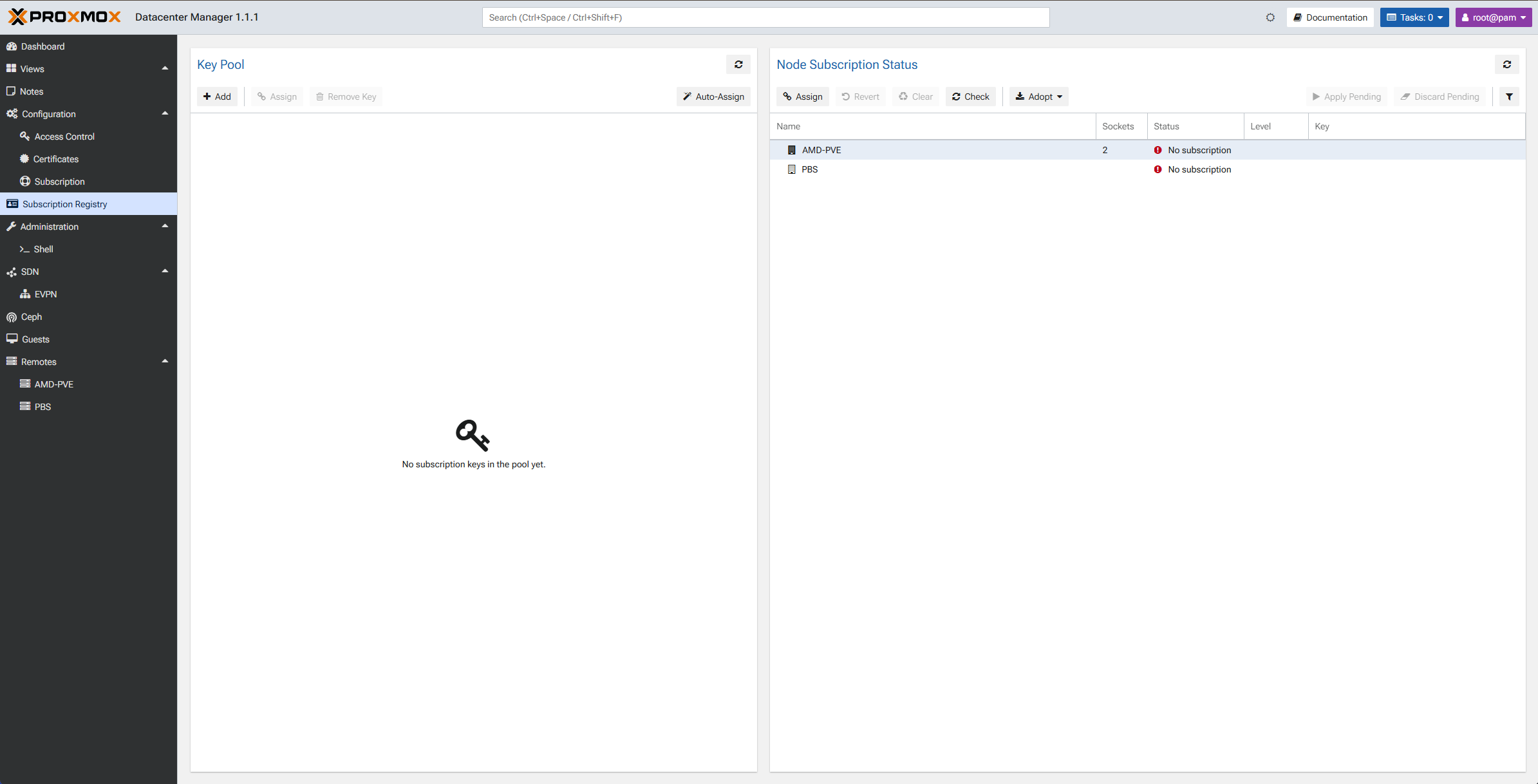
Prepared answer files can also include subscription information, allowing newly provisioned systems to register automatically during installation. This removes another manual step from the deployment process, particularly in larger environments where hosts are added regularly.
Unified Ceph Monitoring Expands Infrastructure Visibility
The release also introduces native monitoring for connected Ceph clusters, giving administrators a consolidated view of storage health and activity across distributed deployments. The unified dashboard displays information on cluster capacity, performance, and overall health from a single interface.
More detailed monitoring is available for Object Storage Daemons, monitors, managers, Metadata Servers, storage pools, CephFS, and cluster flags. This broader visibility is particularly relevant for organizations running hyper-converged infrastructure built around Proxmox VE and Ceph storage.
New Dashboard Widgets Improve Infrastructure Visualization
Several new dashboard widgets have also been added to improve the visualization of distributed environments. A world map widget can display the physical locations of connected remotes, using location data defined through Proxmox VE or Proxmox Backup Server configuration settings.
Additional gauge-based widgets provide at-a-glance views for CPU, memory, and storage utilization. The platform now also collects local metrics for the Datacenter Manager host itself, displaying resource consumption through integrated Round-Robin Database graphs on the node status panel.
Central Guest And Snapshot Management Expanded
Version 1.1 also marks an early step toward broader centralized guest management. Administrators can now view QEMU virtual machines and LXC containers across connected remotes through a unified interface, either in sortable tables or tree-based layouts grouped by remote. Text filtering is included to help locate individual guests more quickly.
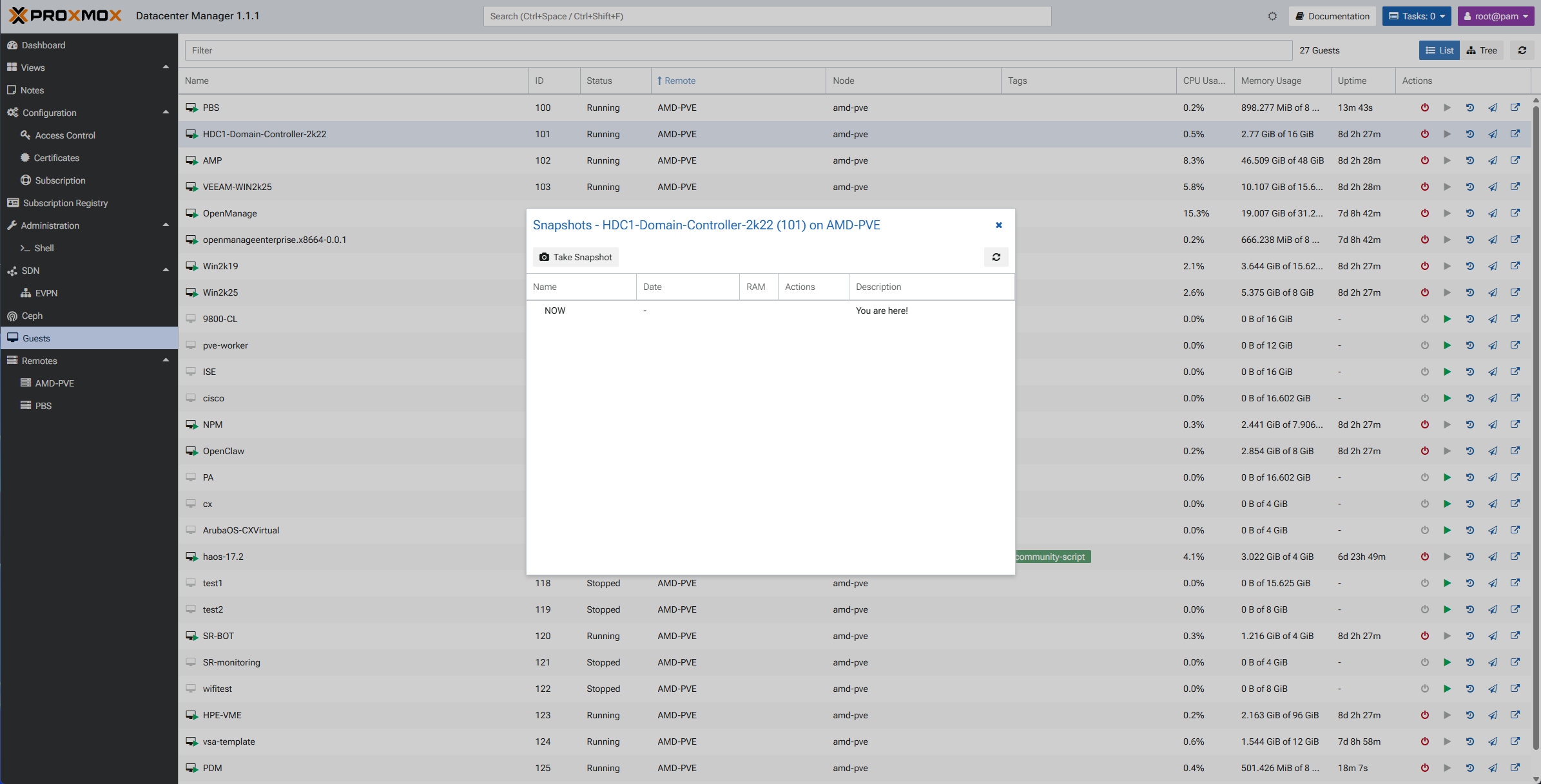
Snapshot management has also been integrated into the same interface, as administrators can view snapshots in parent-child trees and create, roll back, and delete snapshots, as well as edit snapshot descriptions, directly from the central view. Moreover, the update introduces a Resume action for paused or suspended QEMU virtual machines alongside existing power controls. Proxmox notes that this is the initial phase of centralized guest orchestration, with more management features expected in later updates.
Updated Software Stack and Availability
Proxmox Datacenter Manager 1.1 is based on Debian 13.5 “Trixie” and uses Linux kernel 7.0 as the stable default alongside ZFS 2.4. The updated stack is intended to provide a current open-source foundation for centralized infrastructure management and day-to-day operations.
The platform is available as open-source software and can be installed from a full ISO image for bare-metal deployments. Existing installations can be upgraded through the standard APT package management system, and the software can also be installed on top of an existing Debian setup. The project continues to be released under the GNU AGPLv3 license.
Customers with active Enterprise support plans for their managed Proxmox Virtual Environment and Proxmox Backup Server remotes also receive access to Datacenter Manager updates and support without requiring a separate subscription key.


 Amazon