

Alongside its Groq 3 LPX news at Hot Chips 2026, NVIDIA announced that SpaceXAI will deploy NVIDIA Vera CPUs to accelerate its next generation of agentic AI applications. The company also plans to expand the infrastructure behind Grok on the Vera Rubin platform as it scales toward gigawatts of capacity, and to extend that architecture into orbit with a first-generation Starmind AI satellite based on an optimized Vera Rubin NVL72 system.
The framing is worth noting because it is a CPU story in a week dominated by accelerators. NVIDIA argues that agentic applications lean on the CPU more than conventional inference does, since agents spend their time orchestrating tools, executing code, processing data, and running simulations between model calls. Starving that work slows the agent loop and leaves GPUs waiting.
Vera, the CPU Built for Agents
NVIDIA describes Vera as the first CPU built for AI agents, aimed at the CPU-intensive work surrounding model inference. The company lists 88 NVIDIA-designed Olympus cores, NVIDIA Spatial Multithreading, and high-bandwidth LPDDR5X memory delivering up to 1.2TB/s. NVIDIA claims up to 1.8x faster task completion than x86 CPUs across agentic AI, reinforcement learning, and data processing workloads, a vendor figure that we’re anxious to validate.
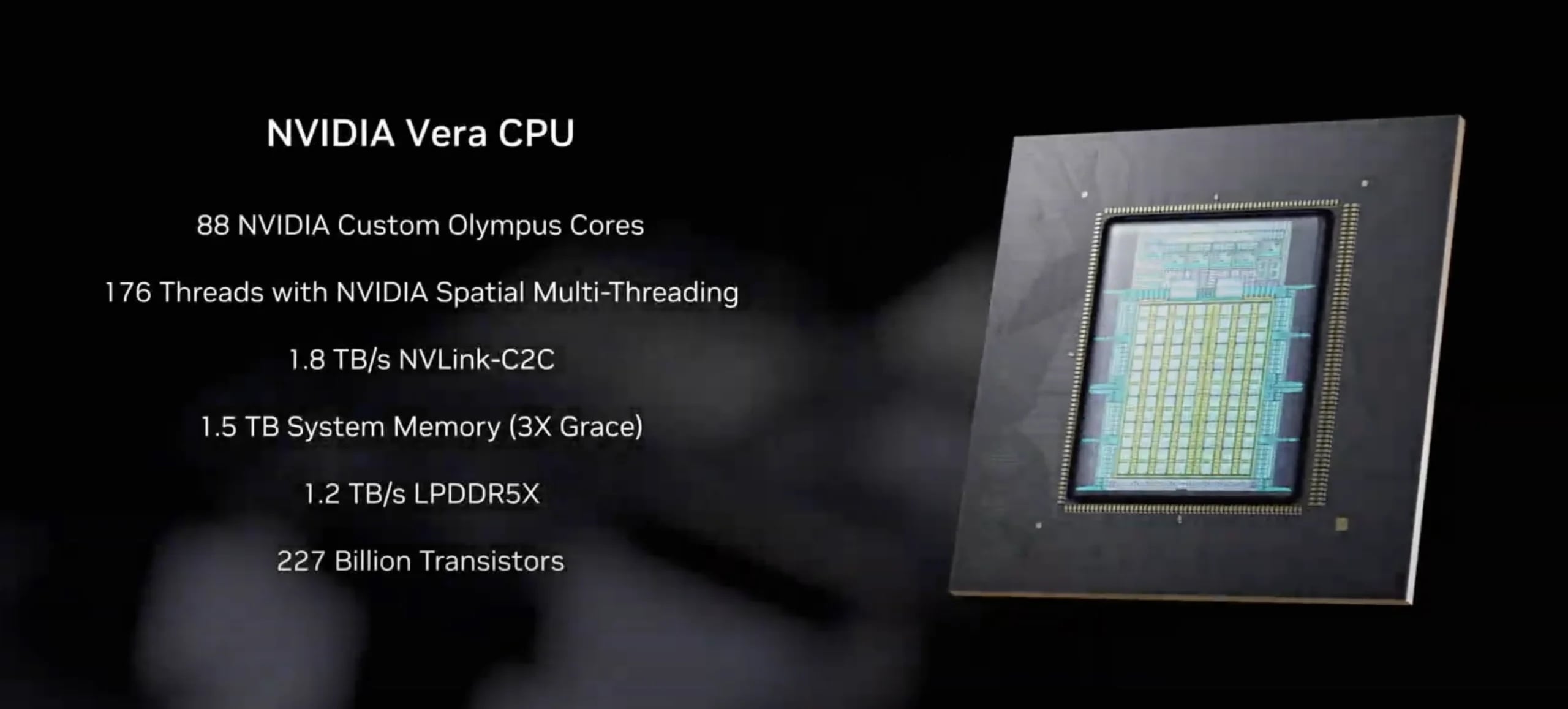
The specifications track what NVIDIA showed when it introduced the platform, where Vera was detailed with 176 threads, 1.8TB/s of NVLink-C2C bandwidth, 1.5TB of system memory, and 227 billion transistors.
“Agentic AI requires a new kind of computing system, one built not only to generate answers, but to take action,” said Ian Buck, vice president of hyperscale and high-performance computing at NVIDIA. “Vera gives AI agents the CPU performance to act in real time, executing code, processing data and coordinating complex tasks. SpaceXAI is taking this architecture from massive AI factories to the next frontier of computing in orbit.”
Scaling Grok on Vera Rubin
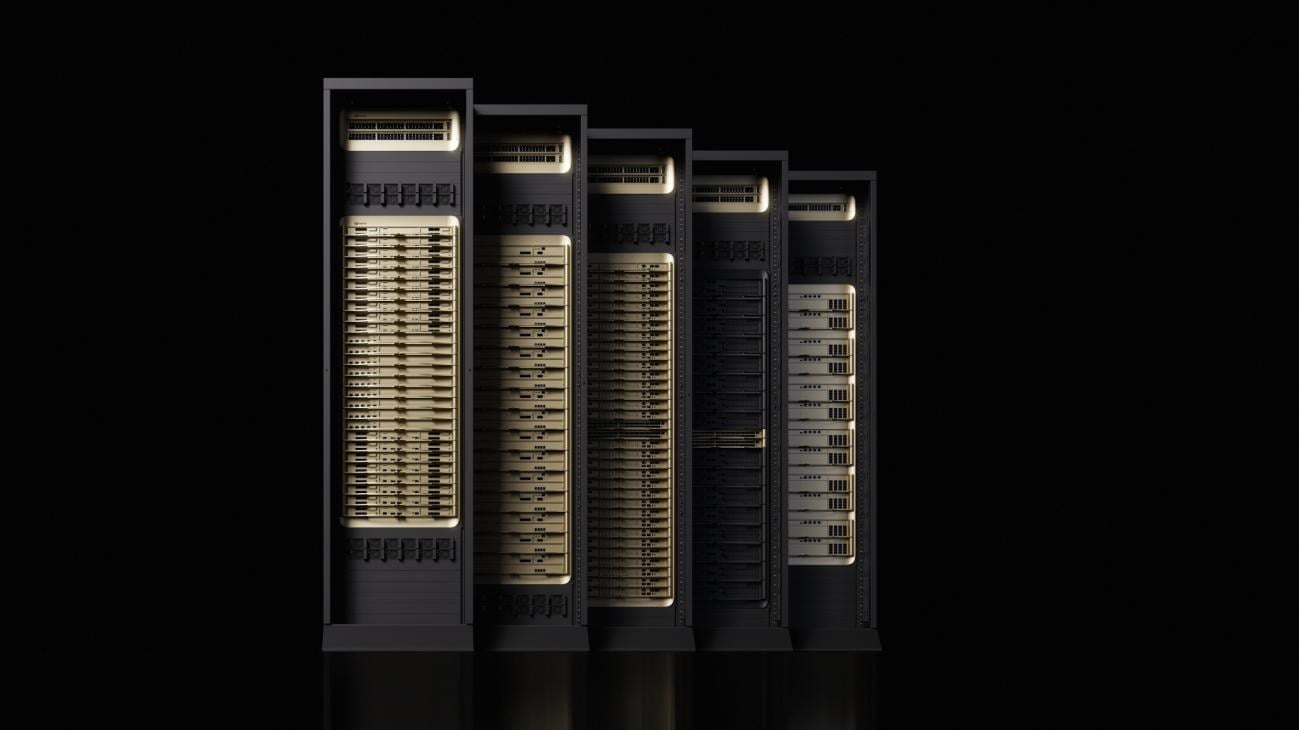
SpaceXAI plans to build the infrastructure behind Grok on Vera Rubin, which NVIDIA codesigns across compute, networking, and software rather than shipping as discrete parts. That stack combines NVLink, Spectrum-X Ethernet, and BlueField data processing, with NVIDIA positioning the integration as the route to lower cost per token at scale.
“Vera gives us the CPU performance and memory bandwidth to run enormous amounts of orchestration, code and data processing while keeping GPUs doing what they do best,” said Mike Nicolls, president of SpaceXAI. “That means higher-performance AI agents and more useful work from every watt of compute.”
From AI Factories to Orbit
The more speculative half of the announcement is orbital. SpaceXAI is developing AI computing infrastructure for space, where power, thermal management, bandwidth, reliability, and physical integration impose constraints that have little in common with those of a terrestrial data center. Its planned first-generation Starmind satellite will be based on an optimized Vera Rubin NVL72 rack-scale system, with NVIDIA and SpaceXAI adapting the design to those conditions while keeping a common architecture and software ecosystem.
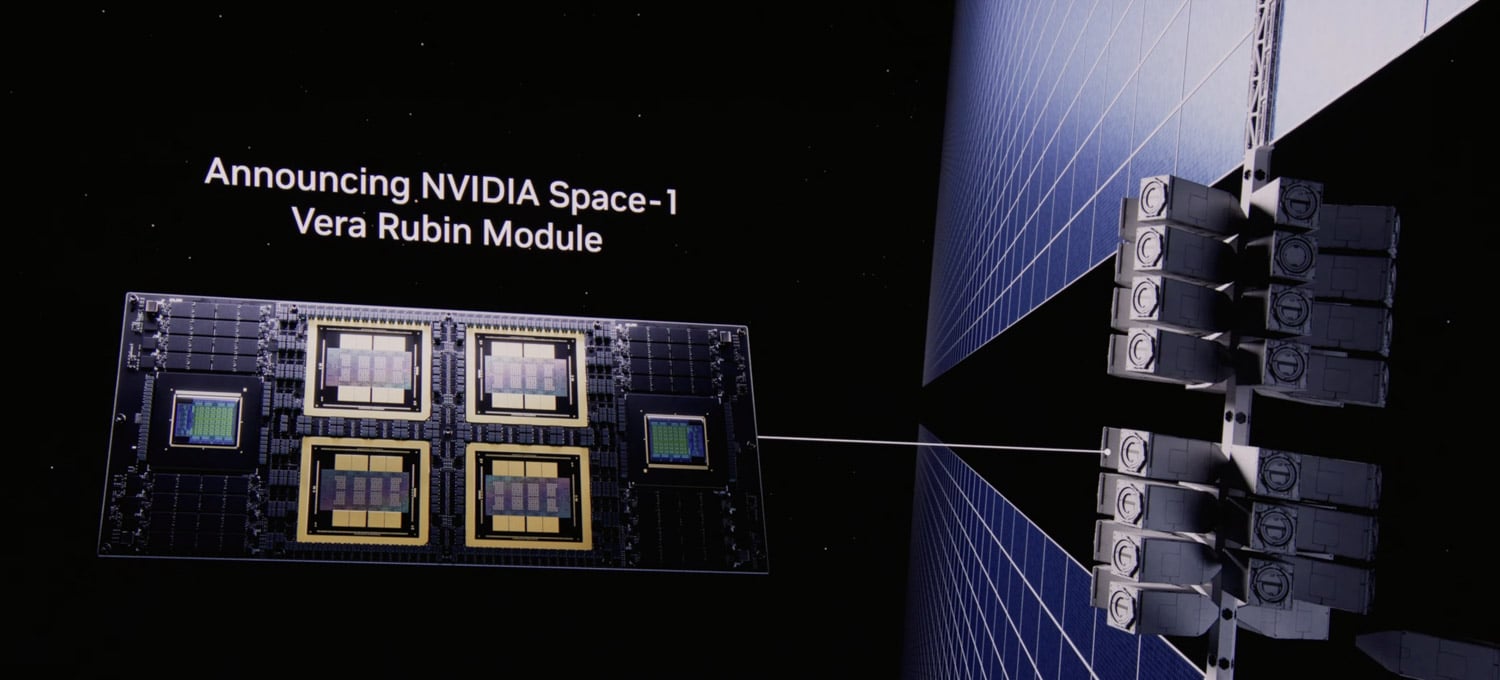
NVIDIA has been building toward this: at GTC 2026, it showed a Space-1 Vera Rubin module aimed at orbital deployment, pictured above. Note that no timeline, launch date, or capacity figure accompanies the Starmind plan, and NVIDIA files the whole payload under forward-looking statements.



 Amazon