

At ISC High Performance 2026 in Hamburg, VDURA is showcasing three major platform updates designed to improve storage operations and data pipeline performance for AI and HPC environments. The company unveiled a next-generation multi-tenant control plane, enhanced S3 performance capabilities, and native S3 object tagging support, all scheduled for general availability in the second half of 2026.
The updates target organizations that manage large-scale AI training, inference, and scientific computing workloads, where operational simplicity and sustained storage performance are critical.
New Control Plane Targets Multi-Tenant AI and HPC Deployments
VDURA’s next-generation control plane introduces a redesigned management experience focused on multi-tenant environments. The platform adds a modernized management interface and a simplified tenant administration model, allowing platform administrators and tenant operators to manage storage resources from a centralized dashboard.
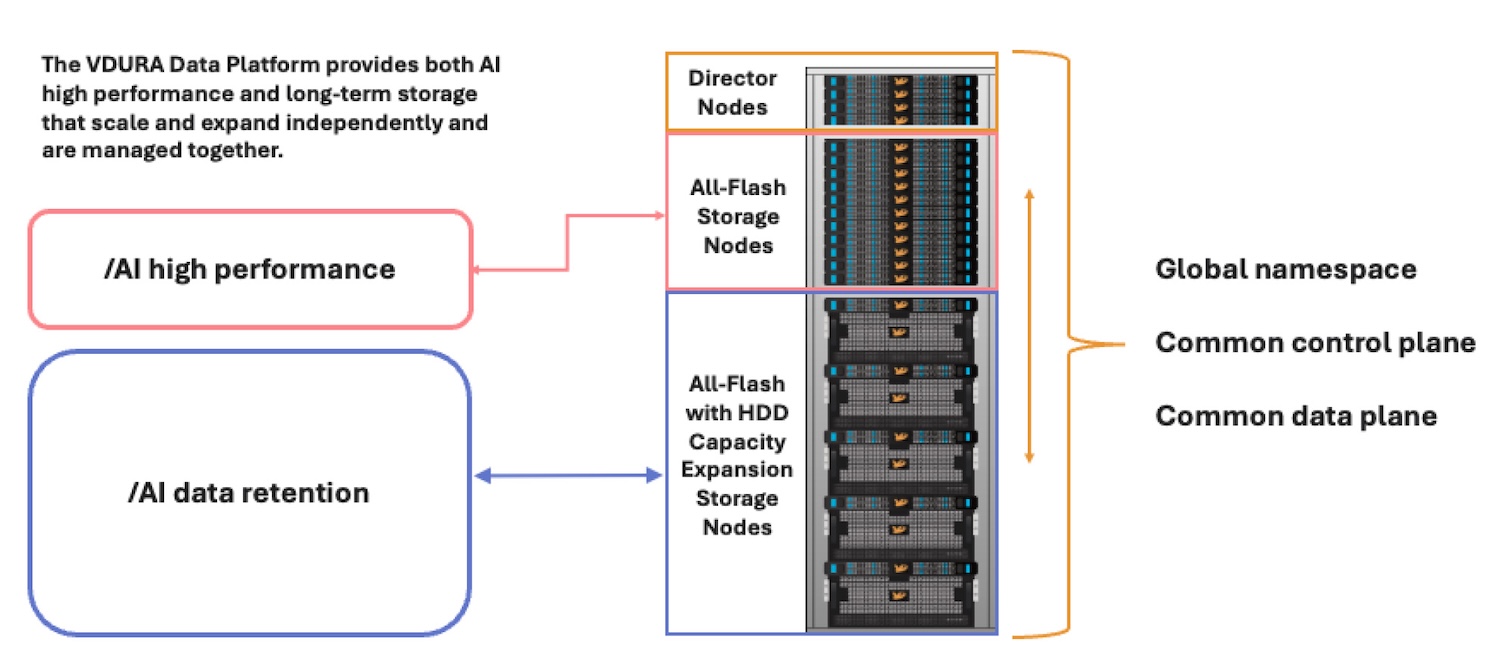
The release also includes a REST API for key platform operations, providing integration points for automation frameworks, orchestration tools, and operational workflows. Together, the interface and API are intended to reduce management complexity while maintaining the level of control required by enterprise, cloud, and research deployments.
S3 Performance Optimized for AI Data Pipelines
VDURA is also delivering a series of S3 performance enhancements aimed at cloud-native AI workflows. The company said the updates are designed to sustain high throughput across data-intensive operations such as model checkpointing, inference serving, and large-scale dataset ingestion.
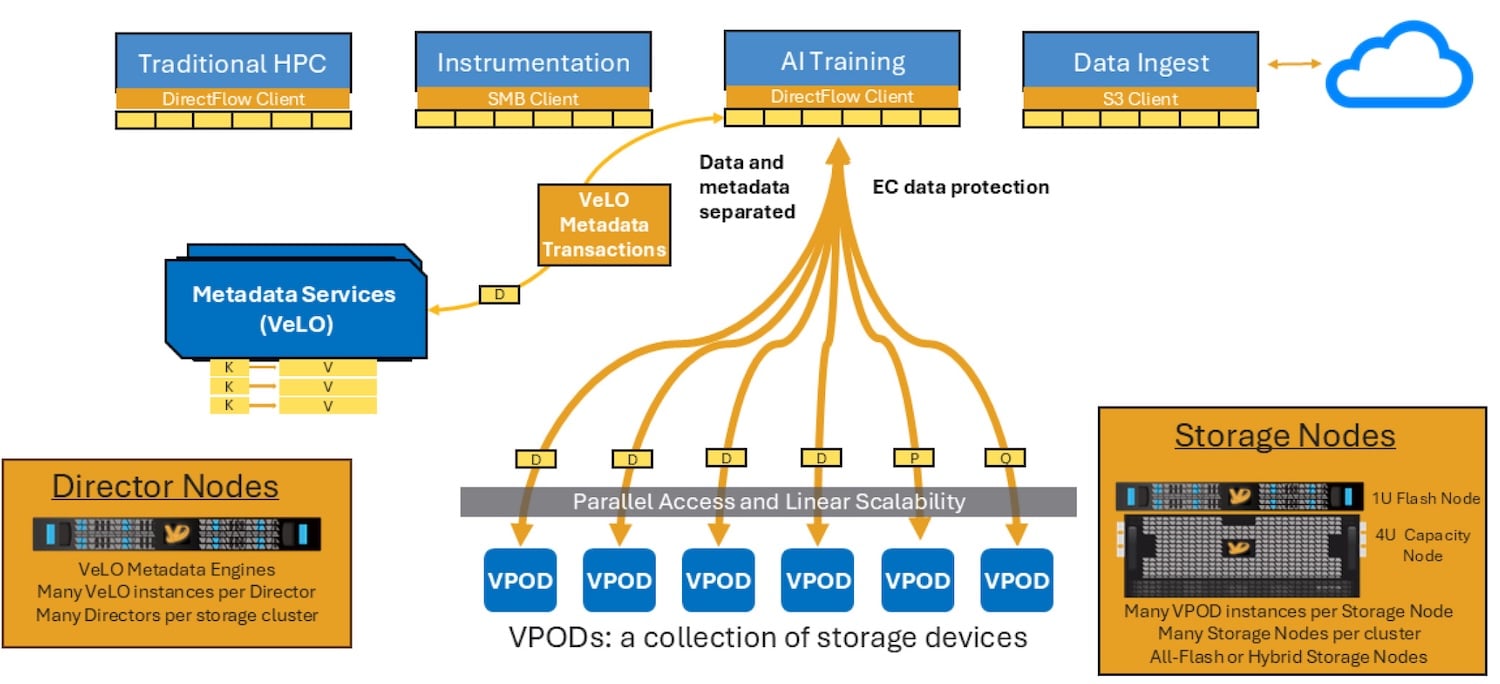
The improvements focus on reducing latency for S3-native operations while increasing aggregate throughput across concurrent read and write workloads. As AI environments continue to scale in both dataset size and user concurrency, maintaining consistent object storage performance has become increasingly important for minimizing pipeline bottlenecks.
Native S3 Object Tagging Adds Metadata-Based Data Management
Complementing the performance updates, VDURA is introducing native S3 object tagging support. The capability allows organizations to associate metadata with stored objects, creating a framework for policy-driven data management and governance.

With object tagging, administrators can implement lifecycle policies, automate tiering workflows, and apply more granular access controls across datasets, model artifacts, and scientific research repositories. For organizations operating petabyte-scale object storage environments, metadata-driven management can help streamline governance and data lifecycle processes without requiring changes to application workflows.
Customer-Driven Enhancements
“With these new capabilities, we’re focused on making VDURA more powerful and easier to operate at every level of the organization,” said Chris Girard, Vice President of Product Management at VDURA. “The new management interface brings clarity and control to the people running VDURA day-to-day, while our expanded S3 capabilities give data engineers and AI practitioners the tools to build more sophisticated, automated data pipelines. These are the operational and integration capabilities our customers have been asking for.”
Availability
The next-generation control plane, S3 performance enhancements, and native S3 tagging capabilities are expected to become generally available during the second half of 2026 for all V5000-class systems. Existing customers will be able to deploy the new capabilities through an in-place online software update.


 Amazon