

At the Mistral AI NOW Summit, VAST Data outlined its partnership with Mistral AI and Mistral Compute, detailing a joint effort to deploy NVIDIA-accelerated AI factories in Europe. The collaboration aligns three core layers required for production AI: NVIDIA accelerated compute, Mistral’s frontier models, and the VAST AI Operating System as the unified data platform.
At the center of the deployment is a large-scale implementation of NVIDIA GB300 NVL72 systems, representing one of the highest-density concentrations of this architecture in Europe. Mistral Compute will operate the infrastructure as part of its AI cloud platform, while VAST provides the data layer that manages data access, movement, governance, and performance across the environment.
Data Platform for Production AI Workloads
VAST positions its AI Operating System as the foundational data layer for AI factories, designed to support end-to-end workflows without the fragmentation typically seen in multi-system pipelines. Within the Mistral Compute environment, the platform provides a shared data architecture spanning training, inference, retrieval, and enterprise deployment. This eliminates the need for duplicated datasets and reduces operational overhead associated with siloed storage and data movement.
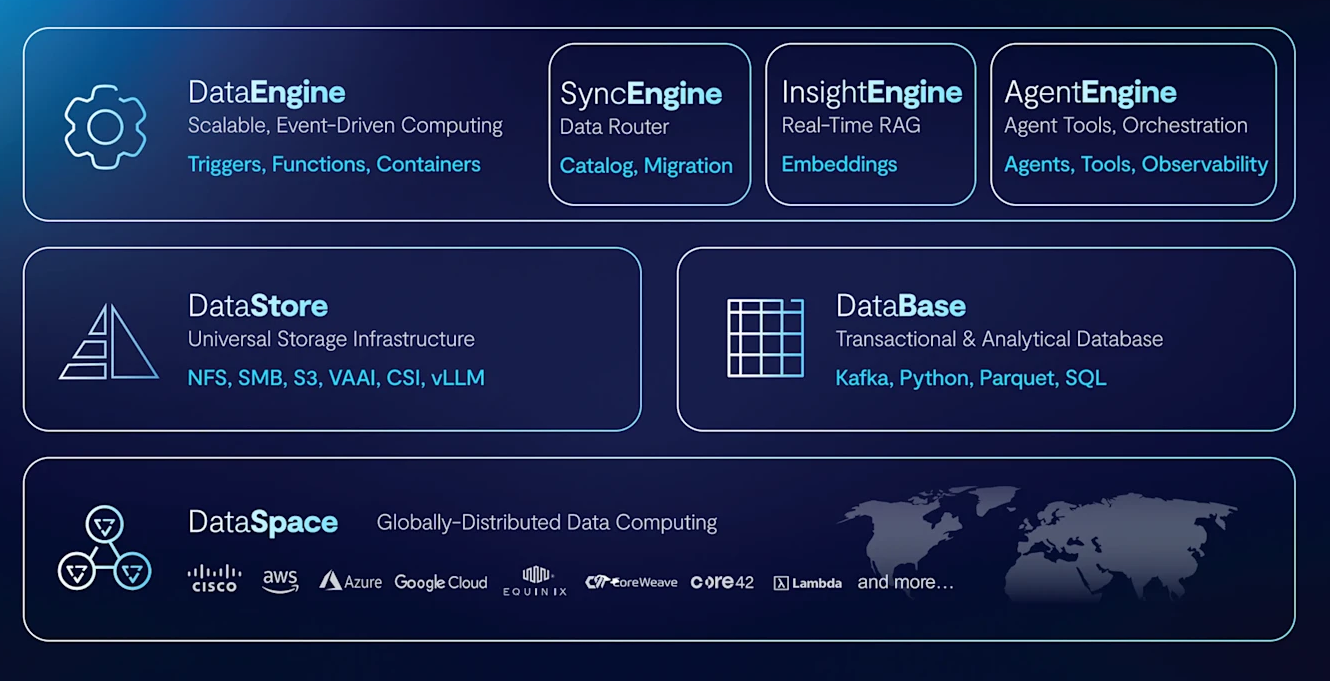
The platform is built to handle the full range of data types and runtime states required by modern AI workloads. This includes structured and unstructured data such as files and tables, as well as vectors, key-value cache, event streams, and persistent agent memory. These capabilities are delivered across distributed environments, enabling consistent performance and access regardless of location.
Extending Across Research, Cloud, and Enterprise
The partnership extends beyond a single deployment and reflects a broader integration across Mistral’s AI lifecycle. VAST is already deployed in AI cloud environments used by Mistral AI for model training and research, supporting the development and operation of its own models, including Voxtral, Ministral, and Codestral. Through VAST DataSpace, Mistral teams can operate across multiple cloud environments using a unified namespace, avoiding the need to redesign data pipelines when shifting workloads.
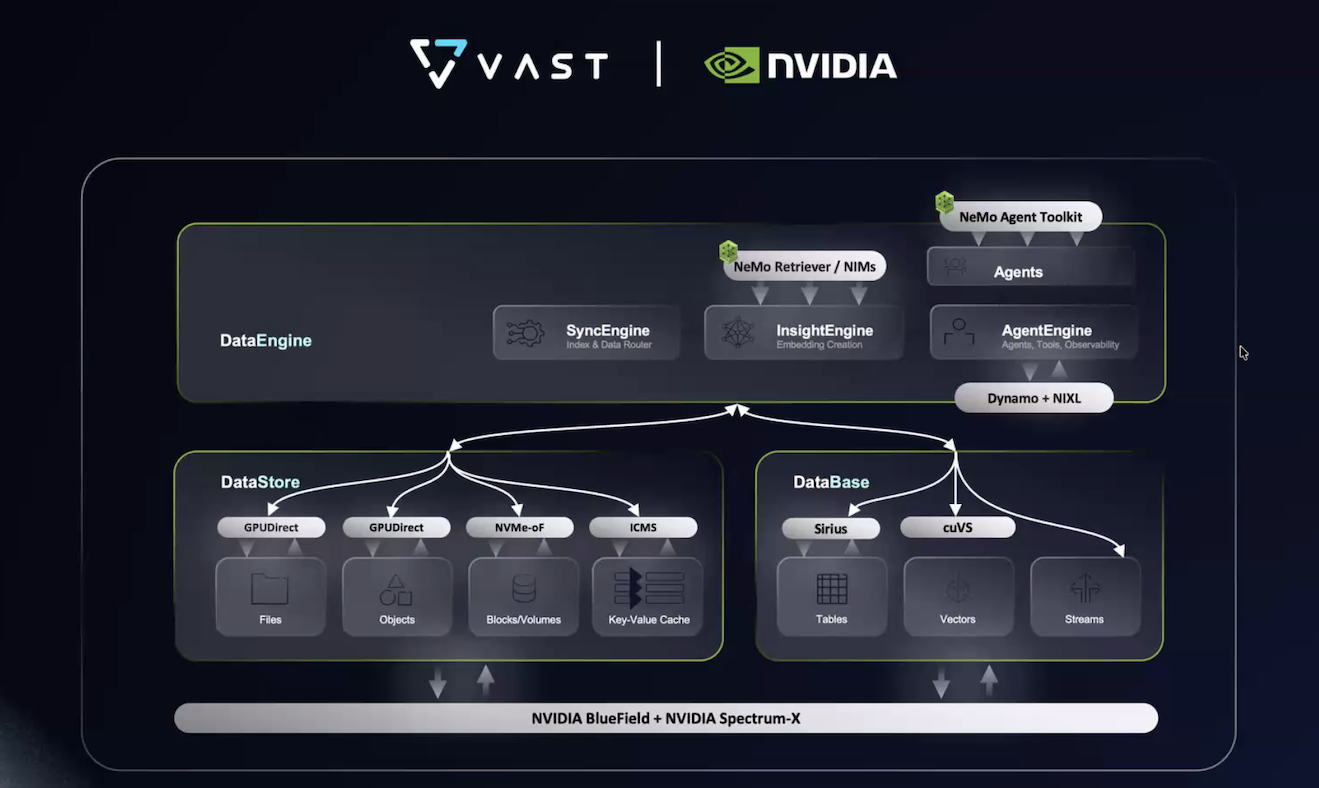
Mistral Compute, now an NVIDIA Cloud Partner, has adopted the VAST AI Operating System as its core data platform for its managed AI cloud services. The system is currently in production, supporting both internal Mistral workloads and customer-facing deployments. The addition of GB300 NVL72 infrastructure extends this environment to support higher-scale AI factory operations.
Supporting Enterprise AI and Data Control
As Mistral brings its models into enterprise environments, the requirement shifts toward integrating models with enterprise data while maintaining performance and governance. VAST provides a common operating layer that connects models to enterprise datasets, enabling consistent data access and control across training and inference workflows.
The architecture is designed to support requirements around data locality, governance, and isolation, which are increasingly critical for European enterprises and public-sector organizations. By maintaining a unified data foundation across research, cloud, and enterprise deployments, the platform enables organizations to retain control over how data is stored, accessed, and used in AI workflows.
Positioning for European AI Sovereignty
The deployment reflects a broader push toward regional AI infrastructure and data sovereignty. With compute, models, and data platform integrated within a European-operated environment, the solution provides a framework for building and running advanced AI systems with localized control.
In this model, the data layer becomes the primary control point for AI operations, governing how data flows between training, inference, and production systems. VAST’s role as the unified data platform positions it as a key component in enabling Mistral Compute to deliver both high-performance AI infrastructure and the governance capabilities required for regulated and enterprise use cases.


 Amazon