

Ubiquiti continues to expand its UniFi power ecosystem with the UPS 2U Pro, a higher-capacity rackmount UPS designed for larger network racks, storage systems, and other infrastructure that needs centralized power protection and management. Following the company’s initial entry into the UPS market with the UPS Tower and UPS 2U, the new Pro model builds on that foundation with substantially more capacity and a more advanced set of power-management features.
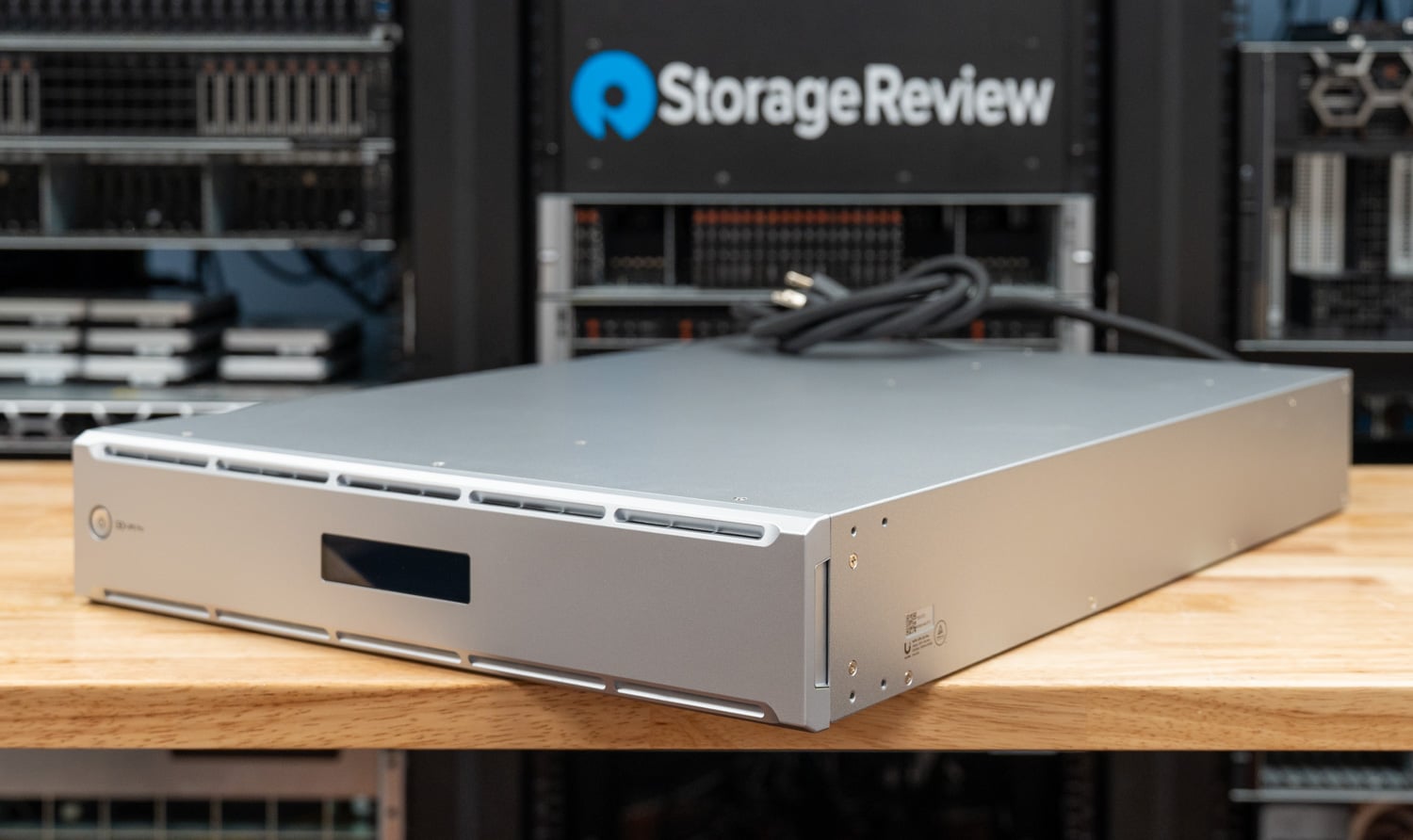
The UniFi UPS 2U Pro is a 1.92 kVA rackmount UPS supporting up to 1,920W of connected equipment. Unlike the standard UPS 2U, the Pro delivers pure sine-wave output and includes a field-replaceable 720Wh battery. Ubiquiti rates the system for up to 22 minutes of runtime at a 960W half load, providing enough capacity for more demanding rack deployments than the company’s first-generation models.
Power management is also a major focus of the UPS 2U Pro. Its eight outlets are individually controllable, with per-outlet power monitoring and remote power cycling available through the UniFi management environment. This gives administrators visibility and control beyond monitoring the overall UPS load, allowing individual devices to be monitored or power-cycled remotely without physical access to the rack.
Integration remains one of Ubiquiti’s biggest differentiators. The UPS 2U Pro supports graceful shutdown of compatible UniFi storage appliances, including UNVR and UNAS systems. At the same time, Network UPS Tools (NUT) compatibility extends shutdown and monitoring capabilities to third-party servers and infrastructure.
At $679 on the Ubiquiti store ($732 with Ubiquiti’s checkout surcharge included), the UPS 2U Pro is priced above Ubiquiti’s original UPS offerings but targets a different class of deployment. We put the UPS 2U Pro into our rack to see how it installs, how the UniFi management features work in practice, and where its runtime and per-outlet monitoring land for homelab, SMB, and edge infrastructure deployments.
Specifications
| Specification | UPS 2U Pro |
|---|---|
| Physical Specifications | |
| Dimensions | 442.4 x 87.4 x 630 mm (17.4 x 3.4 x 24.8″) |
| Weight | 32 kg (70.5 lb) |
| Enclosure Material | Galvanized steel |
| Form Factor | Rack mount (2U) |
| Weatherproofing | IP20 |
| Hardware | |
| Management | Ethernet |
| Networking Interface | (1) 100/10 MbE port for network connection; (2) GbE ports for surge in/out |
| Power Connections | (1) OVC II AC in: NEMA 5-20P; (8) Battery backup/surge protection: NEMA 5-20R |
| Capacity | 1920VA / 1920W |
| Type | Line interactive |
| Electrical Specifications | |
| Input Voltage Range | 89-145V AC |
| Power Method | (1) TN system, 120V AC, 16A Max., 50/60 Hz |
| Nominal Input Voltage | 120V AC |
| Output Voltage | 120V AC |
| Nominal Output Voltage | 120V AC |
| Frequency Range | AC mode: 50/60 Hz ±5 Hz (Auto sensing); Battery mode: 60 Hz ±1 Hz |
| AC Voltage Regulation | ±1.5% (Battery mode) |
| Transfer Time | 6 ms typical; 10 ms max. (Battery mode) |
| Wave Form | Pure sine wave (Battery mode) |
| Battery | |
| Battery Type | (1) Lead Acid 72V, 10Ah |
| Runtime | Full load: 9 min; Half load: 22 min |
| Battery Charging Time | 8 hours recovery to 90% capacity |
| Protection | |
| Overload at On-Line Mode | 103-120%: 5 min to fault; 120-150%: 10 sec to fault; 150%: 1 sec to fault |
| Overload at Battery Mode | 103-120%: 1 min to fault; 120-150%: 10 sec to fault; 150%: 0.5 sec to fault |
| Short Circuit Protection at On-Line Mode | Breaker, 250V AC, 20A |
| Emergency Power Off (EPO) | Yes |
| Interface and Controls | |
| Display | 3.7″ touchscreen |
| Buttons | (1) Power; (1) Factory reset; (1) Circuit breaker |
| Status LEDs | Off: device not turned on; Flashing white: initializing / factory default; Steady white: waiting for adoption; Steady blue: device adopted and working; Flashing blue: battery mode; Alternating white/blue: firmware upgrading; Rapid flashing blue: locate; Steady red: warning; Flashing red: low battery |
| Ethernet LED | Yes |
| Environmental | |
| Operating Altitude | 3,000 m (1.9 mi) |
| Operating Environment | Pollution Degree 2 |
| Ambient Storage Temperature | -15 to 50° C (5 to 122° F) |
| Ambient Operating Temperature | 0 to 40° C (32 to 104° F) |
| Ambient Operating Humidity | 0 to 95% noncondensing |
| Compliance and Certifications | |
| NDAA Compliant | Yes |
| Certifications | FCC, IC, UL 1778, CSA C22.2 No. 107.3 |
| Software | |
| Mobile Apps | iOS: Version 10.36.1 and later; Android: Version 10.39.3 and later |
| UniFi Network | Version 10.5.67 and later |
Build and Design
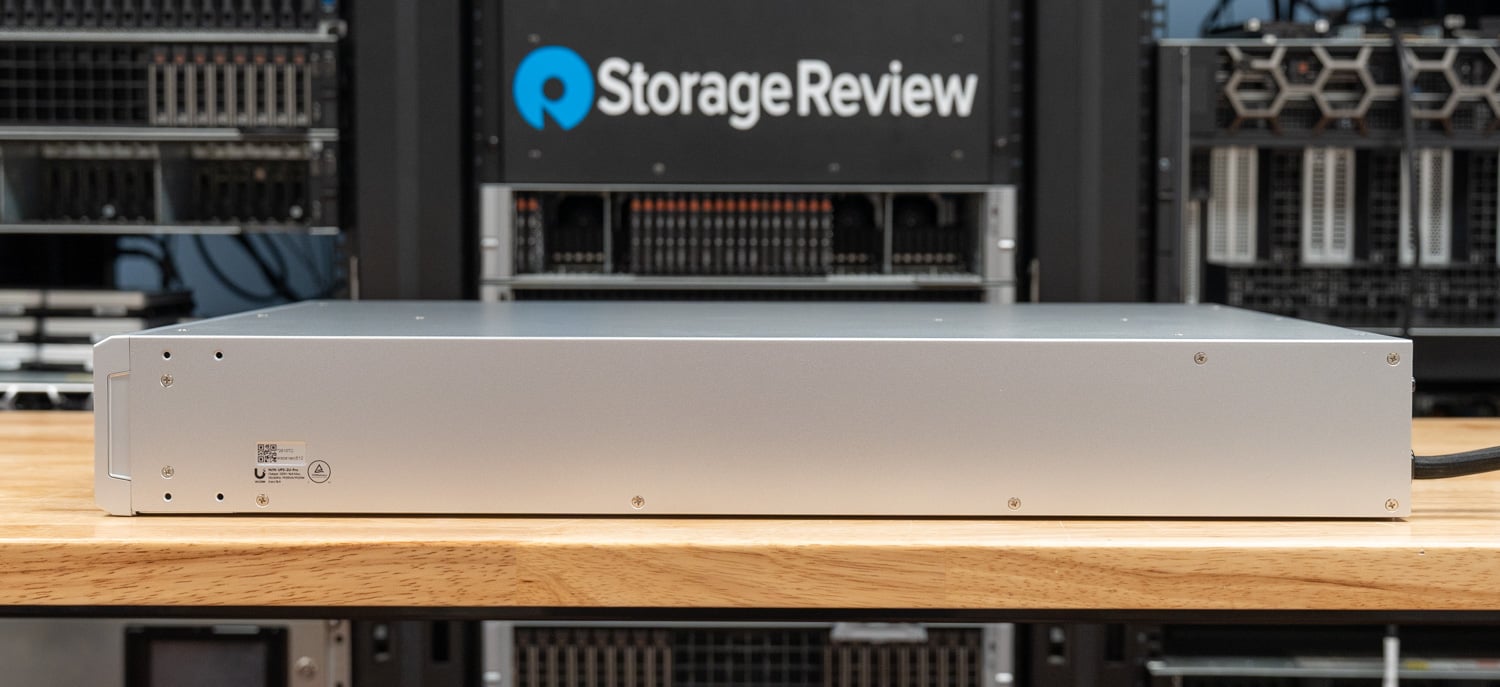
As expected from a rackmount UPS of this capacity, the UniFi UPS 2U Pro is a substantial piece of hardware. It features Ubiquiti’s familiar silver industrial design with a galvanized steel enclosure that feels solid and well suited for permanent installation in a network or server rack. The UPS provides 1,920VA/1,920W of capacity in a standard 2U form factor and measures 17.4 x 3.4 x 24.8 inches. Weighing 70.5 pounds, it requires two people to install it into a rack. The chassis has an IP20 rating, appropriate for indoor IT and network environments.
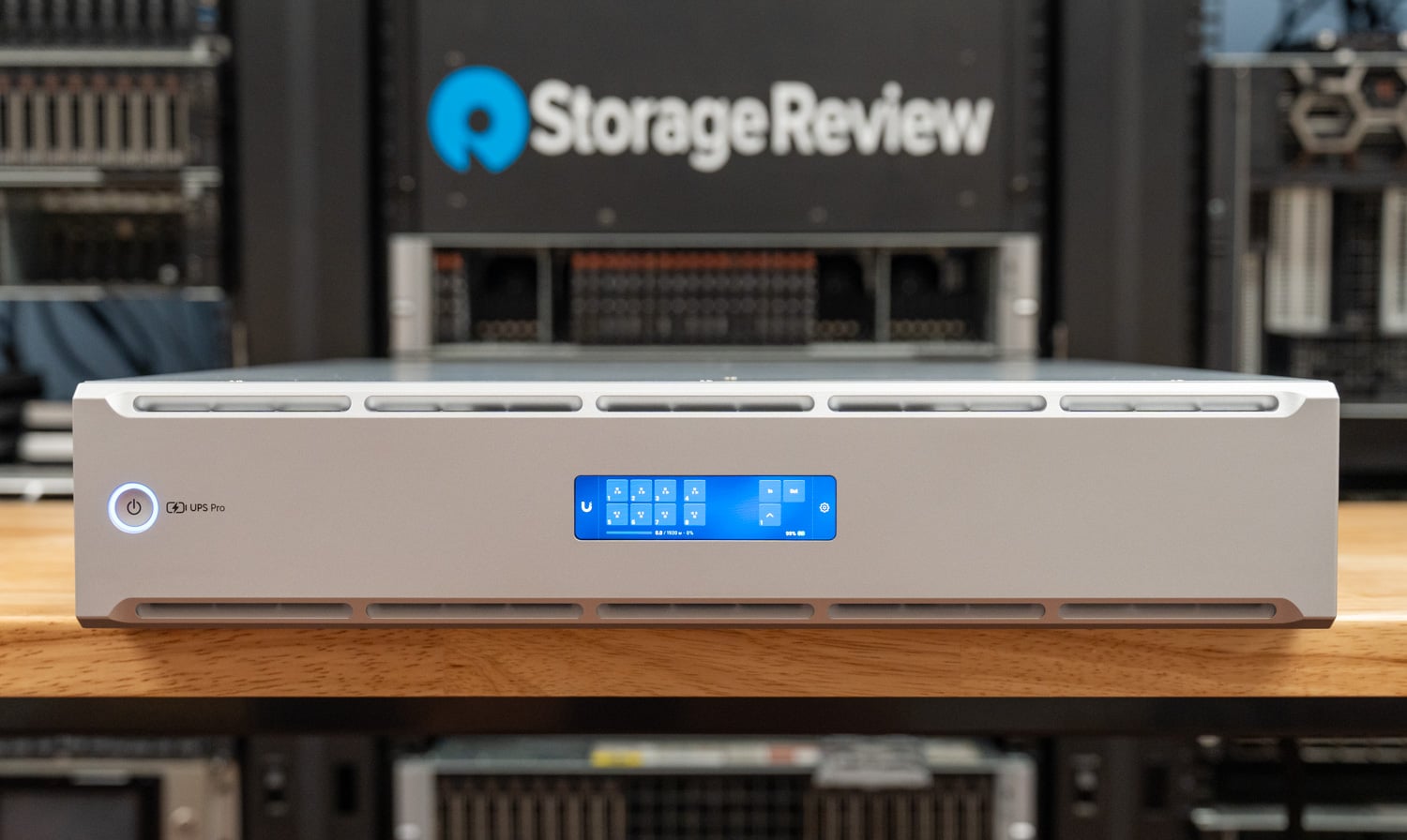
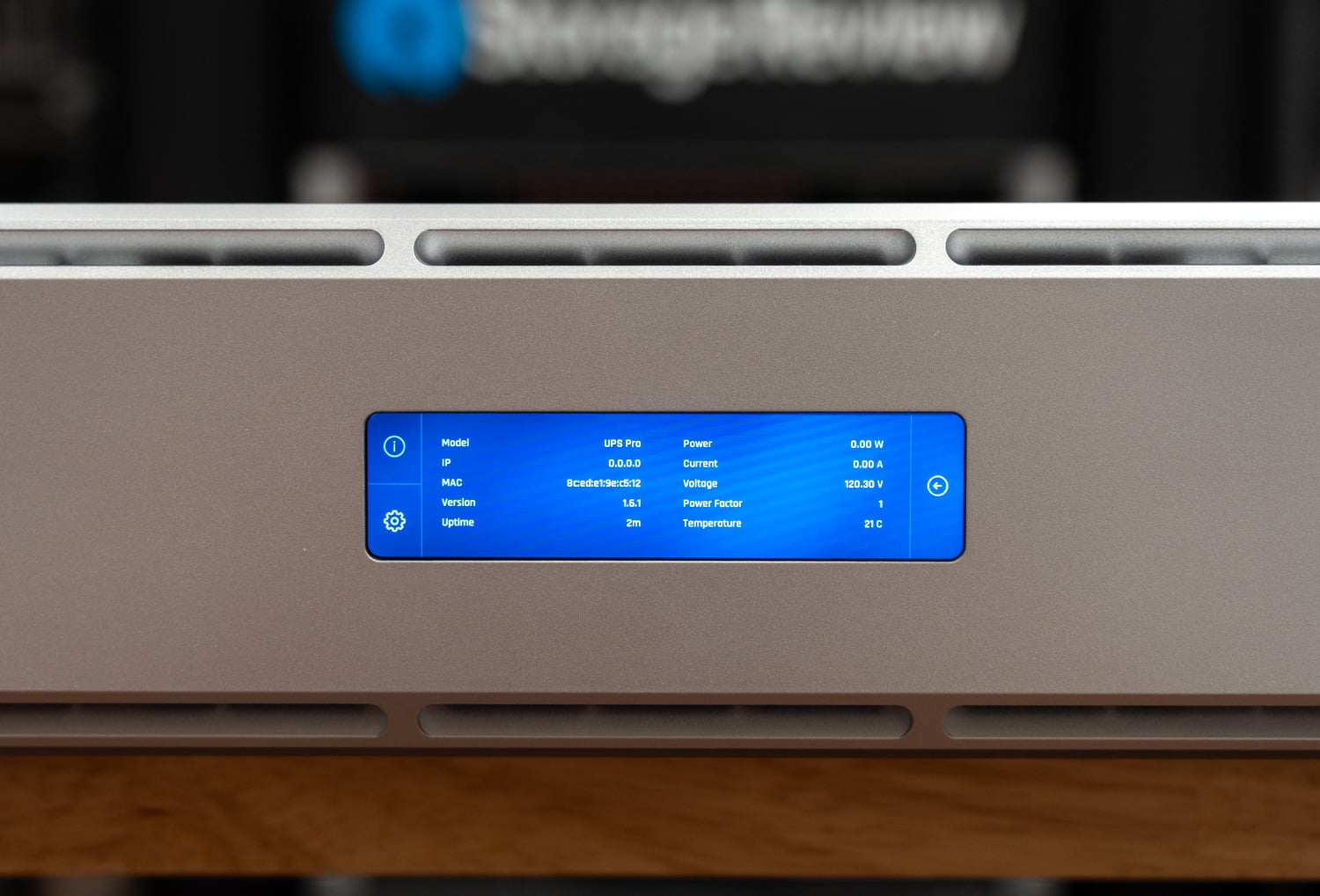
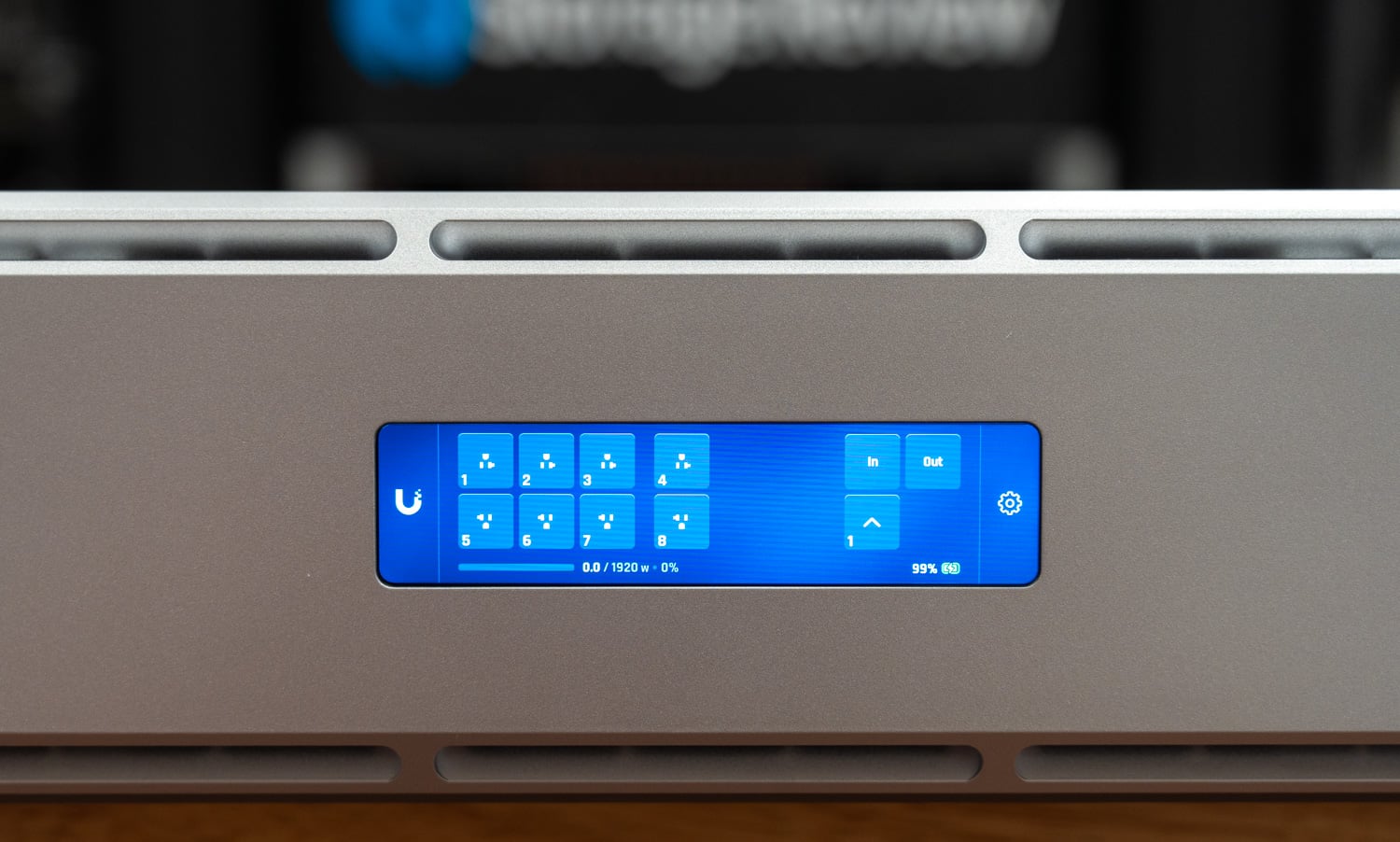
The front of the UPS 2U Pro is clean and simple. A 3.7-inch touchscreen serves as the primary local interface, accompanied by a physical power button. The display provides at-a-glance system information and lets administrators perform basic device management directly from the UPS without opening the UniFi interface. This is especially useful during initial installation or when troubleshooting equipment locally at the rack.
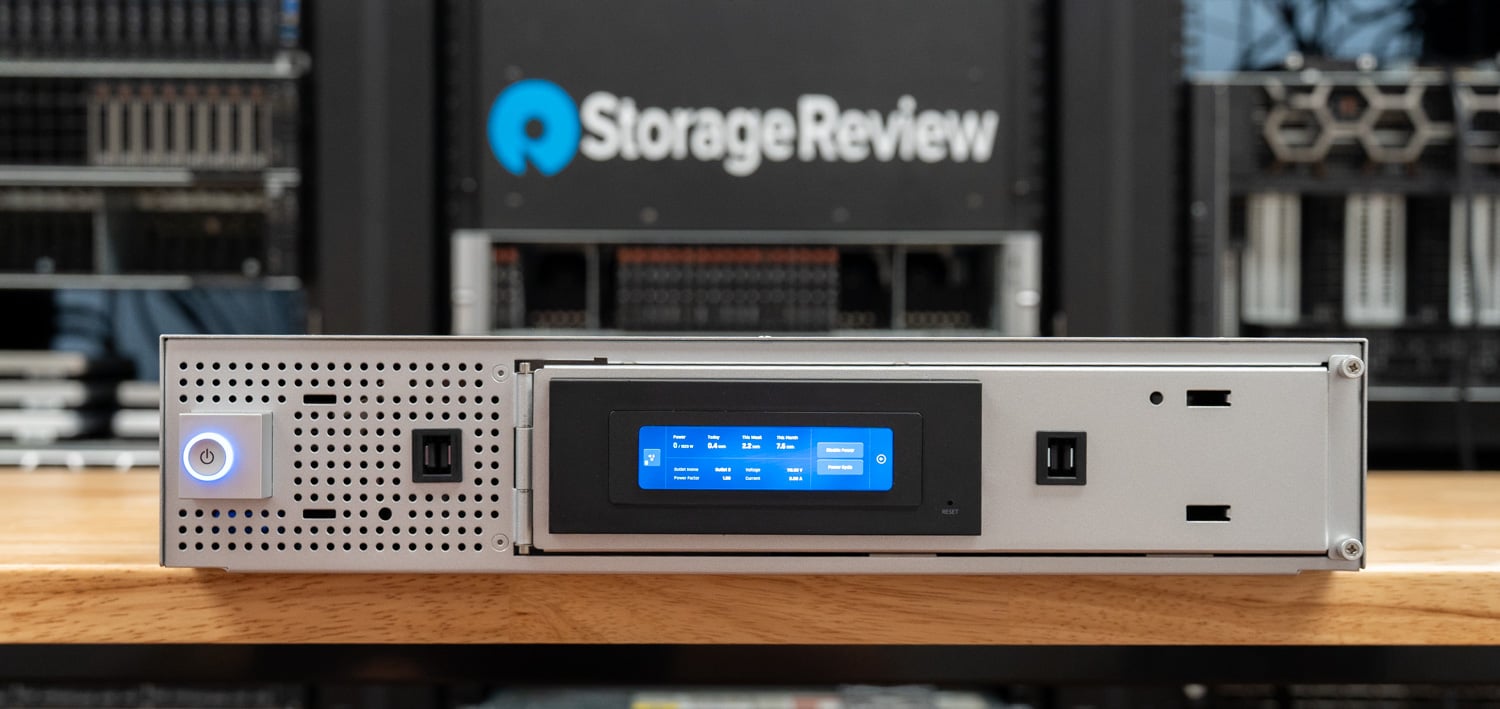
Most of the UPS 2U Pro’s connectivity and power-management hardware is at the back. AC input is supplied through a NEMA 5-20P connection protected by a 20A breaker. Power delivery uses eight NEMA 5-20R battery-backup and surge-protected outlets. Each output is individually monitored and switched, allowing administrators to view power consumption and remotely control or power-cycle specific devices instead of treating the UPS as a single power bank.
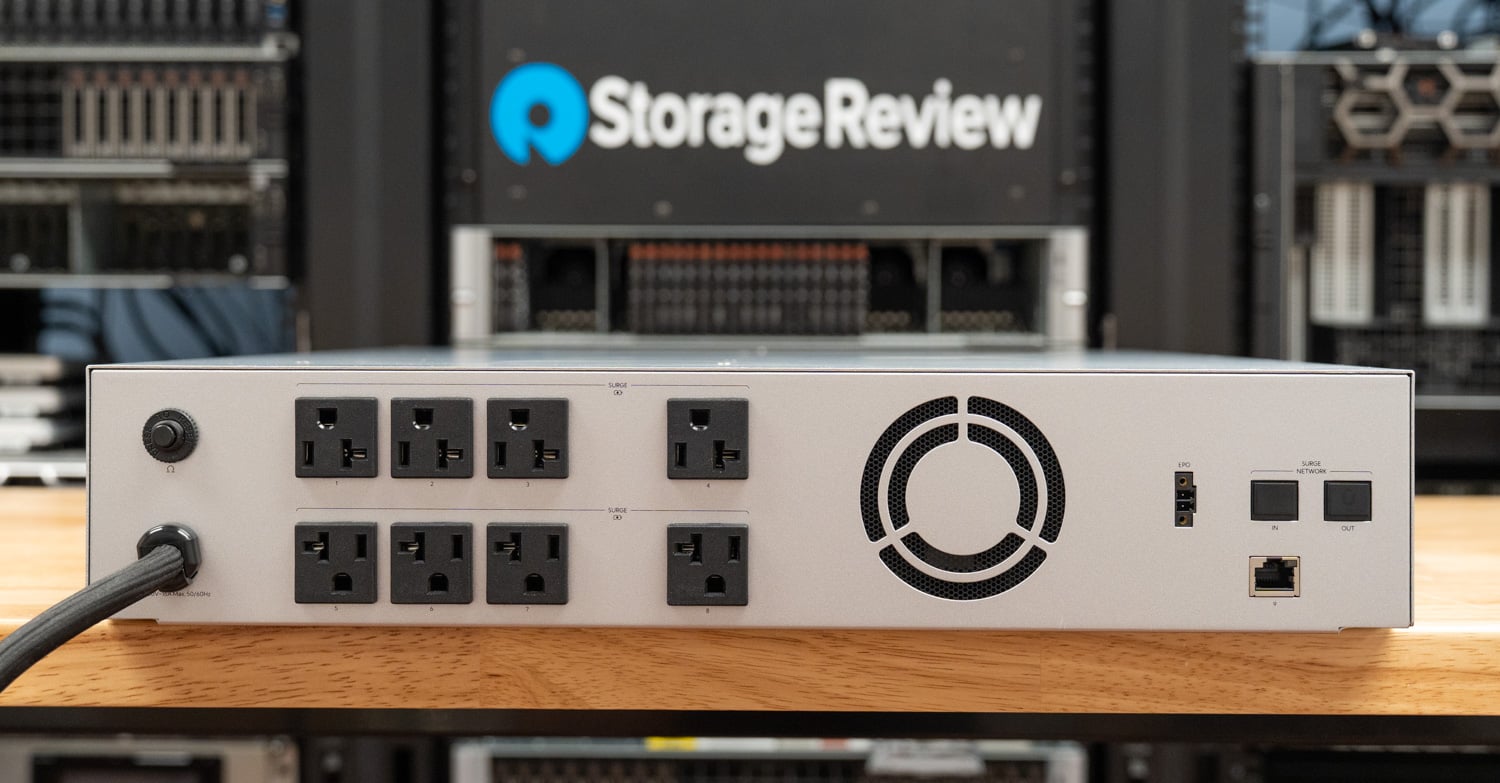
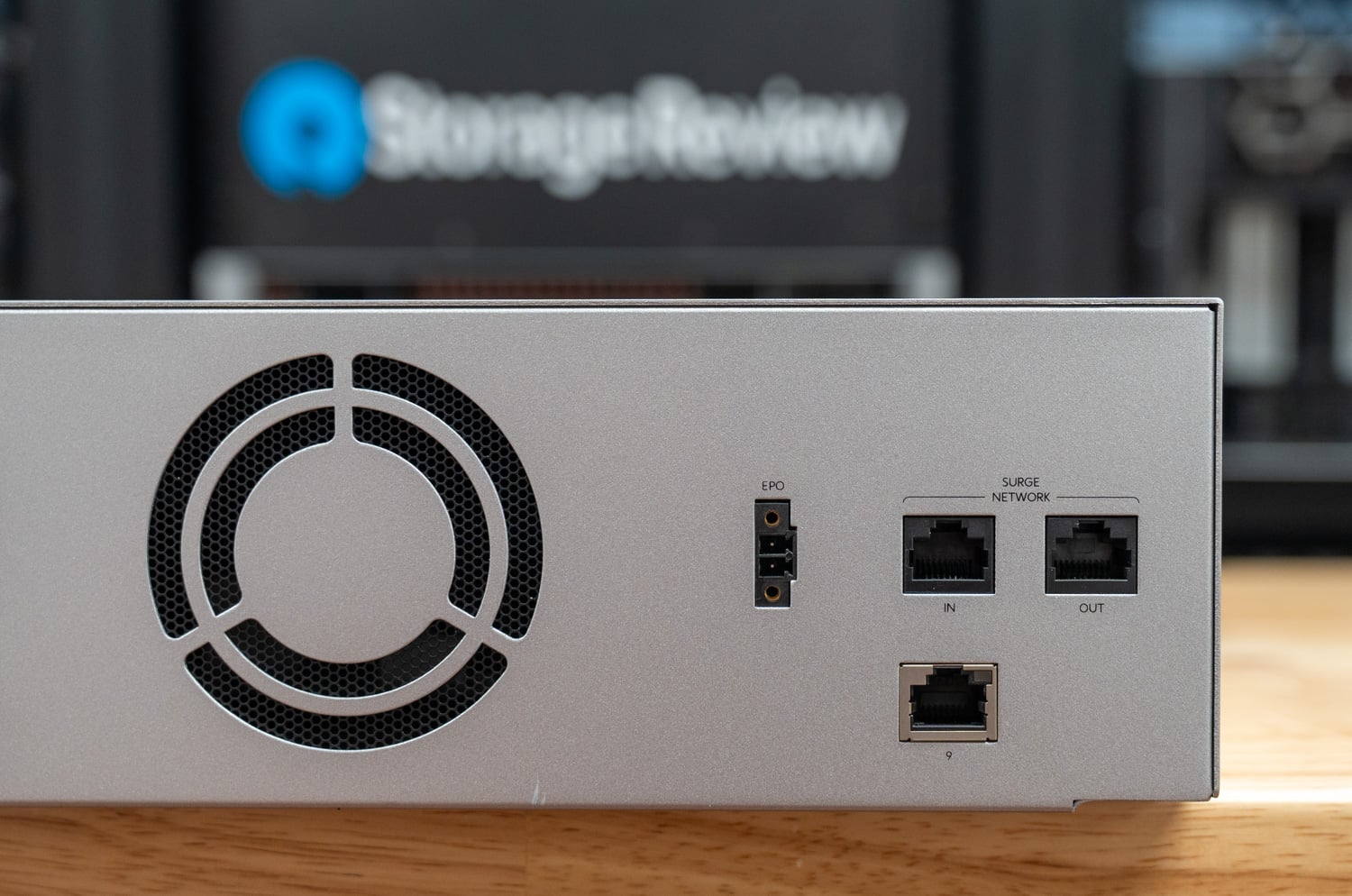
Network connectivity consists of a dedicated 100/10 MbE management interface used to connect the UPS to the network and UniFi management environment. Ubiquiti also includes two GbE ports for Ethernet surge protection, providing network surge passthrough for connected infrastructure.
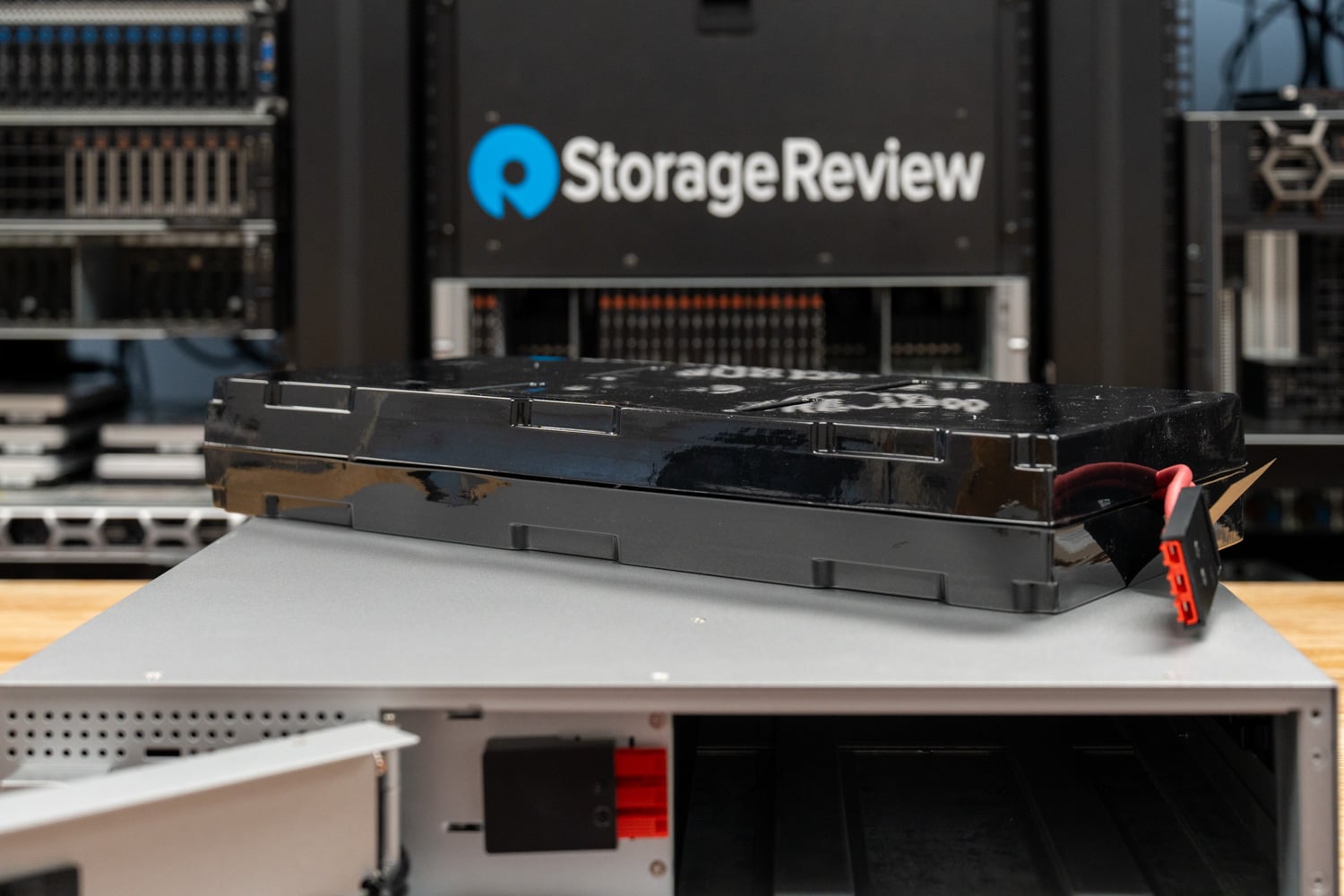
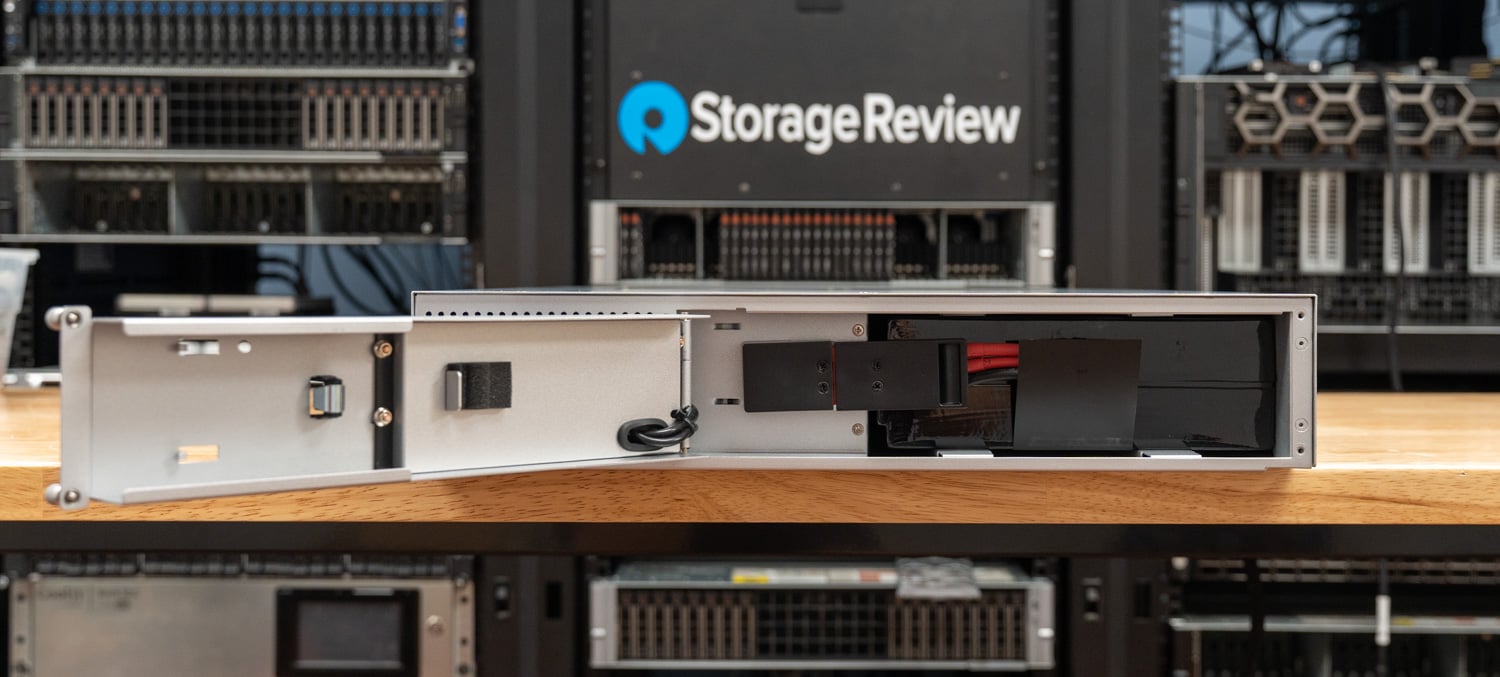
Internally, the UPS 2U Pro uses a field-replaceable 72V, 10Ah lead-acid battery pack. Ubiquiti rates runtime at about nine minutes under a full 1,920W load and 22 minutes at a 960W half load. The UPS provides pure sine-wave output on battery, an important feature for modern server, storage, and networking equipment with sensitive power supplies.
The UPS includes multiple levels of overload and short-circuit protection. While operating online, loads between 103 and 120 percent can be sustained for up to five minutes before a fault occurs. Loads between 120 and 150 percent are supported for up to 10 seconds, while loads above 150 percent trigger a fault after about one second. Battery operation is more restrictive: 103-to-120-percent overload is supported for one minute, 120-to-150 percent for 10 seconds, and loads above 150 percent cause a fault in roughly half a second. Online short-circuit protection is handled by the integrated 250V AC, 20A breaker.
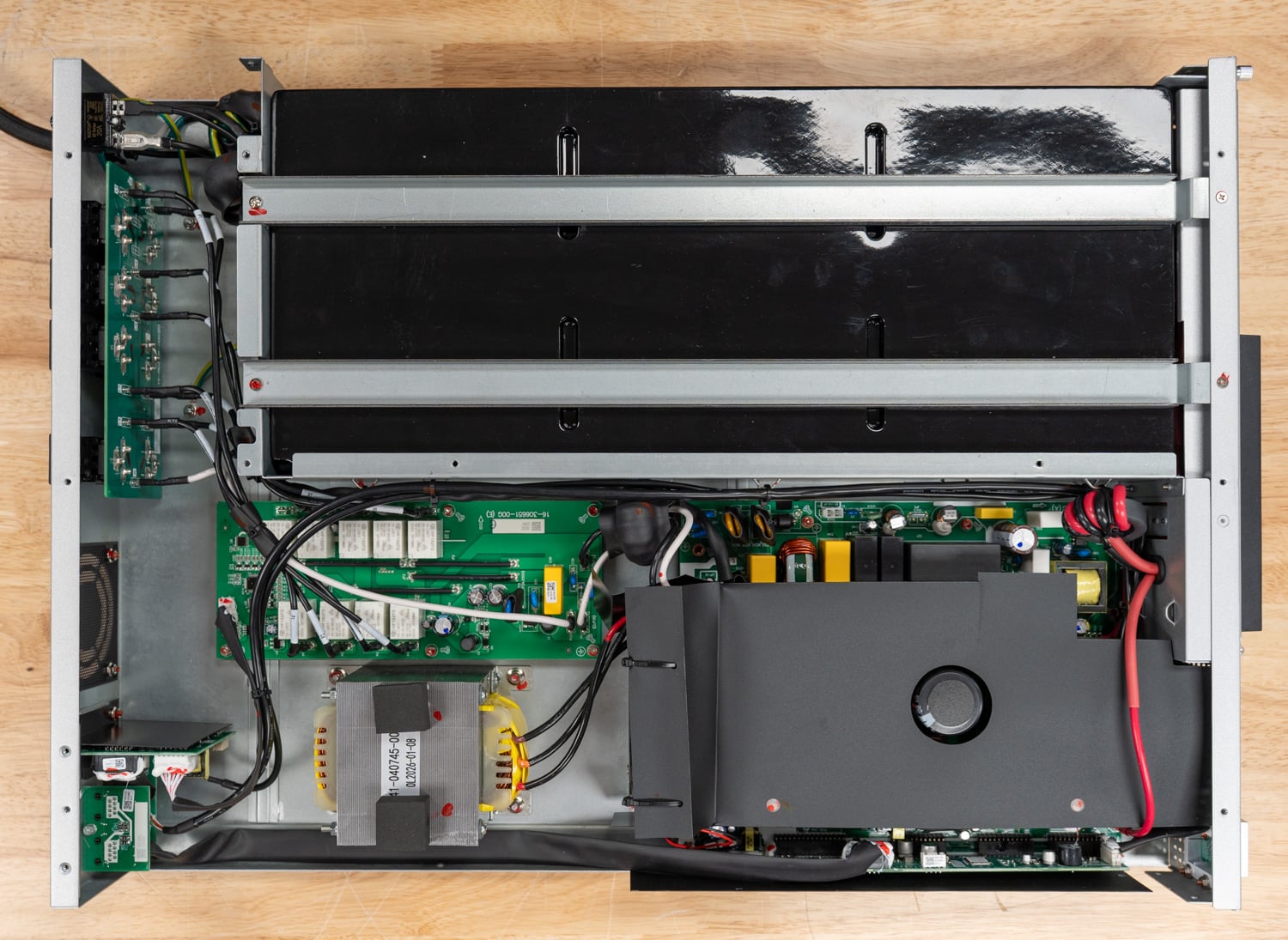
Overall, the UPS 2U Pro has the physical construction expected from a high-capacity rackmount UPS. Still, Ubiquiti has kept the exterior design cleaner than many traditional enterprise UPS platforms. The combination of a sturdy 2U steel chassis, touchscreen interface, individually switched outlets, network management, and pure sine-wave battery output makes it feel more like a managed piece of UniFi infrastructure than a traditional UPS at the bottom of the rack.
UniFi Management
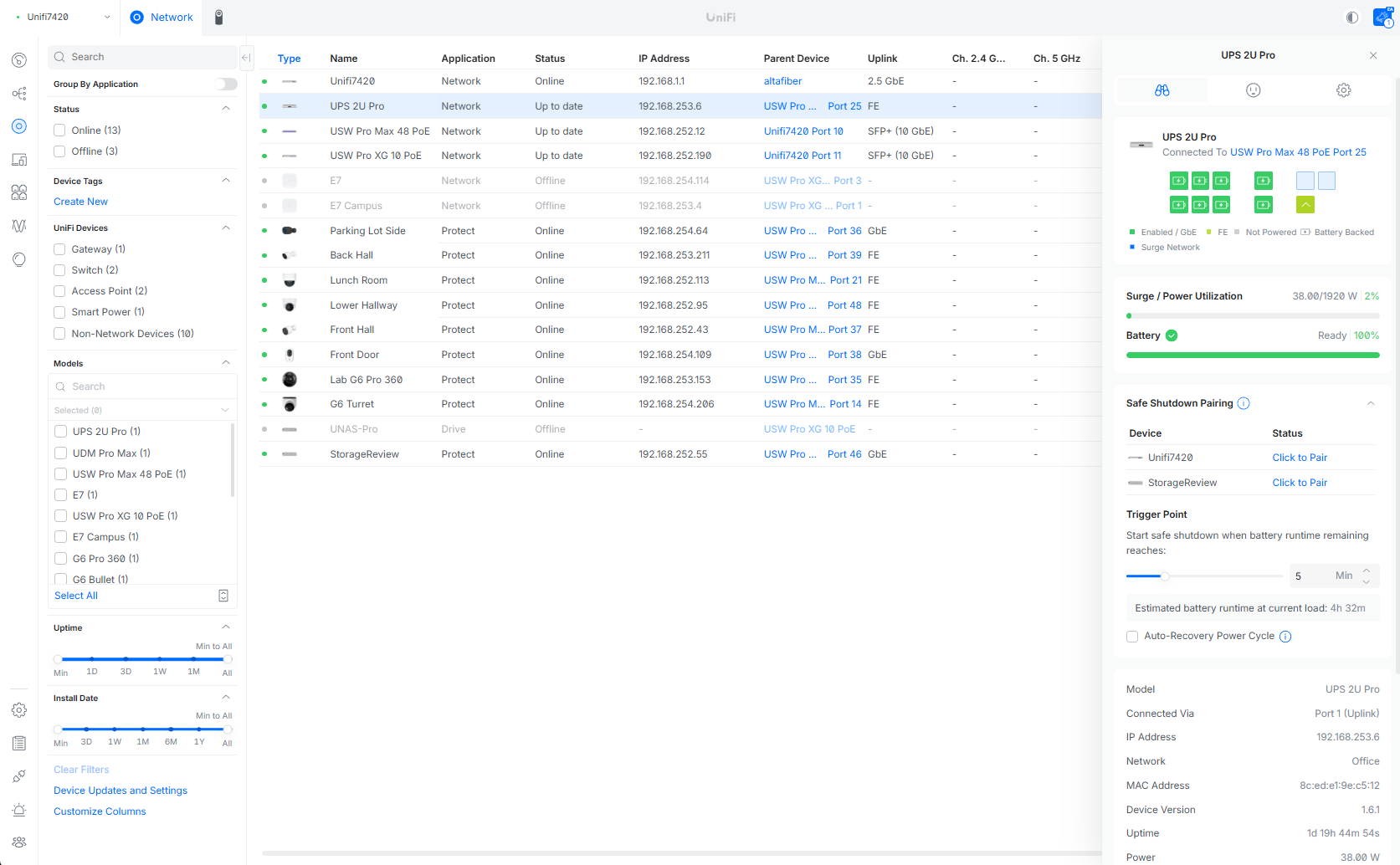
Like other UniFi devices we have reviewed, the UPS 2U Pro fits directly into Ubiquiti’s existing management ecosystem. Once adopted, the UPS appears alongside switches, access points, and other hardware within the UniFi Network application. This prevents UPS management from becoming a standalone interface and gives administrators a familiar place to check power status, configure outlets, and manage shutdown behavior.
The main device overview provides a quick look at the UPS without requiring administrators to navigate additional menus. The right-hand pane shows current surge and power utilization, battery charge and status, and a graphical representation of the rear outlets and network connections. UniFi also reports estimated battery runtime based on the current load, updating as equipment is added or removed.
One useful feature is Safe Shutdown Pairing. Compatible UniFi devices can be paired directly with the UPS and set to begin a graceful shutdown once the estimated remaining runtime reaches a defined threshold. In the UniFi interface, that threshold can be adjusted in minutes, with UniFi displaying the estimated runtime at the current load. An Auto-Recovery Power Cycle option is also available to automatically recover connected equipment after a power event.
Outlet Management
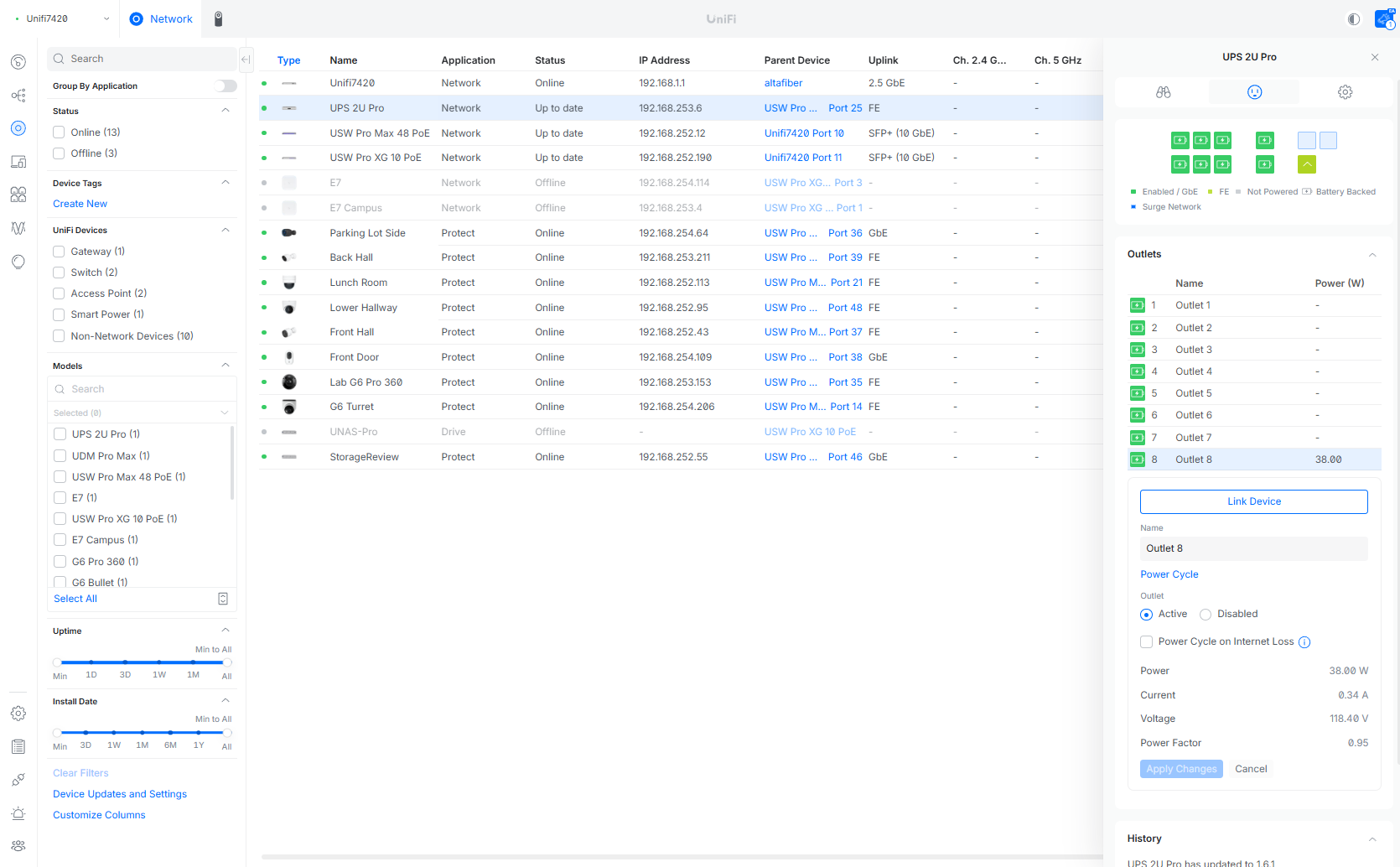
The second pane provides individual control and monitoring for all eight NEMA 5-20R outlets. Each outlet can be named, linked to a device, enabled or disabled, and power-cycled remotely. There is also an option to automatically power-cycle an outlet after a loss of Internet connectivity.
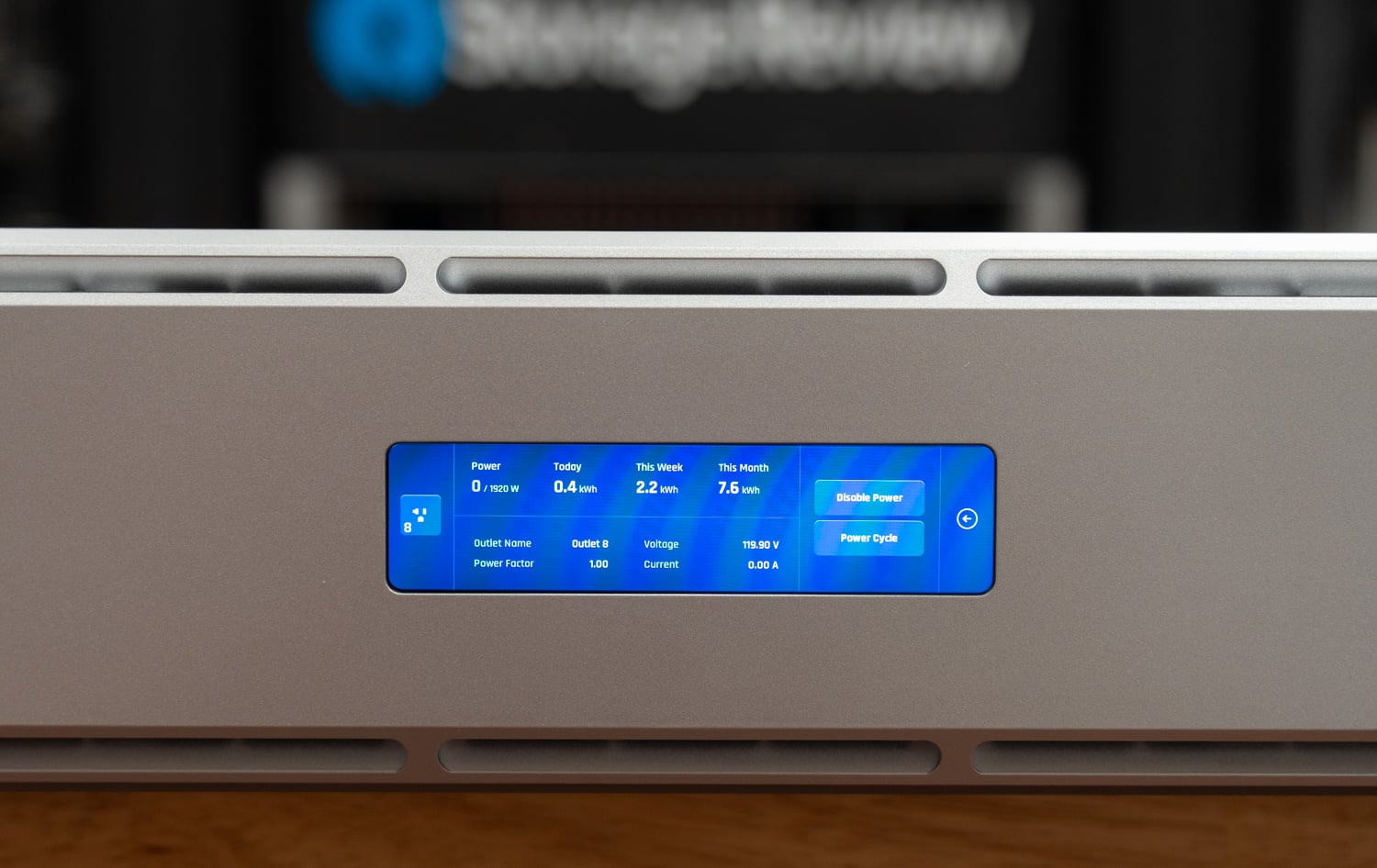
More importantly, monitoring occurs at the individual outlet level rather than just the UPS as a whole. Selecting an outlet displays its current power draw, amperage, voltage, and power factor. In our example, the load on Outlet 8 drew 38W at 0.34A and 118.4V with a 0.95 power factor. This makes it easier to identify which device is responsible for a load and track power consumption without adding a separate metered PDU.
UPS Settings
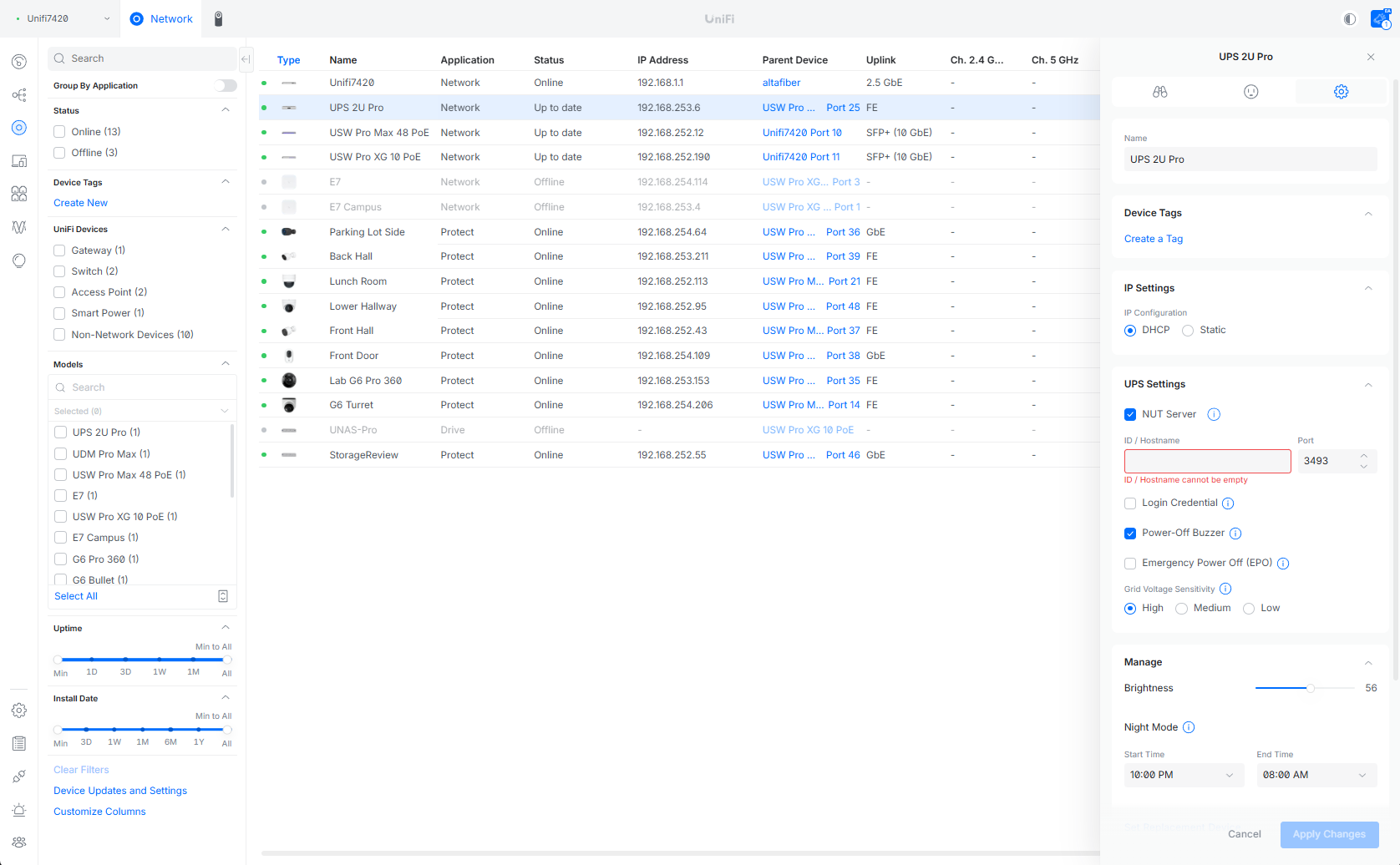
The settings pane contains traditional UPS configuration options. Network addressing can be set through DHCP or a static IP, while the integrated NUT server can be enabled for third-party systems. Administrators can define the NUT ID or hostname, change the listening port, and optionally require login credentials.
Additional UPS controls include the audible power-off buzzer, Emergency Power Off (EPO) functionality, and adjustable grid voltage sensitivity with High, Medium, and Low settings. These options let the UPS behavior be adjusted based on the quality and stability of incoming utility power.
Ubiquiti also exposes some physical interface settings through UniFi. The front touchscreen brightness can be adjusted remotely, and Night Mode can automatically reduce display brightness on a defined schedule.
One firmware behavior is worth planning around. When we updated the UPS 2U Pro during testing, the unit cut output power to its outlets for the duration of the update, and there is no internal bypass to keep downstream equipment energized while the UPS restarts. That behavior is common for portable power stations but unusual next to enterprise UPS platforms, which typically apply firmware updates without dropping the protected load. Until that changes, treat firmware updates on the UPS 2U Pro as scheduled maintenance windows: shut down connected infrastructure first or move it to another power source.
Overall, the software side of the UPS 2U Pro is very much in line with the rest of the UniFi ecosystem. Ubiquiti takes functions normally spread across a UPS web interface, network management card, and metered PDU and presents them through the same UniFi Network interface administrators may already be using to manage the rest of the rack.
Transfer Time and Inverter Output
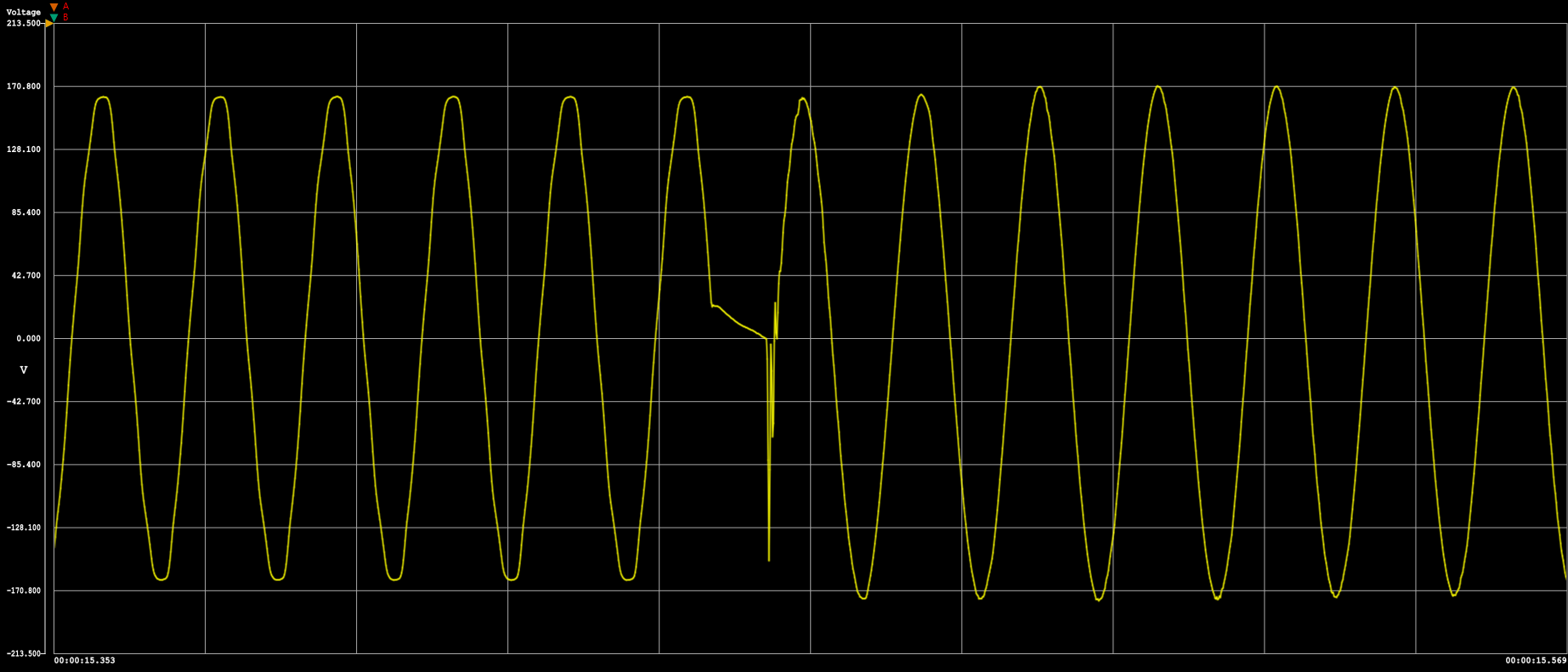
Using our Quarch Mains Power Analysis Module, we monitored power output during cutovers from utility to battery power and a return from battery to utility power. During the initial cutover, shown below, we measured a transfer time of 9.1 ms, measured from the start of the event to the return to the waveform. The UPS output was clean, with a pure sine wave inverter. We saw subtle output differences, such as a slightly higher line voltage off the battery. The return to utility power measured 6.6 ms. The Ubiquiti UPS 2U Pro offered quick transfer speed matching manufacturer specifications and offered clean output running off battery.
Conclusion
At $679 ($732 with Ubiquiti’s checkout surcharge), the UniFi UPS 2U Pro makes a strong value argument in the 2kVA rackmount UPS market. Comparable solutions from established enterprise UPS vendors can easily reach two to three times the price when configured with a similar feature set. The UPS 2U Pro delivers 1,920VA/1,920W capacity, pure sine-wave battery output, a field-replaceable battery, and eight individually monitored and switched outlets.
An important part of that value is that network management comes standard. With many traditional UPS platforms, network connectivity requires stepping up to a more expensive model or purchasing a separate network management card. Ubiquiti builds Ethernet management directly into the UPS 2U Pro, with no additional hardware required.
There is also no separate UPS management platform to deploy and maintain. The UPS 2U Pro lives directly inside UniFi Network alongside the rest of the infrastructure, avoiding the clunky standalone web interfaces and additional management software commonly associated with UPS hardware. From the same interface, administrators get battery and runtime monitoring, per-outlet power telemetry and control, graceful shutdown, and NUT support for third-party equipment.
The one operational caveat is firmware updates. With no internal bypass, an update takes the outlets offline, so plan updates as maintenance windows rather than routine background tasks.
For UniFi environments in particular, the UPS 2U Pro offers an impressive combination of capacity, management, and price, bringing features normally associated with significantly more expensive enterprise UPS deployments into a much simpler package.
Ubiquiti UPS 2U Pro (affiliate link)
Leaderboard: The UniFi UPS 2U Pro takes Best UniFi UPS on our Ubiquiti Reviews index.


 Amazon