

HPE announced a broad set of updates across its GreenLake platform, targeting enterprises that are modernizing private cloud environments and preparing data infrastructure for AI-driven workloads. The updates span next-generation private cloud systems, unified data services, and integrated data protection, with a focus on reducing operational fragmentation and simplifying hybrid and multi-cloud adoption.
Fourth-Generation Private Cloud System Targets Modern Virtualization
At the core of the announcement is HPE’s fourth-generation private cloud system, designed to support both traditional virtualized workloads and cloud-native applications within a unified operational model. HPE positions the system as a single-vendor alternative to multi-platform environments, integrating infrastructure, operations, and data services to reduce complexity and operational risk.
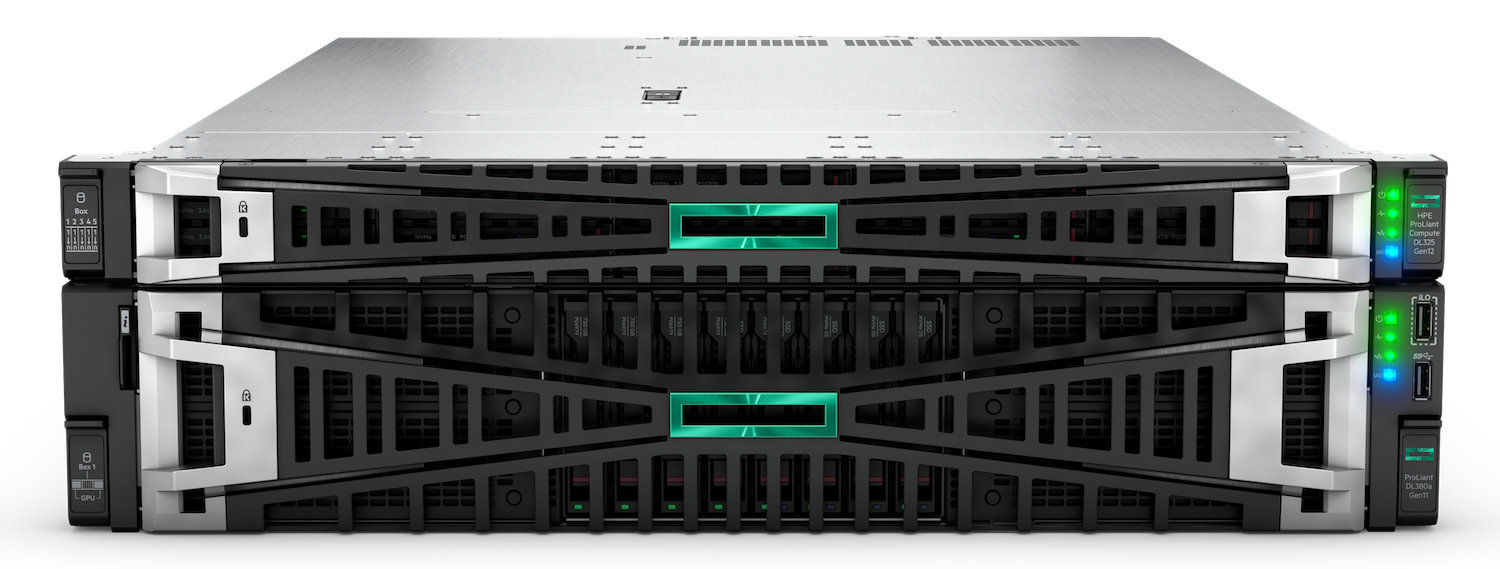
The updated HPE Private Cloud PC3000 introduces unified management for virtual machines and Kubernetes workloads on a single platform. This allows enterprises to scale cloud-native applications independently without re-architecting existing environments. The system also provides a direct upgrade path to the enterprise edition of HPE Morpheus Software, enabling multi-cloud management, workload migration, and hybrid cloud orchestration from a common control plane.
HPE Zerto Software Data Protection
The platform is built on HPE ProLiant Compute Gen12 servers, which deliver better performance per watt and support higher workload density. Security enhancements are anchored in HPE Integrated Lights-Out, providing hardware-level management and protection.
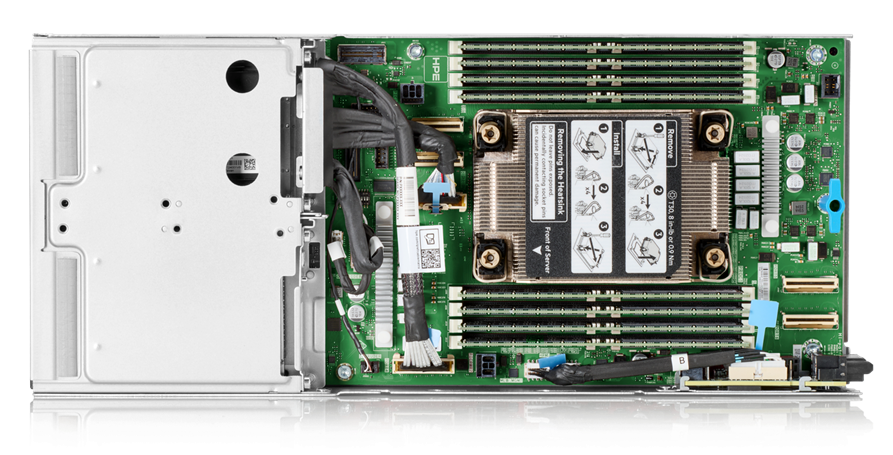
HPE Proliant Compute EL220
Data protection is tightly integrated into the platform. HPE Private Cloud now includes validated support for HPE Zerto Software, enabling continuous data protection, granular recovery, and ransomware detection, with non-disruptive testing and compliance reporting. Integration with the Veeam Data Platform adds capabilities such as instant VM recovery, orchestrated failover, and agentless, image-based backups. These features are further optimized through integration with HPE StoreOnce, which provides deduplicated backup and replication with near-zero recovery point and recovery time objectives.
SimpliVity Support for HPE Morpheus VM Essentials
HPE also updated its HPE SimpliVity PC1000 offering for edge and distributed environments. The system now supports HPE Morpheus VM Essentials and integrates with StoreOnce Gen5 systems, extending resilience and backup capabilities. This positions SimpliVity as a standardized HCI option for remote and branch deployments that require consistent operations and simplified data protection.
Alletra Storage MP Expands Unified Data Layer for AI Workloads
HPE is expanding its Alletra Storage MP portfolio to meet growing demand for unified data platforms that support AI pipelines. The updates add native file services, scale-out block storage, and deeper automation through AI-driven management.
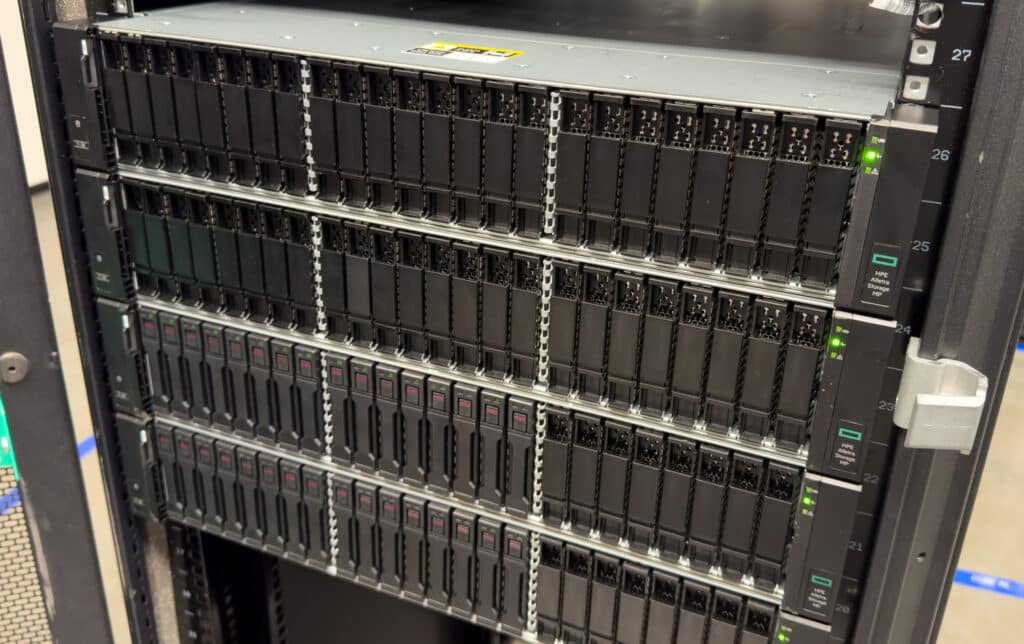
The HPE Alletra Storage MP X10000 adds native file storage alongside existing object capabilities, consolidating file and object workloads on a single system. The platform scales to 16 nodes and up to 23PB of raw capacity, with a 100% data availability guarantee. It also introduces support for RDMA-enabled file access, complementing existing S3 over RDMA capabilities to reduce latency and improve throughput for data-intensive workloads. These enhancements streamline data access for AI training, inference, and KV cache use cases while supporting analytics and cyber resilience workflows.

The HPE Alletra Storage MP B10000 receives updates focused on performance and operational automation. The system now incorporates agentic AI capabilities to detect, analyze, and resolve infrastructure issues in real time. It also includes a 5:1 data reduction guarantee and expands scalability from four to six controller nodes, increasing performance by up to 50 percent while maintaining dual-node fault tolerance.
Data Fabric Enhancements Introduce Policy Automation and AI Assistance
HPE Data Fabric Software is updated with new policy-based data placement and mobility features, enabling administrators to automate data distribution across environments. A conversational interface and an integrated AI assistant provide natural-language access to the global namespace, enabling faster data discovery and simplified reporting.
Enhancements to metadata management improve data classification, lineage tracking, and visibility across datasets. Support for open standards, including Apache Polaris, is intended to ensure consistent governance and compliance across heterogeneous environments.
Zerto Advances Cyber Resilience and VMware Migration Capabilities
HPE Zerto Software also receives updates to strengthen cyber resilience and simplify workload mobility. The platform now includes an AI assistant to support operational workflows, in addition to its existing continuous data protection, failover, and recovery capabilities.
Zerto further expands its role in virtualization transitions by enabling workload migration from VMware environments to HPE Morpheus Software. Integration with Microsoft Defender delivers real-time threat visibility and accelerates recovery workflows, building on HPE’s previously announced recovery-at-scale capabilities.
HPE continues to align GreenLake with enterprise priorities, including hybrid cloud simplification and AI readiness. The combination of unified private cloud systems, integrated data protection, and a scale-out data platform reflects a push to consolidate infrastructure and data services under a single operational framework, while introducing automation and AI-driven management to reduce operational overhead.


 Amazon